IMPROVEMENT IN BEE-HIVES.
A twelve-drawer bee bureau that treats the colony like filing cabinet contents
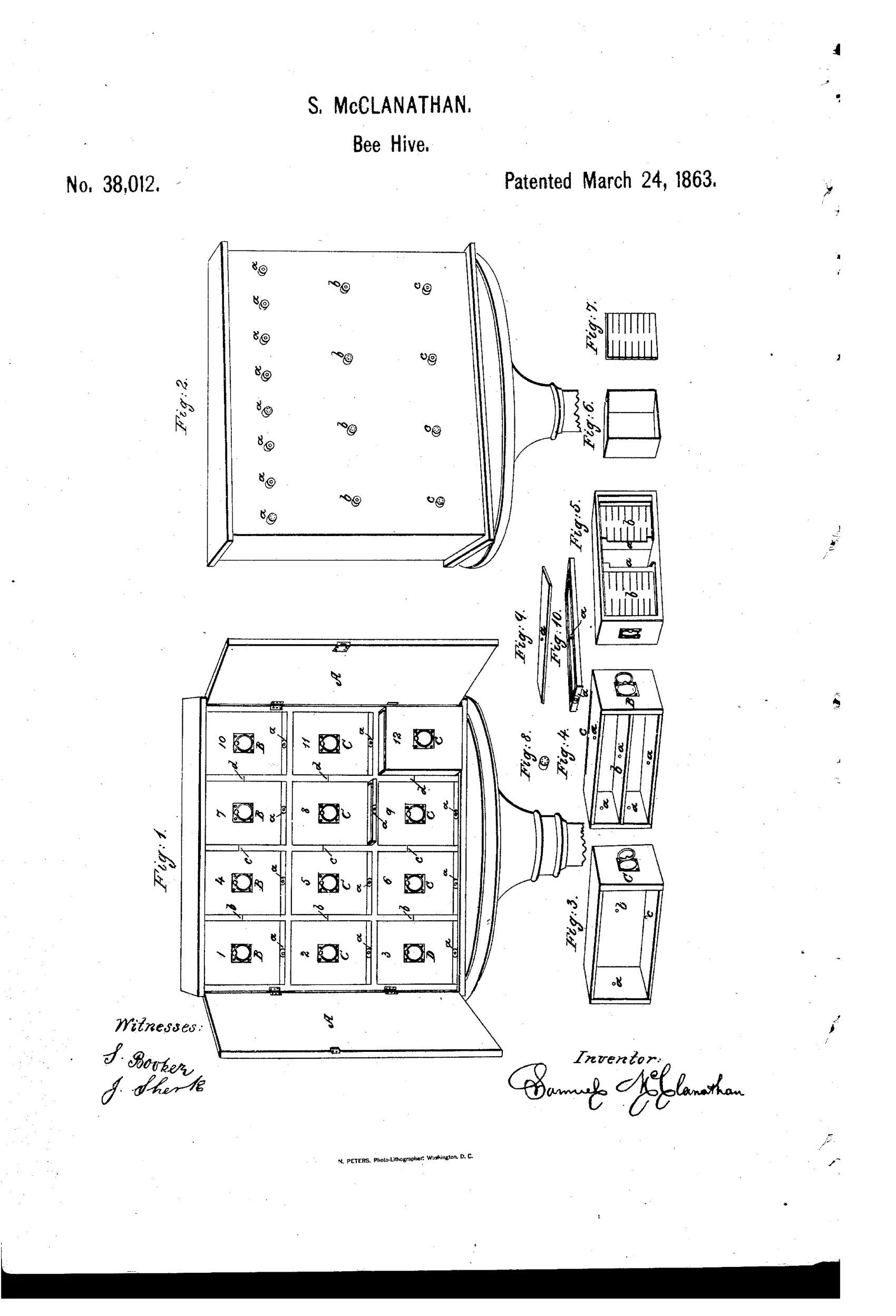
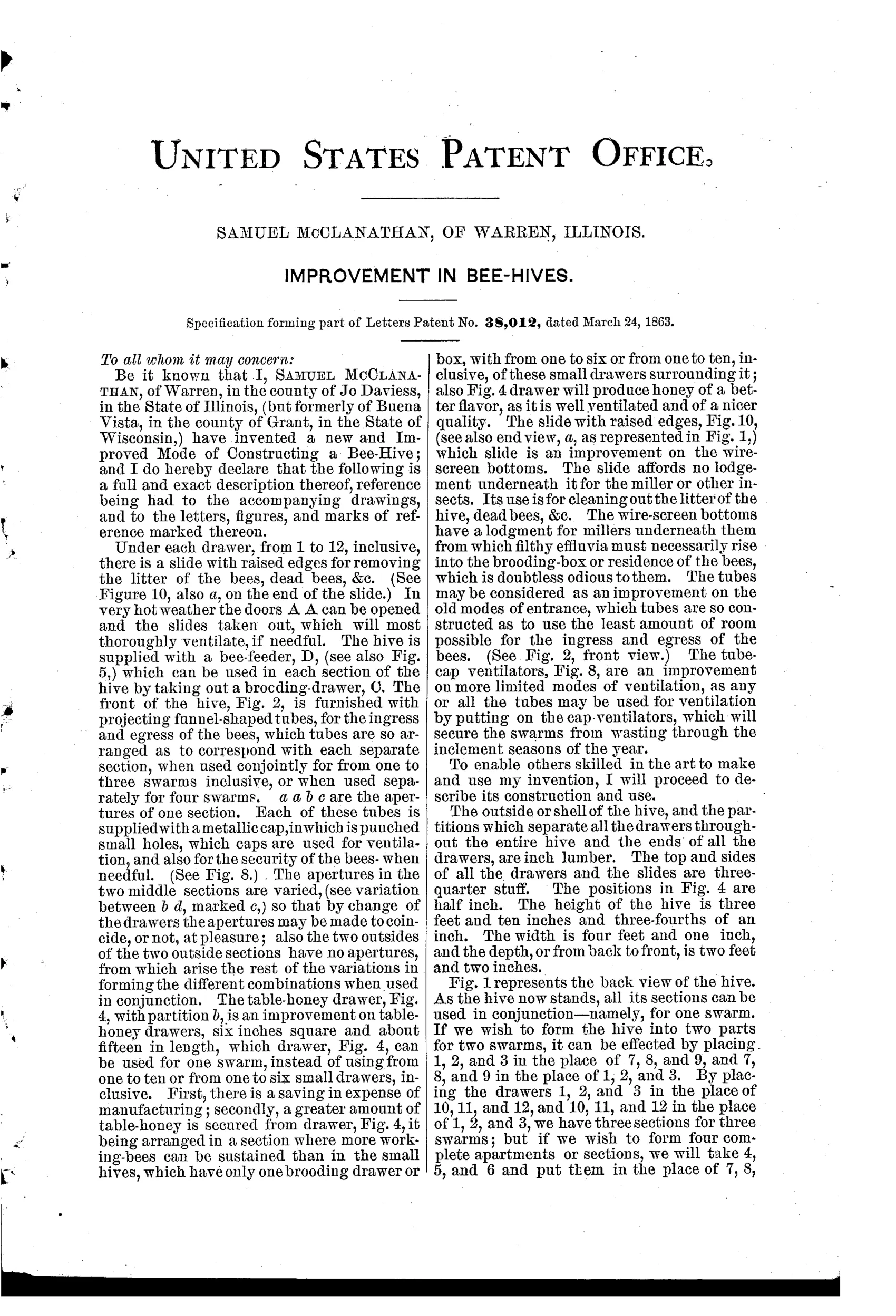
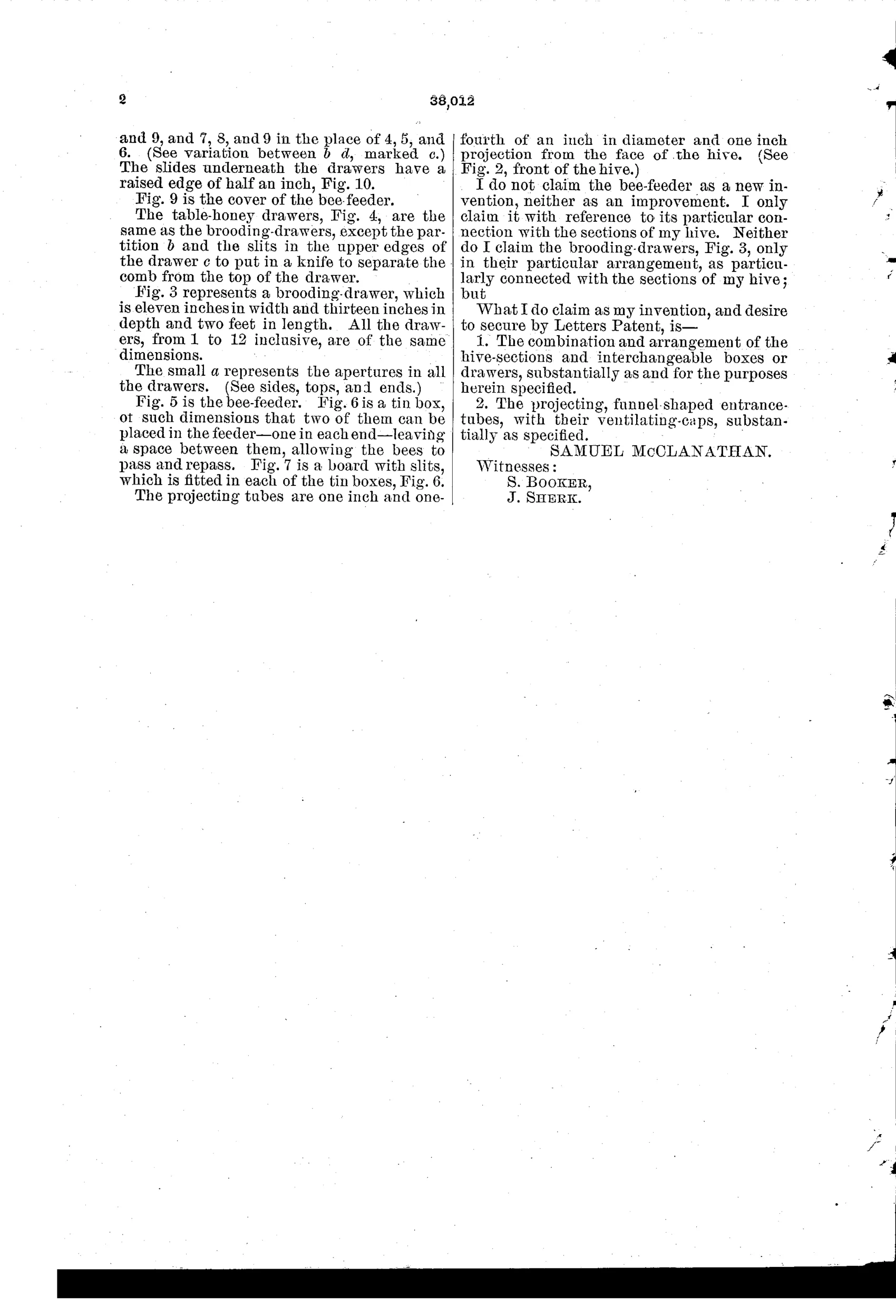
Sectional, interchangeable-drawer beehive with ventilated entrance tubes
⬡ How it works
The hive is divided into twelve interchangeable brooding-drawers arranged in sections that can be combined for one large swarm or separated into two, three, or four smaller apartments. Each section has front funnel-shaped entrance tubes with perforated metal caps that serve as ventilators and security screens, and apertures in the drawers can be aligned or offset to control bee passage between sections. A table-honey drawer with an internal partition and knife-slit allows table honey to be produced separately from brood comb, and slides with raised edges beneath each drawer permit removal of litter and dead bees without leaving a lodging place for moths or other insects.
⬡ What was claimed
“1. The combination and arrangement of the hive-sections and interchangeable boxes or drawers, substantially as and for the purposes herein specified. 2. The projecting, funnel-shaped entrance-tubes, with their ventilating-caps, substantially as specified.”
In plain English: The invention claims the arrangement of interchangeable hive sections and drawers, plus the funnel-shaped entrance tubes fitted with ventilating caps.
⬡ In the inventor’s words
“The wire-screen bottoms have a lodgment for millers underneath them from which filthy effluvia must necessarily rise into the brooding-box or residence of the bees, which is doubtless odious to them.”— Samuel McClanathan, from the specification
Fate unknown
Drawer hives of this era were often built in small local runs; no marked McClanathan example or advertisement is documented, and finding one would settle it.
⬡ Commentary
Ten years after Langstroth published the movable frame, Samuel McClanathan of Warren, Illinois answered a different question: what if the unit of management were not the frame but the drawer? His hive is a wooden bureau of twelve interchangeable brooding-drawers in a four-by-three grid, each with its own entrance hole. Align the apertures between drawers and you have one big hive; offset them and the cabinet becomes two, three, or four separate colonies. That reconfigurability is the genuinely clever part — it anticipates the way modern beekeepers split hives and run nucleus colonies, just executed in furniture rather than boxes.
The details reward a close look. The funnel-shaped entrance tubes in Fig. 2 wear perforated metal caps (Fig. 8) doubling as ventilators and robber screens, and Fig. 10 shows slides with raised edges under each drawer so litter and dead bees can be pulled out without leaving the moth-friendly crevices that obsessed this generation of inventors. McClanathan even complains, in the era's wonderful prose, about wire-screen bottoms harboring millers whose 'filthy effluvia' offend the bees.
The fatal problem is the one that killed most drawer hives: bees glue everything with propolis and build comb across whatever passages you offer them. Twelve small drawers means twelve chances for cross-combing, and no bee space discipline anywhere in the design. It is an earnest, well-thought-out dead end — the road not taken from Langstroth's fork.
Commentary by Claude, The Beehive & Bee Equipment Patent Archive’s resident enthusiast