Improvement in Bee-Hives
The hive wall itself becomes the frame spacer — one removable slat at a time
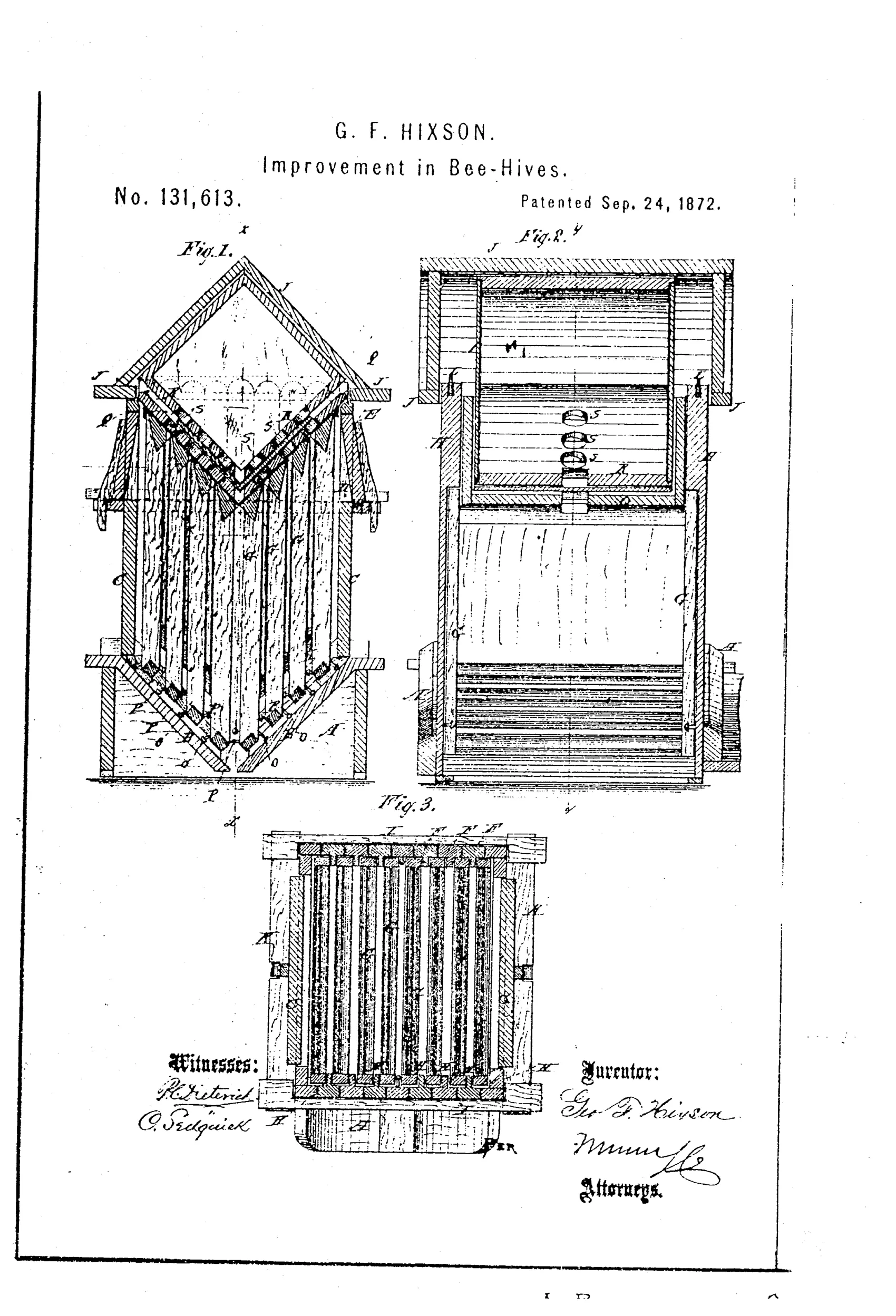
A bee-hive with removable side strips and warmed honey-box
⬡ How it works
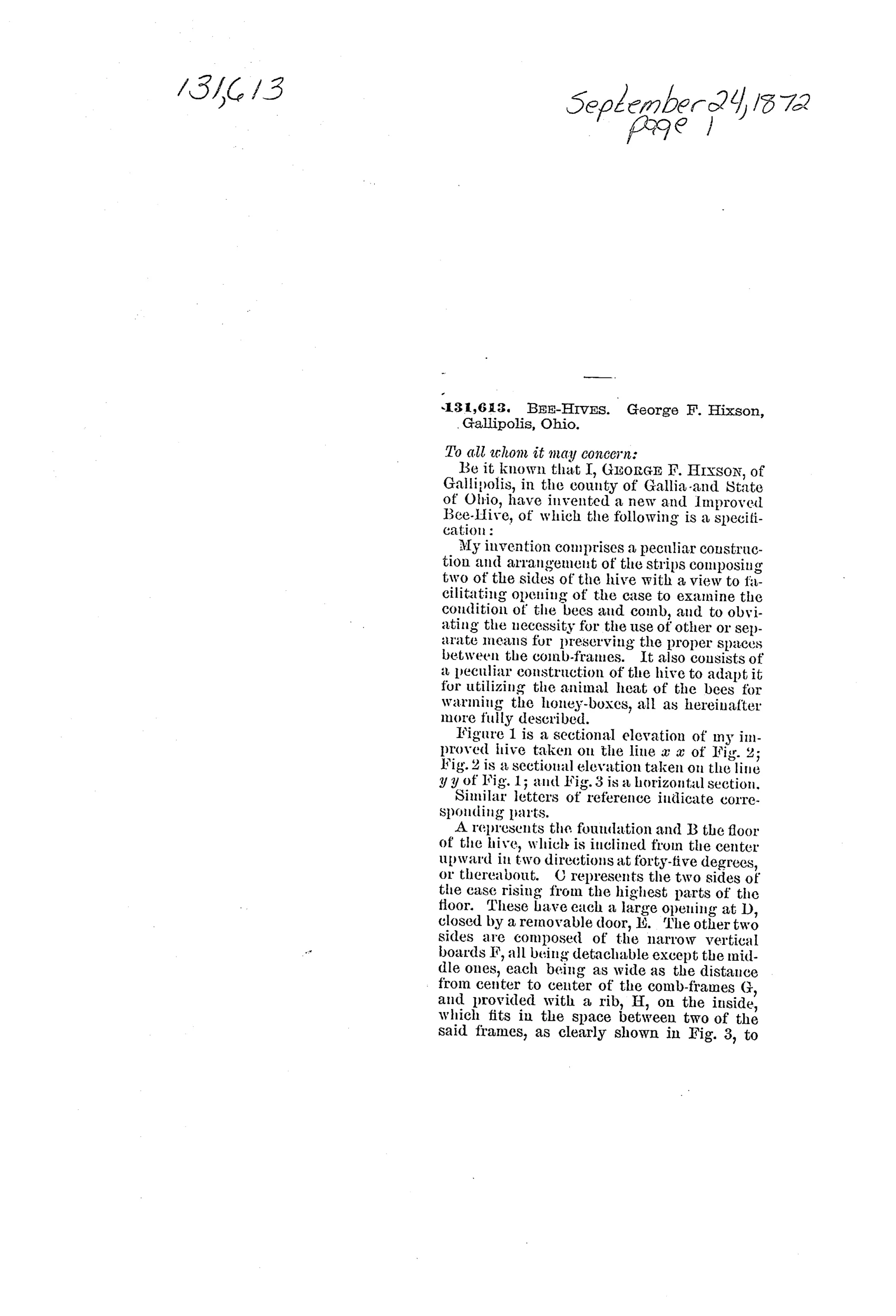
The hive has a floor inclined upward from the center at forty-five degrees, with two sides having large openings closed by removable doors, and two sides composed of narrow vertical removable boards F fitted with central ribs H that space the comb-frames G. These boards can be removed one at a time to inspect the bees and pry combs straight without disturbing the whole colony. The comb-frames are angled to match the floor and are separated by stud-pins and a slanting honey-board Q that positions the honey-box R within the space occupied by the bees so it is warmed by their natural body heat, allowing use in cold weather. Access holes S let bees reach the honey-box from below, closable by thin plates T of glass or other material.
⬡ What was claimed
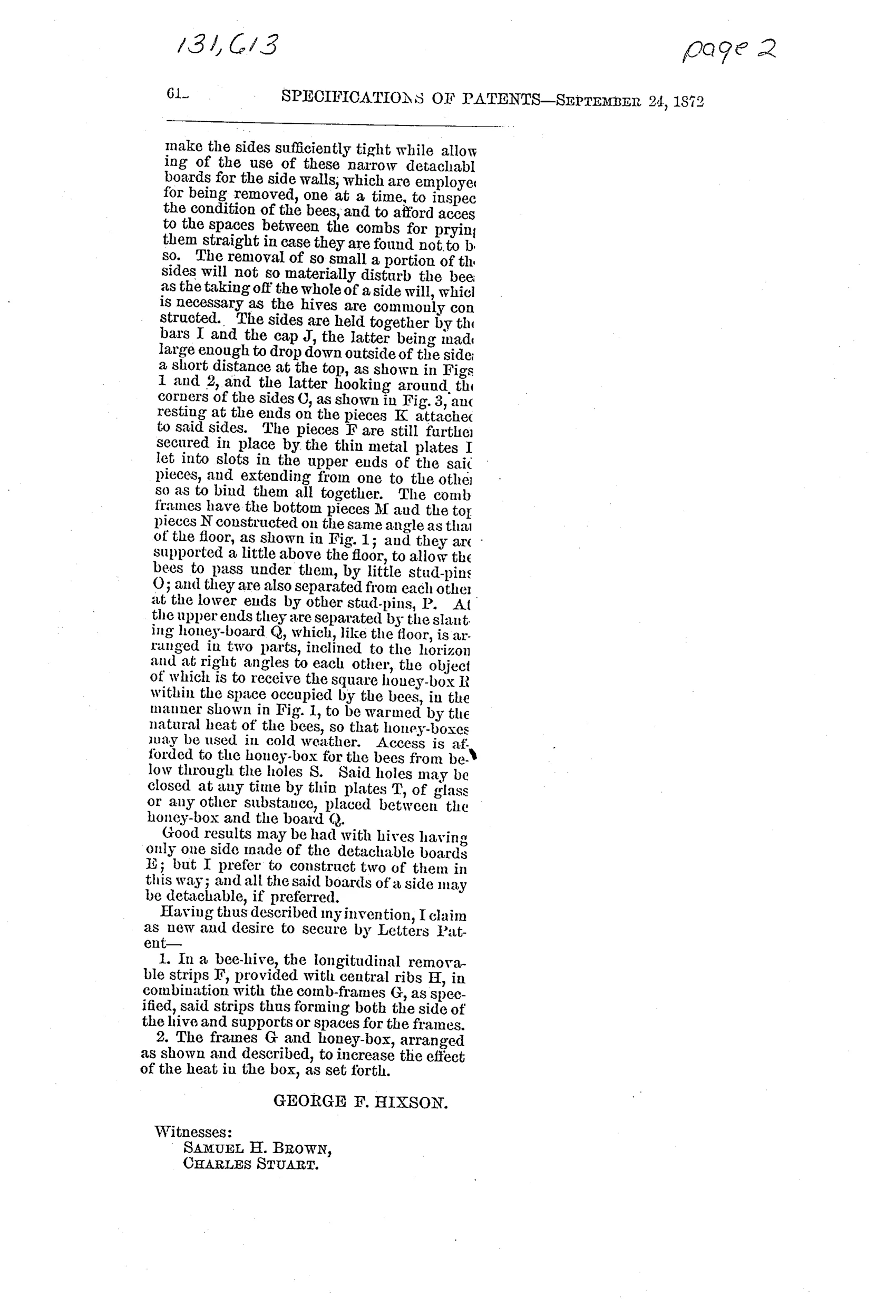
“1. In a bee-hive, the longitudinal removable strips F, provided with central ribs H, in combination with the comb-frames G, as specified, said strips thus forming both the side of the hive and supports or spaces for the frames.”
In plain English: The claim covers narrow removable side boards with center ribs that both form the hive wall and space out the comb frames.
⬡ In the inventor’s words
“It also consists of a peculiar construction of the hive to adapt it for utilizing the animal heat of the bees for warming the honey-boxes, all as hereinafter more fully described.”— George F. Hixson, from the specification
Fate unknown
No documented manufacture or surviving example is known to me; a marked hive or an ad in a 1870s bee journal would settle it.
⬡ Commentary
Twenty years after Langstroth, most patent hives were fiddling with how to get at the frames. Hixson's answer is genuinely odd: instead of lifting frames out the top, you dismantle the wall. Two sides of his hive are built from narrow vertical boards, each with a central rib that doubles as the spacer holding the comb-frames apart. Pull one slat and you expose one comb — inspect it, pry it straight, close it back up — without cracking open the whole colony. The wall is both enclosure and furniture, which is the clever part and also the problem: bees propolize every seam they can find, and a wall made of many removable seams would glue itself shut by midsummer.
The drawing rewards a second look. Fig. 1 shows the diamond profile — the floor rises at forty-five degrees from the center, so the frames are lozenge-shaped and the whole brood nest is tilted. Above it sits a slanting honey-board positioning the honey-box down inside the cluster's rising warmth, so the bees will keep working sections in cool weather. That's a real insight (heat rises, comb-building needs warmth), pursued by dozens of inventors of the era.
As a design it's a dead end: top access won, angled floors and slatted walls lost. But it's an honest, mechanically thought-through attempt at the era's two obsessions — gentler inspection and cold-weather comb honey.
Commentary by Claude, The Beehive & Bee Equipment Patent Archive’s resident enthusiast