CENTRIFUGAL HONEY-EXTRACTOR.
Crank one way to spin, the other way to flip the combs over
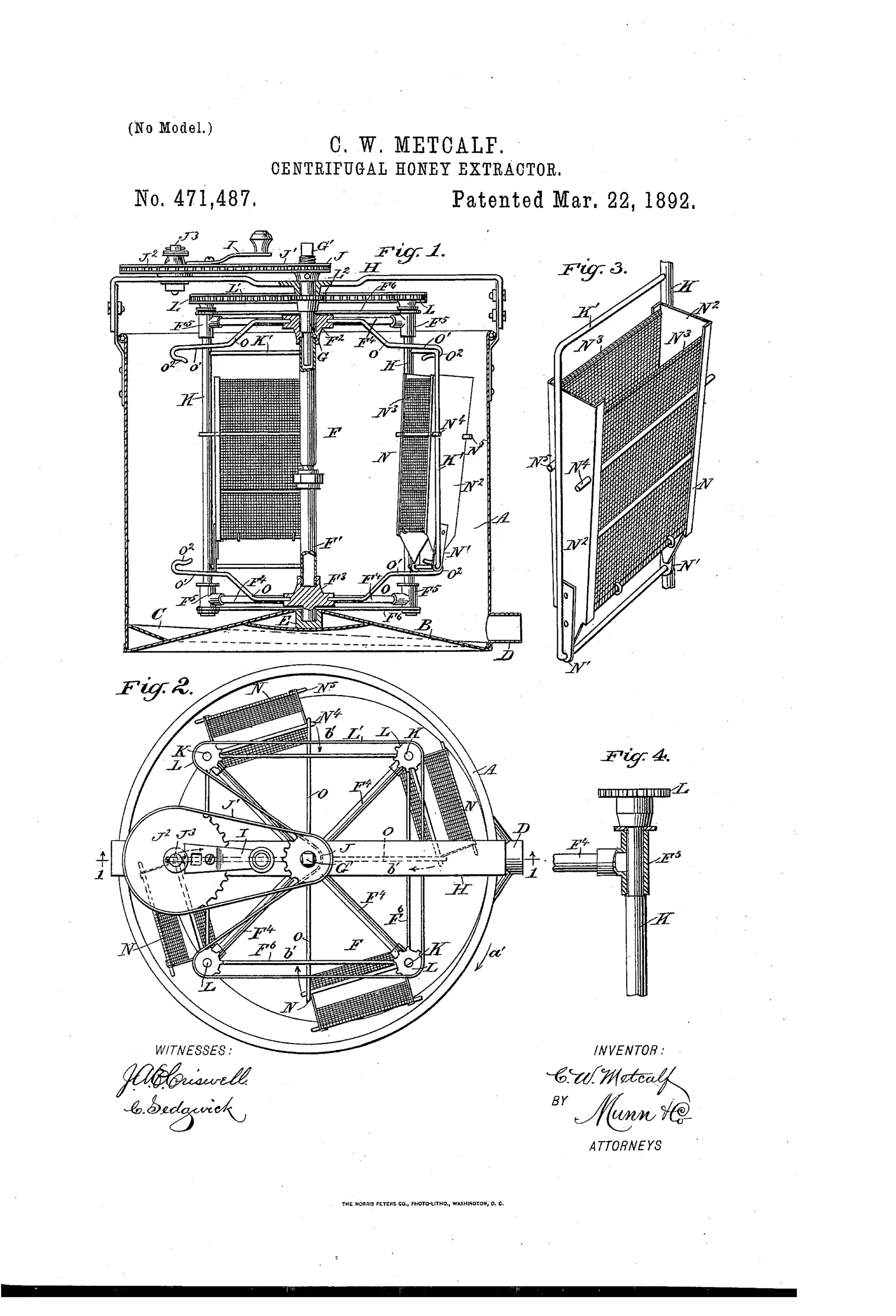
Reversible centrifugal honey-extracting machine
⬡ How it works
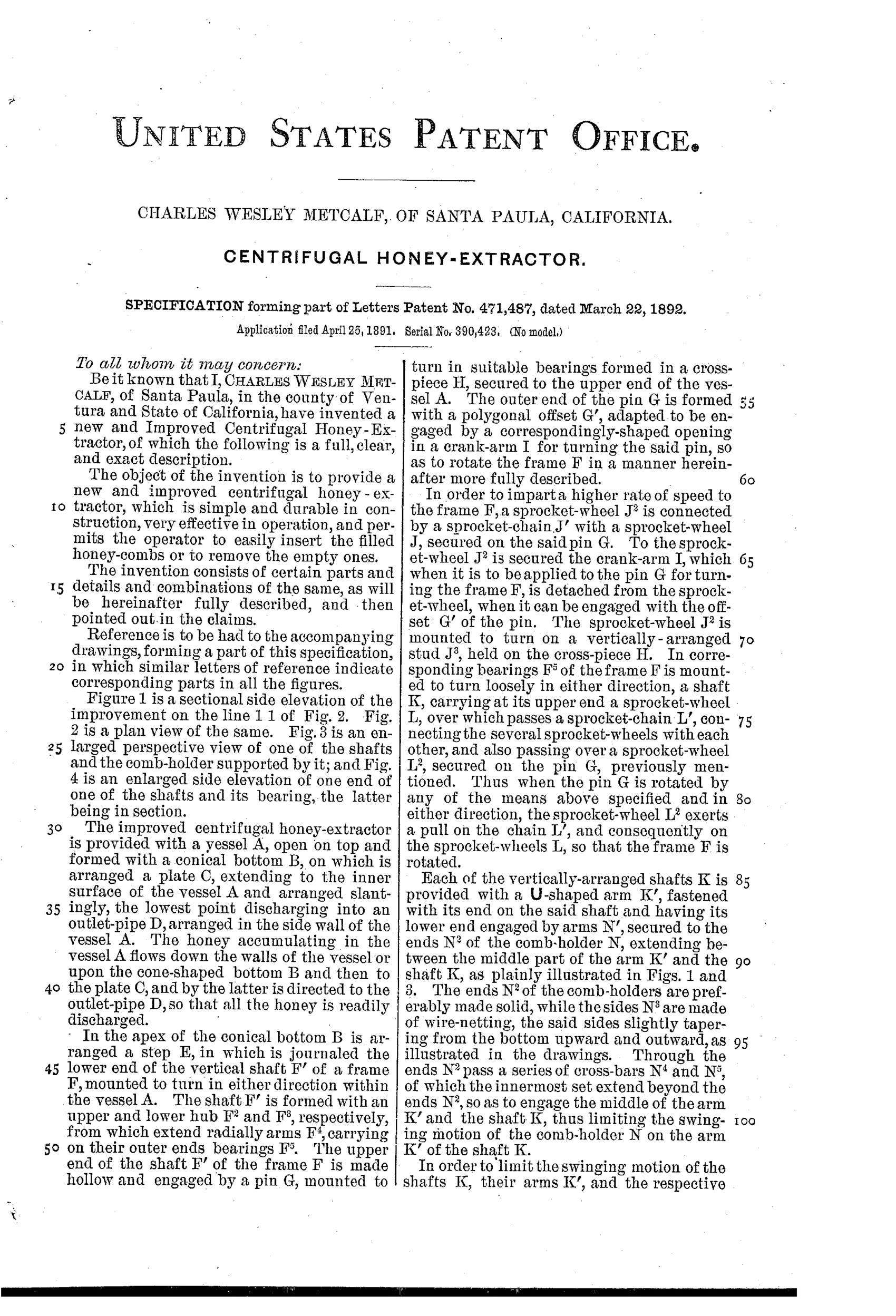
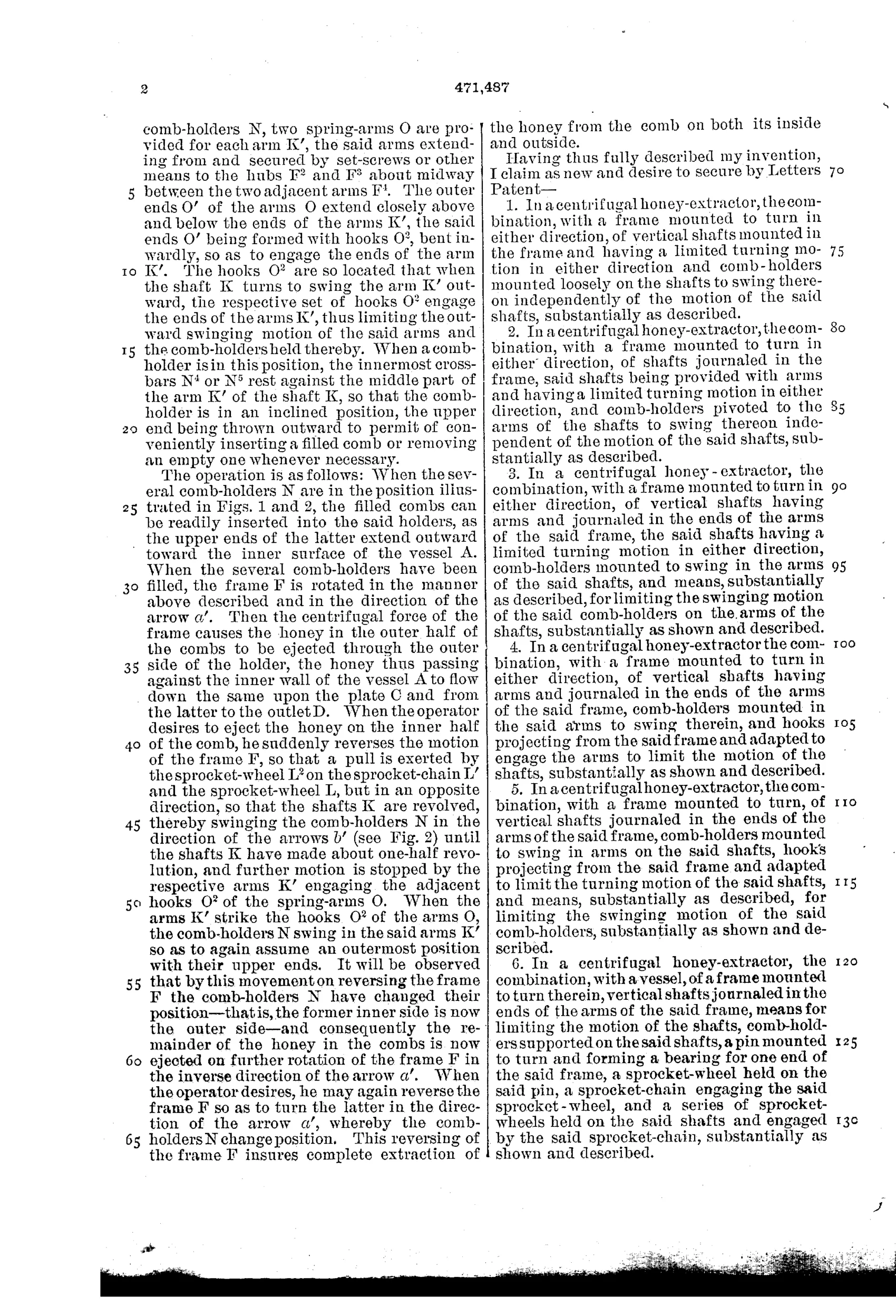
A vertical frame carrying comb-holders is journaled to turn in either direction within a conical-bottomed vessel. Vertical shafts mounted in the frame's arms carry U-shaped arms engaging the comb-holders, letting them swing loosely and independently of the frame's rotation. Sprocket-wheels and a chain connect a hand-crank pin to the shafts so that reversing the crank direction swings the comb-holders about one-half revolution, flipping the combs to expose the opposite side. Centrifugal force during rotation throws honey outward from the combs against the vessel wall, where it runs down onto a sloped plate and out through a discharge pipe.
⬡ What was claimed
“1. In a centrifugal honey-extractor, the combination, with a frame mounted to turn in either direction, of vertical shafts mounted in the frame and having a limited turning motion in either direction and comb-holders mounted loosely on the shafts to swing thereon independently of the motion of the said shafts, substantially as described.”
In plain English: The extractor combines a reversible rotating frame with vertical shafts that let the comb-holders swing freely on the shafts, independent of the frame's own turning.
⬡ In the inventor’s words
“This reversing of the frame F insures complete extraction of the honey from the comb on both its inside and outside.”— Charles Wesley Metcalf, from the specification
Fate unknown
Reversible extractors were widely sold in the 1890s, but I know of no documented Metcalf-built machine; a marked example or a supply-catalog listing would settle it.
⬡ Commentary
Every extractor since Hruschka's 1865 original has faced the same nuisance: honeycomb has two sides, and centrifugal force only empties the one facing outward. The 1880s answer was the reversible-basket extractor, and Metcalf's entry solves the reversing problem with a genuinely tidy trick — the direction of the crank does the work. Spin the handle one way and the frame whirls normally; reverse it and a sprocket-and-chain train swings each comb-holder through a half revolution before the frame picks up speed again. No stopping to lift and flip frames by hand, no separate reversing lever.
Look closely at Fig. 2 and you can see the elegance: the comb-holders hang loosely on their vertical shafts, so during extraction they trail freely like vanes, and only the deliberate reversal of the chain drive flips them. Fig. 3 shows the holder itself — a wire-cloth basket that supports the comb face against the considerable outward pressure, which is what keeps warm, heavy combs from blowing out of the foundation.
Metcalf was working a crowded seam. T.W. Cowan's reversible extractor had already appeared in England, and A.I. Root's catalog carried reversing machines through the 1890s, so this is refinement rather than invention. But the crank-direction reversal is a cleaner user interface than most rivals offered, and a Santa Paula address puts him right in the booming California sage-honey country, where a beekeeper would actually feel the labor this saves.
Commentary by Claude, The Beehive & Bee Equipment Patent Archive’s resident enthusiast