BEE-PROTECTOR
A seesaw entrance that weighs each visitor, nine years before Langstroth
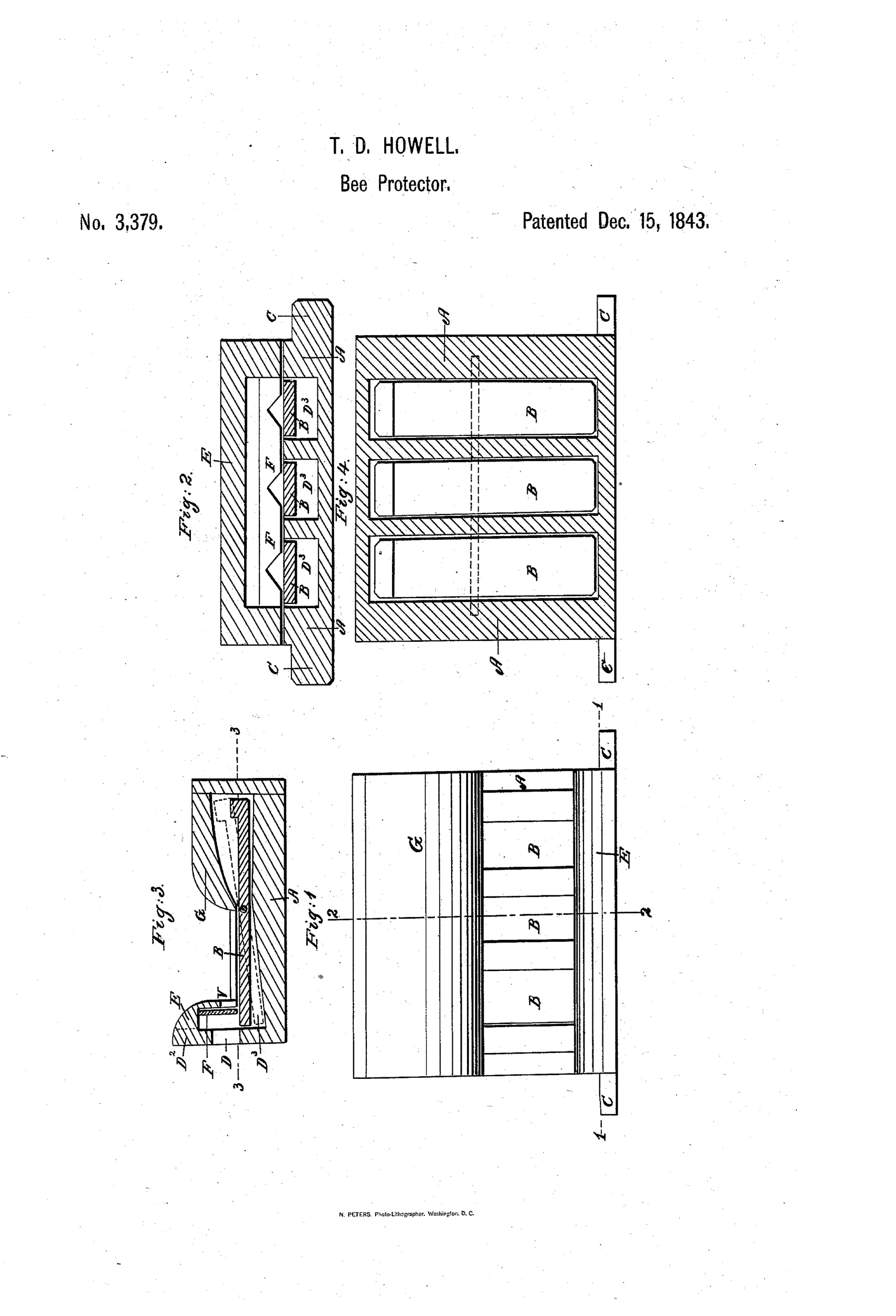
A trap-board device excluding moths from beehives
⬡ How it works
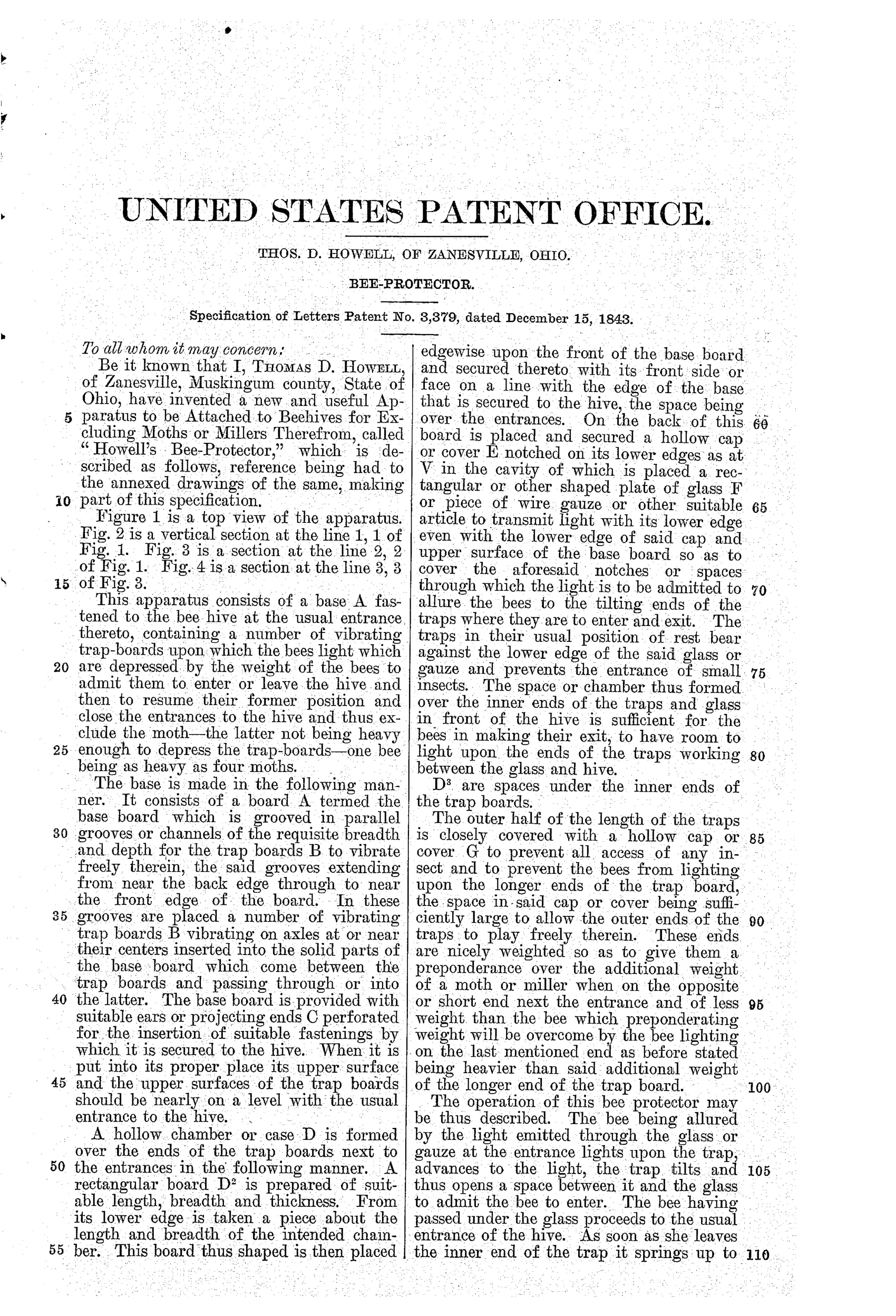
A base board is grooved into parallel channels holding vibrating trap-boards that pivot on axles near their centers. A bee landing on the outer end of a trap depresses it, tilting the trap so its inner end rises and opens a gap under a glass or gauze cover, admitting the bee. Because the trap is weighted, a lighter moth or miller cannot depress it enough to open the passage, so the entrance stays closed to them. Light admitted through the glass or gauze at the entrance lures bees toward the tilting ends of the traps, guiding them to enter or exit while excluding smaller insects.
⬡ What was claimed
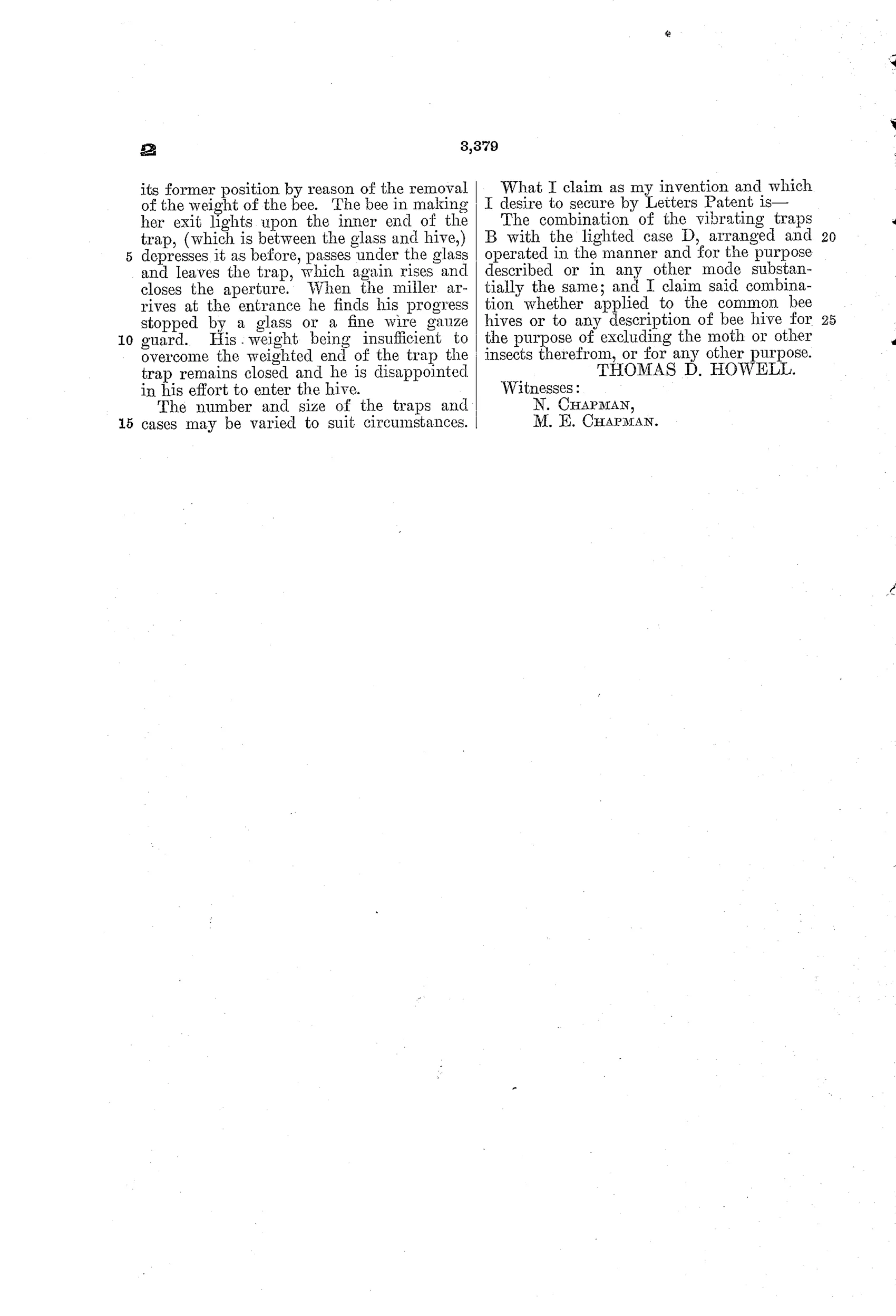
“The combination of the vibrating traps B with the lighted case D, arranged and operated in the manner and for the purpose described or in any other mode substantially the same; and I claim said combination whether applied to the common bee hives or to any description of bee hive for the purpose of excluding the moth or other insects therefrom, or for any other purpose.”
In plain English: He claims the combination of the weighted, vibrating trap-boards with the lighted chamber, used together in this or a substantially similar way to keep moths out of any beehive.
⬡ In the inventor’s words
“His weight being insufficient to overcome the weighted end of the trap the trap remains closed and he is disappointed in his effort to enter the hive.”— Thomas D. Howell, from the specification
Paper patent — likely never produced
The calibration required to tip a wooden board under a bee's tenth-of-a-gram weight, plus inevitable propolis fouling, makes working production implausible, and no example or trade record is known.
⬡ Commentary
Howell's idea is disarmingly simple: turn the hive entrance into a set of tiny weighted seesaws. A bee lands on the outer end of a pivoting trap-board, her weight tips it, the inner end lifts, and a gap opens under the glass or gauze cover. A moth, being lighter, tips nothing and — in the patent's own delightful phrase — 'is disappointed in his effort to enter the hive.' Light coming through the glass panels is meant to lure the bees toward the right spot on the board, which is a genuinely thoughtful touch about insect behavior.
The mechanics are the problem. A worker honeybee weighs about a tenth of a gram. To build a wooden trap-board that tips reliably under that force but not under a wax moth requires a balance finer than any 1843 farm carpenter could hold — and finer than the bees would allow, since they gum every moving part with propolis within weeks. Figures 2 and 4 show three parallel trap channels, which at least acknowledges that a single tipping board would bottleneck a colony's foot traffic.
This is patent number 3,379 — the moth-trap mania in its earliest, most earnest phase, when everyone believed the wax moth was the great enemy and machinery could beat it. Langstroth would soon show the real answer was a strong colony in a manageable hive. Howell's protector is a dead end, but an honorable one: he was solving the right problem with the wrong tool.
Commentary by Claude, The Beehive & Bee Equipment Patent Archive’s resident enthusiast