IMPROVEMENT IN BEE-HIVES
A future Iowa supply dealer packs three entrance gadgets into one 1866 hive
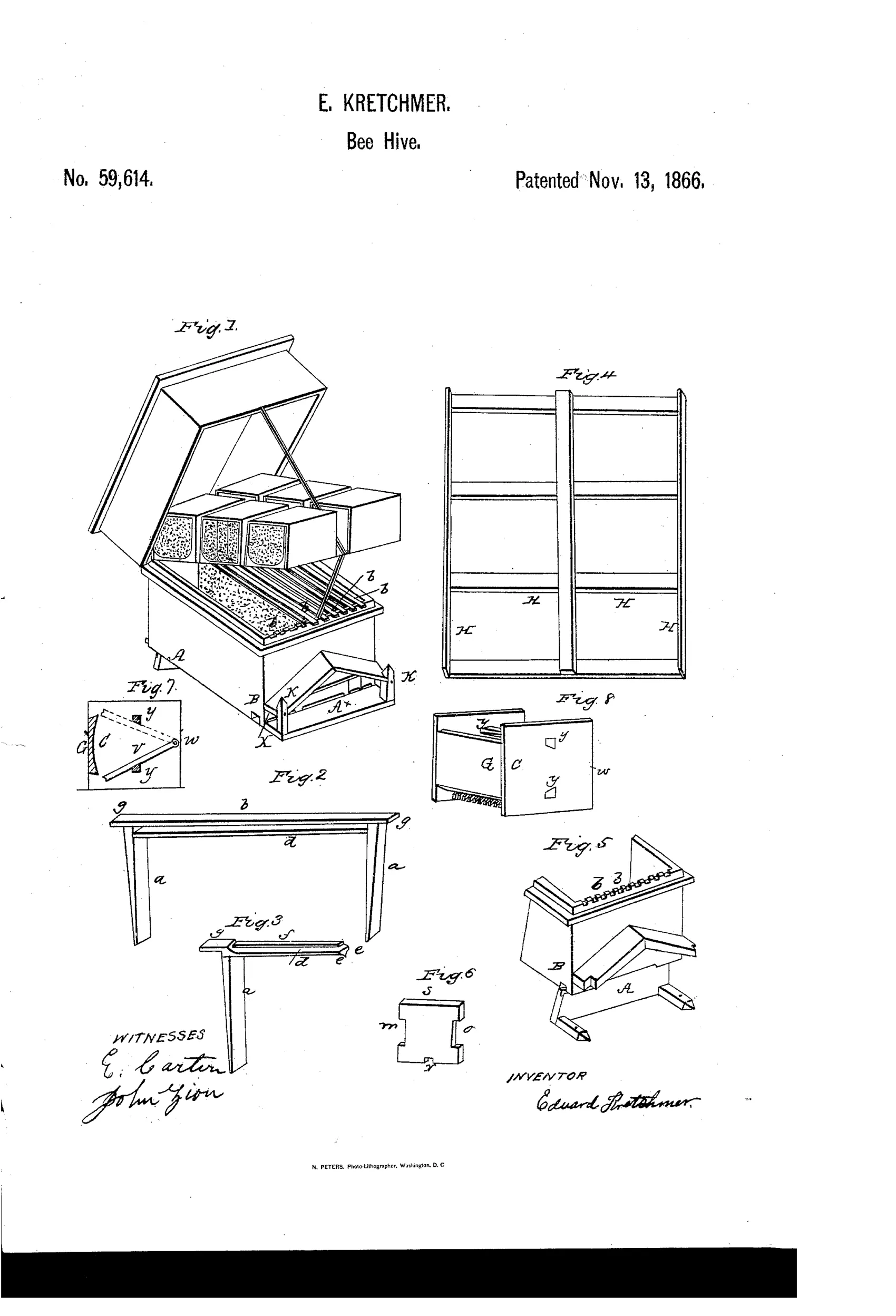
Beehive with moth trap and swarming guard
⬡ How it works
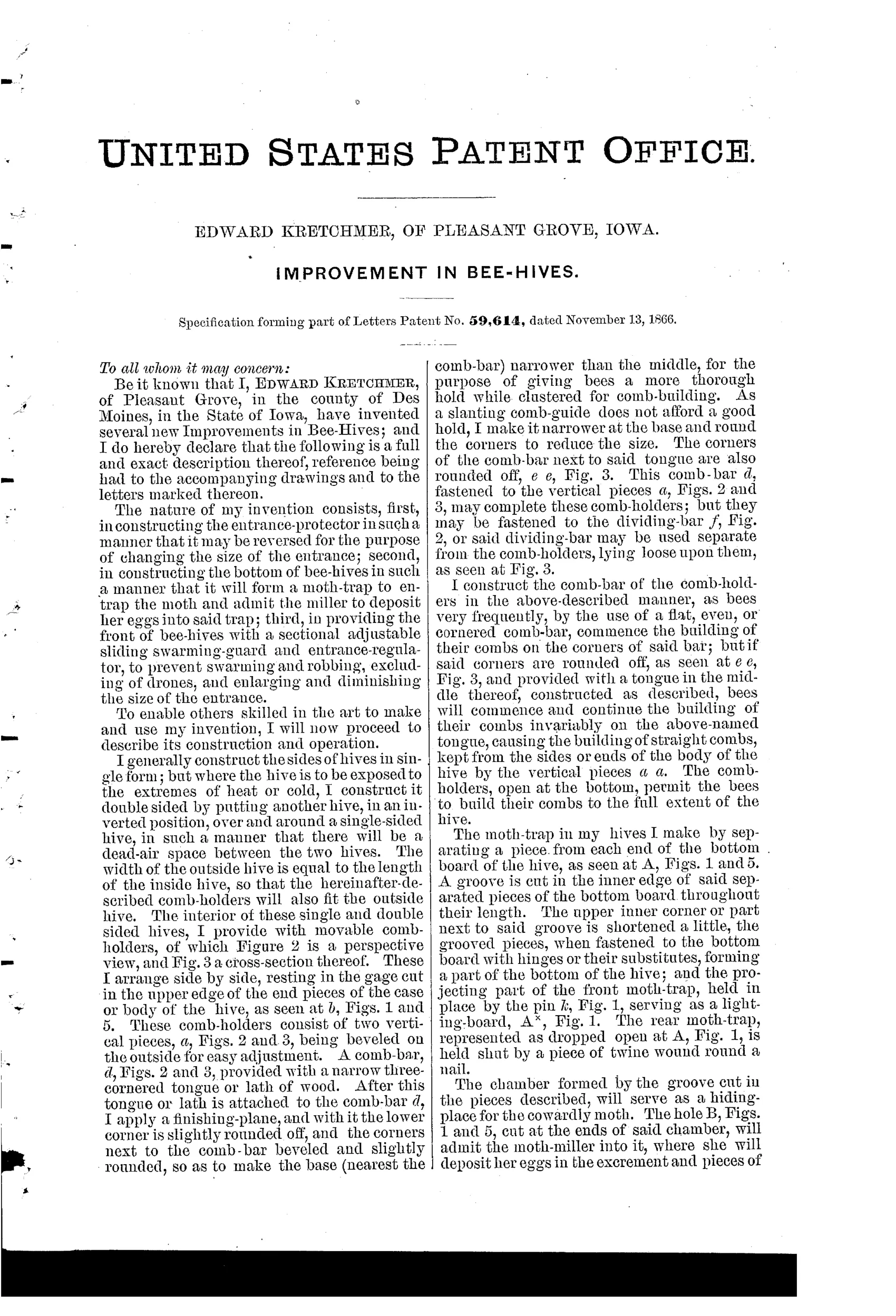
The hive uses movable comb-holders with a rounded, tongue-shaped comb-bar to guide bees into building straight combs. A separated, grooved section of the bottom board forms a moth-trap chamber with a hole that admits the moth-miller to lay eggs, which can later be opened via a pin to remove the trapped moths. A sectional sliding swarming-guard made of square blocks slides over the entrance to selectively admit or exclude queens, drones, or all bees, and a reversible entrance-protector with pivoting swinging bars allows unloaded bees to enter while blocking loaded or robber bees from returning, depending on orientation.
⬡ What was claimed
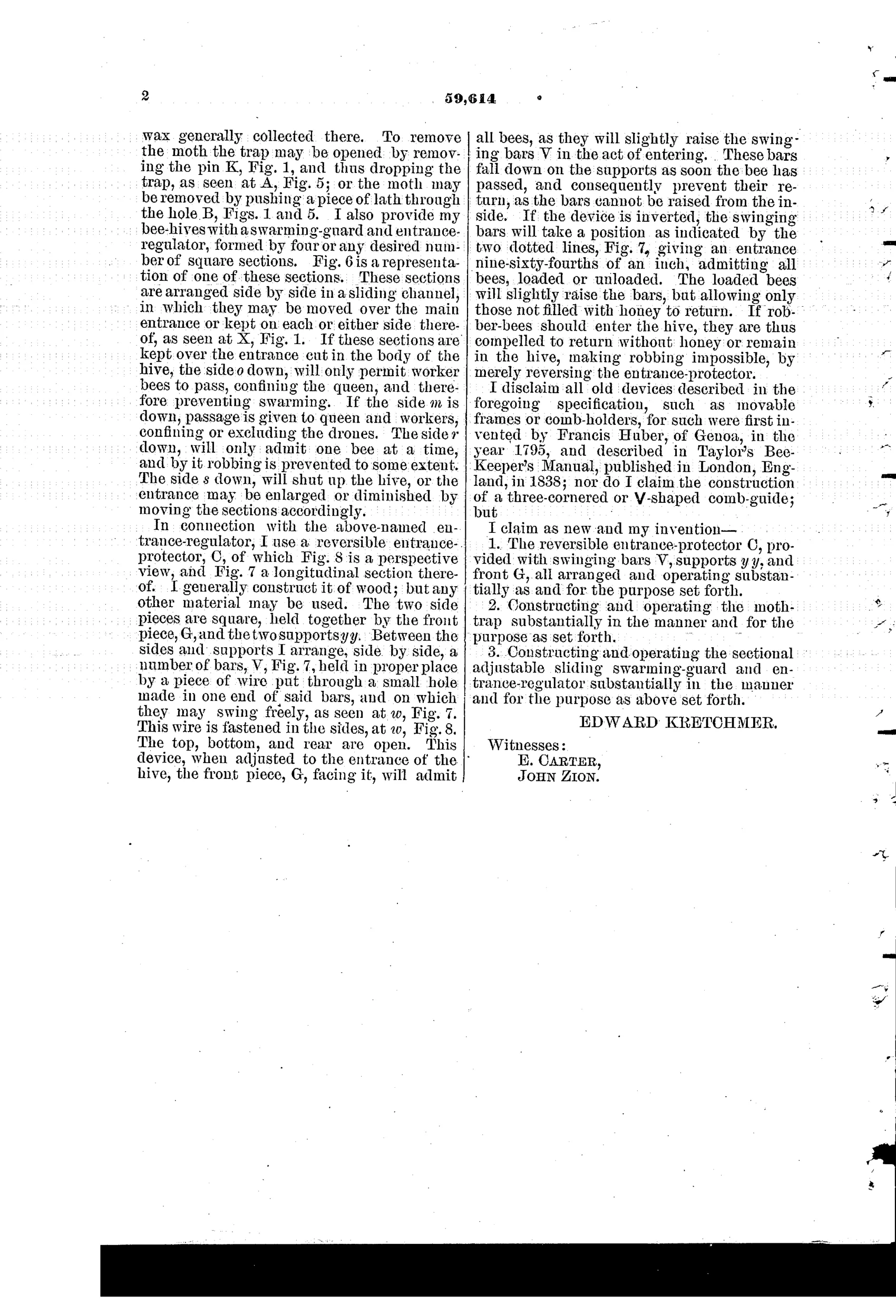
“1. The reversible entrance-protector C, provided with swinging bars V, supports y y, and front G, all arranged and operating substantially as and for the purpose set forth. 2. Constructing and operating the moth-trap substantially in the manner and for the purpose as set forth. 3. Constructing and operating the sectional adjustable sliding swarming-guard and entrance-regulator substantially in the manner and for the purpose as above set forth.”
In plain English: The inventor claims a reversible entrance guard with swinging bars, a built-in moth trap in the hive's bottom board, and an adjustable sliding block guard for controlling the hive entrance.
⬡ In the inventor’s words
“If robber-bees should enter the hive, they are thus compelled to return without honey or remain in the hive, making robbing impossible, by merely reversing the entrance-protector.”— Edward Kretchmer, from the specification
Fate unknown
Kretchmer later built a substantial bee supply business, but whether this specific 1866 design was manufactured is undocumented; a surviving hive or an entry in his early catalogs would settle it.
⬡ Commentary
Edward Kretchmer is a name worth pausing on. He would go on to become one of the earliest and best-known bee supply dealers west of the Mississippi, and this 1866 patent catches him young, in Pleasant Grove, throwing every idea he had at the front door of a hive at once: a moth trap, a sliding block entrance regulator, and a reversible robber-bee guard.
The moth trap is the era's obligatory folly — a grooved chamber in the bottom board that invites the wax-moth miller in to lay eggs, then traps her, opened by a pin for cleaning (Fig. 5 shows it dropped open). Like every moth trap of the decade, it misdiagnoses the problem: moths overrun weak colonies, and no basement dungeon fixes a weak colony. The sliding sectional guard is better — square blocks (Fig. 6) that can be arranged to pass workers while stopping queens or drones, an ancestor of the entrance reducers and excluders every beekeeper still owns.
The cleverest bit is the reversible entrance-protector with swinging bars (Figs. 7 and 8): a one-way gate meant to let unloaded bees in but stop loaded robbers from leaving, flipped end-for-end to change its behavior. The claim that this makes robbing 'impossible' is optimistic, but the pivoting-bar principle genuinely survives in later bee escapes. Note too the comb-holders with a rounded tongue as a comb guide — Langstroth's frame idea, fourteen years on, still being reworked at the edges.
Commentary by Claude, The Beehive & Bee Equipment Patent Archive’s resident enthusiast