Bee Hive.
A padlocked hive that spins shut, with round honey boxes imitating hollow limbs
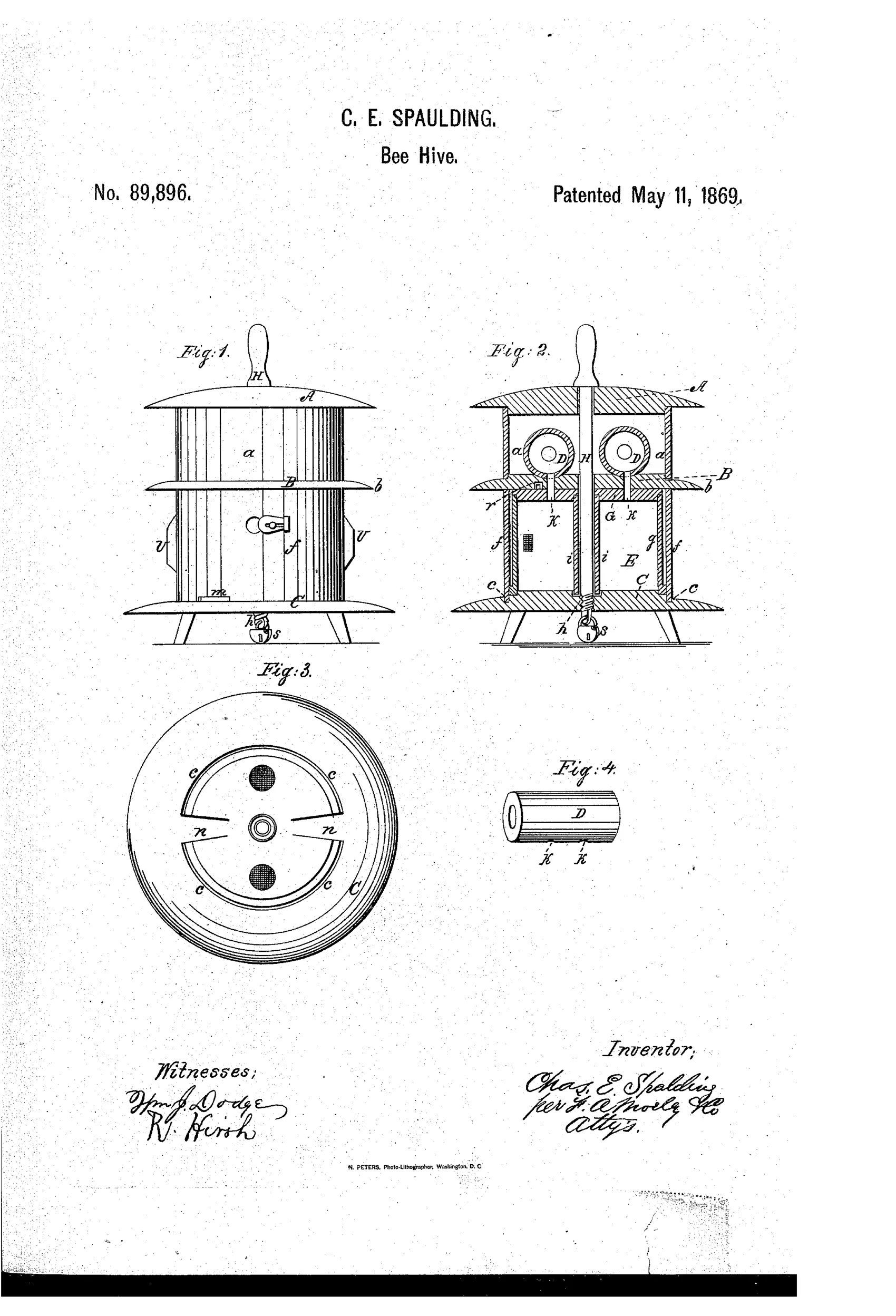
A lockable, revolving bee-hive with removable honey boxes.
⬡ How it works
A central shaft (H) passes through the hive's top, honey-box chamber, diaphragm, and bottom, screwing into the base to bind all parts together and lock the hive against theft with a padlock (s). A revolving outer hoop (f) is turned to align notches with channels cut in the bottom, opening or closing the hive's entrances. A rotating diaphragm (B) is turned to align or misalign holes with those in head (G), opening or sealing passages between the brood chamber (E) and the round honey-boxes (D) above. The honey-boxes are made cylindrical to mimic the hollow limbs bees seek in the wild, and double hoops (f and g) form an insulating double wall around the brood chamber.
⬡ What was claimed
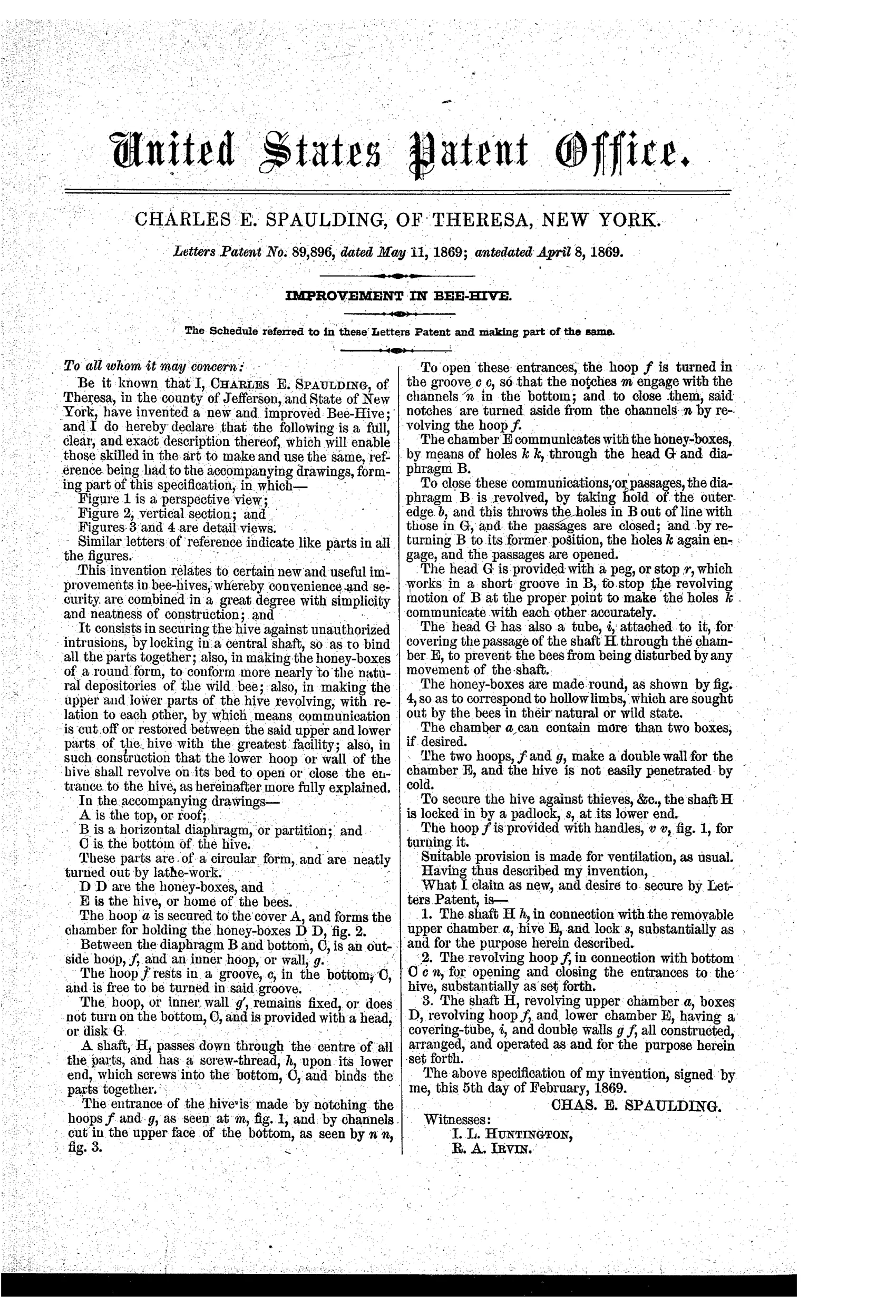
“The shaft H h, in connection with the removable upper chamber a, hive E, and lock s, substantially as and for the purpose herein described.”
In plain English: A single locking shaft running through the hive binds the removable upper chamber, the main brood chamber, and a padlock together to secure the whole hive against tampering.
⬡ In the inventor’s words
“The honey-boxes are made round, as shown by fig. 4, so as to correspond to hollow limbs, which are sought out by the bees in their natural or wild state.”— Charles E. Spaulding, from the specification
Fate unknown
The turned cylindrical construction would have been costly to produce and no manufactured example is documented; a surviving marked hive or period advertisement would settle it.
⬡ Commentary
Spaulding's hive is a good specimen of the anxieties driving 1860s hive design: honey theft and swarm control. His answer to the first is genuinely novel — a single shaft runs from the handle at the crown clear through the honey chamber, diaphragm, and brood box, screwing into the base so a padlock at the bottom binds the whole assembly. Nobody lifts the top and steals your comb honey without a key. It also means the beekeeper needs the key for every inspection, which tells you where his priorities lay.
The entrance mechanism is the clever bit in Fig. 3: rather than a sliding gate, the outer hoop revolves, and turning it brings notches in or out of register with channels in the bottom board, opening or sealing the entrances in one motion. The same rotary logic seals or opens the passages between brood chamber and honey boxes above — twist the diaphragm to align holes with those in the head. It's an all-rotary hive.
The best line in the specification defends the cylindrical honey boxes on the grounds that bees seek hollow limbs in the wild — earnest bee-psychology of the pre-scientific sort. But note what's missing: seventeen years after Langstroth, there are no movable frames anywhere. Bees would fix comb to those round boxes solid, and extraction would mean destruction. Mechanically ingenious, apiculturally already obsolete the day it issued.
Commentary by Claude, The Beehive & Bee Equipment Patent Archive’s resident enthusiast