BEEHIVE.
Thirteen years before Langstroth, a Connecticut man builds a trapdoor floor for wax worms
A self-cleaning bee hive base
⬡ How it works
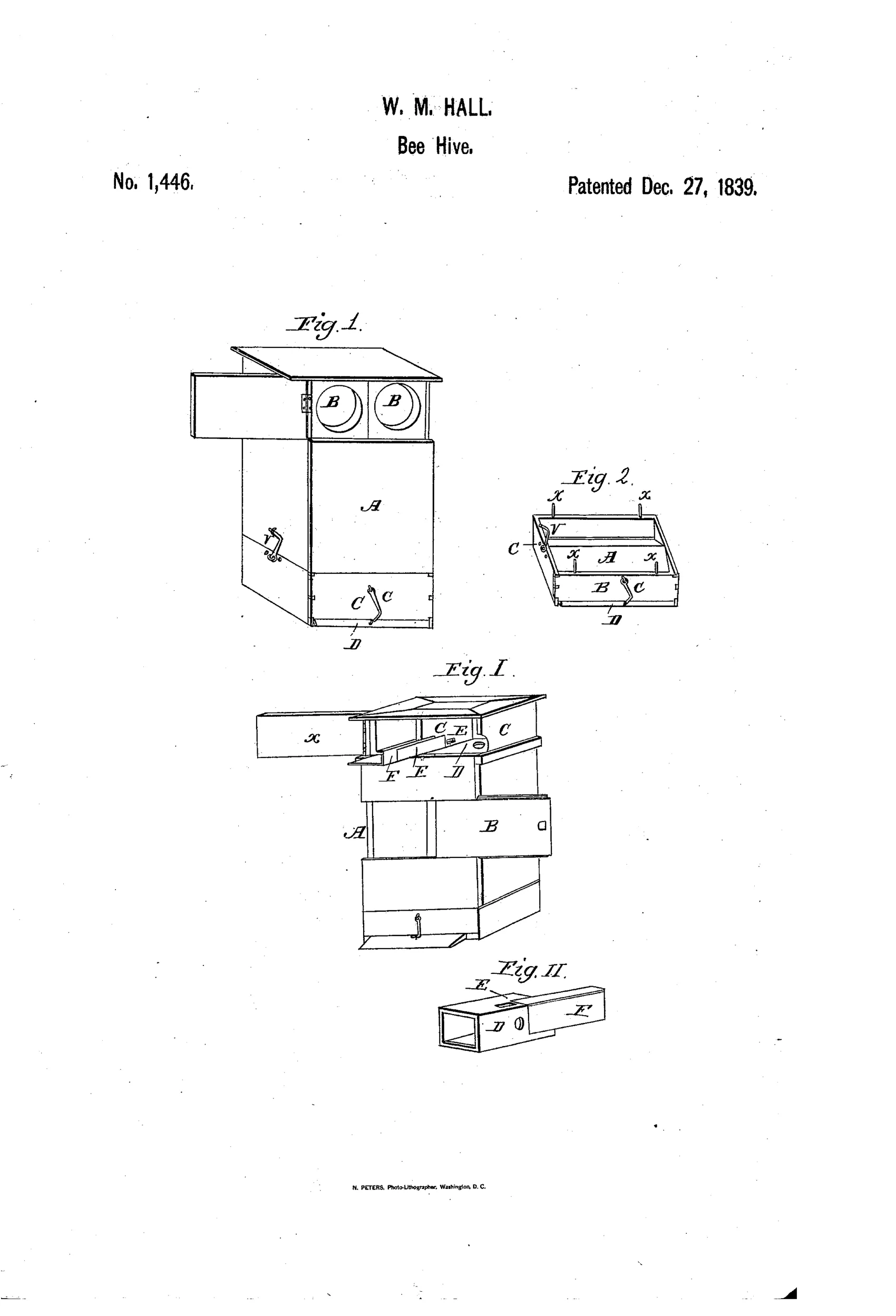
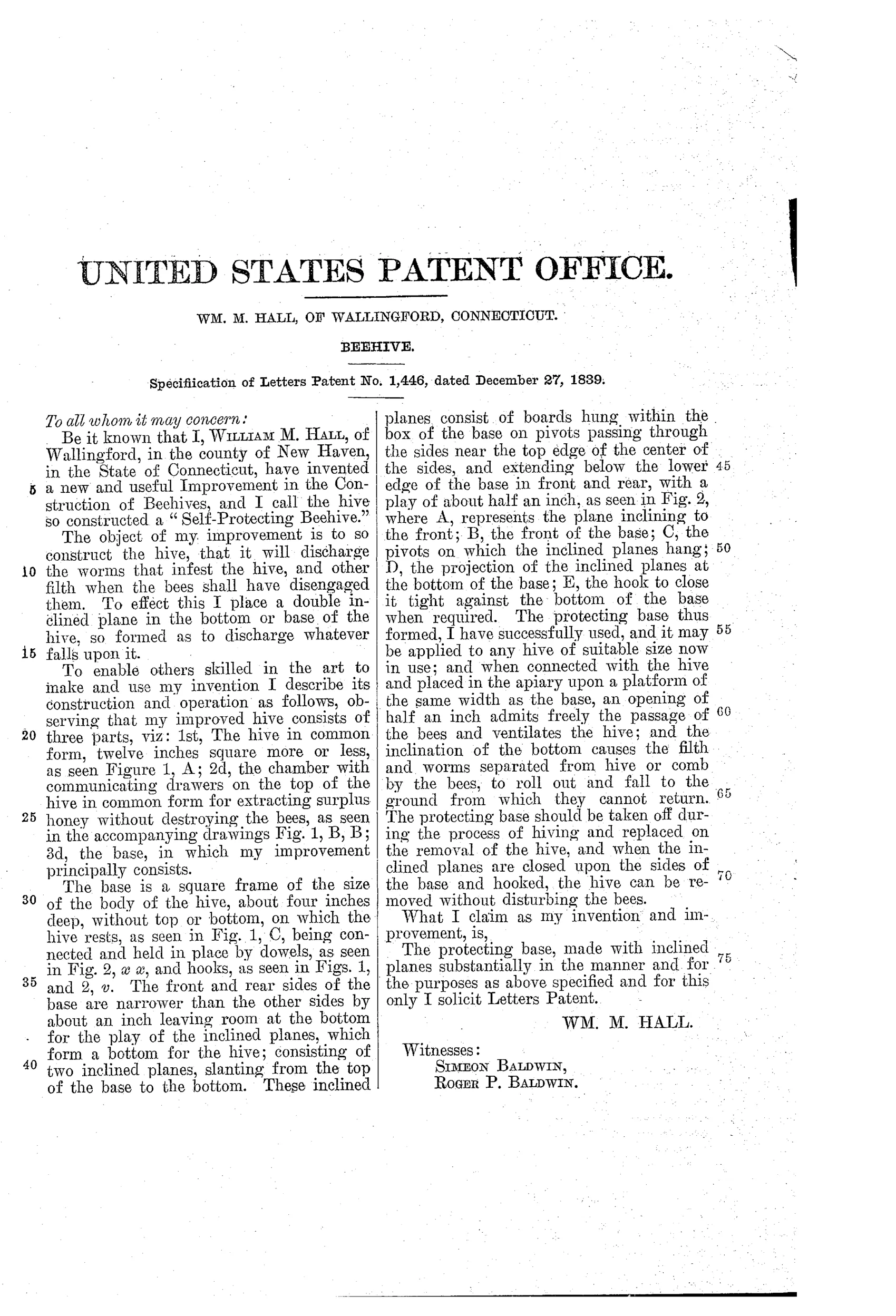
The hive consists of three parts: a common hive body, a surmounting chamber with drawers for extracting surplus honey, and a base with hinged double inclined planes. The inclined planes hang on pivots within the base frame and slant from the top center down to the front and rear edges, forming a self-cleaning bottom. Filth and worms dislodged by the bees roll down the slanted planes and fall through a half-inch gap to the ground below, where they cannot return. Hooks allow the inclined planes to be closed tight against the base sides so the hive can be moved without disturbing the bees.
⬡ What was claimed
“The protecting base, made with inclined planes substantially in the manner and for the purposes as above specified and for this only I solicit Letters Patent.”
In plain English: He claims only the hinged double-inclined-plane base that lets filth and worms fall out of the hive while keeping bees in.
⬡ In the inventor’s words
“The object of my improvement is to so construct the hive, that it will discharge the worms that infest the hive, and other filth when the bees shall have disengaged them.”— William M. Hall, from the specification
Fate unknown
No production record or surviving example is documented for this 1839 design; a marked hive or period advertisement from Wallingford would settle it.
⬡ Commentary
Patent No. 1,446 — a four-digit patent number, issued three years after the Patent Office started numbering from scratch. This puts Hall in the very first wave of American beehive patents, thirteen years before Langstroth's bee space rewrote everything. And like nearly all of that first wave, his enemy is the wax moth. The larvae were the great terror of pre-modern beekeeping, and inventors attacked them with traps, drawers, and gadgets of every description.
Hall's answer is more elegant than most: instead of trapping the worms, get rid of the floor. His base holds two hinged inclined planes slanting down from a central ridge, with a half-inch gap at the front and rear edges. When bees dislodge a larva or drop debris, it rolls down the slope and falls out of the hive entirely — gravity as janitor. The hooks that snug the planes tight against the base sides are a practical touch, letting you close everything up to move the hive. The upper chamber with honey drawers is standard patent-hive fare for the era; his claim, sensibly, covers only the base.
Does it work? Partially. Bees do carry out debris, and a self-clearing bottom would help — modern screened bottom boards for mite control are a distant cousin of the same instinct. But the worms that matter burrow into comb the bees can't reach; no floor design fixes that. An honest, mechanically sound answer to a problem it can only half solve.
Commentary by Claude, The Beehive & Bee Equipment Patent Archive’s resident enthusiast