IMPROVEMENT IN BEE-HIVES
Small boxes sell higher; bees prefer big ones — Wheeler splits the difference
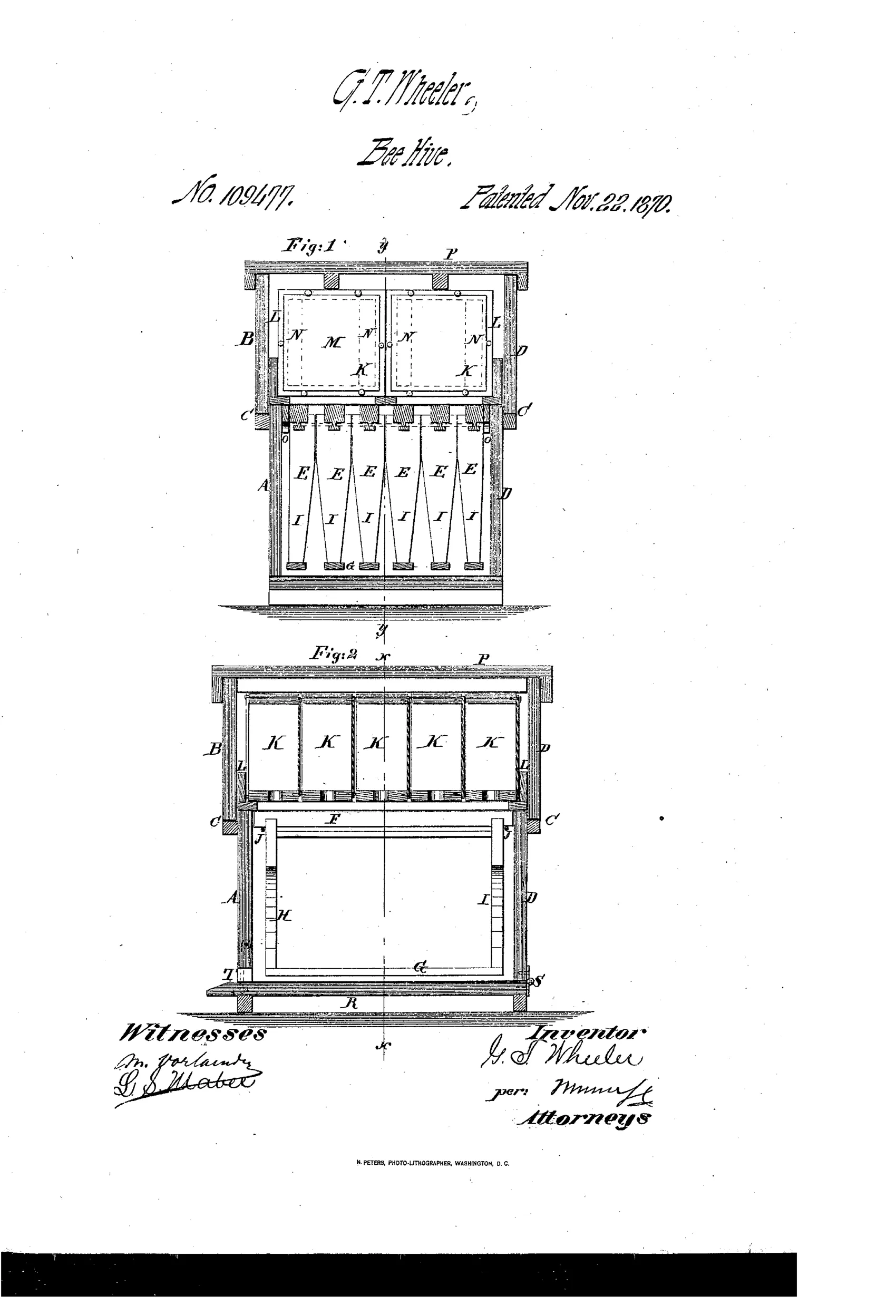
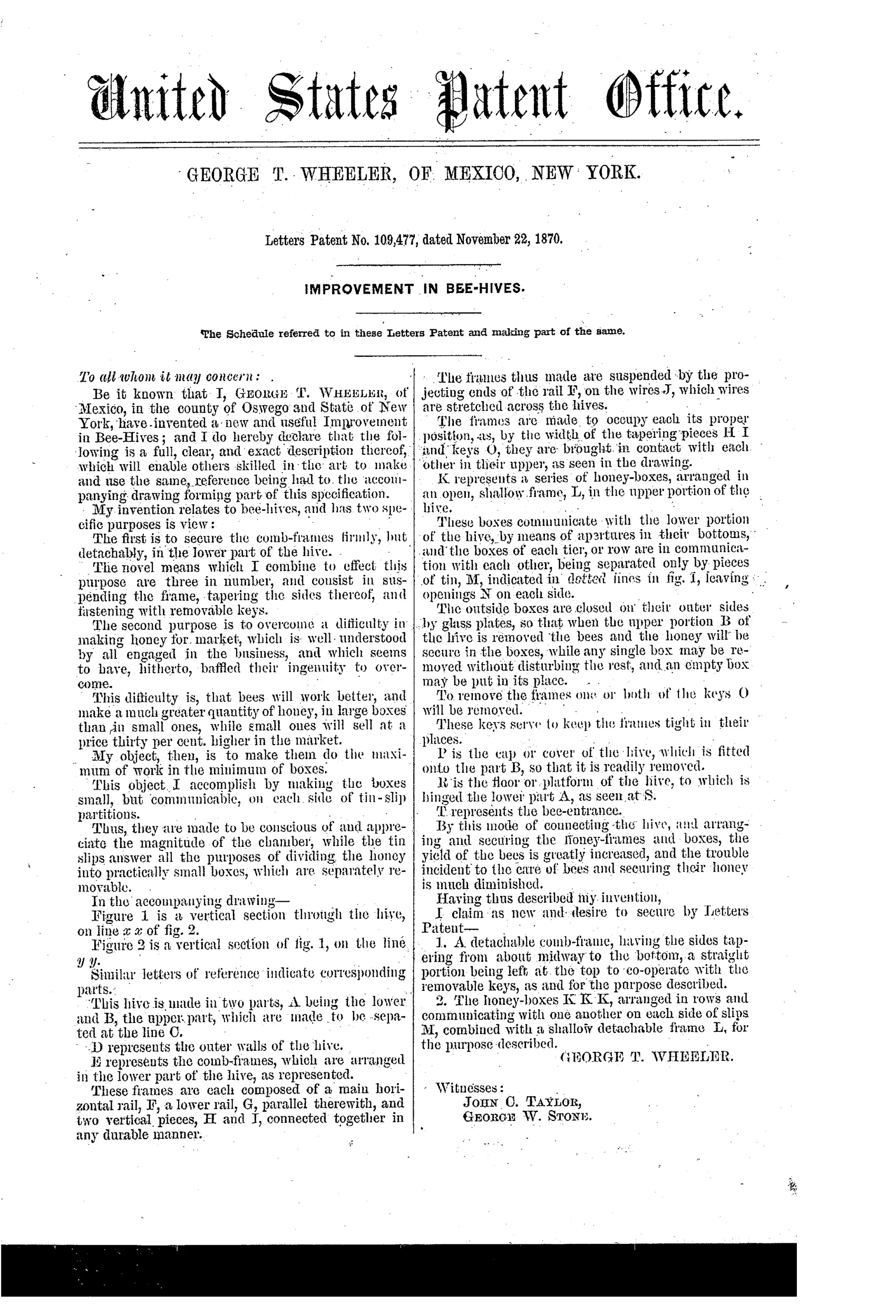
Two-part bee-hive with detachable frames and honey-boxes
⬡ How it works
The hive is built in two separable parts, a lower brood chamber and an upper super, divided at a horizontal line. The lower part holds detachable comb-frames whose sides taper toward the bottom and are suspended by rail ends resting on stretched wires, secured in place with removable keys. The upper part contains a shallow frame holding a row of small honey-boxes that communicate with each other and with the lower chamber through apertures, separated only by thin tin slips, allowing bees to treat many small boxes as one large chamber while still permitting individual boxes to be removed and sold without disturbing the rest.
⬡ What was claimed
“1. A detachable comb-frame, having the sides tapering from about midway to the bottom, a straight portion being left at the top to co-operate with the removable keys, as and for the purpose described. 2. The honey-boxes K K K, arranged in rows and communicating with one another on each side of slips M, combined with a shallow detachable frame L, for the purpose described.”
In plain English: The patent covers a comb-frame with tapered lower sides held by removable keys, plus a set of small honey-boxes arranged in rows that communicate with each other through tin partitions and sit in a shallow removable frame.
⬡ In the inventor’s words
“This difficulty is, that bees will work better, and make a much greater quantity of honey, in large boxes than in small ones, while small ones will sell at a price thirty per cent. higher in the market.”— George T. Wheeler, from the specification
Fate unknown
The section-box idea was clearly commercialized by others, but no surviving Wheeler hive or trade listing is documented; a marked specimen or period advertisement would settle it.
⬡ Commentary
Wheeler names the economic problem outright, and it's the best line in the patent: bees fill large boxes readily, but small boxes of comb honey fetched thirty percent more at market. His answer is a row of small honey-boxes divided only by thin tin slips, with apertures letting the bees pass freely between them. To the colony it reads as one continuous chamber; to the beekeeper it's a shelf of individually removable, individually saleable units. That is exactly the logic that would later win out in the section-box comb honey trade of the 1870s-90s, so this 1870 patent is an early and genuinely thoughtful entry in that race.
The lower half is odder. The brood frames taper from midway down to the bottom and hang from rails resting on stretched wires, locked with removable keys. The taper eases withdrawal of a propolized frame, which any beekeeper will appreciate, but the wire-and-key suspension is fussier than the simple rabbeted ledge Langstroth had already shown, and it's the kind of refinement that adds parts without adding much.
Fig. 2 rewards a close look: five boxes marked K sitting shoulder to shoulder over the open brood chamber, the whole hive cleanly divided at the horizontal line — recognizably a super over a brood box. Wheeler was working inside the Langstroth architecture and pushing on the right problem, even if his particular hardware left no obvious trace.
Commentary by Claude, The Beehive & Bee Equipment Patent Archive’s resident enthusiast