IMPROVEMENT IN MOTH-TRAPS.
A lobster pot for wax moths, bolted to the end of the hive
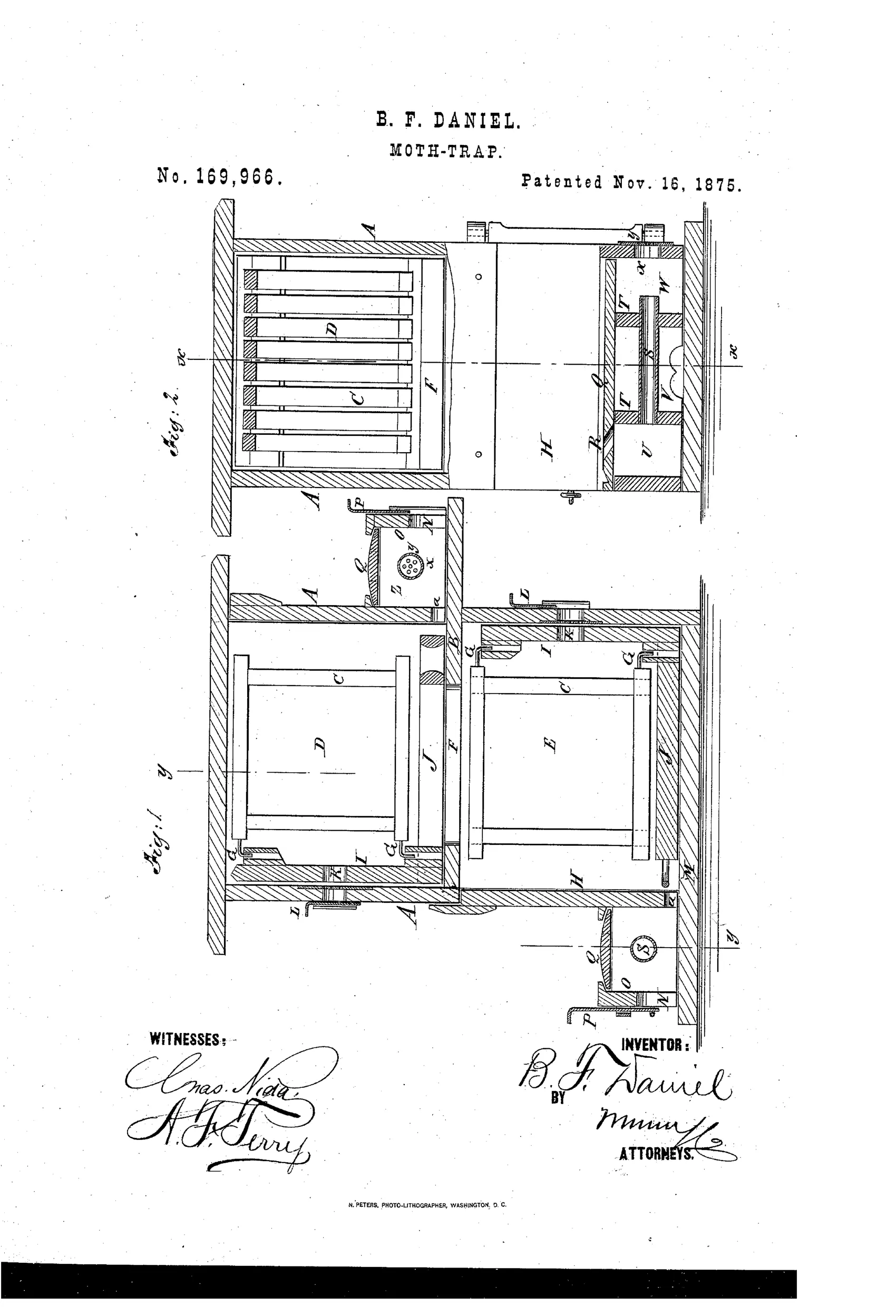
A moth-trap built into a bee-hive.
⬡ How it works
The hive body is divided by a perforated horizontal partition into upper and lower compartments, each fitted with removable honey-frames on sliding bed-pieces. A separate trap assembly at the hive's end is divided by vertical partitions into three compartments (U, V, W) linked by a tube (S); a moth entering through an angled orifice in a sliding cover passes into compartment U, through the tube, and into compartment W, from which it cannot find its way back to the bee-entrance. Bees, by contrast, reach the hive interior through separate lower openings beneath the moth-tube, bypassing the trap entirely. Sliding covers, doors, and slides allow access to frames and control of air and entrances.
⬡ What was claimed
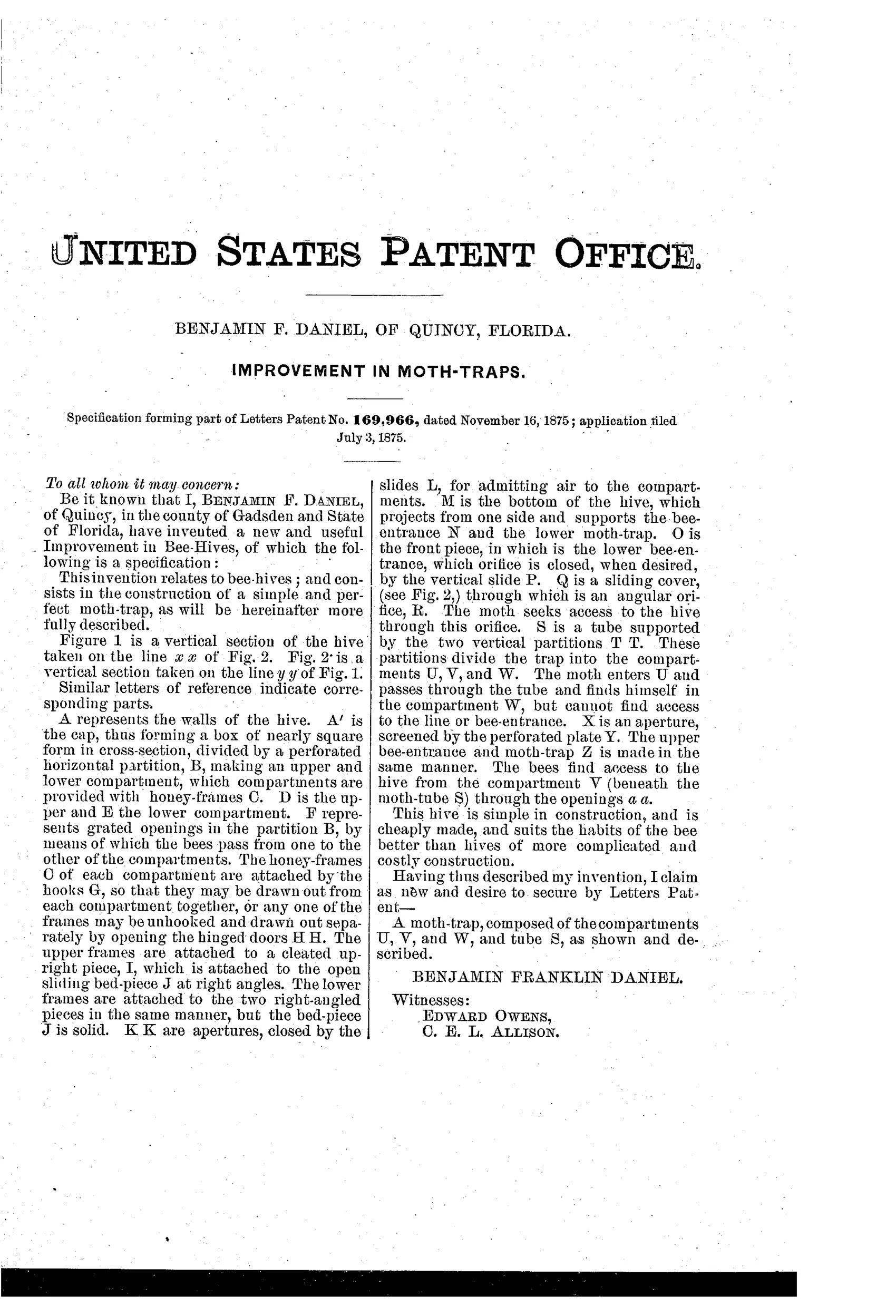
“A moth-trap, composed of the compartments U, V, and W, and tube S, as shown and described.”
In plain English: The invention claims a moth-trap made of three connected compartments (U, V, W) joined by a tube (S), arranged so a moth can enter but not find its way back out.
⬡ In the inventor’s words
“This hive is simple in construction, and is cheaply made, and suits the habits of the bee better than hives of more complicated and costly construction.”— Benjamin Franklin Daniel, from the specification
Fate unknown
No manufactured example or trade listing is documented; a surviving hive or period advertisement from north Florida would settle it.
⬡ Commentary
Twenty-three years after Langstroth, Benjamin Franklin Daniel of Quincy, Florida was still fighting the war that sold most pre-Langstroth patent hives: the wax moth. His answer is essentially a lobster pot in wood. Look at the right end of Fig. 2 — the three little compartments U, V, W joined by tube S. A moth enters through an angled orifice, wanders through the tube, and ends up in a dead-end chamber it supposedly cannot navigate back out of. Bees use separate openings beneath the trap and never see any of it. That's the whole claim: three boxes and a tube.
The rest of the hive is more conventional than the moth-trap billing suggests — a perforated horizontal partition dividing the body into two frame chambers, frames riding on sliding bed-pieces, which shows Daniel had absorbed the movable-frame lesson even while chasing an older obsession.
The mechanical flaw is the premise. Wax moths follow hive odor to where the bees are; there's no reason a gravid female would prefer Daniel's decoy orifice over the actual entrance, and moths in a wooden box aren't the problem anyway — larvae in the comb are. Beekeepers eventually learned the real moth defense is a strong colony, not architecture. Daniel's own boast that the hive 'suits the habits of the bee' is charming, but it suits the habits of the moth rather less. A well-drawn entry in a doomed genre.
Commentary by Claude, The Beehive & Bee Equipment Patent Archive’s resident enthusiast