BEEHIVE.
An 1860 hive that wired copper and zinc together to electrify the wax moth
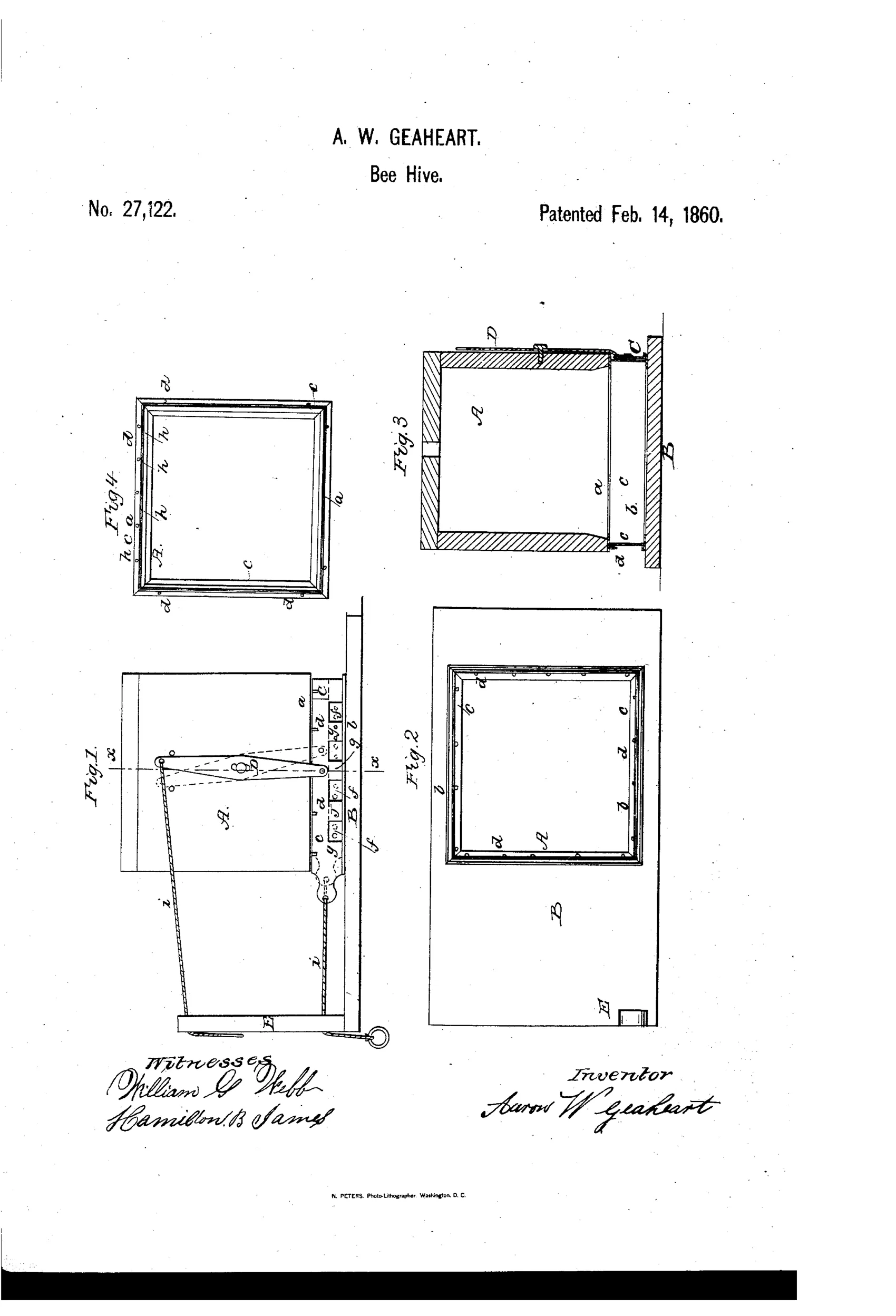
Beehive with galvanic metal strips to deter moth-millers
⬡ How it works
A copper strip is secured to the lower edges of the hive, and a corresponding zinc strip is secured to the platform or bottom that supports the hive. A zinc band rests vertically between these strips and is held in place by small pins projecting from the hive's lower edges. Dew, dampness, and moisture create a slight galvanic current between the copper and zinc, which is intended to prevent moth-millers from depositing eggs at the hive's base. A sliding door with matching notches for bee ingress/egress and small ventilation holes is pivoted to a vibratory lever and operated by cords running to a distant standard, allowing the beekeeper to open or close the entrance without disturbing the bees.
⬡ What was claimed
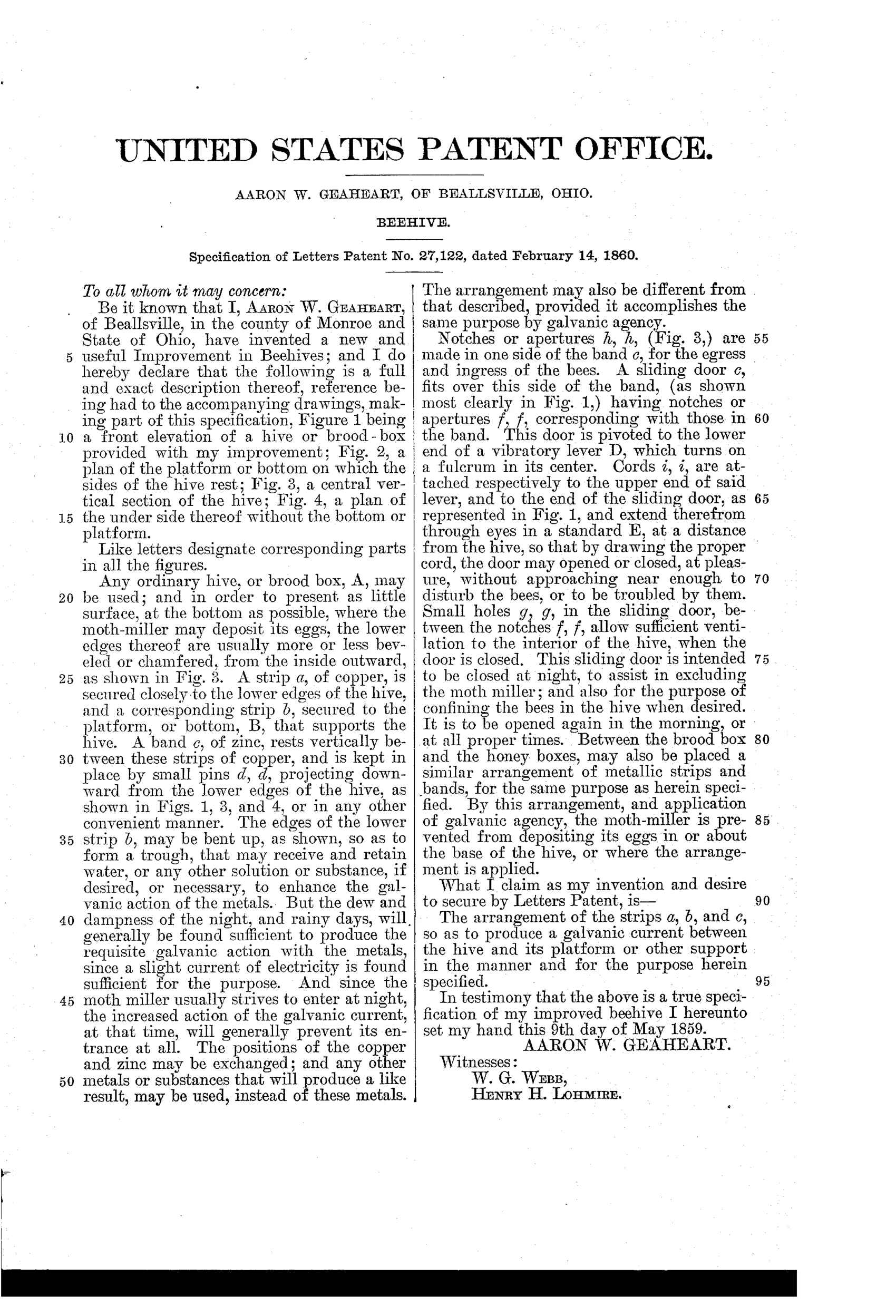
“The arrangement of the strips a, b, and c, so as to produce a galvanic current between the hive and its platform or other support in the manner and for the purpose herein specified.”
In plain English: The invention claims the specific arrangement of copper, zinc, and connecting metal strips that generates a mild electric (galvanic) current between the hive and its platform to deter moth-millers.
⬡ In the inventor’s words
“And since the moth miller usually strives to enter at night, the increased action of the galvanic current, at that time, will generally prevent its entrance at all.”— Aaron W. Geaheart, from the specification
Paper patent — likely never produced
The galvanic mechanism is physically ineffective against moths, no manufactured example or trade record is known, and the design left no trace in the equipment literature.
⬡ Commentary
Eight years after Langstroth showed the world that the answer to the wax moth was a strong colony in a movable-frame hive, Aaron Geaheart of Beallsville, Ohio went a different direction: he built a battery into the doorstep. A copper strip runs along the hive's lower edges, a zinc strip lines the platform beneath, and a zinc band bridges them. Overnight dew was supposed to complete the circuit, generating a faint galvanic current across the very threshold where the moth-miller lands to lay her eggs. His specification even notes, with real ingenuity, that the current would be strongest at night — exactly when the moth flies. Fig. 3, the section, is where to look: the tiny hatched strips labeled a, b, c at the base are the whole invention.
The trouble is dosage. A dew-wetted copper-zinc couple produces a current so feeble a moth would never notice it, let alone be repelled. This is 1860s electrical enthusiasm applied to an entomological problem, and it belongs squarely with the moth traps and moth-proof palaces that crowd the pre-Langstroth-consensus decades.
Don't skip the sliding entrance door in Fig. 1, though — pivoted to a lever and worked by cords from a distant post, so the keeper could shut the hive without approaching it. That remote-control detail is more practical than the claim the patent actually rests on.
Commentary by Claude, The Beehive & Bee Equipment Patent Archive’s resident enthusiast