IMPROVEMENT IN BEE-HIVES
The frames ARE the hive wall — Russell dispenses with the box entirely
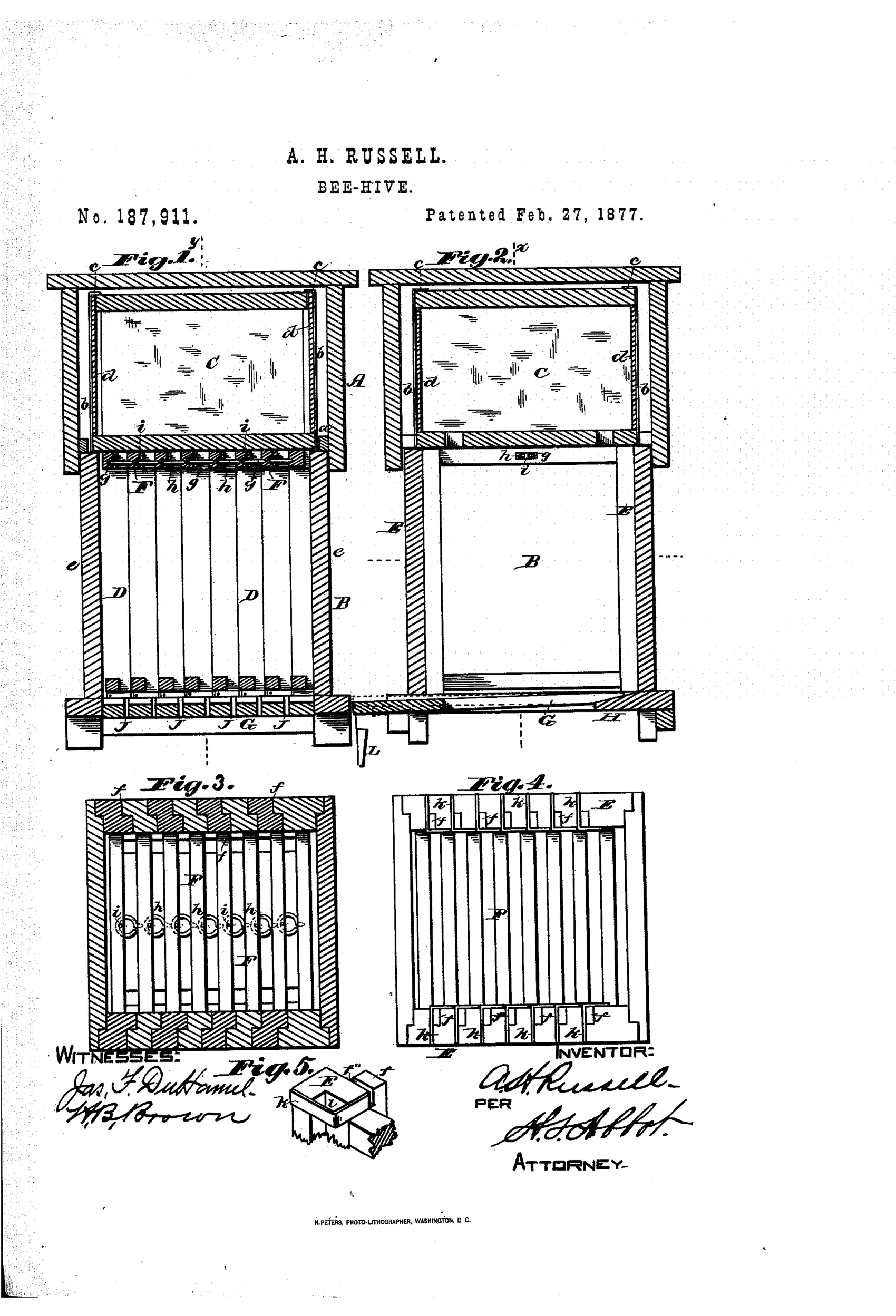
Bee-hive with interlocking comb-frames and adjustable bottom board
⬡ How it works
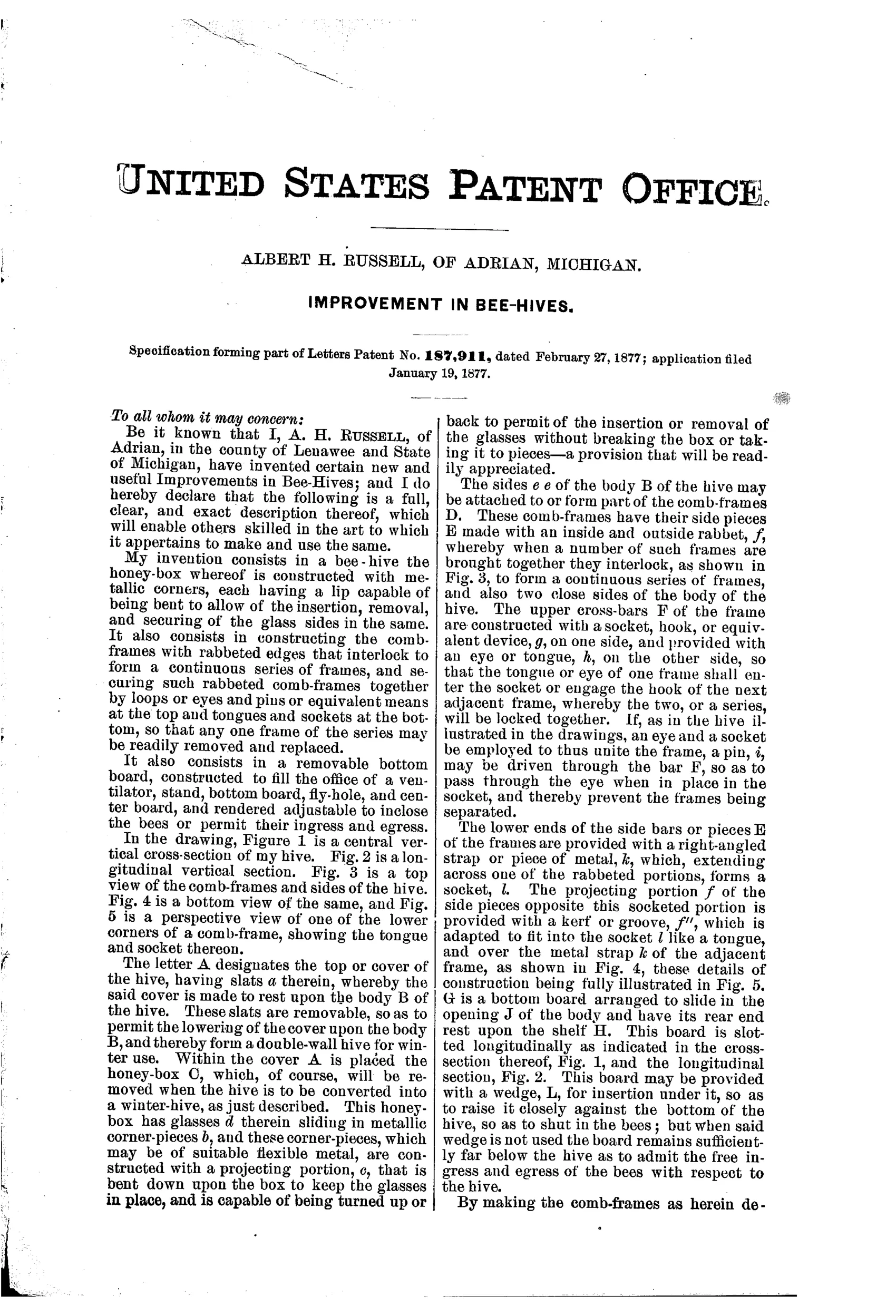
The hive's cover has a honey-box with glass sides held by bent metallic corner lips that can be turned up to insert or remove glasses without breaking the box. The comb-frames forming the brood chamber body have rabbeted side pieces that interlock, with hooks and eyes at the top and tongues and sockets at the bottom, so a series of frames lock together securely yet can be individually removed. A removable, slotted bottom board slides in an opening in the hive body and rests on a shelf, serving as ventilator, stand, bottom board, fly-hole, and center board; a wedge can be inserted beneath it to close the hive or left out to allow bees free ingress and egress.
⬡ What was claimed
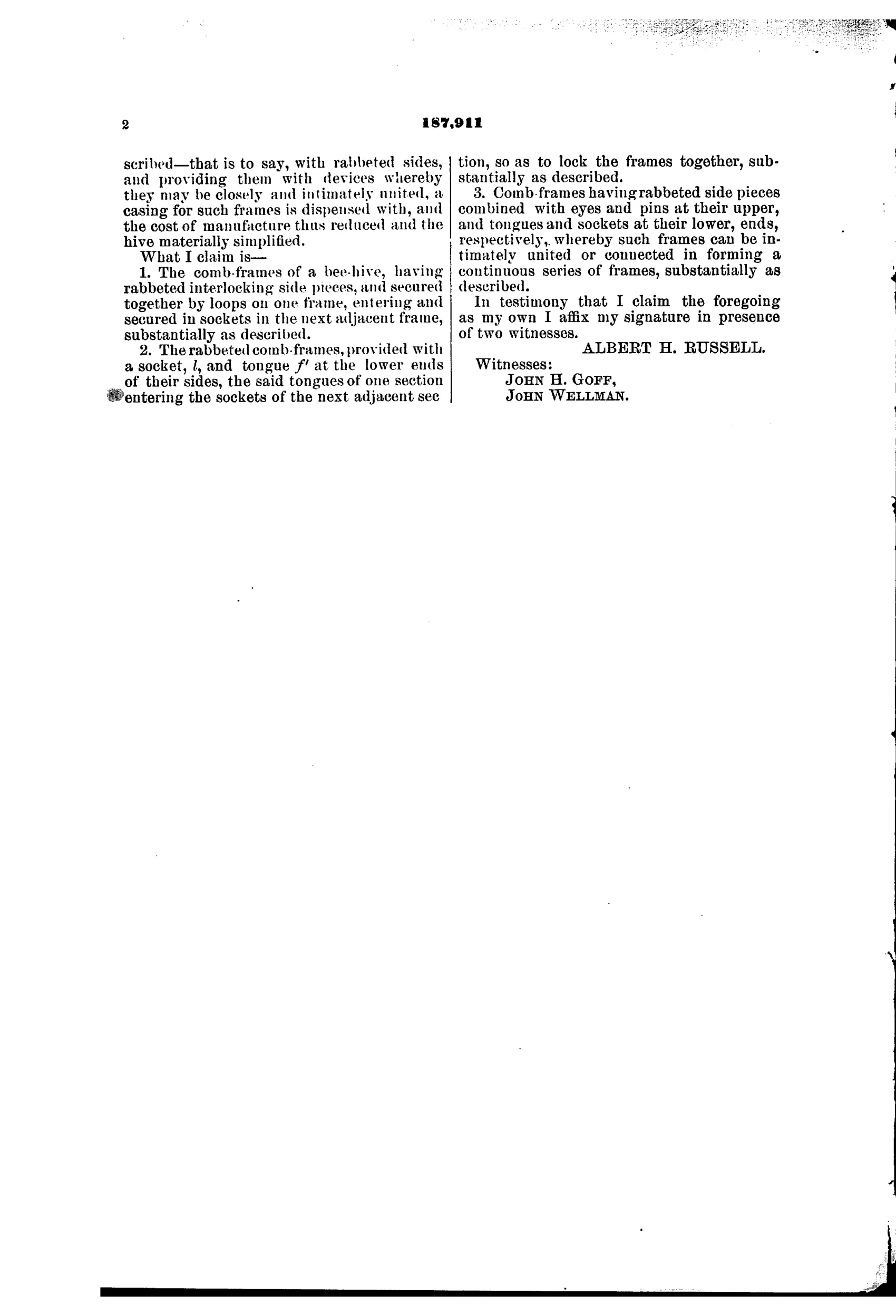
“The comb-frames of a bee-hive, having rabbeted interlocking side pieces, and secured together by loops on one frame, entering and secured in sockets in the next adjacent frame, substantially as described.”
In plain English: The comb-frames have rabbeted edges that interlock, and are held together by loops on one frame fitting into sockets on the next.
⬡ In the inventor’s words
“By making the comb-frames as herein described—that is to say, with rabbeted sides, and providing them with devices whereby they may be closely and intimately united, a casing for such frames is dispensed with, and the cost of manufacture thus reduced and the hive materially simplified.”— Albert H. Russell, from the specification
Paper patent — likely never produced
The frame-as-wall scheme runs against propolis and practical management, and no manufactured example or trade listing is known; it appears to have stayed on paper.
⬡ Commentary
Twenty-five years after Langstroth, most inventors were refining the frame inside the box. Russell asked a more radical question: why have a box at all? His comb-frames have rabbeted side pieces that lock edge-to-edge — hooks and eyes at top, tongues and sockets at bottom — so a row of frames becomes the brood chamber itself. His stated aim is disarmingly practical: skip the casing, cut the cost. Fig. 3 and Fig. 4 show the interlocked row from above and below, and the little Fig. 5 perspective of a corner tongue is the whole invention in miniature.
The trouble is that this trades away exactly what made Langstroth's frames revolutionary. Movable frames work because they hang freely inside a rigid box with bee-space around them. Make the frames structural and every joint becomes a seam the bees will cement with propolis; pulling one frame means breaking the wall of the hive open, in weather and in temper. The rabbets that keep rain out are the same rabbets that keep the beekeeper out.
The rest is period-standard fare done with some care: a glass-sided honey box in the cover, held by bendable metal corner lips so a cracked pane can be swapped without wrecking the box, and a slotted bottom board that Russell cheerfully credits with five jobs at once. A clever, economical dead end — the industry went the other way, toward standardized boxes and interchangeable everything.
Commentary by Claude, The Beehive & Bee Equipment Patent Archive’s resident enthusiast