BEEHIVE
A decade before Langstroth, two Ohioans stack topless boxes and add supers underneath
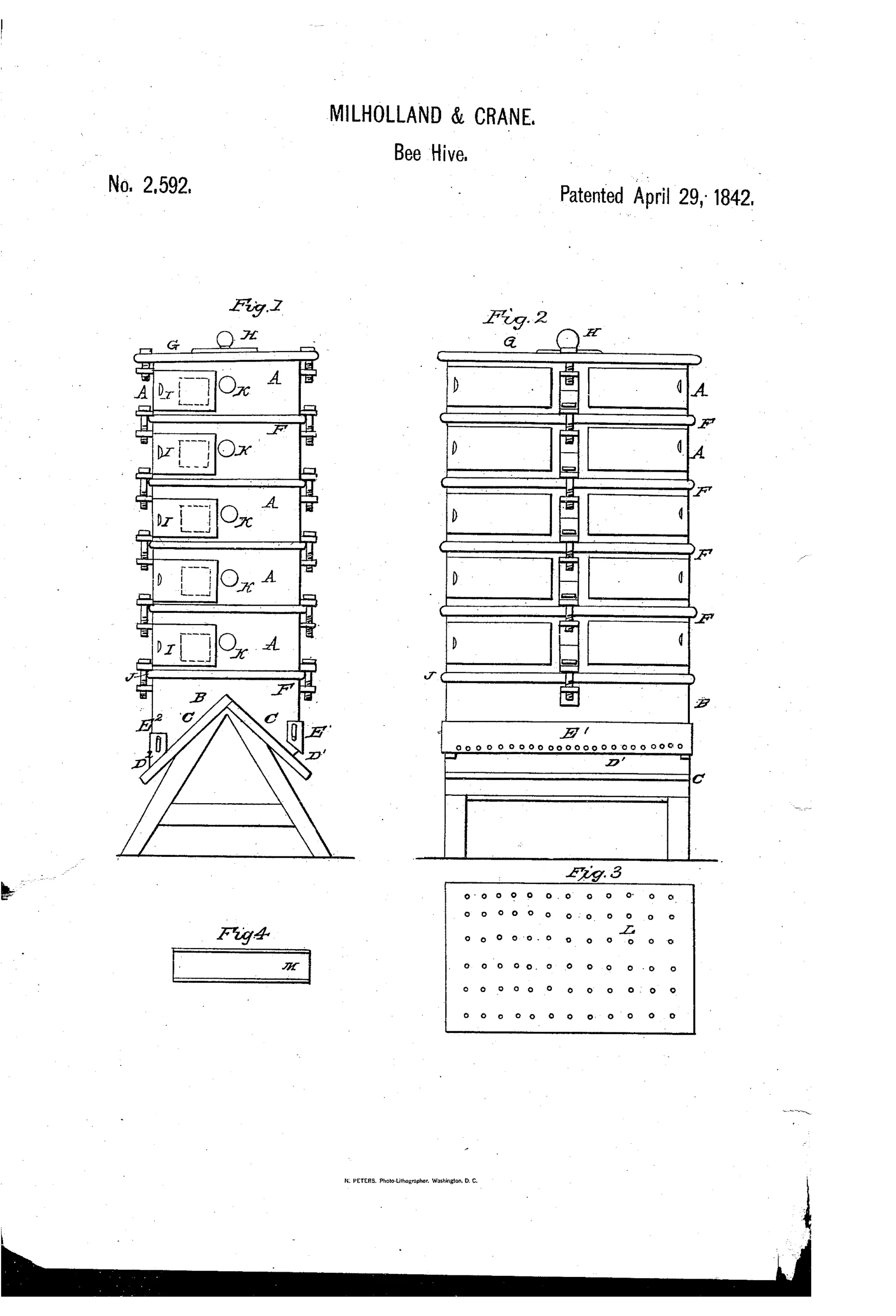
Stackable modular multi-box beehive tower
⬡ How it works
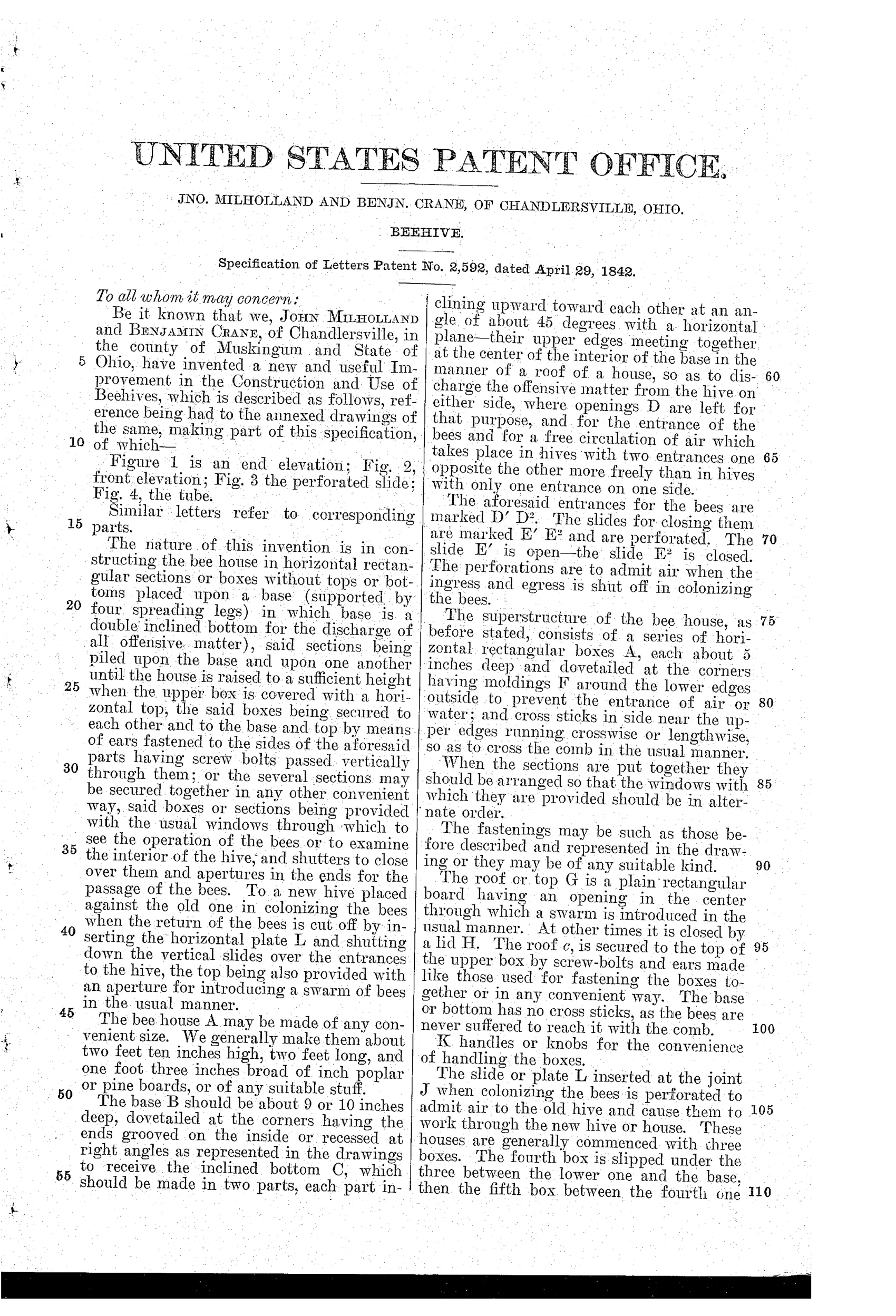
The hive is built as a series of horizontal rectangular boxes without tops or bottoms, stacked upon a base with a double-inclined bottom that drains offensive matter through side openings. Boxes are dovetailed at the corners, fitted with moldings, windows with shutters, and cross sticks to support the comb, and are secured together and to the base and roof by ears and vertical screw bolts. New boxes can be added beneath the stack to give a perpetual, ever-renewing supply of honey without disturbing the bees, and a perforated slide or tube allows colonizing of a new hive from an old one by forcing the bees to travel through a connecting tube into the new house.
⬡ What was claimed
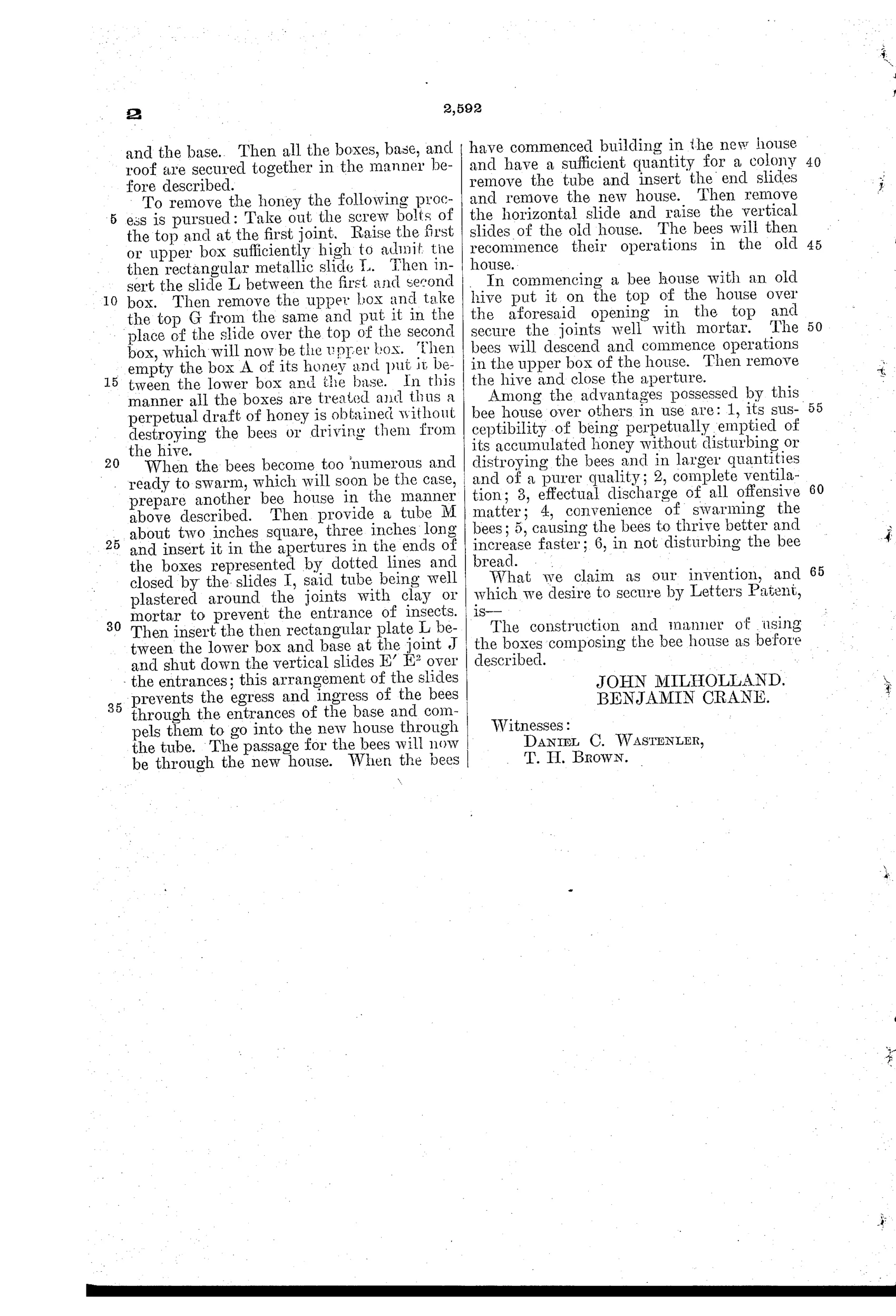
“The construction and manner of using the boxes composing the bee house as before described.”
In plain English: They claim the overall design and method of using the stacked boxes that make up this beehive.
⬡ In the inventor’s words
“In this manner all the boxes are treated and thus a perpetual draft of honey is obtained without destroying the bees or driving them from the hive.”— John Milholland and Benjamin Crane, from the specification
Fate unknown
No documented example or trade record of this hive survives; a marked box or period advertisement from the Zanesville area would settle it.
⬡ Commentary
Milholland and Crane's tower is a box hive trying to become something more. Each unit is a rectangular box with no top or bottom, dovetailed at the corners, held to its neighbors by ears and long vertical screw bolts — the whole stack is essentially one tall chimney of comb. The interesting move is where new boxes go: at the bottom, not the top. Since bees build downward, sliding a fresh box in under the stack lets the colony extend its comb while the honey-heavy upper boxes ripen for the taking. That's nadiring, and it genuinely works — it's how skep beekeepers with 'ekes' operated, here translated into sawn lumber and hardware.
The promised 'perpetual draft of honey... without destroying the bees' was the great selling point of the era, when the standard harvest still meant sulfuring the colony. The colonizing tube of Fig. 4, forcing bees to march into a new house, is the standard artificial-swarming fantasy of the period, and Fig. 3's perforated slide is a crude division board with ventilation.
The fatal flaw is the one shared by every pre-1852 design: the comb hangs on fixed cross sticks, so bees cement everything together and each 'harvest' means cutting a box free with a wire. Windows and shutters let you watch, but not manage. A thoughtful dead end, and an early one — patent number 2,592.
Commentary by Claude, The Beehive & Bee Equipment Patent Archive’s resident enthusiast