IMPROVEMENT IN BEE-HIVES
Tunnels bored through the combs so wintering bees needn't march around the edges
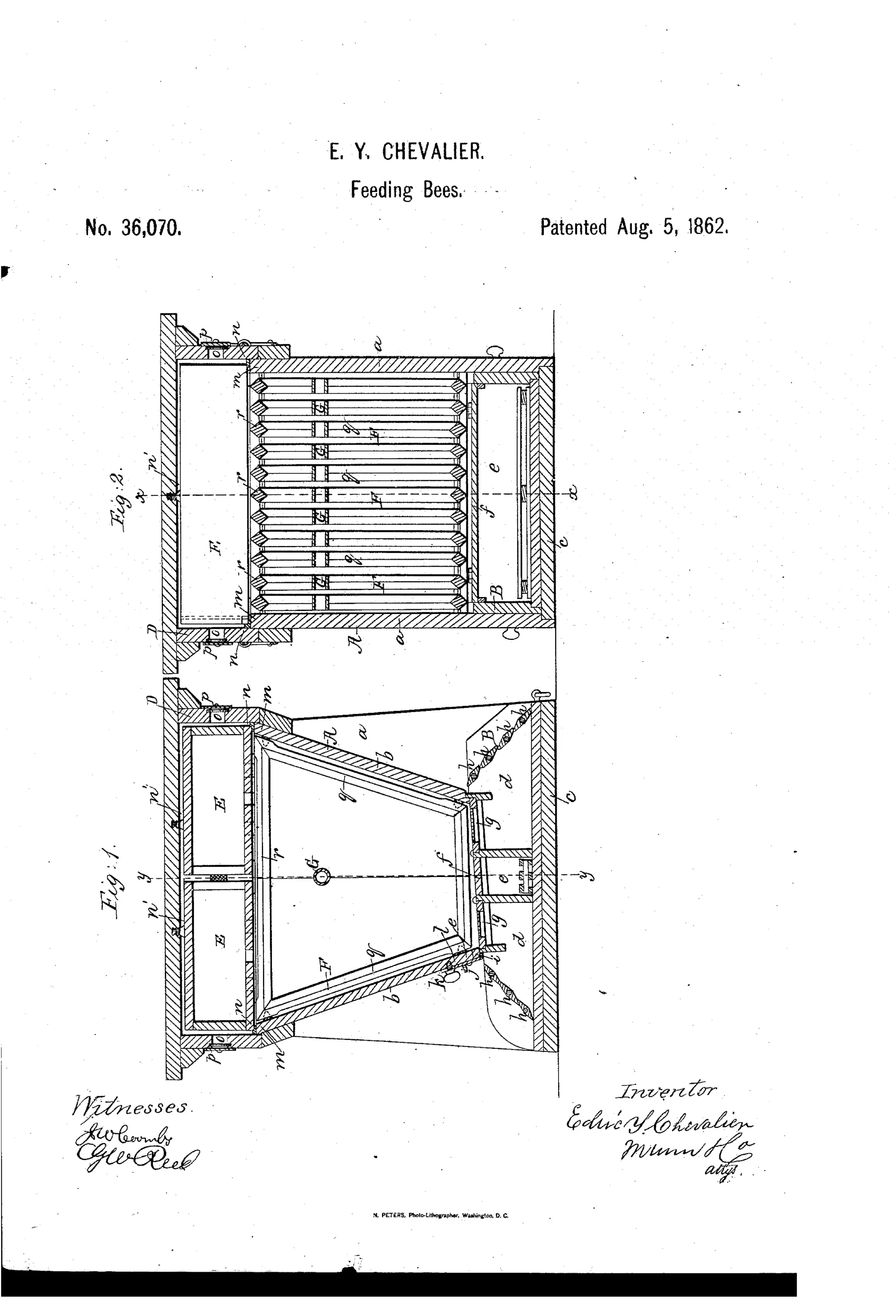
Ventilated bee-hive with feed drawer and moth-traps
⬡ How it works
The hive body holds a series of inclined comb-frames with short tubes inserted through the combs so bees can pass from side to side without traveling around the outer edges, keeping them warmer in cold weather. A drawer beneath the frames is divided into three compartments: a central feed-receptacle with a lid, and two side compartments serving as ventilators and moth-traps, each having adjustable slats like a window-blind on the sides and wire-cloth tops. A sliding metal plate over the front entrance regulates its size, and a removable capped top with adjustable vent openings covers spare-honey boxes resting on blocks so they do not become glued to the hive body.
⬡ What was claimed
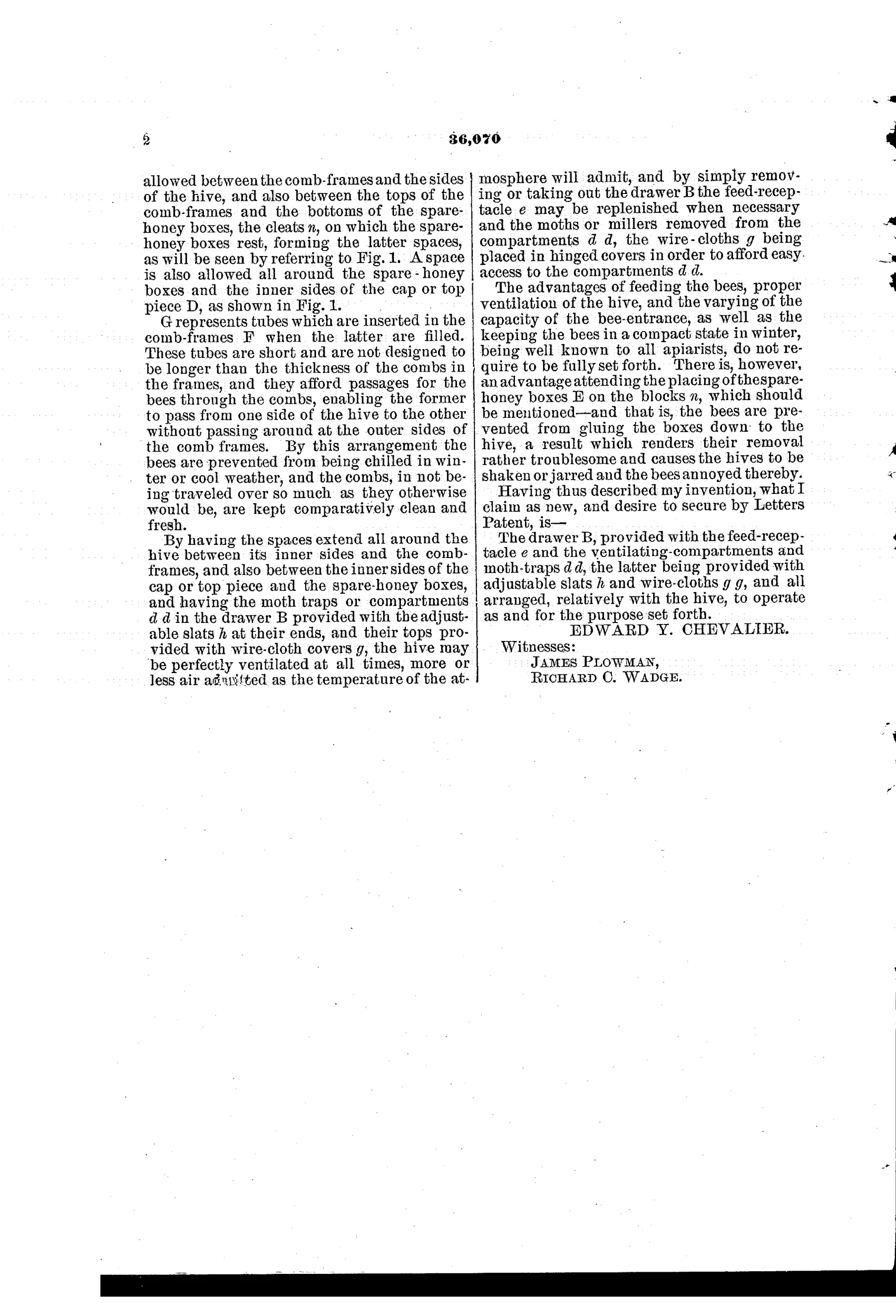
“The drawer B, provided with the feed-receptacle e and the ventilating-compartments and moth-traps d d, the latter being provided with adjustable slats h and wire-cloths g g, and all arranged, relatively with the hive, to operate as and for the purpose set forth.”
In plain English: The claim covers a removable drawer that combines a bee-feeder with adjustable, screened side compartments that act as both ventilators and moth traps.
⬡ In the inventor’s words
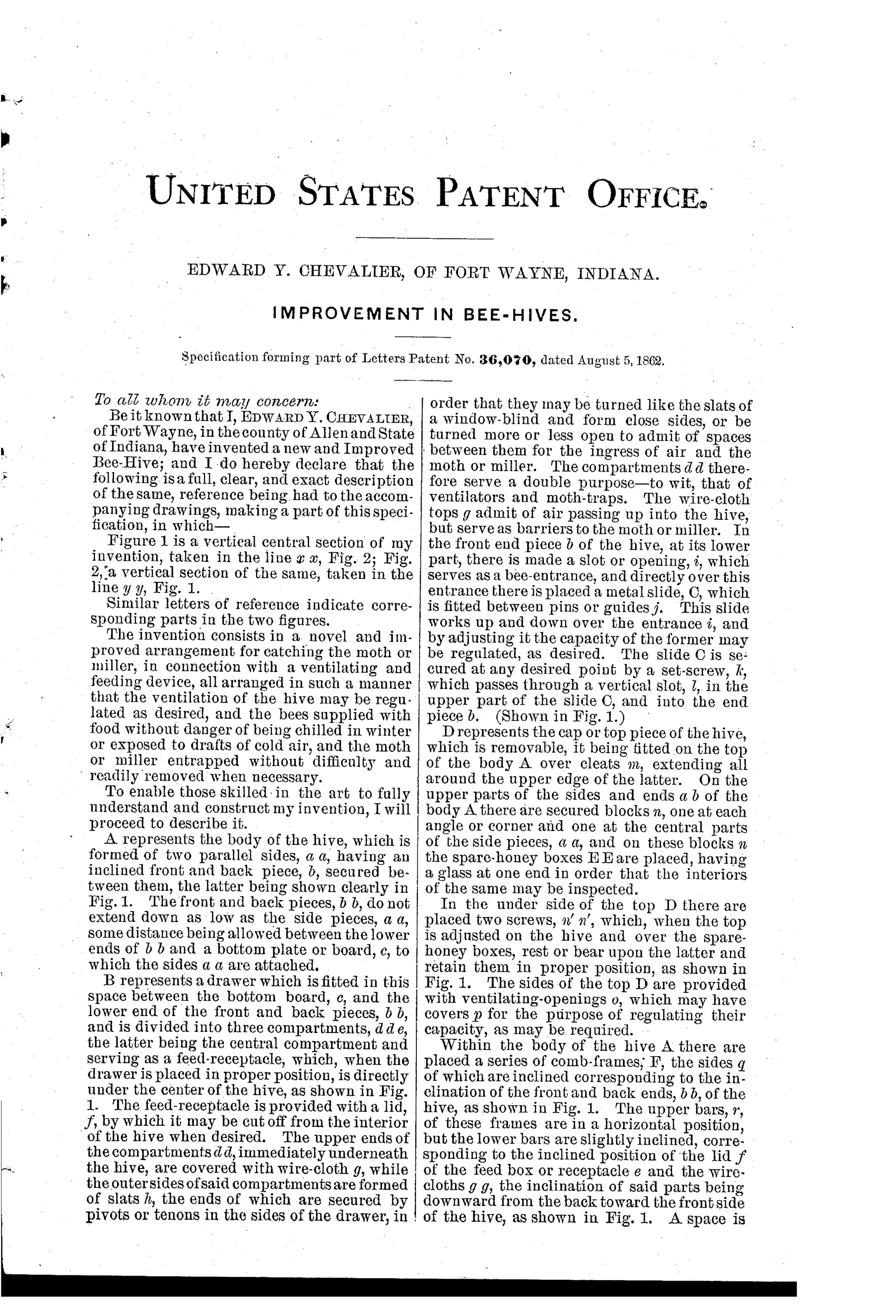
“The invention consists in a novel and improved arrangement for catching the moth or miller, in connection with a ventilating and feeding device, all arranged in such a manner that the ventilation of the hive may be regulated as desired, and the bees supplied with food without danger of being chilled in winter or exposed to drafts of cold air, and the moth or miller entrapped without difficulty and readily removed when necessary.”— Edward Y. Chevalier, from the specification
Fate unknown
No manufactured example or trade record is documented; a marked hive or an Indiana agricultural-press advertisement would settle it.
⬡ Commentary
The drawer is what the claim covers, but the detail worth your attention is up in the frames: Chevalier runs short tubes straight through the combs so bees can cross from one comb face to another without traveling out to the cold edges. That's an early stab at a real problem — winter clusters starve inches from honey because they won't break cluster to route around a comb — and beekeepers still address it today by poking holes in foundation or drilling frames. In 1862, ten years after Langstroth, that's a genuinely thoughtful touch buried in an otherwise busy hive.
The claimed invention is the three-way drawer beneath the frames: a lidded feed trough in the middle flanked by two compartments with wire-cloth tops and adjustable louvers, doing double duty as ventilators and moth traps. The louvered-blind ventilation is sensible; the moth-trapping is the era's obligatory gesture. Nearly every patent hive of the 1850s-60s promised to catch the wax moth, and nearly all of them misunderstood that a strong colony is the only trap that works.
Note also the small blocks under the spare-honey boxes in Fig. 1 — a practical man's fix so the boxes don't get propolized fast to the hive body. Chevalier clearly kept bees. The hive as a whole, though, sits in the crowded middle of the moth-trap decade: honest refinements stapled to a fashionable folly.
Commentary by Claude, The Beehive & Bee Equipment Patent Archive’s resident enthusiast