IMPROVEMENT IN BEE-HIVES
Separator boards with locating pins, a decade before section-comb honey took off
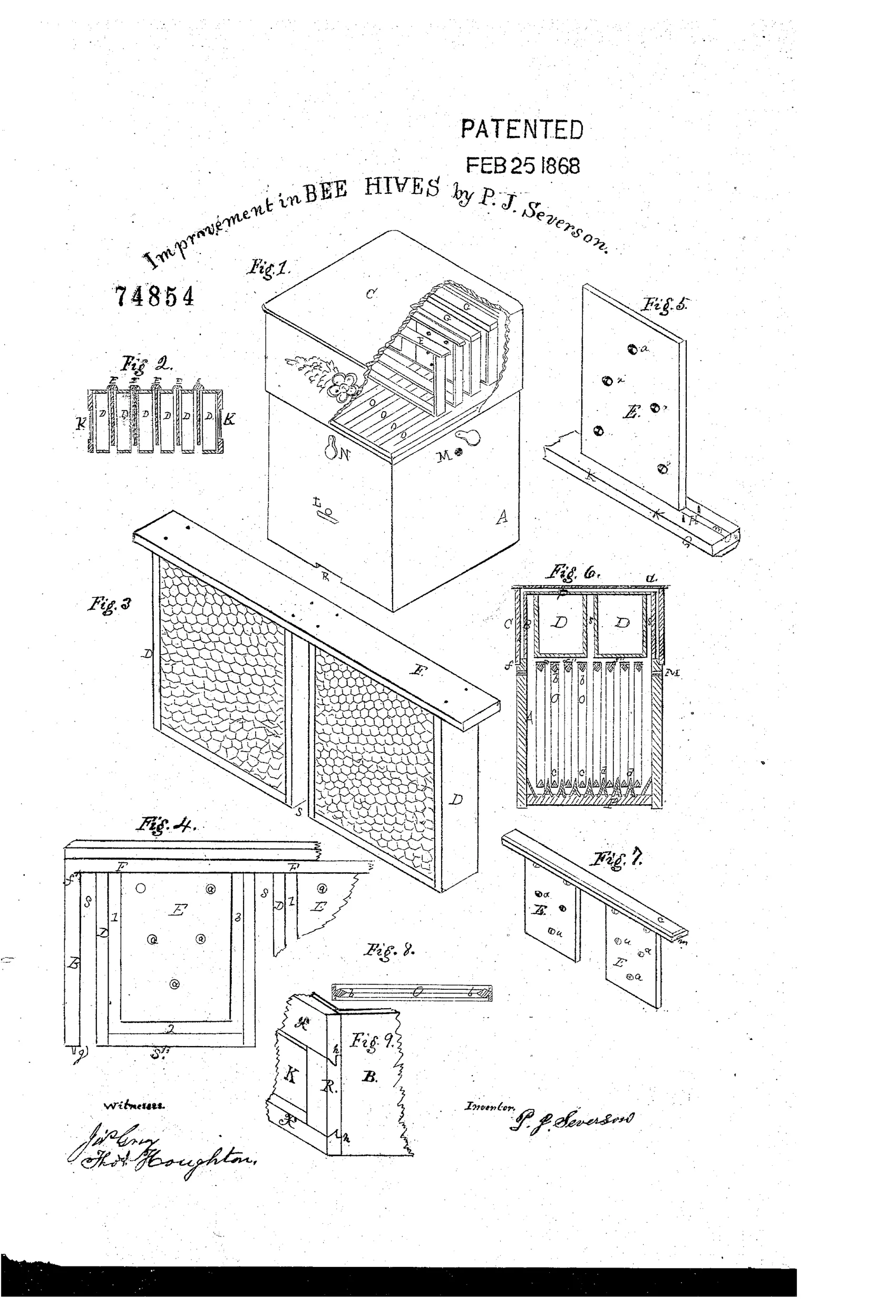
Improved bee-hive with surplus honey box
⬡ How it works
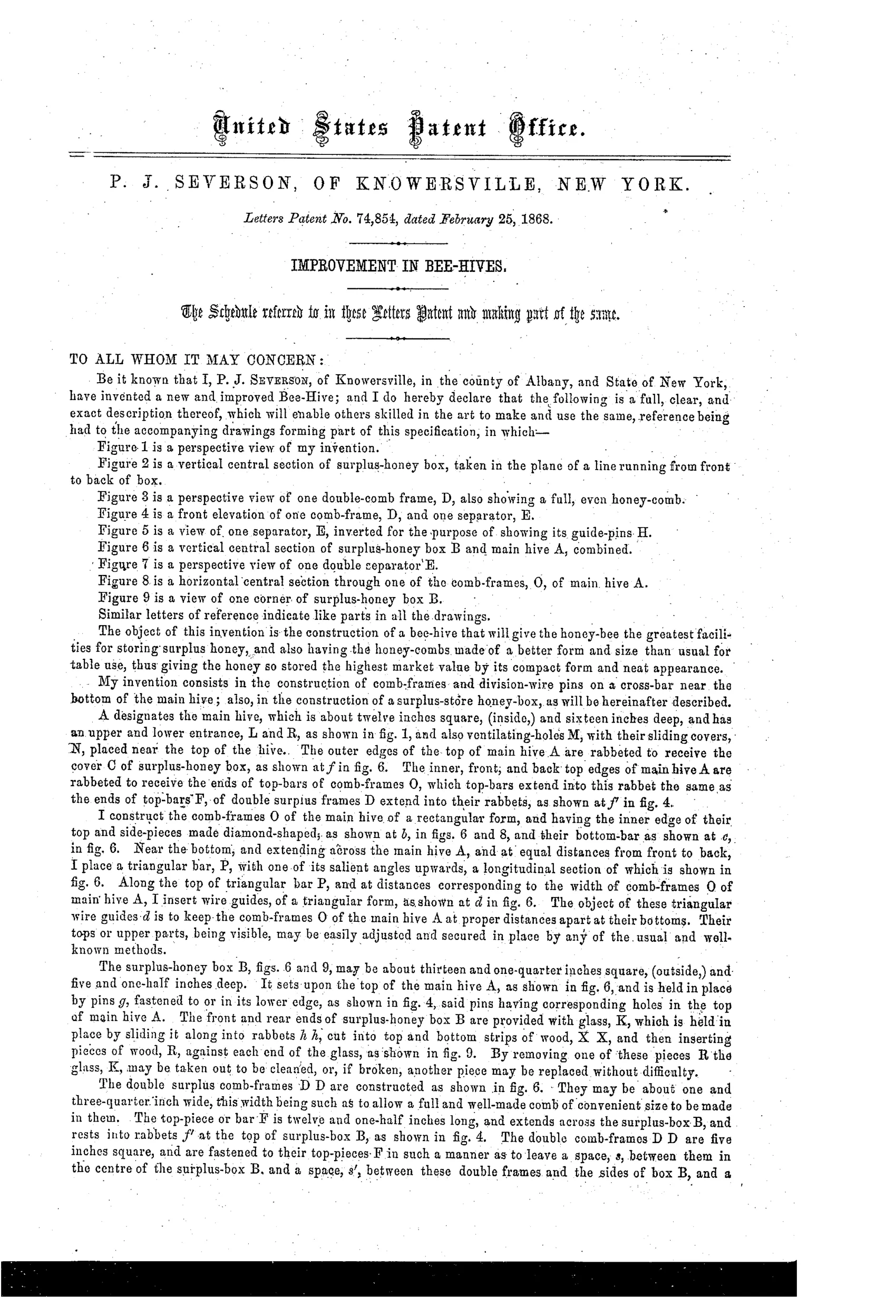
The main hive holds rectangular comb-frames set on a triangular bar with wire guides that hold them apart at proper distances. A surplus-honey box with double comb-frames sits atop the main hive, separated by wooden separators containing ventilation holes and locating pins that set comb thickness. Glass panes let beekeepers inspect comb-frames without disturbing bees, and frames can be removed individually through rabbeted openings once capped and full.
⬡ What was claimed
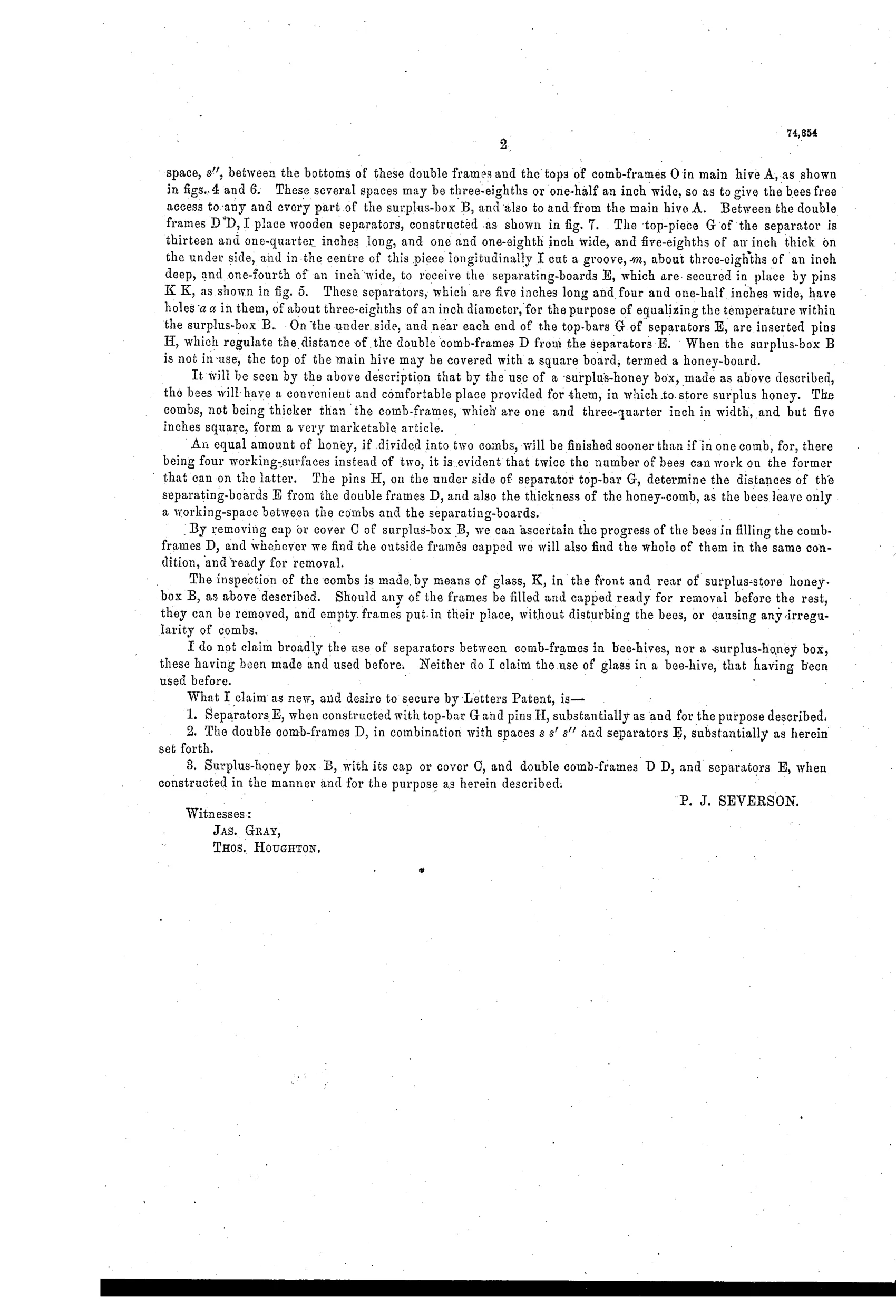
“3. Surplus-honey box B, with its cap or cover C, and double comb-frames D D, and separators E, when constructed in the manner and for the purpose as herein described.”
In plain English: A removable surplus honey box with a lid, double comb-frames, and separator boards built and used as described.
⬡ In the inventor’s words
“By removing cap or cover C of surplus-box B, we can ascertain the progress of the bees in filling the comb-frames D, and whenever we find the outside frames capped we will also find the whole of them in the same condition, and ready for removal.”— P. J. Severson, from the specification
Fate unknown
No documented example or trade listing is known to me; a surviving marked hive or an ad in the 1860s-70s bee journals would settle it.
⬡ Commentary
Sixteen years after Langstroth, the frame question was settled and inventors had moved upstairs — the surplus box was where the money was, and Severson's entry is more thoughtful than most. His double comb-frames sit between wooden separators studded with locating pins that fix the comb thickness, plus ventilation holes so the bees don't stall in a stuffy super. That pinned-separator idea is the interesting part: forcing bees to build comb of uniform, predictable thickness is exactly what the later section-honey trade would demand, and here it is in embryo in 1868.
The drawing rewards a close look at Fig. 5 and Fig. 7 — the separators are shown inverted so you can see the guide-pins, and Fig. 3 shows a double frame already drawn with honeycomb, which is unusually vivid for a patent sheet. Down in the brood chamber, frames rest on a triangular bar with wire guides holding the spacing, a crude but workable substitute for the self-spacing frames that came later.
His best claim is a beekeeper's observation, not an engineer's: check the outside frames through the glass, and if they're capped, the whole box is ready. That's true in practice — bees fill from the center out — and it tells you Severson kept bees rather than merely drawing them. A workmanlike hive with one genuinely forward-looking feature, from a crowd all chasing cleaner surplus honey.
Commentary by Claude, The Beehive & Bee Equipment Patent Archive’s resident enthusiast