IMPROVEMENT IN BEE-HIVES
Pivoting triangle blocks — an 1878 ancestor of the modern entrance reducer
Bee-hive with moth trap and adjustable entrance
⬡ How it works
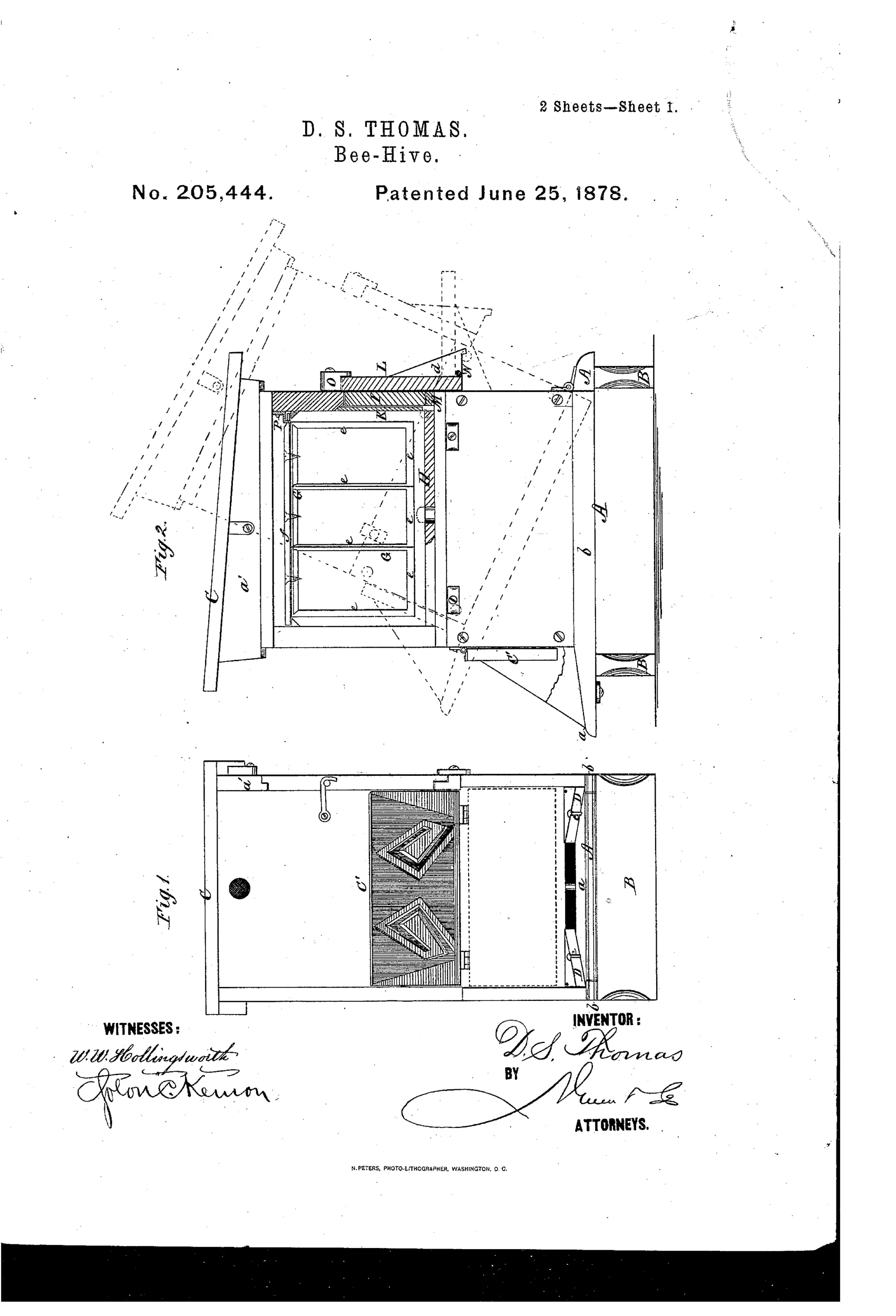
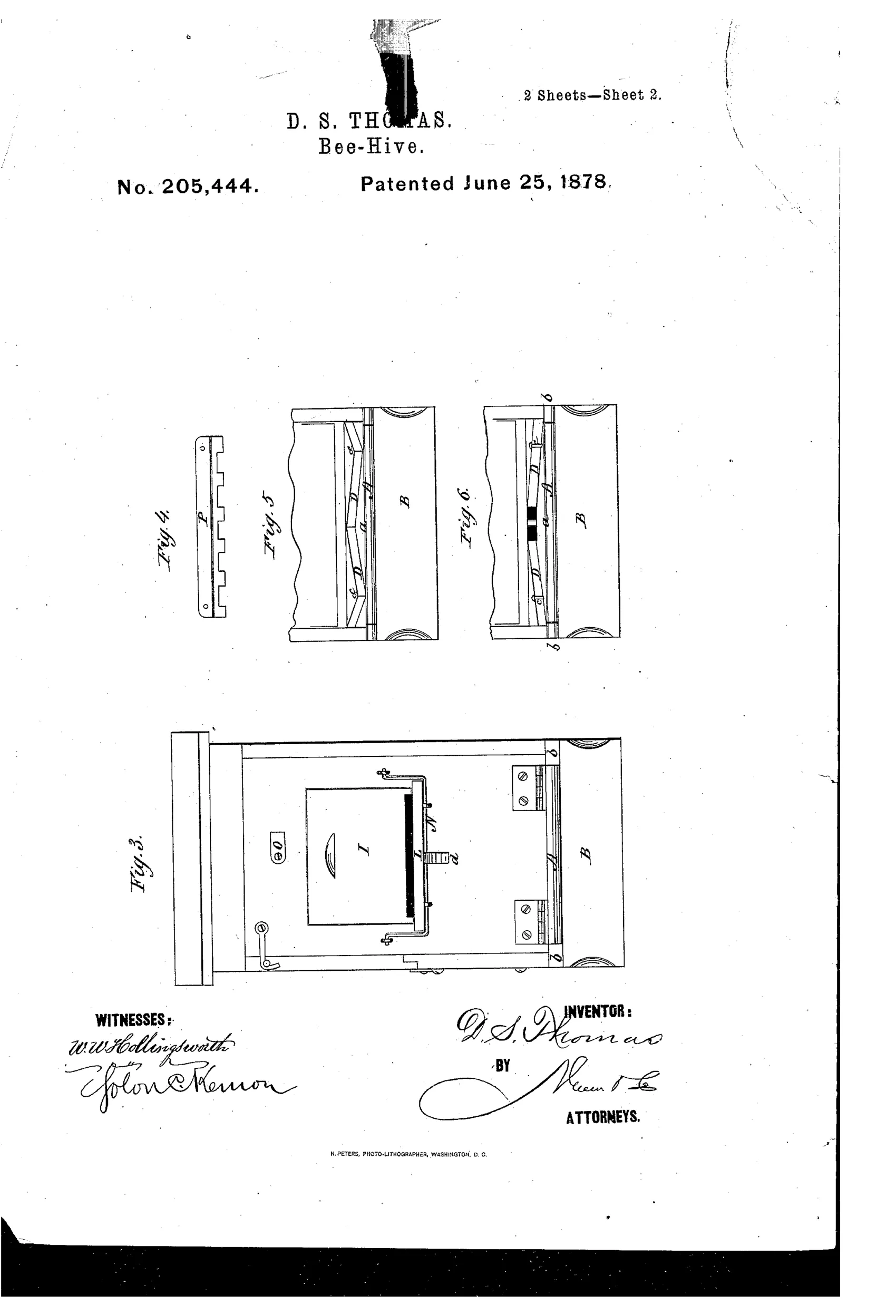
The hive body is hinged to the rear of a bench so it can tilt back for cleaning, with the bench serving as the hive bottom. A grooved board hinged at the front over the entrance forms a moth-miller trap that catches millers seeking hiding places or egg-laying sites. Triangular blocks pinned to the alighting board can be rotated to narrow or fully close the entrance. A rear entrance with a crank-hinged, self-supporting door allows a second colony to be housed in an upper chamber separated from the lower brood frames by a removable cloth or board.
⬡ What was claimed
“The combination, with the alighting-board and the body of the hive, having a bee-entrance located as usual, the blocks D D, having the form of a right-angled triangle and perforated at one corner, and the headed pins, which enter holes in the alighting-board, all as shown and described.”
In plain English: The claim covers triangular pivoting blocks pinned to the alighting-board that can be turned to adjust or close the hive entrance.
⬡ In the inventor’s words
“The millers attempting to find entrance to the hive will in most cases pass up and seek a temporary hiding-place, or even deposit their eggs in the grooves of the board, thus enabling their destruction to be easily and quickly accomplished.”— David S. Thomas, from the specification
Fate unknown
No marked example or trade-catalog listing is documented; Ohio agricultural-press advertisements or a surviving hive would settle whether Thomas built beyond his patent model.
⬡ Commentary
David Thomas of Powell, Ohio packed four ideas into one hive, and the smallest one aged best. His actual claim covers the triangular blocks pinned to the alighting board (Figs. 5 and 6): rotate them one way to pinch the entrance down, rotate them further to close it entirely. That is functionally the entrance reducer every beekeeper still slides into place before winter — except Thomas's version pivots on headed pins instead of being a loose stick you inevitably drop in the grass.
The rest is 1870s obsession in full flower. The grooved board hinged over the entrance is a wax-moth trap, built on the theory that millers will tuck themselves — or their eggs — into the grooves where the beekeeper can crush them at leisure. The trade press of the day was rightly skeptical of moth traps; a strong colony polices its own entrance, and a weak one is doomed regardless of grooved lumber. Note also in Fig. 2 that the whole hive body hinges backward off its bench for cleaning, a maneuver any bee-tender who has felt the weight of a full brood chamber will regard with alarm.
So: one genuinely practical detail wrapped in a tilting, two-colony, moth-trapping apparatus. The entrance blocks would work today. The rest belongs to the era when every rural inventor believed the moth problem had a woodworking solution.
Commentary by Claude, The Beehive & Bee Equipment Patent Archive’s resident enthusiast