IMPROVEMENT IN BEE-HIVES
A moth trap baited with a bigger door than the bees get
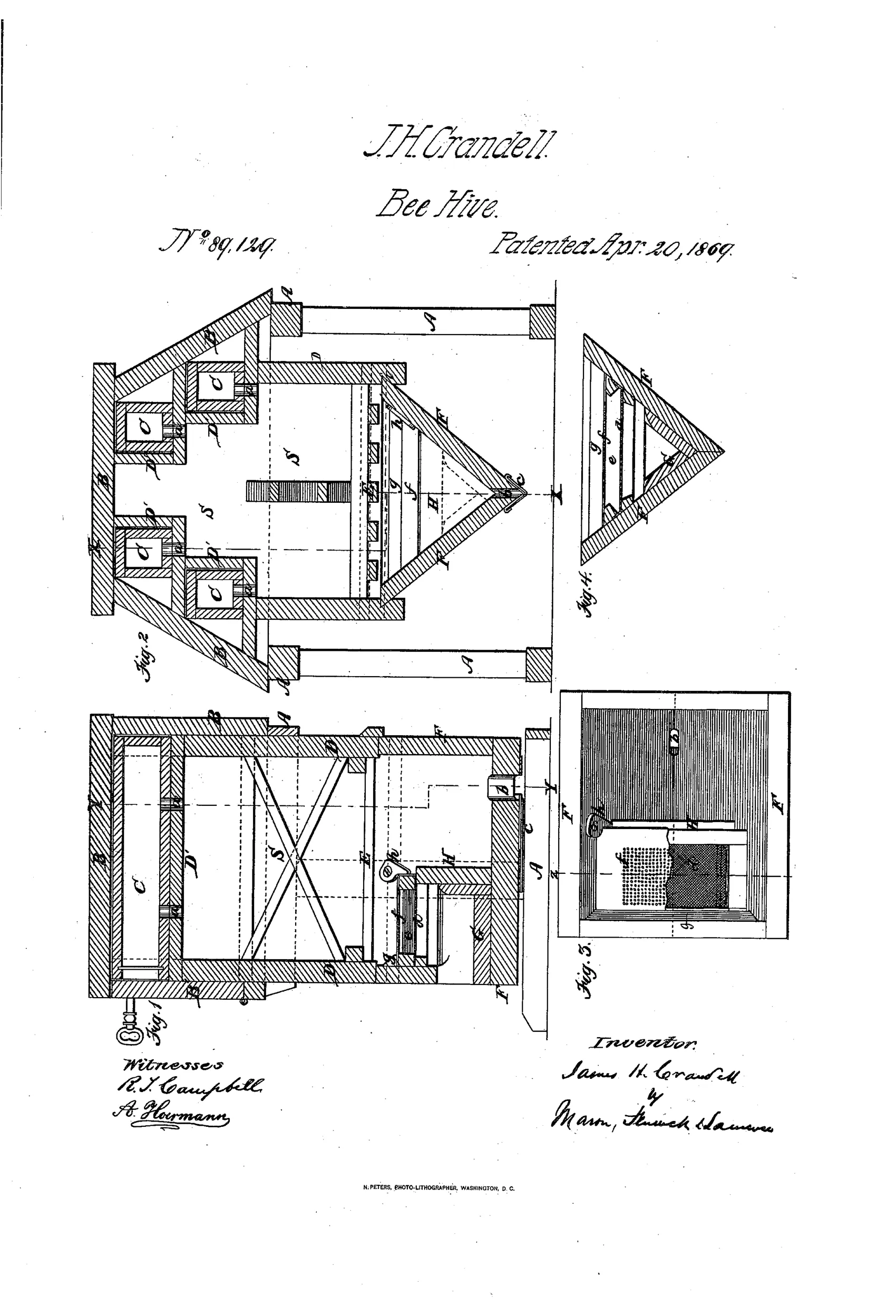
Bee hive with built-in miller-moth trap
⬡ How it works
The hive has an upper section with removable honey-boxes for domestic use and a lower angular chamber for winter honey storage. Within the angular bottom, a vertical partition and perforated screens form a moth-chamber with an opening larger than the bee-entrance, attracting the destructive miller-moth away from the bees while venting honey scent through perforated metal. A removable drawer beneath the trap allows hatched worms to be cleared out, and a second screen behind it prevents any eggs from reaching the bees' honey chamber. The moth-entrance and bee-entrance are kept separate so insects cannot access the honey or bee apartments.
⬡ What was claimed
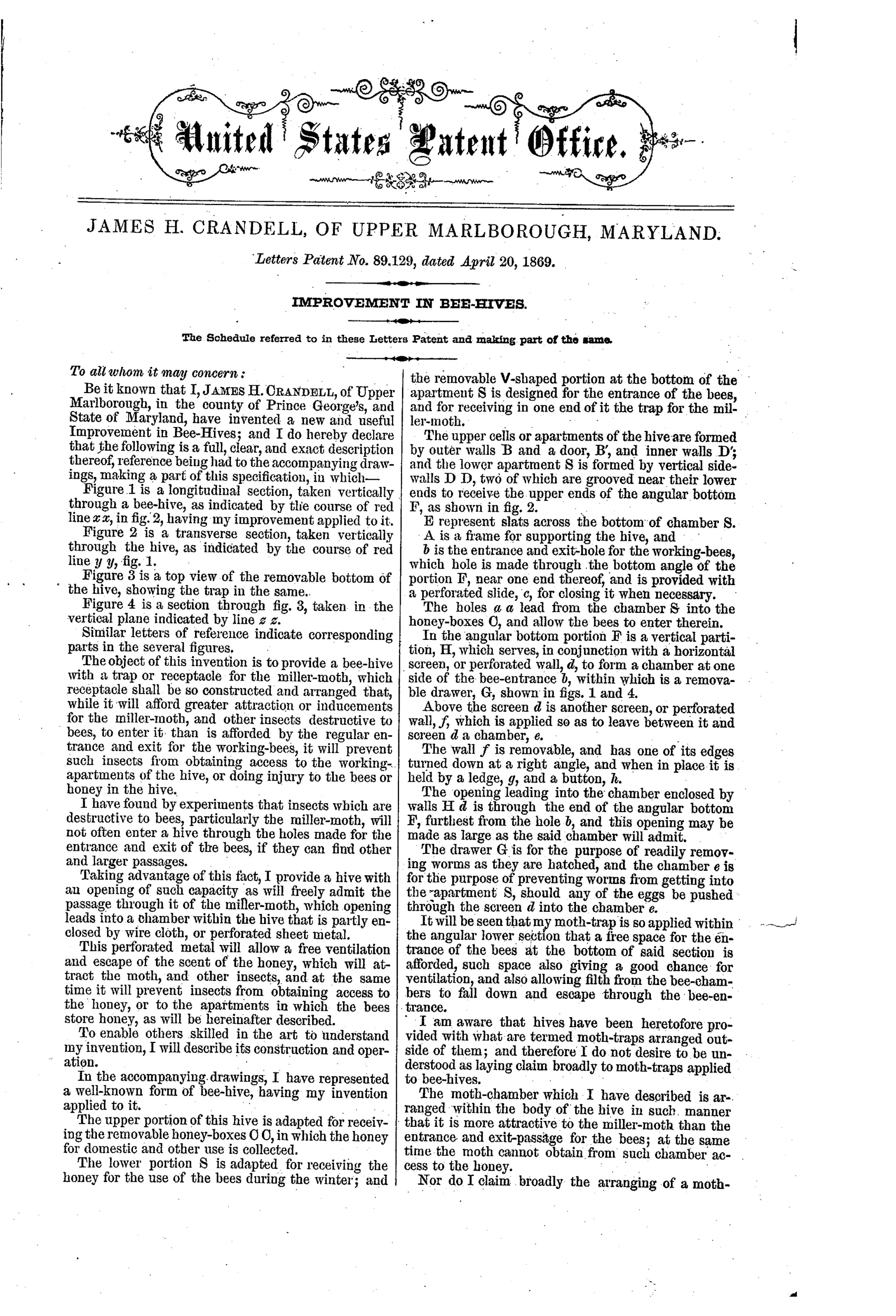
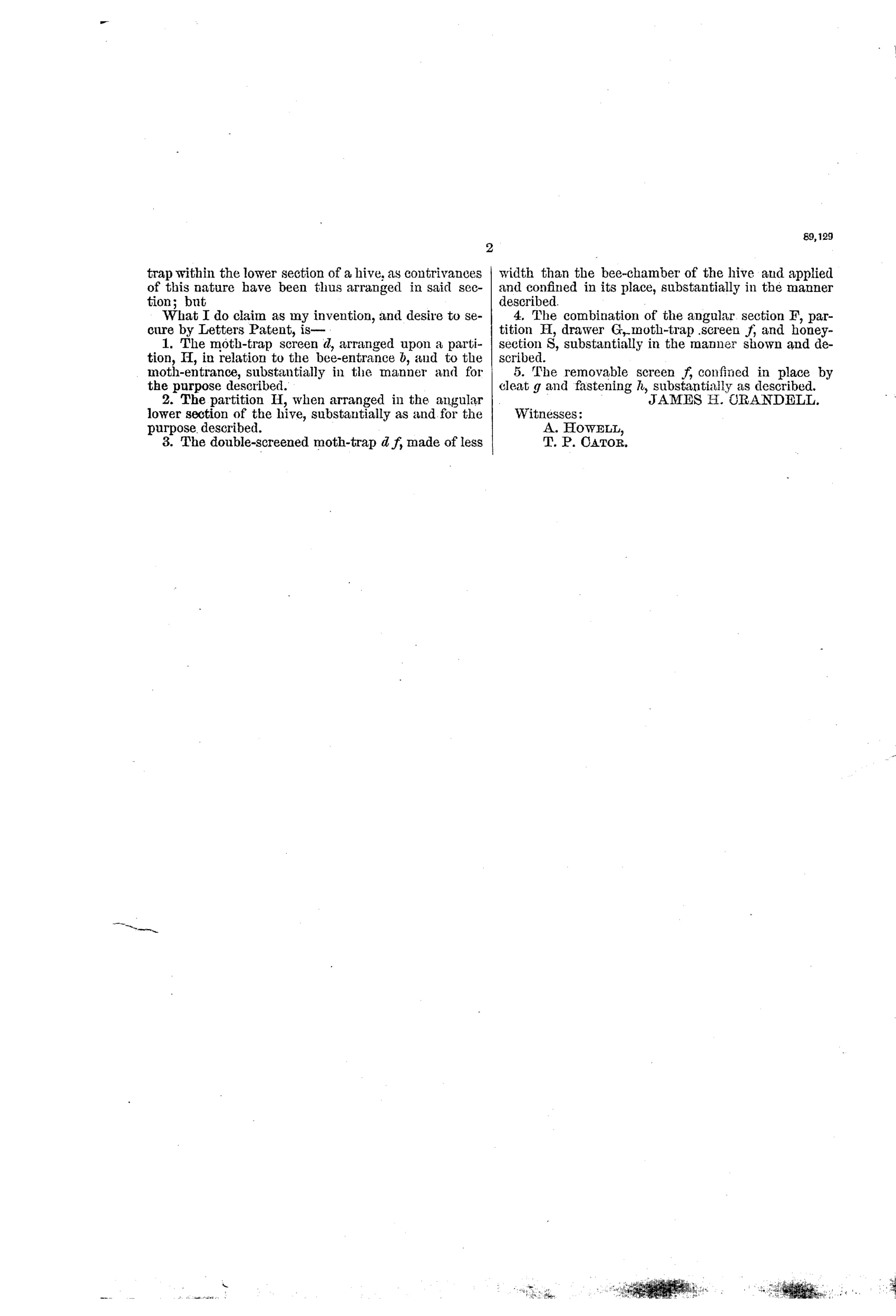
“1. The moth-trap screen d, arranged upon a partition, H, in relation to the bee-entrance b, and to the moth-entrance, substantially in the manner and for the purpose described.”
In plain English: A perforated screen mounted on a partition near the bee entrance, positioned to trap moths without letting them reach the bees.
⬡ In the inventor’s words
“I have found by experiments that insects which are destructive to bees, particularly the miller-moth, will not often enter a hive through the holes made for the entrance and exit of the bees, if they can find other and larger passages.”— James H. Crandell, from the specification
Paper patent — likely never produced
Moth-trap hives of this vintage rarely reached production, and no marked Crandell hive or trade record is known to me; a surviving example would change the call.
⬡ Commentary
Crandell's premise is stated with disarming candor: he found by experiment that the wax moth won't squeeze through bee-sized entrance holes if a larger, easier passage is offered nearby. So he builds one — a decoy entrance leading into a screened chamber in the hive's V-shaped bottom, vented with perforated metal so the honey scent still wafts out as bait. Below it sits a removable drawer for shoveling out hatched worms, with a second screen behind to keep any stray eggs away from the bees' stores. It's a moth motel plumbed directly into the hive.
The drawing rewards a close look. Figures 3 and 4 show the trap as a self-contained removable bottom — the partition, screens, and drawer are a serviceable unit, which is more practical thinking than most moth-trap hives of the era managed. The angular lower chamber doubling as winter honey storage is a nice touch of economy, though it complicates the carpentry considerably.
Still, this sits squarely in the great postwar moth-trap craze, the category's most crowded dead end. Langstroth had already shown, seventeen years earlier, that the real defense against wax moths is a strong colony in a manageable hive — moths only overrun weak or queenless stock. Crandell's trap might catch some moths; it just solves the wrong problem, elegantly.
Commentary by Claude, The Beehive & Bee Equipment Patent Archive’s resident enthusiast