IMPROVED MOSQUITO-GUARD
A wearable barrel of netting for sleepers — the bee veil's overgrown cousin
A wearable full-body mosquito net for sleeping
⬡ How it works
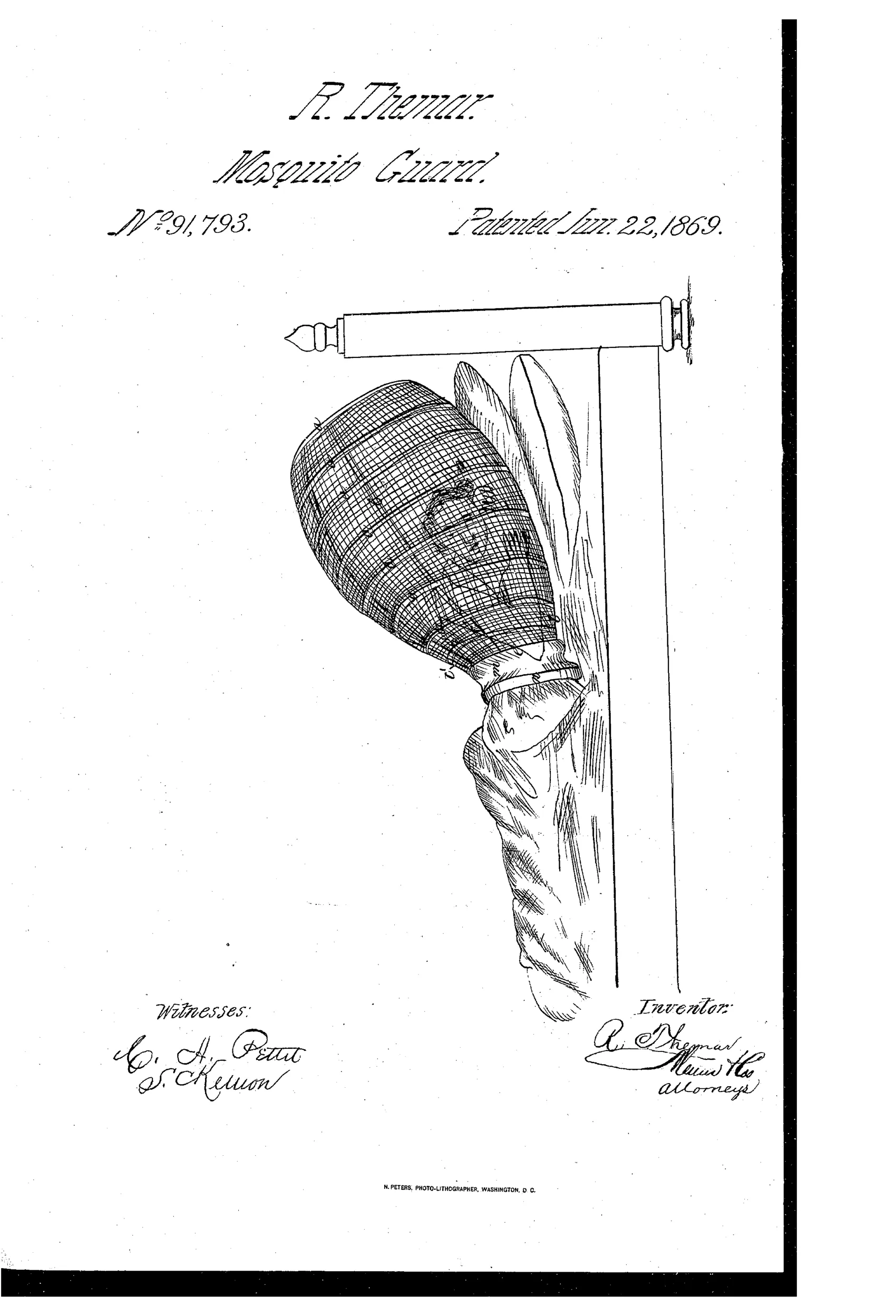
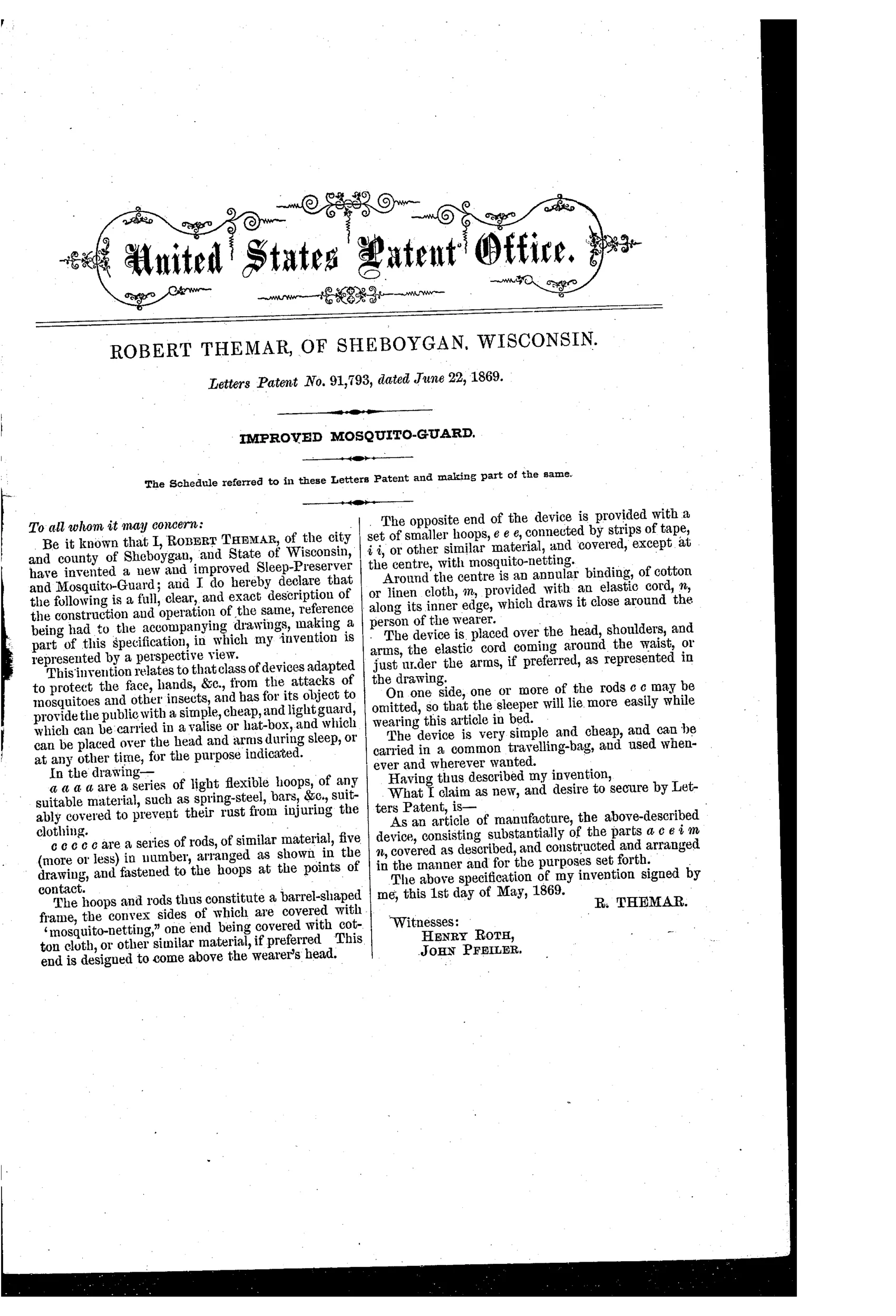
A series of light flexible hoops connected by rods form a barrel-shaped frame that fits over the head, shoulders, and arms of the wearer. The convex sides of this frame are covered with mosquito netting, while one end is covered with cotton cloth to fit over the head. An elastic cord around a central binding draws the device close around the wearer's waist or under the arms, and rods can be omitted on one side so the sleeper can lie down more easily while wearing it.
⬡ What was claimed
“As an article of manufacture, the above-described device, consisting substantially of the parts a c e i m n, covered as described, and constructed and arranged in the manner and for the purposes set forth.”
In plain English: The claim covers the specific combination of hoops, rods, small end-hoops, netting covering, and elastic-cord binding as described, made and arranged for protecting a sleeper from insects.
⬡ In the inventor’s words
“The device is very simple and cheap, and can be carried in a common travelling-bag, and used whenever and wherever wanted.”— Robert Themar, from the specification
Paper patent — likely never produced
No manufactured examples or trade advertisements are known, and the awkwardness of sleeping inside a hooped frame makes commercial production implausible.
⬡ Commentary
Strictly speaking this isn't beekeeping equipment at all — it's a personal mosquito guard from Sheboygan — but it belongs on the shelf next to the bee veil, because it solves the same problem the same way: put a hooped cage of netting around the human, not around the insects. Themar's version just goes all in. Light flexible hoops joined by rods make a barrel-shaped frame; the convex sides are covered in netting, the top end in cotton cloth to sit over the head, and an elastic cord snugs the whole thing around the waist or under the arms. You wear it to bed like a lampshade.
The drawing rewards a second look. It's shown hanging on a wall bracket like a hat — which is the sales pitch: no bedstead needed, no canopy frame, fold it and 'carry it in a common travelling-bag.' The genuinely thoughtful detail is buried in the mechanism: rods can be omitted on one side so the frame flexes and the sleeper can actually lie down without the hoops digging into ribs. Someone slept in a prototype, or at least tried to.
Whether anyone would choose this over a simple bed net is the fair question — turning over at 2 a.m. inside a collapsible barrel sounds like its own torment. But as an artifact of the era's faith that any discomfort could be engineered away with wire, hoops, and netting, it's a charming dead end.
Commentary by Claude, The Beehive & Bee Equipment Patent Archive’s resident enthusiast