Bee Hive
Frames that swing open like book pages, nine years after Langstroth
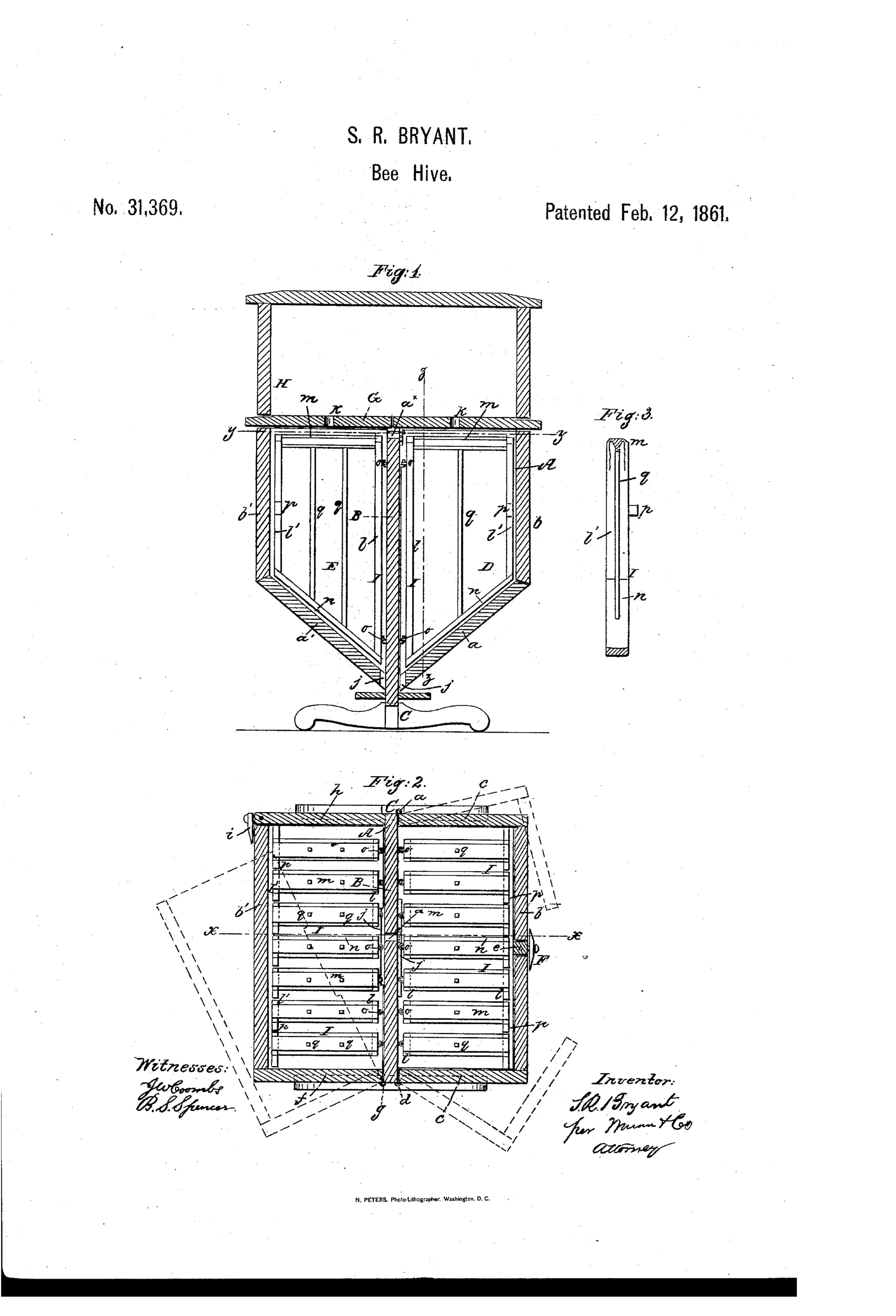
Double beehive with hinged swinging comb frames
⬡ How it works
The hive has a quadrilateral box divided by a central partition into two parts, each with an inclined bottom sloping down to the partition. Comb frames are hinged to the partition so they can swing open like a book for inspection, with V-shaped top rails narrower than the upright bars to keep adjoining combs separated. Vertical guide strips on the frames induce bees to build comb evenly within the plane of each frame. Dirt and debris fall down the inclined bottoms and exit through slots, and doors on the sides allow full access to clean the hive.
⬡ What was claimed
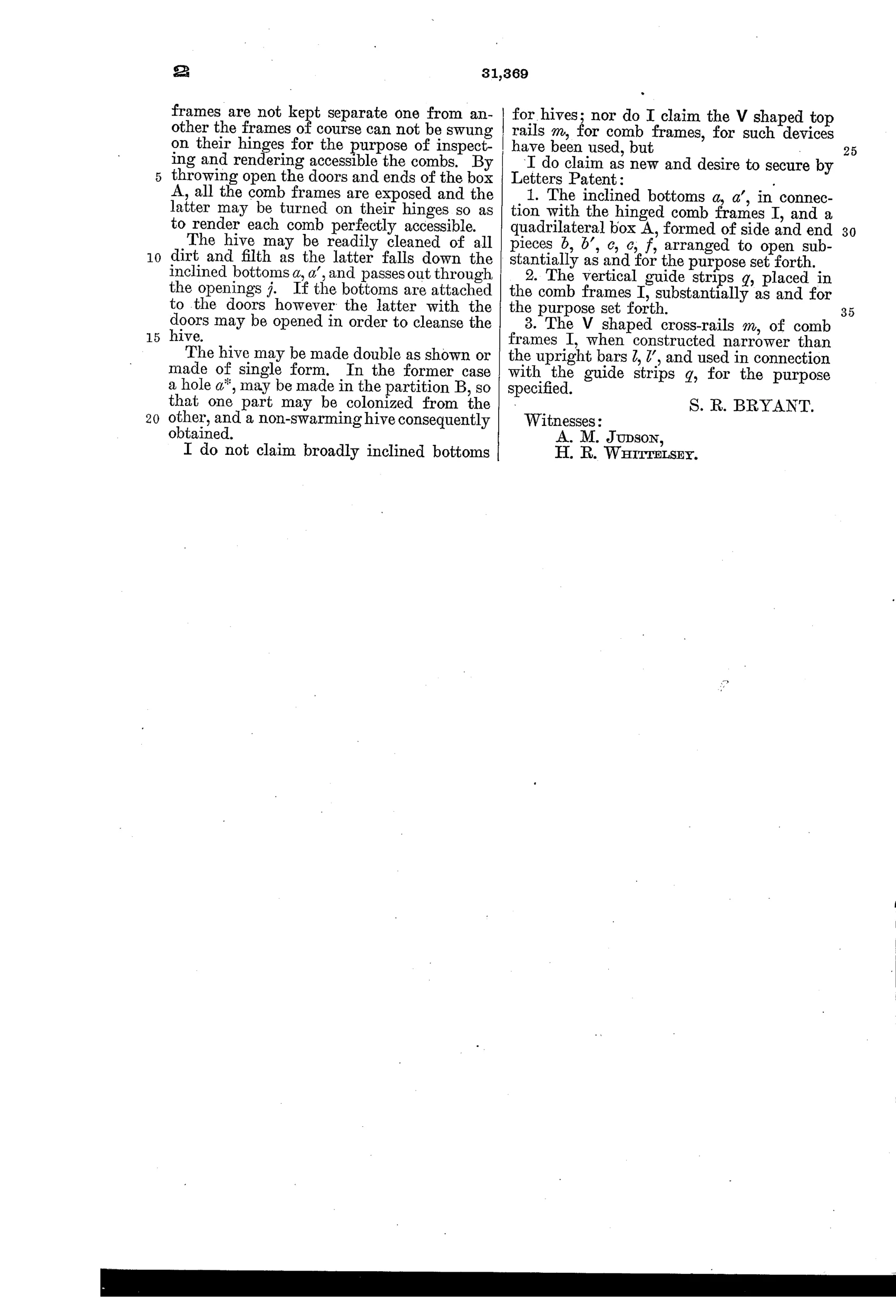
“1. The inclined bottoms a, a', in connection with the hinged comb frames I, and a quadrilateral box A, formed of side and end pieces b, b', c, c, f, arranged to open substantially as and for the purpose set forth.”
In plain English: The combination of sloped hive bottoms, hinged swinging comb frames, and a box with opening side and end panels for cleaning and access.
⬡ In the inventor’s words
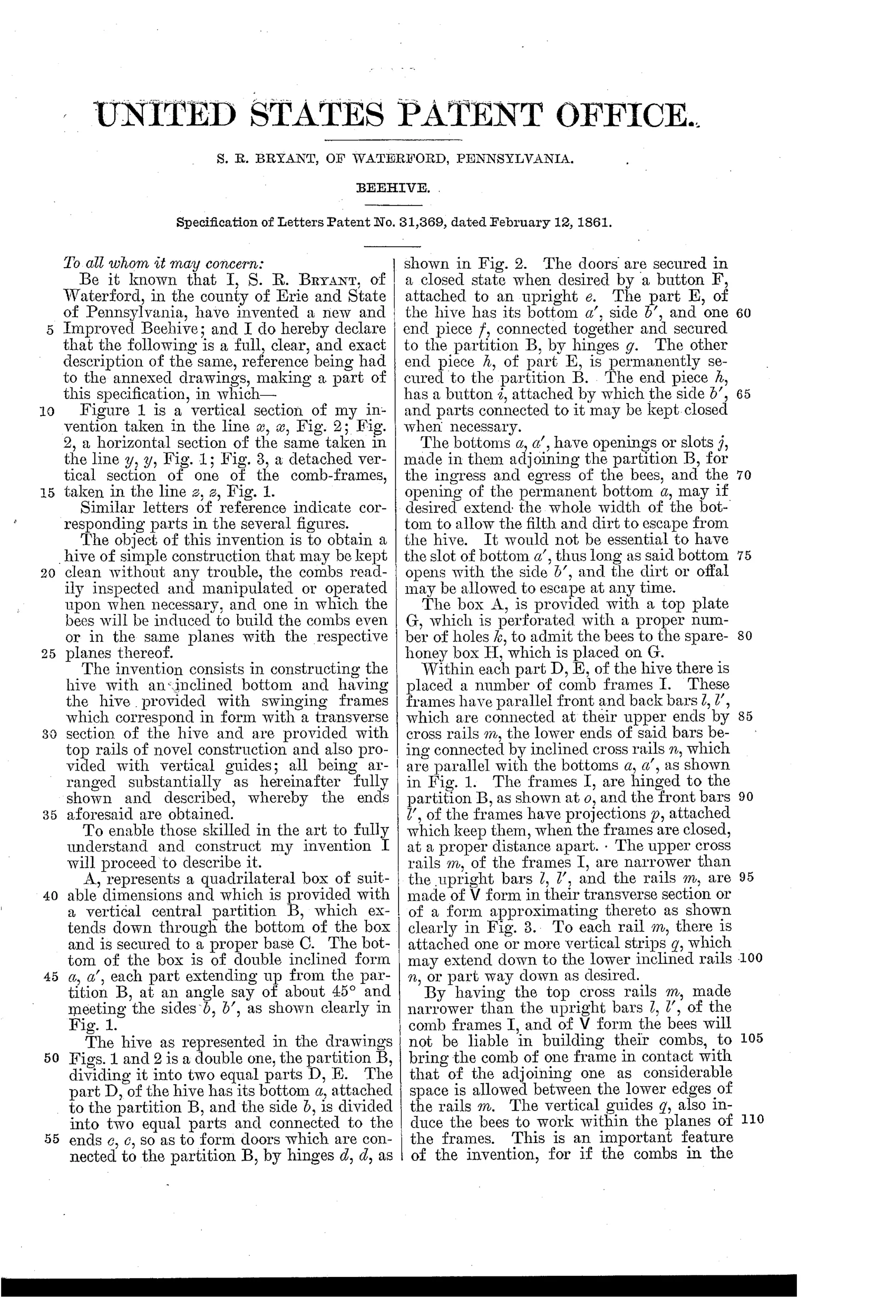
“The hive may be readily cleaned of all dirt and filth as the latter falls down the inclined bottoms a, a', and passes out through the openings j.”— S. R. Bryant, from the specification
Fate unknown
No manufactured example or trade record of Bryant's hive is documented; a marked specimen or period advertisement would settle it.
⬡ Commentary
Bryant's answer to the movable-frame problem is a hinge. Instead of lifting frames out from the top, Langstroth-style, each comb frame pivots on the central partition of this double hive, so the whole comb array fans open like the leaves of a ledger. Fig. 2 shows this beautifully — those dashed outlines at the corners are frames swung out for inspection, and once you see them the drawing stops being a static box and becomes a machine caught mid-motion.
There are real ideas in the details. The V-shaped top rails, narrower than the upright bars, keep adjoining combs from being bridged together — Bryant is groping toward the spacing discipline that makes frames removable at all. The vertical guide strips to coax bees into building comb flat within each frame anticipate the job comb foundation would later do properly. And the twin inclined bottoms funneling debris out through slots address the era's obsession: wax moth larvae breeding in floor litter.
The trouble is what every hinged-frame hive discovered. Bees glue everything with propolis, and a frame that must sweep through an arc will crush bees and tear brace comb the moment you swing it. Lift-out frames won precisely because the motion is a clean vertical pull. Bryant's hive is an intelligent dead end — a serious mechanic solving the right problem with the wrong degree of freedom.
Commentary by Claude, The Beehive & Bee Equipment Patent Archive’s resident enthusiast