IMPROVEMENT IN BEE-HIVES
A chest of drawers for bees, eighteen years after Langstroth solved the problem
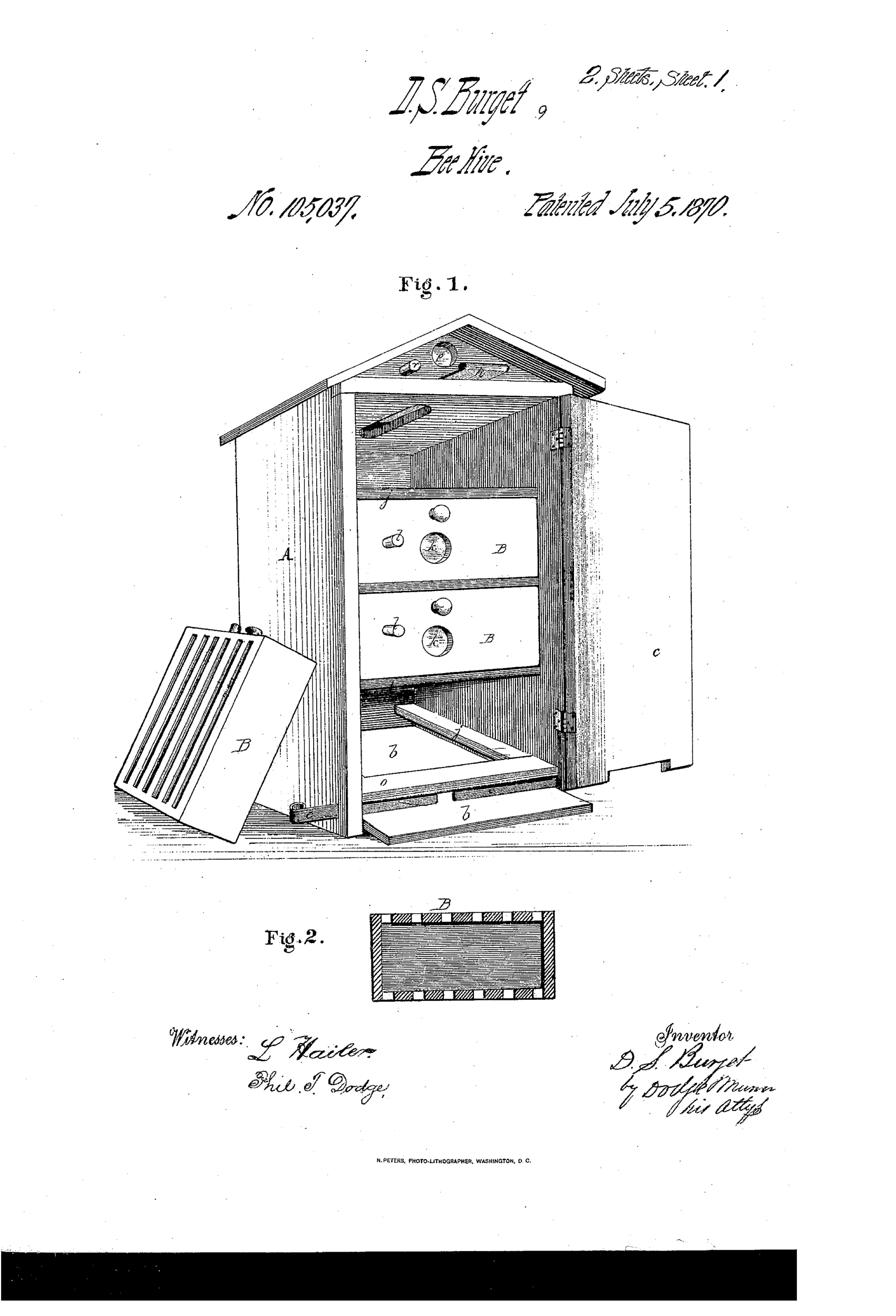
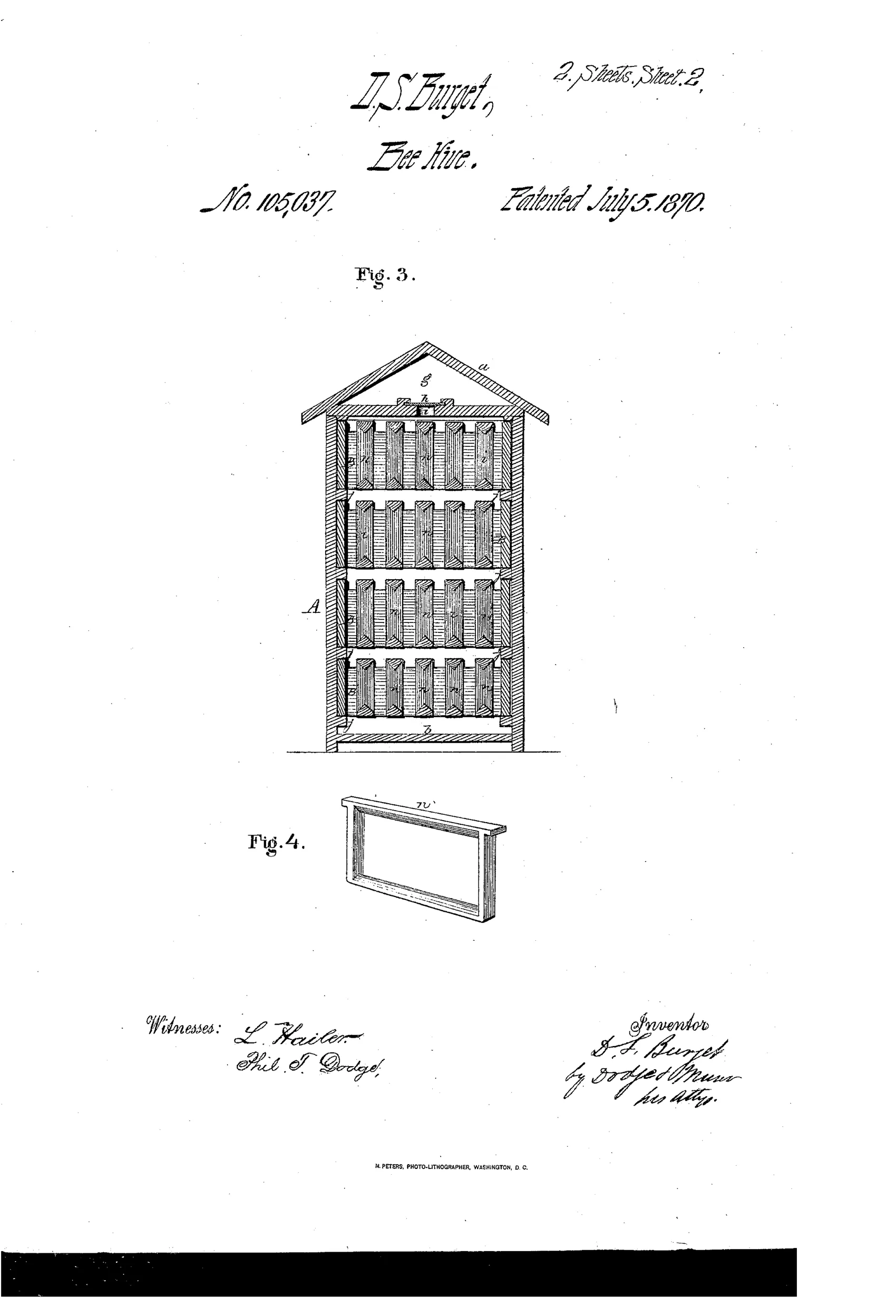
Multi-drawer beehive with removable frames and inspection windows
⬡ How it works
The hive is a rectangular upright body with a hollow detachable chambered top, an inclined bottom forming a lighting-board, and a full-size hinged front door. A series of drawers, each fitted with removable comb-frames and a glass inspection window, slide into the body on cross-cleats, with side slides controlling bee passage beneath a front entrance strip. Smoke can be introduced through a plugged hole to drive bees upward into the top chamber so drawers may be inspected or removed without loss of bees, and the removable top allows an entire hive of bees to be transferred to a new body.
⬡ What was claimed
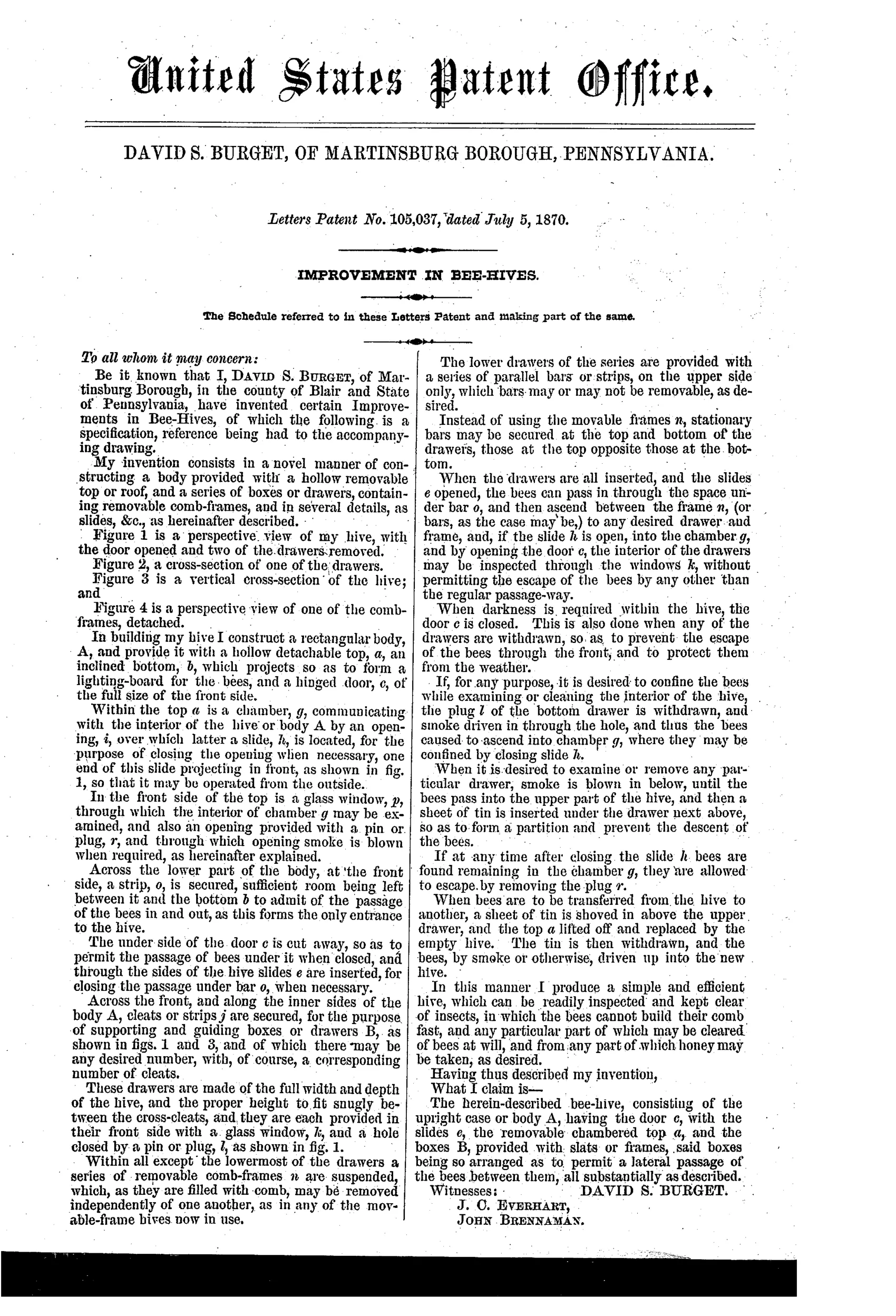
“The herein-described bee-hive, consisting of the upright case or body A, having the door c, with the slides e, the removable chambered top a, and the boxes B, provided with slats or frames, said boxes being so arranged as to permit a lateral passage of the bees between them, all substantially as described.”
In plain English: The hive combines a boxed body with a door and slides, a removable chambered top, and frame-holding drawers arranged so bees can move laterally between them.
⬡ In the inventor’s words
“In this manner I produce a simple and efficient hive, which can be readily inspected and kept clear of insects, in which the bees cannot build their comb fast, and any particular part of which may be cleared of bees at will, and from any part of which honey may be taken, as desired.”— David S. Burget, from the specification
Paper patent — likely never produced
No manufactured example or trade record of Burget's drawer hive is known, and the drawer format was already losing to top-opening frames; it almost certainly stayed on paper.
⬡ Commentary
Burget's hive is a handsome example of the drawer-hive idea: instead of lifting frames out the top, you open a full hinged front door and slide out boxes like bureau drawers, each with its own glass window for peeking at the comb. The Fig. 1 perspective is worth a close look — the slatted drawer leaning against the hive shows how each box is really a frame-holder, and the gaps between stacked drawers are meant to let bees pass laterally through the whole colony.
There are genuinely thoughtful touches. The plugged smoke-hole for driving bees up into the detachable chambered top is a real management technique — you could clear the drawers of bees before pulling them, and the whole top could be lifted to transfer a colony to a fresh body. The inclined bottom doubling as an alighting board is tidy carpentry.
But this is 1870, and the drawer hive was already a road not taken. Langstroth's top-opening architecture won because frames hang free in bee space; drawers add rails, cleats, and joints for bees to glue shut with propolis, and every sliding surface is a place where comb attachment turns a smooth pull into a wrenching mess. Burget promises the bees 'cannot build their comb fast,' which is exactly the promise this whole genre made and could not keep. A sincere, well-drafted entry in a crowded field chasing the wrong opening.
Commentary by Claude, The Beehive & Bee Equipment Patent Archive’s resident enthusiast