IMPROVEMENT IN BEE-HIVES
A perforated pasteboard comb-guide and a funnel floor that feeds moths downstairs
19th-century beehive with removable comb frames
⬡ How it works
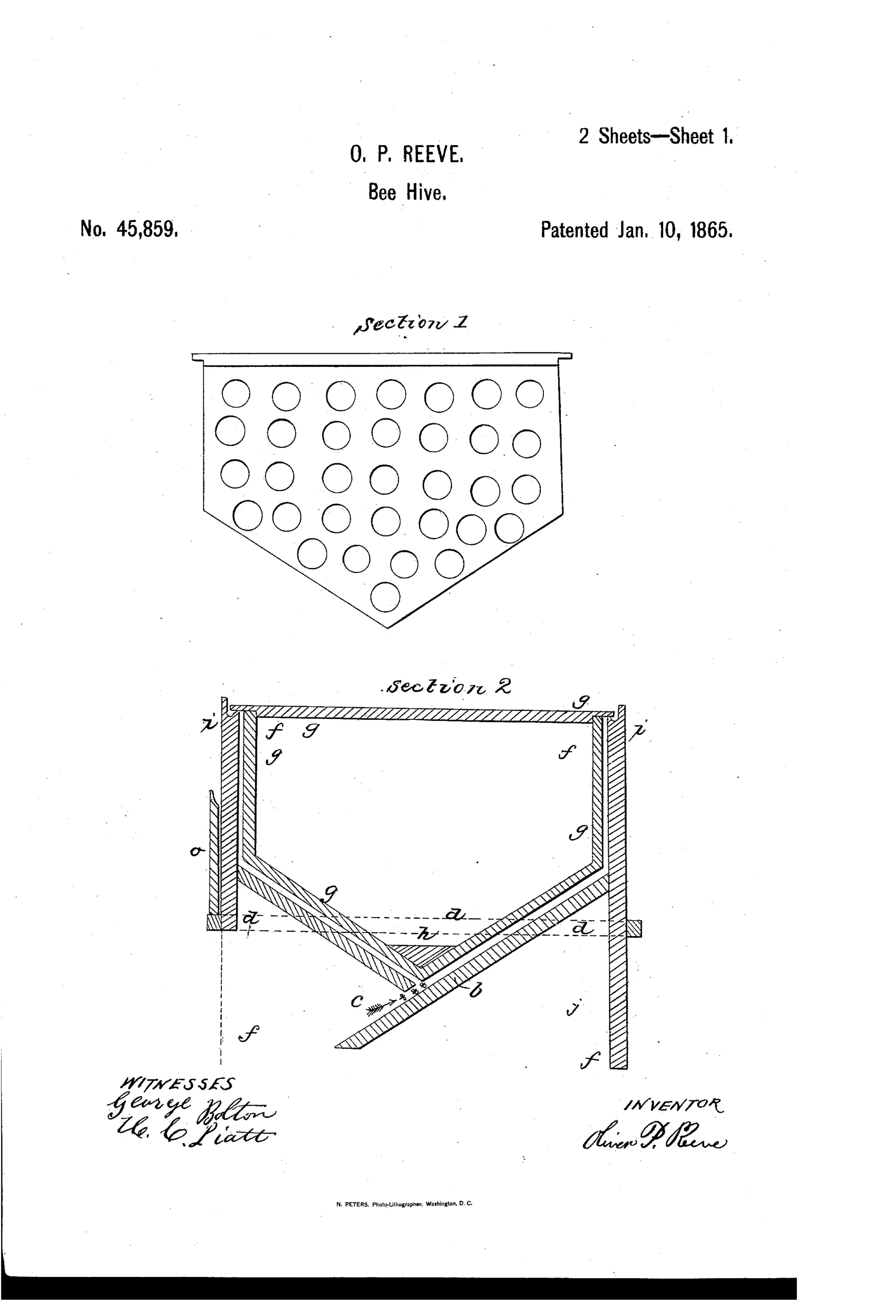
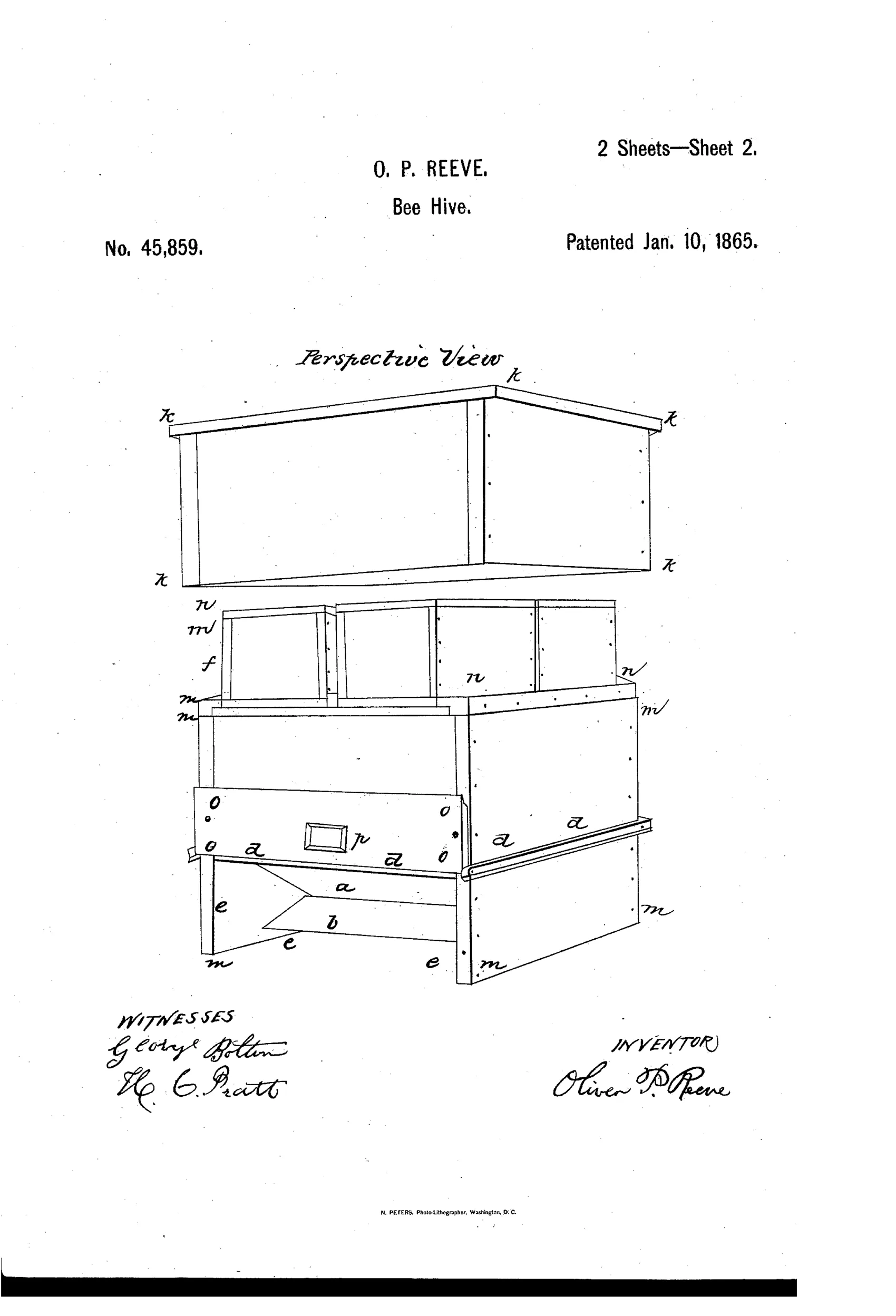
The hive has a double-inclined-plane bottom that lets debris fall through and directs moths and insects into a separate moth apartment away from the honey chamber. Honey-frames rest on grooved edges in the sides of the hive so bees cannot gum the frames to the hive body. A perforated pasteboard comb-guide, held by a cross-stick, is placed between frames to guide bees into building straight, regular combs. A suspended entrance gate/door with wire-cloth window can be lowered over the entrance in cold weather to enclose the hive while still allowing air circulation, and a lighting-board and rider around the hive aid handling and support the removable super containing surplus honey-boxes.
⬡ What was claimed
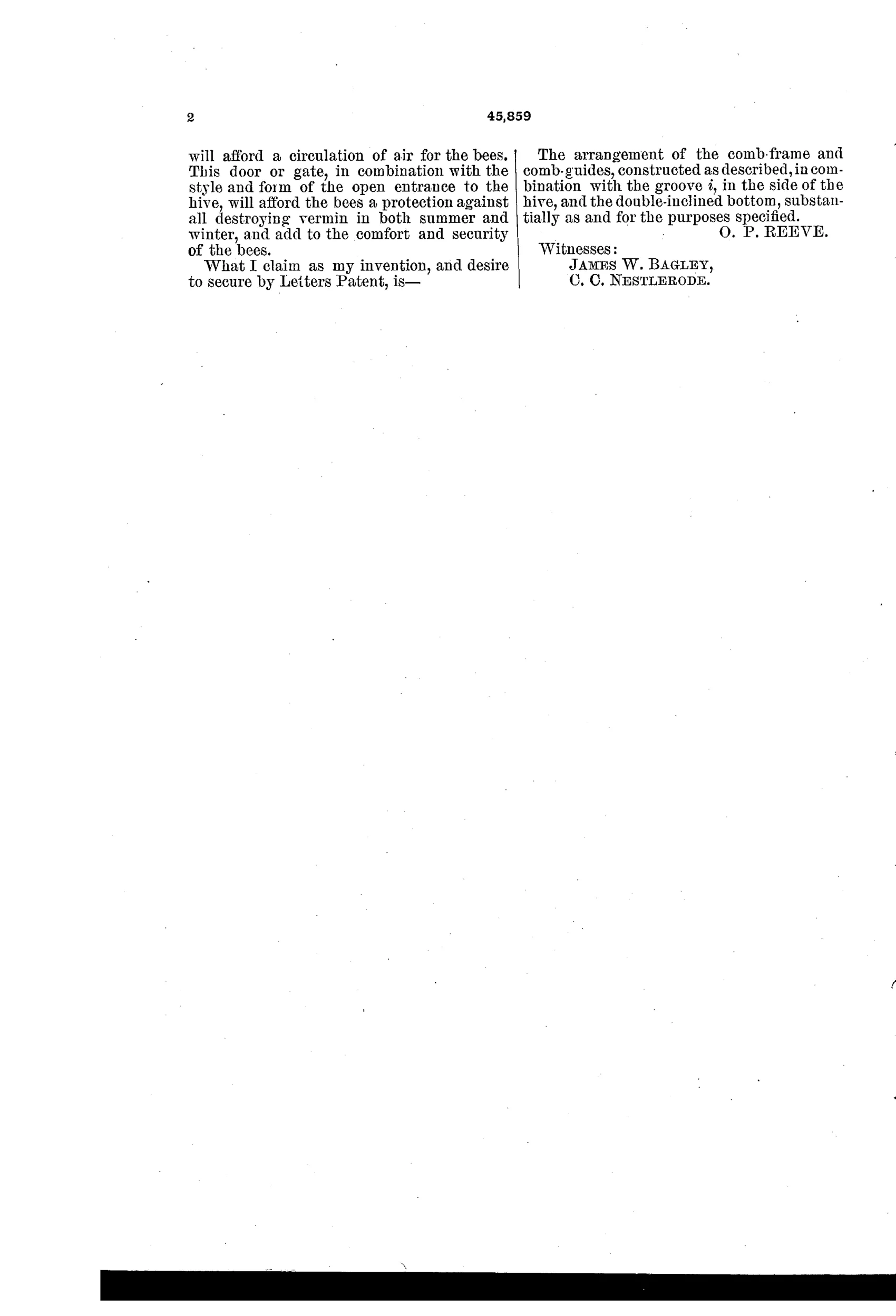
“The arrangement of the comb-frame and comb-guides, constructed as described, in combination with the groove i, in the side of the hive, and the double-inclined bottom, substantially as and for the purposes specified.”
In plain English: The claim covers the specific combination of the comb frames and perforated comb-guides fitting into side grooves, together with the double-inclined bottom, all working together as described.
⬡ In the inventor’s words
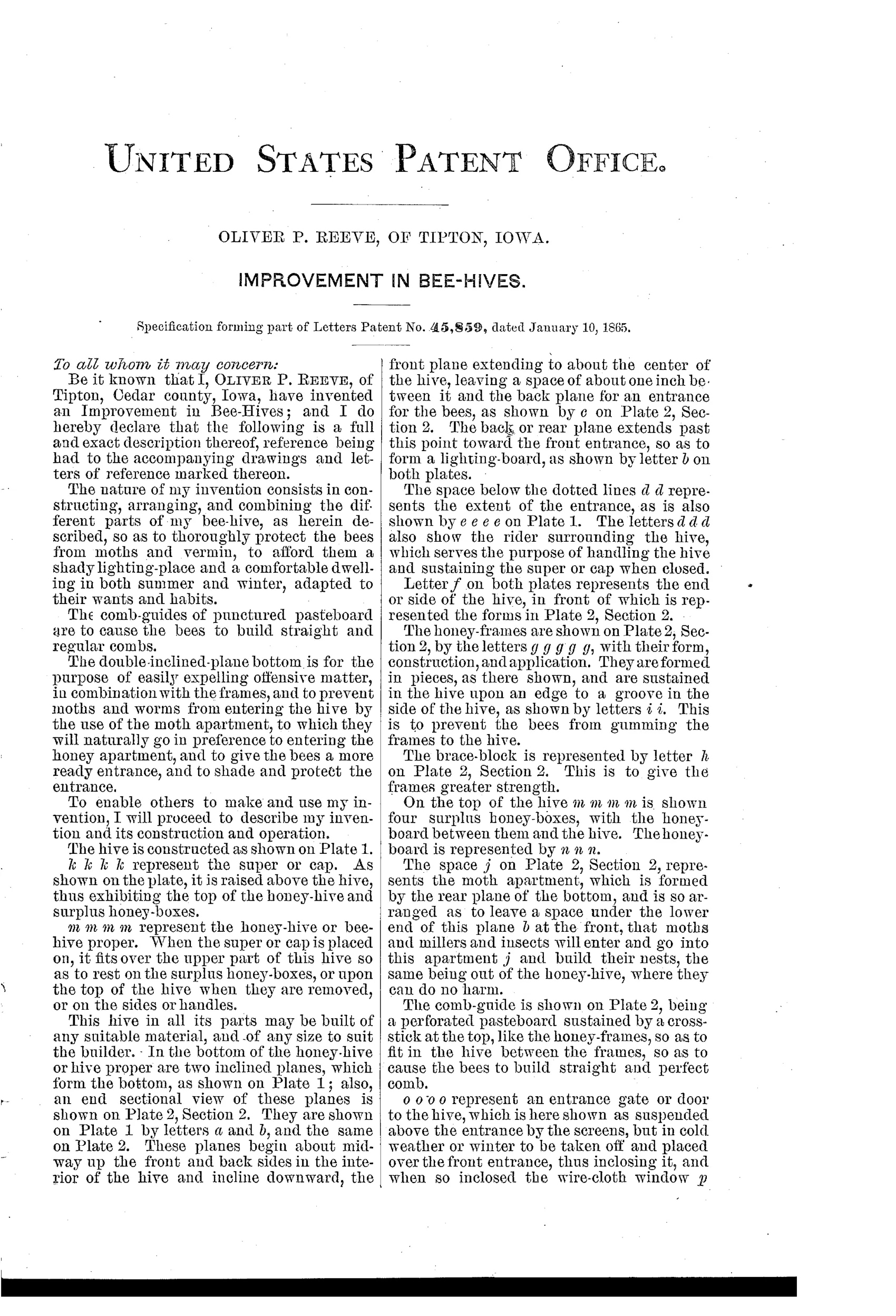
“The nature of my invention consists in constructing, arranging, and combining the different parts of my bee-hive, as herein described, so as to thoroughly protect the bees from moths and vermin, to afford them a shady lighting-place and a comfortable dwelling in both summer and winter, adapted to their wants and habits.”— Oliver P. Reeve, from the specification
Paper patent — likely never produced
The pasteboard comb-guide and moth apartment left no trace in the trade literature or supply catalogs, and no built example is documented; likely a one-off or never built.
⬡ Commentary
Reeve's 1865 hive is a Civil War-era grab bag of the era's obsessions, and two of its ideas are worth a closer look. The first drawing sheet shows the odd star of the show: a pentagonal panel of pasteboard punched full of holes, hung between the frames as a comb-guide. The theory was that bees would build through and around the perforations and thereby keep their combs straight and parallel. This is the pre-foundation era groping toward what Mehring's wax foundation would actually solve in 1857-and-after — a template that persuades bees to build where you want. Pasteboard was the wrong material and holes were the wrong cue, but the instinct was exactly right.
The second section view reveals the double-inclined bottom, a V-shaped floor that lets debris slide down and, Reeve hoped, delivers wax moths into a separate lower apartment away from the combs. Moth paranoia drove half the patent hives of the 1850s-60s, and gravity-fed moth traps were a recurring fantasy; moths fly, so the trap mostly caught litter. Still, note that the frames rest in side grooves specifically to keep bees from propolizing them fast to the walls — Reeve clearly understood the practical headache of Langstroth-style removability, even if his answer was partial.
As a whole it's a workmanlike frame hive with two dead-end flourishes, and the drawing is unusually handsome for it.
Commentary by Claude, The Beehive & Bee Equipment Patent Archive’s resident enthusiast