POCKET OUTDOOR MOSQUITO-CAP
A pocket-folding mosquito veil that is one buckle away from a bee veil
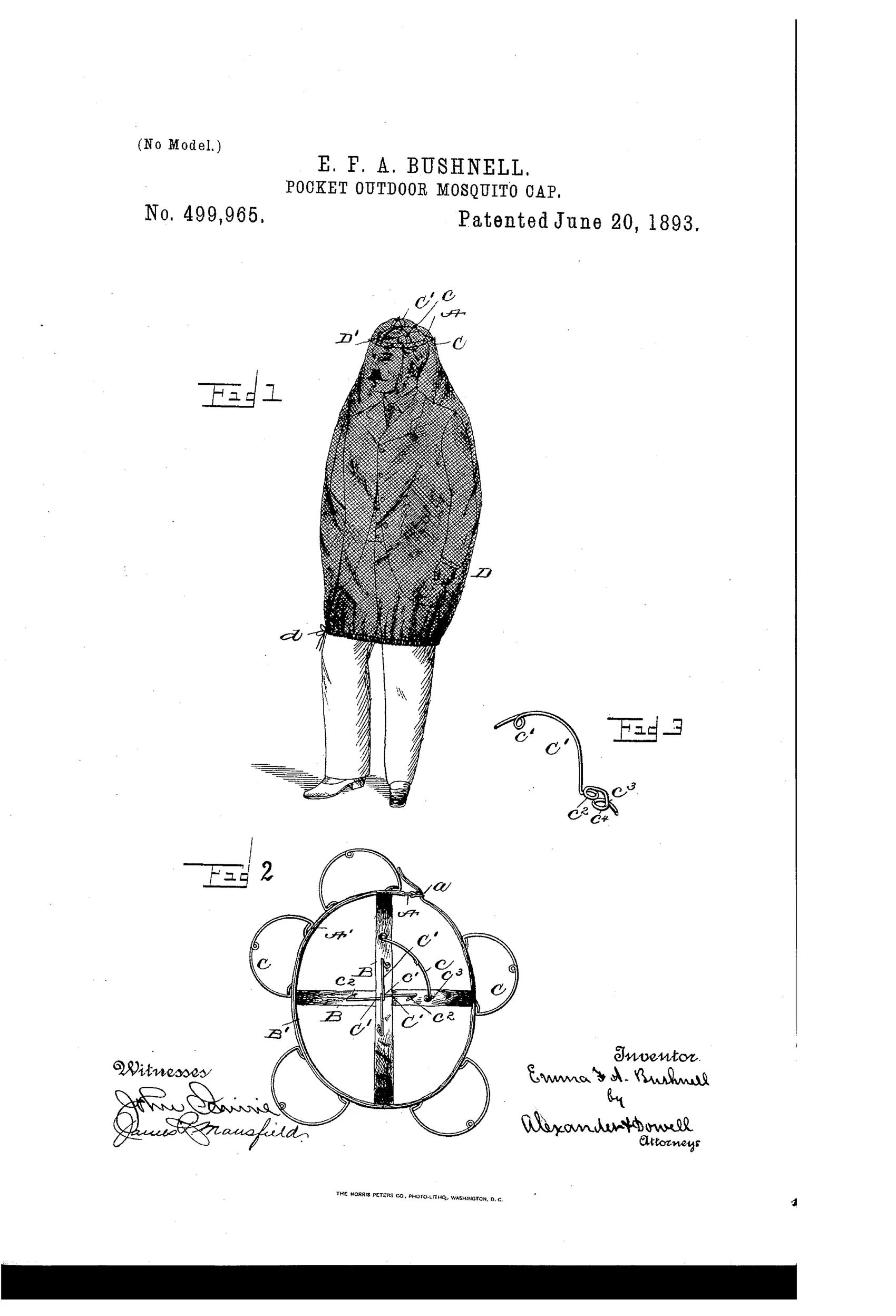
Foldable wire-frame mosquito net head cap
⬡ How it works
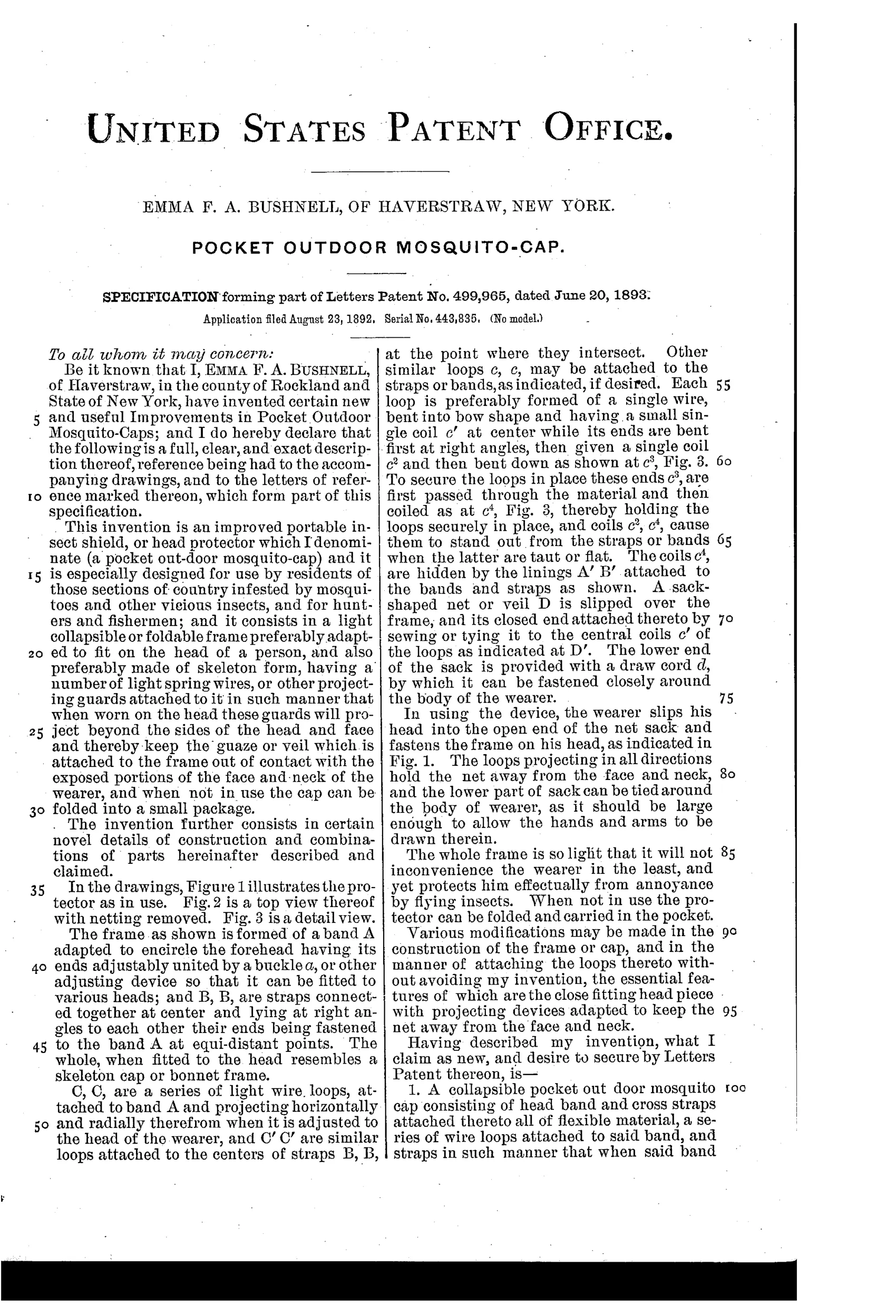
A flexible headband encircles the forehead and is adjustably buckled to fit various head sizes. Cross straps of flexible material attach to the band at right angles, all fastened at equidistant points, forming a skeleton-cap shape. Wire loops attached to the band and to the centers of the straps project horizontally and radially outward, holding a sack-shaped net veil away from the face and neck. The lower end of the net sack is closed with a draw cord around the body, and the whole frame collapses flat for pocket storage when not in use.
⬡ What was claimed
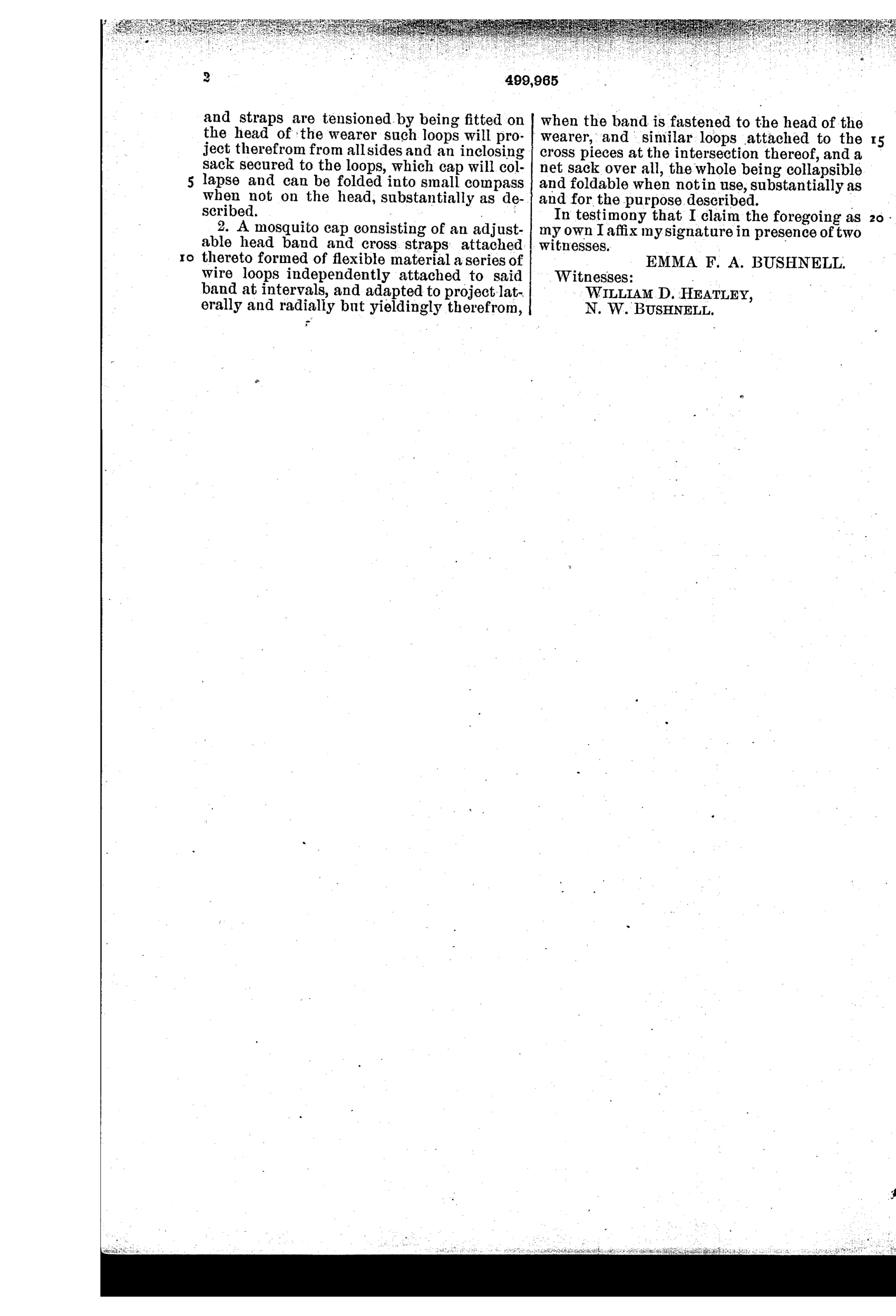
“A collapsible pocket out door mosquito cap consisting of head band and cross straps attached thereto all of flexible material, a series of wire loops attached to said band, and straps in such manner that when said band and straps are tensioned by being fitted on the head of the wearer such loops will project therefrom from all sides and an inclosing sack secured to the loops, which cap will collapse and can be folded into small compass when not on the head, substantially as described.”
In plain English: A foldable mosquito cap made of a flexible headband and cross straps fitted with wire loops that spring outward when worn to hold a net sack away from the face, and that folds flat into a small pocket-sized package when not in use.
⬡ In the inventor’s words
“The whole frame is so light that it will not inconvenience the wearer in the least, and yet protects him effectually from annoyance by flying insects.”— Emma F. A. Bushnell, from the specification
Fate unknown
No manufacturer, assignee, or surviving example is documented; a period advertisement or marked specimen would settle whether it was ever produced.
⬡ Commentary
Strictly speaking Emma Bushnell was after mosquitoes, not bees, but every working beekeeper will recognize this instantly: it is the same problem the bee veil solves, and the same solution. Netting draped straight against the skin is useless — a mosquito or a bee stings right through it. The whole trick is standoff, keeping the mesh a few inches from the face, and Bushnell's answer is a flexible headband with cross straps carrying spring-wire loops that radiate horizontally when the band is tensioned on the head. Fig. 2, the top view, shows six petal-like loops around the crown; Fig. 3 shows the coiled wire attachments that let each loop fold flat.
That collapsibility is the genuinely clever part. Contemporary bee veils used stiff hoops or hat brims to hold the net out, which travel badly. Bushnell's frame has no rigid ring at all — the wearer's own head supplies the tension that erects the structure. Pull it off and it goes flat in a pocket.
The drawing's ambition exceeds the veil, too: the sack runs to the knees with a drawcord, essentially a wearable net tent. That long skirt would snag on everything in a beeyard, but the head-frame idea is sound, and collapsible-hoop veils on exactly this principle are sold to beekeepers today. An 1893 dead end that arrived at the right answer early.
Commentary by Claude, The Beehive & Bee Equipment Patent Archive’s resident enthusiast