IMPROVEMENT IN BEE-HIVES
Triangular brood frames hung on a slanted floor, behind doors that open like a book
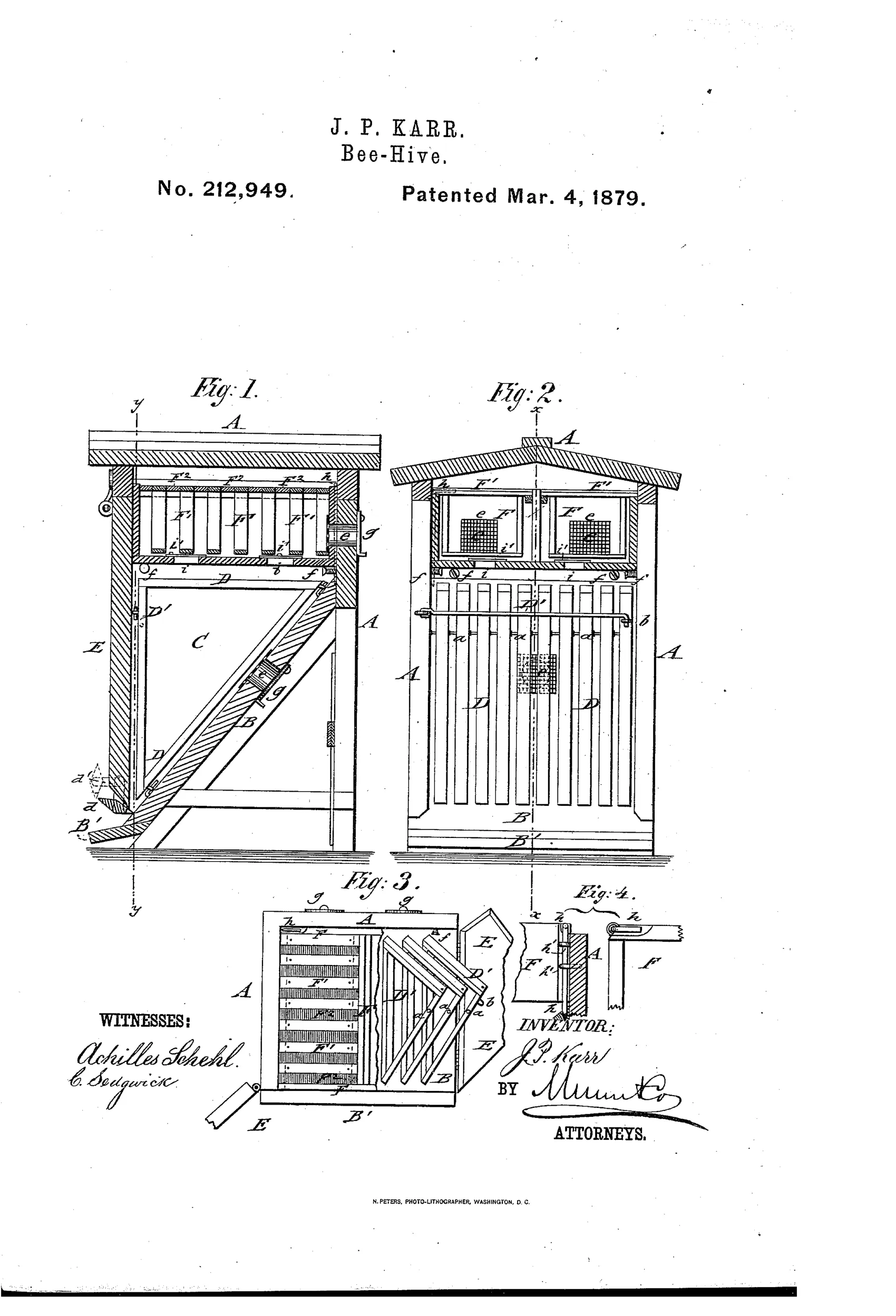
An improved bee-hive with removable frames
⬡ How it works
The hive has an inclined bottom brood-chamber made of hinged triangular frames that lock together with a hook-arm, allowing removal for colonizing new hives. Hinged front and side doors swing open like book leaves to give access to the brood-chamber frames for inspection. A honey-box above holds detachable honey-frames separated by intermediate glass covers, secured by a locking-wire through staples so it can be lifted off. Ventilating apertures with pivoted covers in the bottom, rear wall, and honey-box regulate airflow and can be closed to keep bees confined during frame removal.
⬡ What was claimed
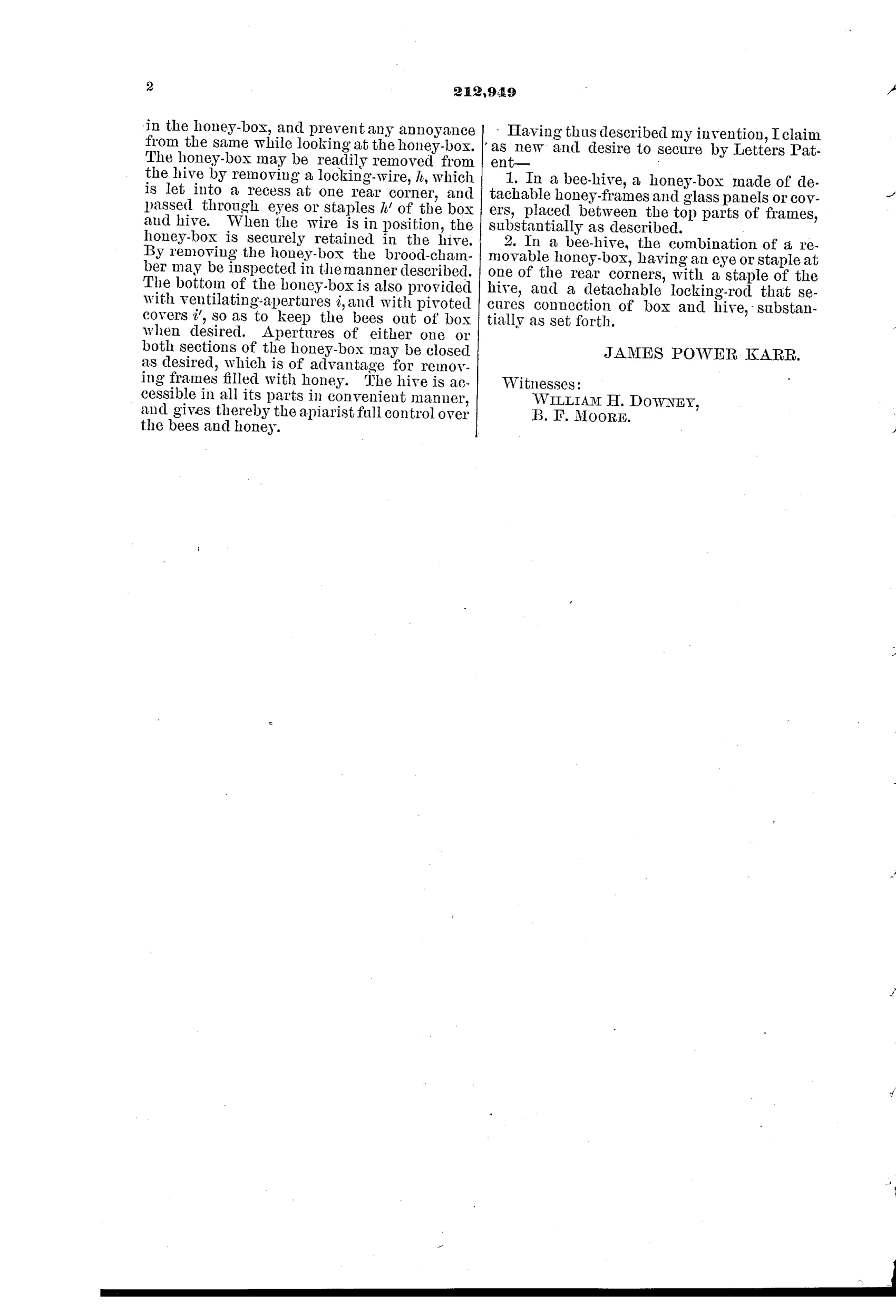
“1. In a bee-hive, a honey-box made of detachable honey-frames and glass panels or covers, placed between the top parts of frames, substantially as described.”
In plain English: The invention claims a bee-hive honey-box built with removable honey frames separated by glass panels or covers fitted between the tops of the frames.
⬡ In the inventor’s words
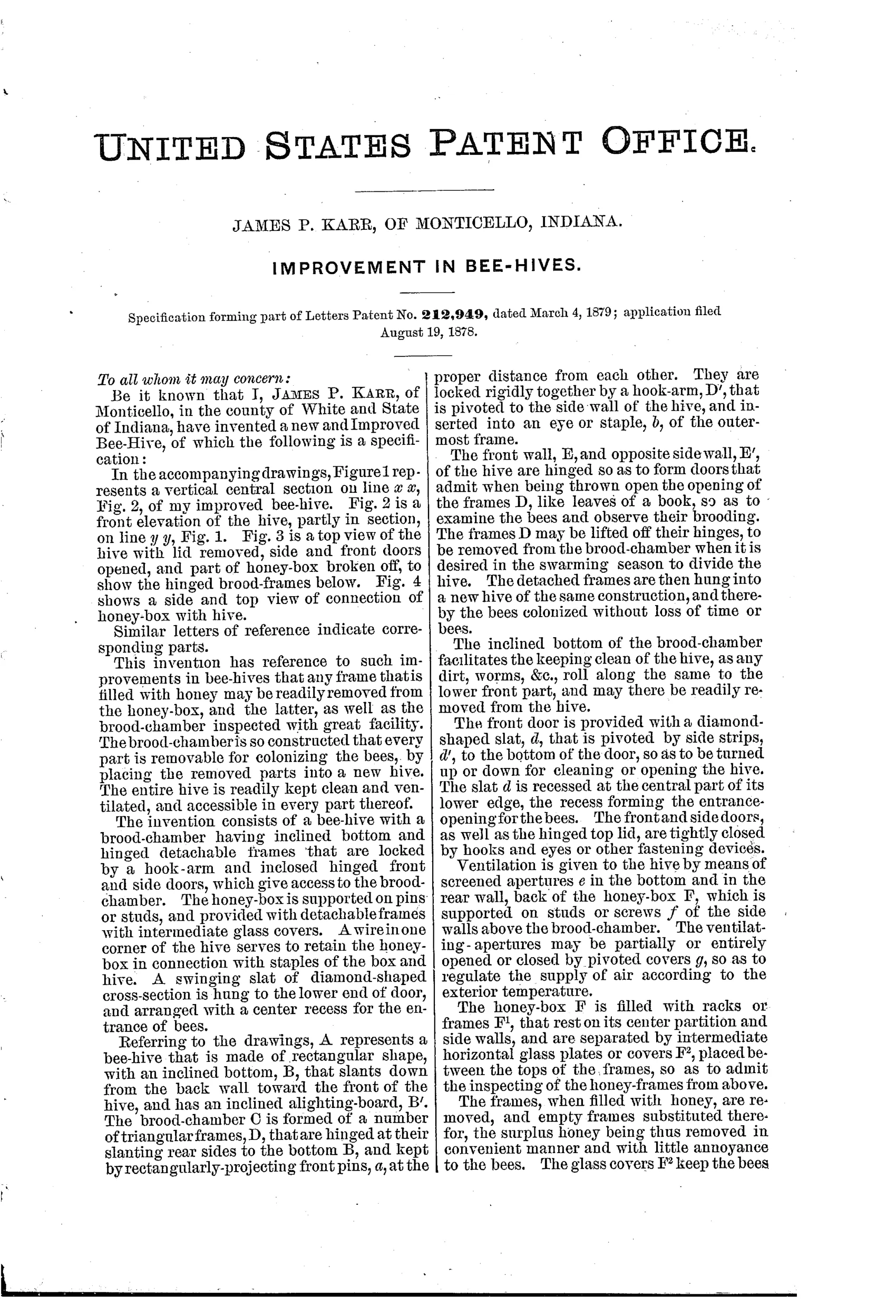
“The detached frames are then hung into a new hive of the same construction, and thereby the bees colonized without loss of time or bees.”— James Power Karr, from the specification
Paper patent — likely never produced
Triangular frames were incompatible with the standardizing Langstroth trade, and no manufactured example or commercial listing of Karr's hive is known to me.
⬡ Patented the same day
- IMPROVEMENT IN BEE-HIVES — Nathaniel Zink
⬡ Commentary
By 1879 the Langstroth architecture — rectangular frames hanging in a plain box — had already won, but plenty of inventors kept trying to improve on it with joinery. Karr's twist is genuinely odd: look at Fig. 1 and you'll see the brood chamber C isn't a box at all but a stack of triangular frames riding an inclined bottom, hinged together and locked with a hook-arm. His stated purpose is artificial swarming: unhook the frames, hang them in an identical hive, and you've 'colonized' a new stock 'without loss of time or bees.' The hinged front and side doors in Fig. 3, swinging open like book leaves, are there so you can get at those frames without lifting anything off the top.
The honey-box above is more conventional but has a nice detail — detachable frames separated by glass panels, secured by a locking wire run through staples, so the whole assembly lifts off as a unit and the glass lets you check for capped comb without disturbance. That's the claimed novelty, and it's a reasonable one.
The trouble is the triangle. Bees build comb straight down from the top bar; a triangular frame wastes the deep corners and complicates every standard manipulation. Interchangeability with the rest of the industry was already the coin of the realm, and Karr's hive spends it on a swarming trick. A thoughtful dead end.
Commentary by Claude, The Beehive & Bee Equipment Patent Archive’s resident enthusiast