IMPROVEMENT IN BEE-HIVES
Flat-pack hive with canvas-hinged sawdust pockets, twelve years before Root's dovetailed boxes
Knockdown wooden bee-hive with winter/summer conversion
⬡ How it works
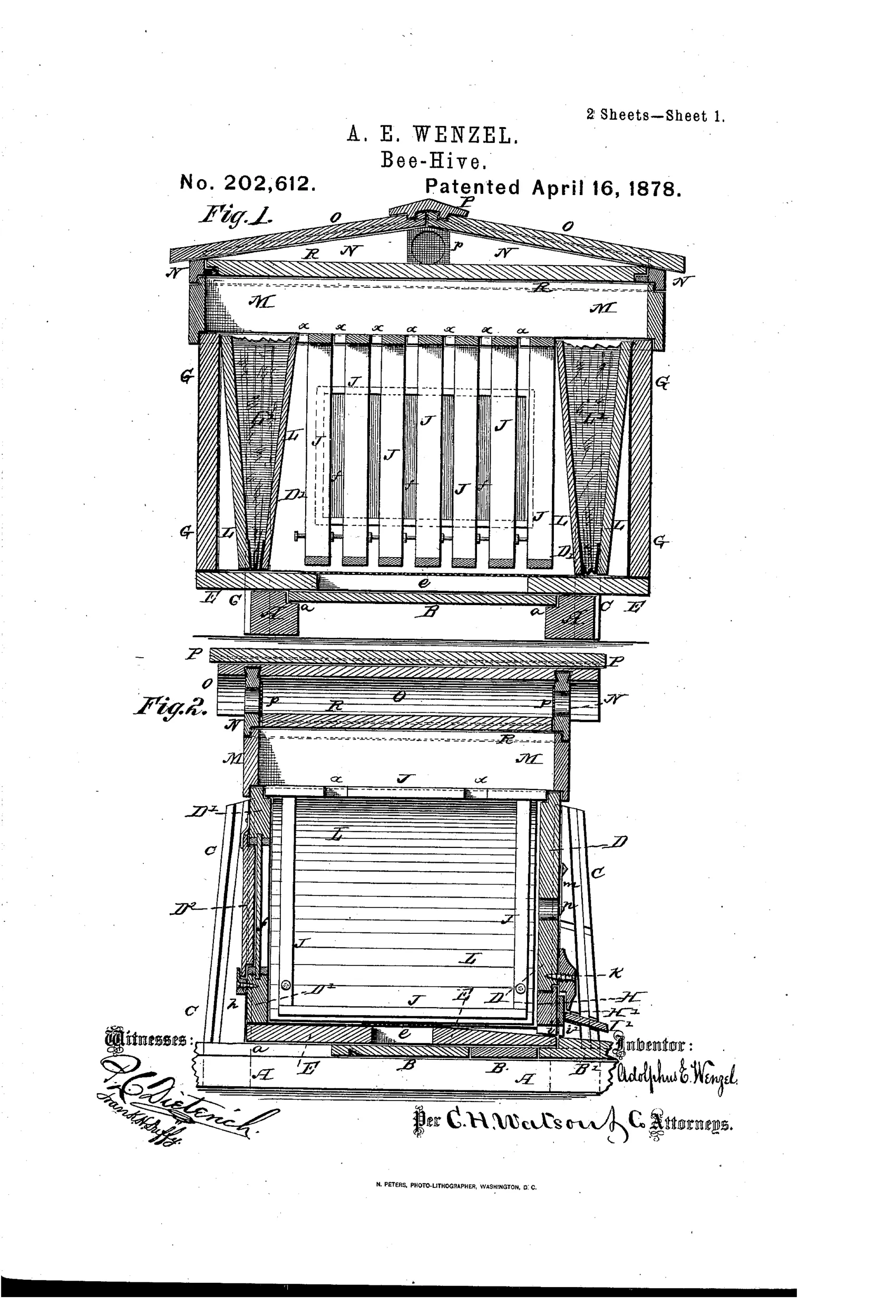
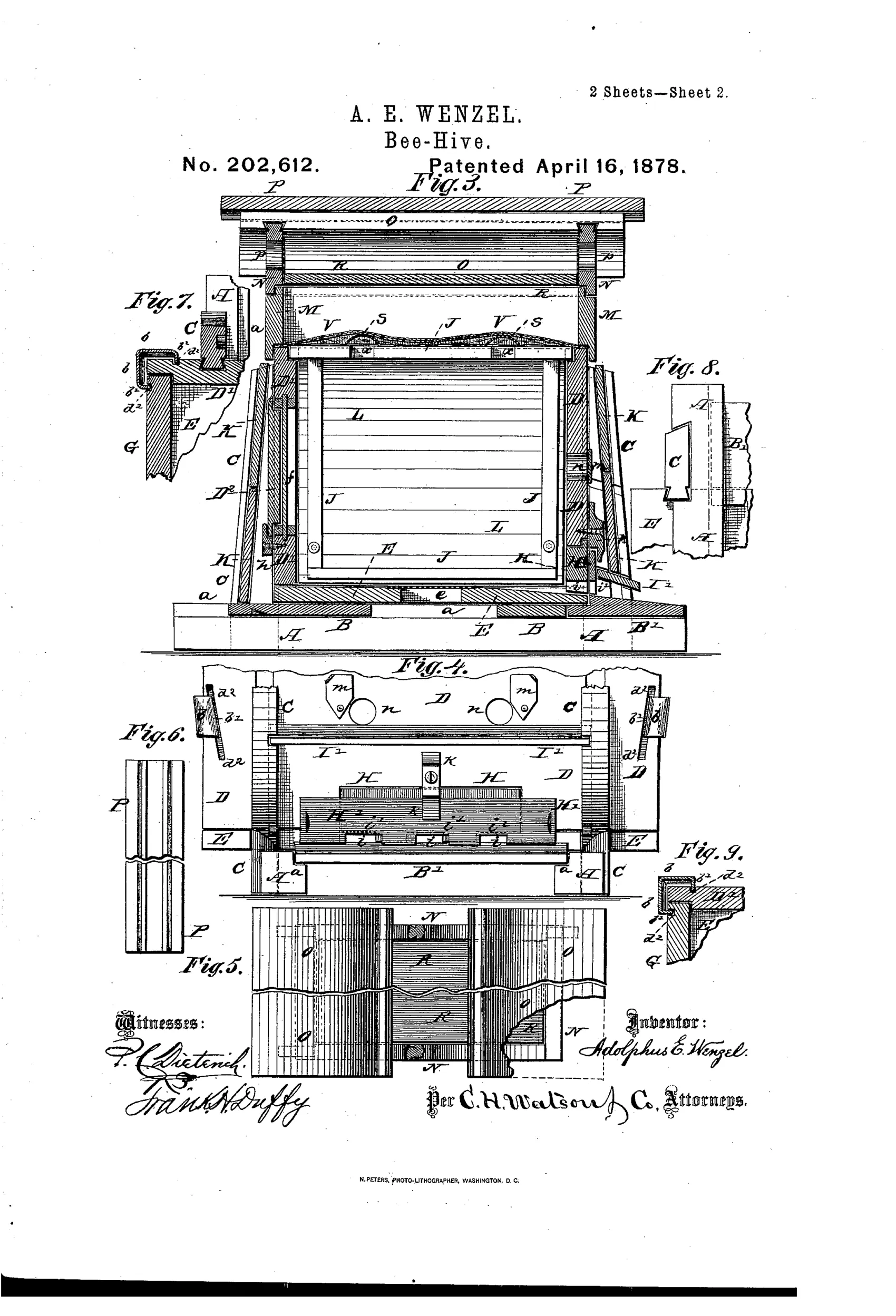
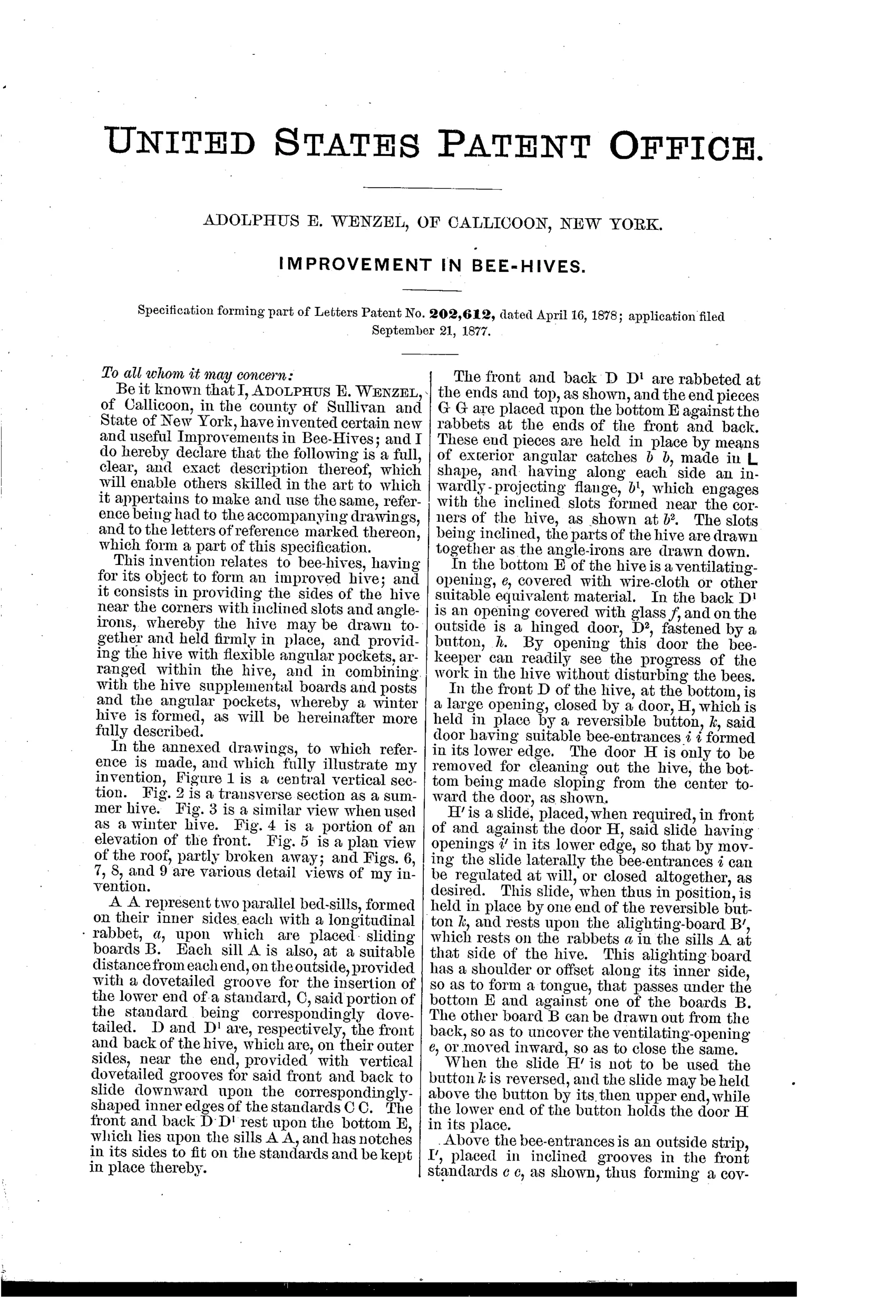
The hive's sides, front, back and bottom are joined entirely by dovetailed grooves and tongues, held together by inclined slotted corners engaged with angular catches, so no nails or screws are needed and the whole structure can be knocked down for shipment and reassembled. Flexible angular pockets made of two boards joined by canvas are fitted inside each end of the hive; in summer they are closed, but in winter they are opened and packed with sawdust or similar insulating material to retain heat. Supplemental boards and posts can be added to form a double wall around the brood chamber for additional winter protection, while removable box-frames and a ventilated roof-frame accommodate honey-boxes or honey-frames in summer. Wire-cloth ventilating openings, a glass-covered observation door, and adjustable entrance slides let the beekeeper regulate airflow, inspect the combs, and control bee entrances without disturbing the colony.
⬡ What was claimed
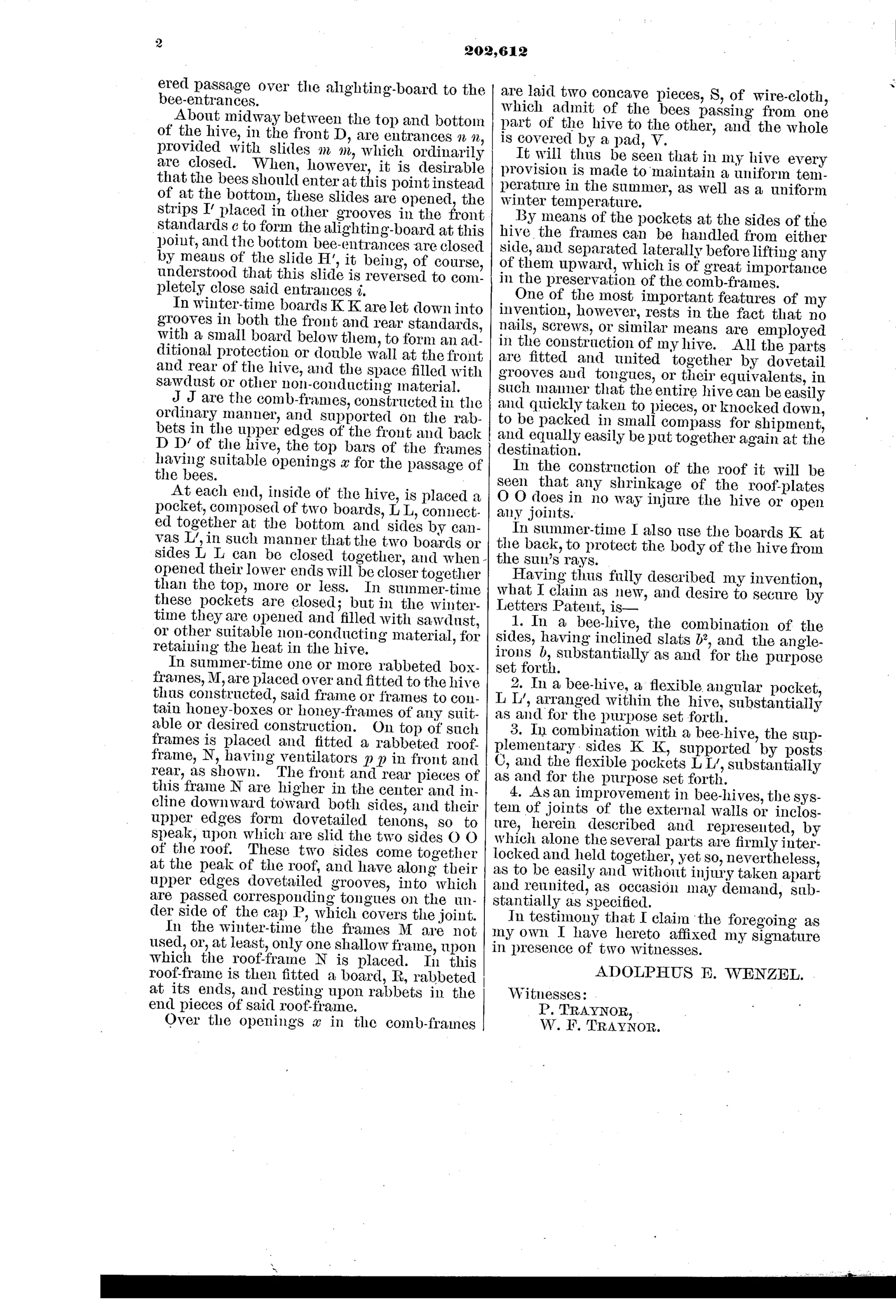
“4. As an improvement in bee-hives, the system of joints of the external walls or inclosure, herein described and represented, by which alone the several parts are firmly interlocked and held together, yet so, nevertheless, as to be easily and without injury taken apart and reunited, as occasion may demand, substantially as specified.”
In plain English: The hive's outer walls are held together entirely by interlocking dovetail joints, so the whole hive can be taken apart and put back together without damage whenever needed.
⬡ In the inventor’s words
“One of the most important features of my invention, however, rests in the fact that no nails, screws, or similar means are employed in the construction of my hive.”— Adolphus E. Wenzel, from the specification
Paper patent — likely never produced
The all-joinery construction and canvas pocket-work would have been costly to produce, and no manufactured example or trade listing is known to me.
⬡ Patented the same day
- IMPROVEMENT IN BEE-HIVES. — David P. Miller
⬡ Commentary
Wenzel's proudest boast — "no nails, screws, or similar means are employed" — reads at first like a woodworker showing off, but there's real logic behind it. A hive that ships knocked down and assembles by sliding dovetailed tongues into grooves, locked by those little angular catches drawn in Figs. 7 and 9, is a hive a rural customer can receive by rail as a bundle of boards. That's the same insight A.I. Root would ride to fortune with his machine-cut dovetailed hive bodies a decade-plus later, though Root kept the nails and dropped the cleverness.
The part a casual reader will skate past is inside the walls: those hatched triangular wedges flanking the frames in Fig. 1 are flexible pockets, two boards hinged with canvas. Folded flat in summer, opened and stuffed with sawdust in winter. It's a genuinely thoughtful answer to the era's obsession with wintering losses, and cheaper than the double-walled "chaff hives" then gaining ground — you convert one hive rather than buy two.
The trouble is everything else. Wenzel piles on supplemental double walls, a ventilated roof-frame, a glazed observation door, wire-cloth vents, and slide entrances. Every joint that lets the hive come apart is also a joint bees will propolize and weather will swell. The insulation idea was sound; the field settled it more crudely, with plain boxes and packing cases.
Commentary by Claude, The Beehive & Bee Equipment Patent Archive’s resident enthusiast