IMPROVEMENT IN BEE-HIVES
A chimney-hive that asks moths to exit through the confusing tube
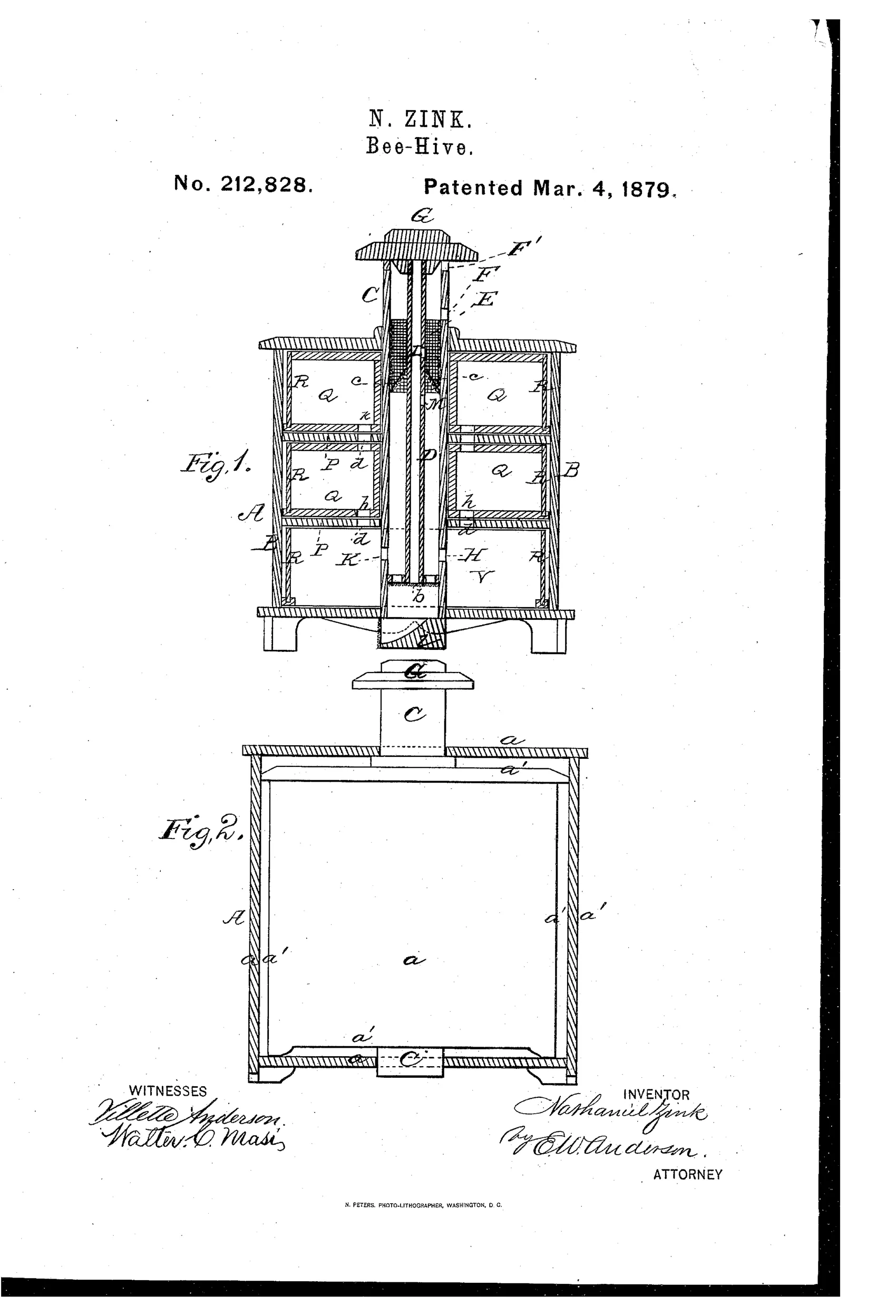
Ventilated, moth-proof bee-hive with concentric tubes
⬡ How it works
A rectangular double-walled hive box contains horizontal compartments with removable glass-fronted comb drawers accessed through hinged doors. A central outer tube extends through the top and bottom of the hive and serves as both ventilation shaft and bee entrance, while a smaller inner tube fits inside it with a perforated, gauze-covered plate at its lower end. Bees entering the outer tube pass into a wire-gauze box (moth trap) and then down through the inner tube, emerging through side openings into the hive below a light-attracting trap that catches and kills entering moths. Drawers with aligned holes in their bottoms and the partitions allow bees to move freely between the lower brood chamber and upper compartments.
⬡ What was claimed
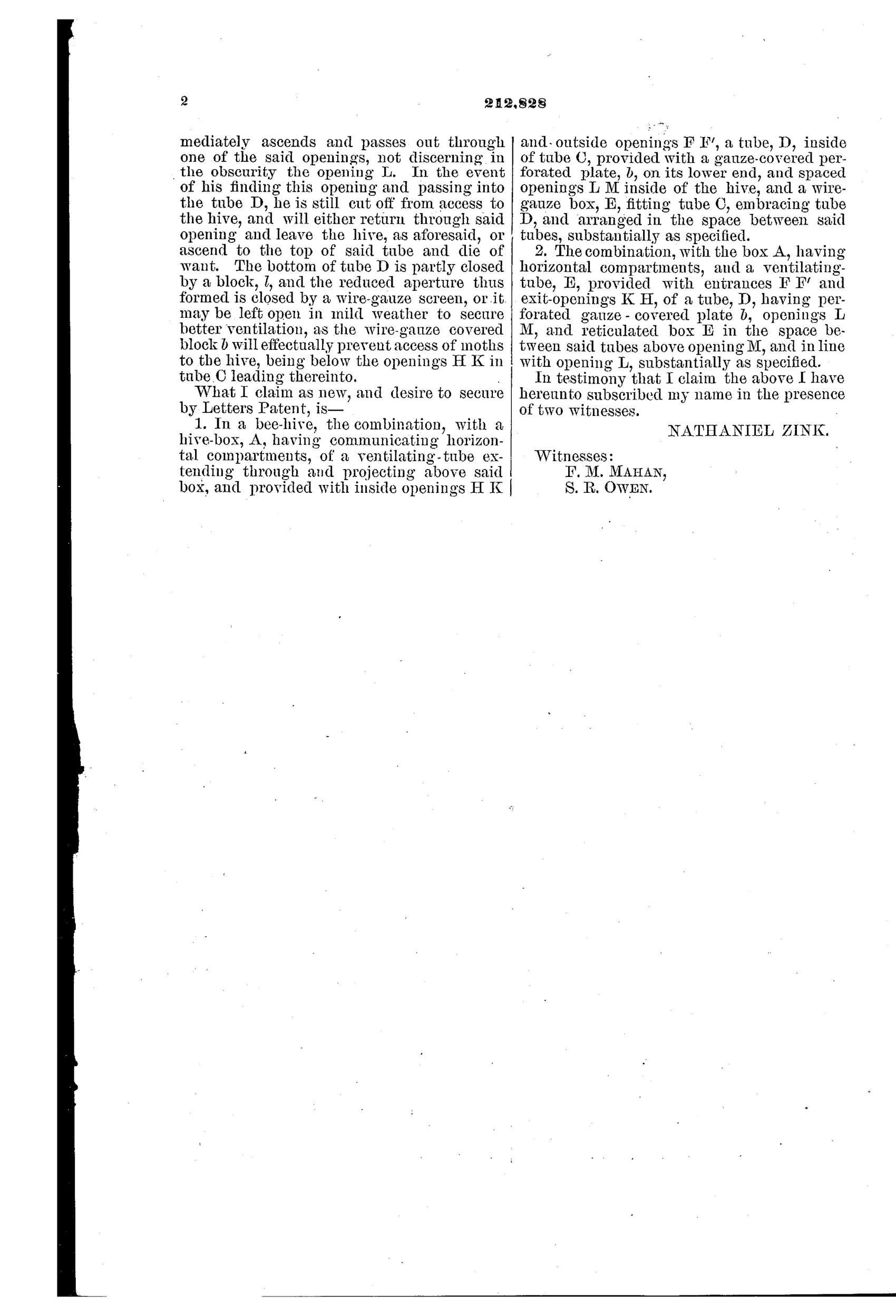
“1. In a bee-hive, the combination, with a hive-box, A, having communicating horizontal compartments, of a ventilating-tube extending through and projecting above said box, and provided with inside openings H K and outside openings F F', a tube, D, inside of tube C, provided with a gauze-covered perforated plate, b, on its lower end, and spaced openings L M inside of the hive, and a wire-gauze box, E, fitting tube C, embracing tube D, and arranged in the space between said tubes, substantially as specified.”
In plain English: The hive combines a box with connected horizontal compartments and a ventilating outer tube (with inside and outside openings) enclosing an inner tube fitted with a gauze-covered perforated plate and spaced openings, plus a wire-gauze moth-trap box positioned between the two tubes.
⬡ In the inventor’s words
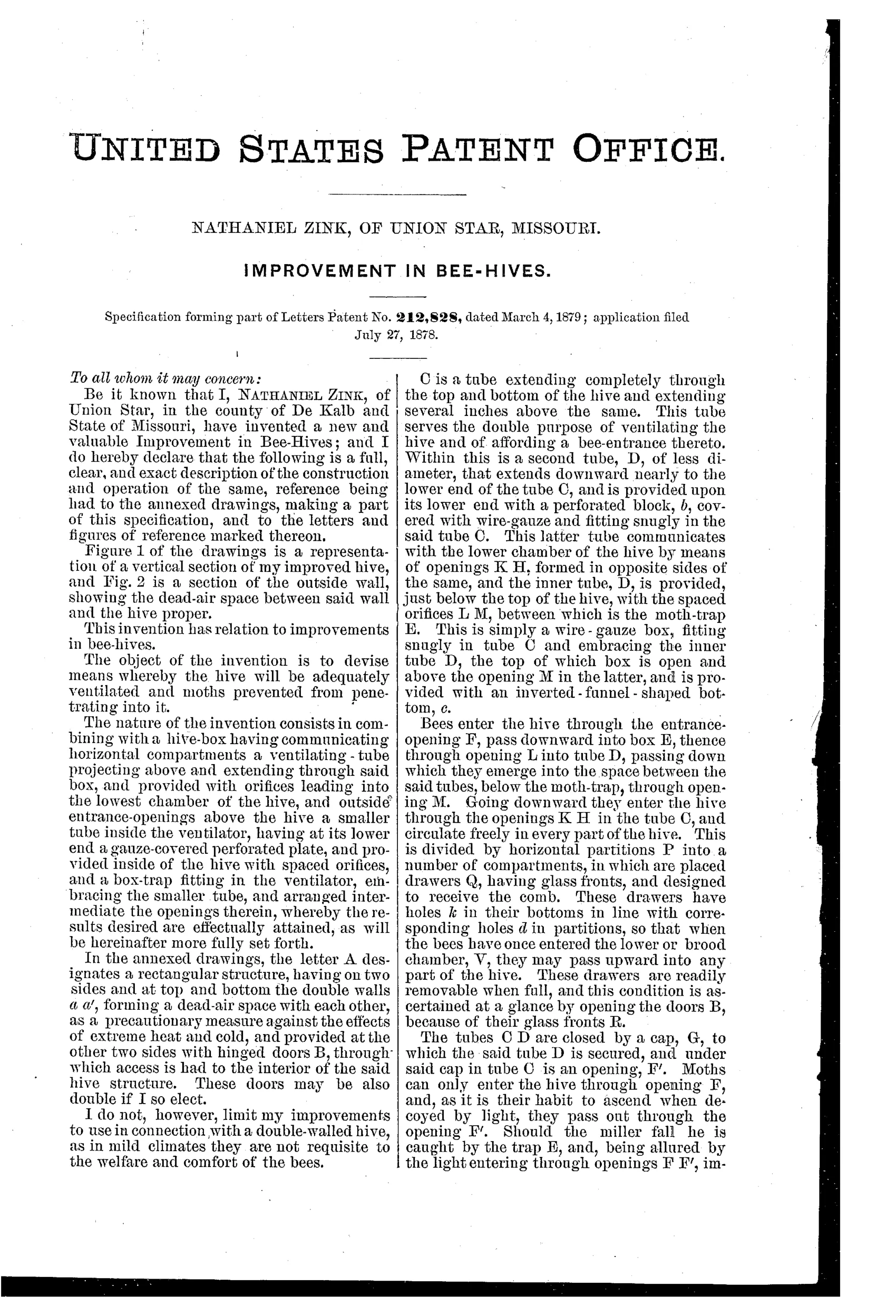
“Should the miller fall he is caught by the trap E, and, being allured by the light entering through openings F F', immediately ascends and passes out through one of the said openings, not discerning in the obscurity the opening L.”— Nathaniel Zink, from the specification
Fate unknown
No manufactured example or trade listing is documented; a surviving hive or a period advertisement from northwest Missouri would settle it.
⬡ Patented the same day
- IMPROVEMENT IN BEE-HIVES — James Power Karr
⬡ Commentary
Zink's hive is a good specimen of the 1870s moth-trap obsession taken to architectural extremes. Instead of a simple entrance at the bottom board, bees enter through a cap at the top of a central chimney — two concentric tubes running clean through the hive. They descend the inner tube past a gauze-covered plate; wax moths, meanwhile, are supposed to blunder into a wire-gauze box wedged between the tubes, be 'allured by the light' of the upper openings, and fly back out without ever finding the dark passage into the hive. The patent text is charmingly confident that the miller cannot discern 'in the obscurity the opening L.'
The drawing rewards a close look. Fig. 1 shows the whole apparatus in section: glass-fronted comb drawers stacked in horizontal compartments around the chimney, with aligned holes letting bees pass between brood chamber and upper stories. Fig. 2 shows a double wall with a dead-air space — genuinely sound insulation thinking, and the most practical idea on the sheet.
But the whole scheme fights bee behavior. Bees ventilate by fanning at a low entrance; forcing all traffic down a narrow gauze-obstructed tube would congest foraging and clog with dead bees and debris. By 1879 Langstroth frames and simple entrance reducers had already made this kind of anti-moth engineering unnecessary — strong colonies handle moths themselves. This is a dead-end branch, worked out with real care.
Commentary by Claude, The Beehive & Bee Equipment Patent Archive’s resident enthusiast