IMPROVEMENT IN BEE-HIVES.
A sliding blade to slice propolis before you pry off the lid
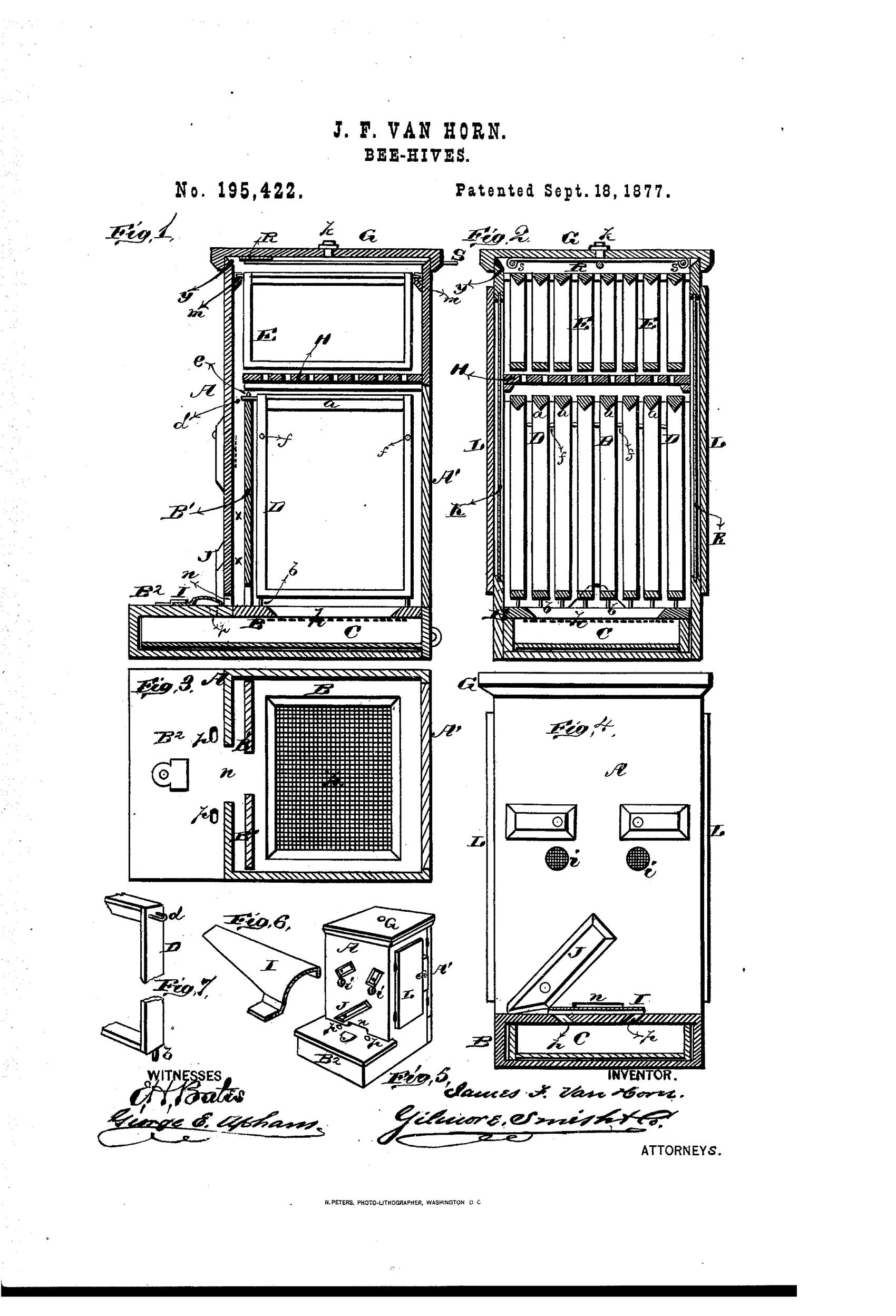
A multi-purpose beehive with removable frames.
⬡ How it works
The hive body holds lower brood frames D that can be removed from the front, back, or top, supported by metal points and wire loops on a permanently attached frame-board. A perforated honey-board separates the lower brood frames from upper honey frames, deterring the queen from passing up while allowing worker bees through. The movable bottom extends forward into an alighting board with a sliding shield that directs moth larvae and debris into a waste drawer beneath the hive. A sliding wax-cutter mounted on rods beneath the hive top can be pulled across to sever wax or propolis fibers before removing the top, preventing bees from being crushed.
⬡ What was claimed
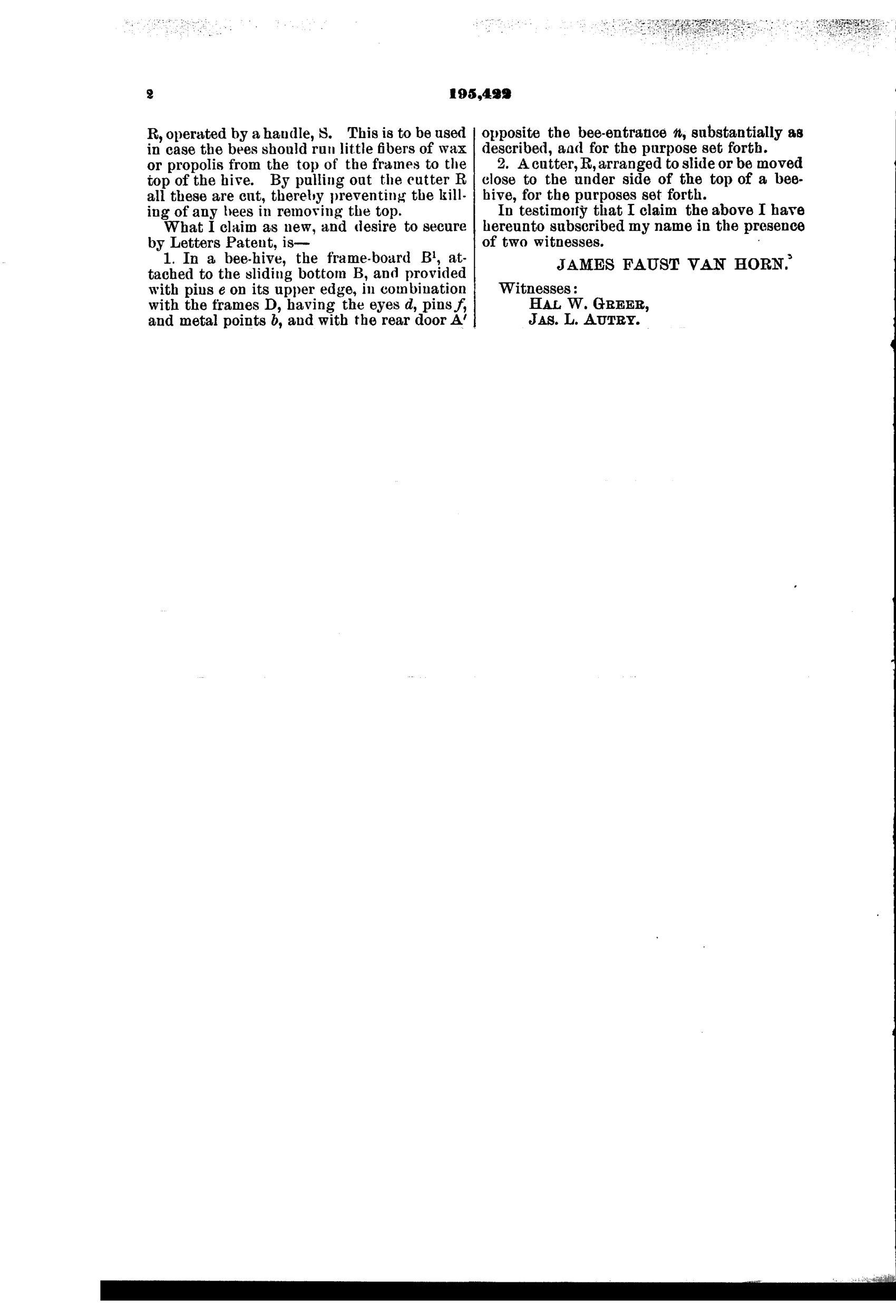
“1. In a bee-hive, the frame-board B1, attached to the sliding bottom B, and provided with pins e on its upper edge, in combination with the frames D, having the eyes d, pins f, and metal points b, and with the rear door A' opposite the bee-entrance n, substantially as described, and for the purpose set forth.”
In plain English: The patent covers a hive frame-board attached to a sliding bottom, fitted with pins, that works together with hanging frames and a rear door positioned across from the bee entrance.
⬡ In the inventor’s words
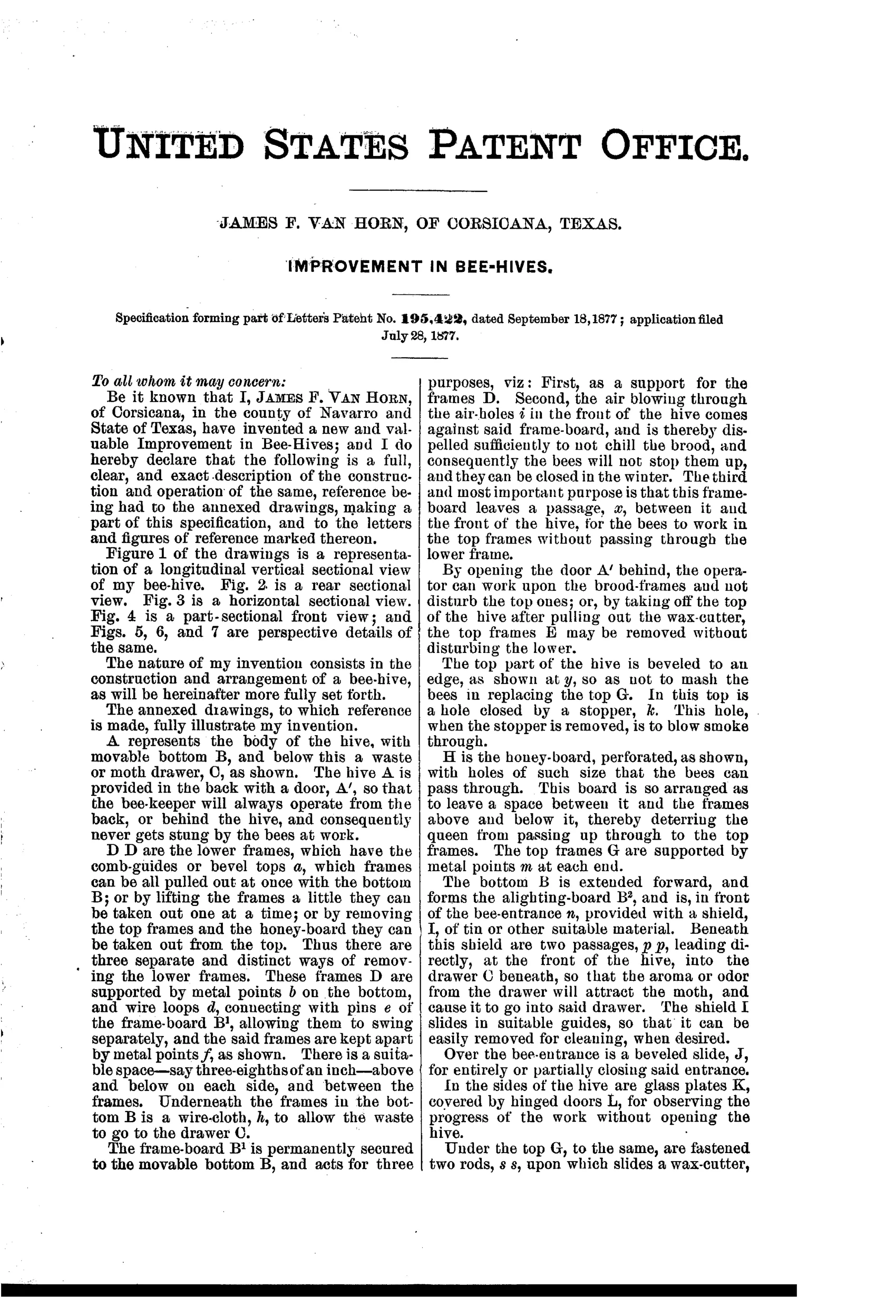
“By pulling out the cutter R all these are cut, thereby preventing the killing of any bees in removing the top.”— James F. Van Horn, from the specification
Fate unknown
No documented manufacture or surviving example is known to me; a marked hive or a Texas agricultural-press advertisement would settle it.
⬡ Patented the same day
- IMPROVEMENT IN BEE-HIVES — Isham Berry Burroughs
⬡ Commentary
Van Horn's hive is a grab-bag of 1877's obsessions — moth defense, queen exclusion, frames you can pull from three directions — but the detail worth stopping on is the wax-cutter. Fig. 6 shows it: a blade riding on rods beneath the hive top, so that before you lift the lid you draw the cutter across and sever every strand of wax and propolis the bees have used to glue things down. His stated purpose is humane and practical at once: 'preventing the killing of any bees in removing the top.' Anyone who has cracked a propolized cover knows exactly the problem he was solving; the modern answer is simply the hive tool, but a built-in shear is not a foolish thought.
The perforated honey-board separating brood frames below from honey frames above is a genuine queen-excluder idea, circulating in this era before the punched-zinc excluder became standard. His frames hang on a fussy system of pins, eyes, and metal points from a frame-board fixed to a sliding bottom — clever for access, but a lot of small hardware for a farmer-carpenter to reproduce, and every extra pin is a place for propolis to defeat you.
The moth drawer under the alighting board, with a shield to funnel larvae into it, is the standard-issue folly of the decade. As a whole this is a thoughtful, over-engineered entry in a very crowded field, post-Langstroth in architecture but pre-standardization in every detail.
Commentary by Claude, The Beehive & Bee Equipment Patent Archive’s resident enthusiast