IMPROVEMENT IN BEE-HIVES
Moth-baffling entrance shutters and little tunnels so bees can commute between frames
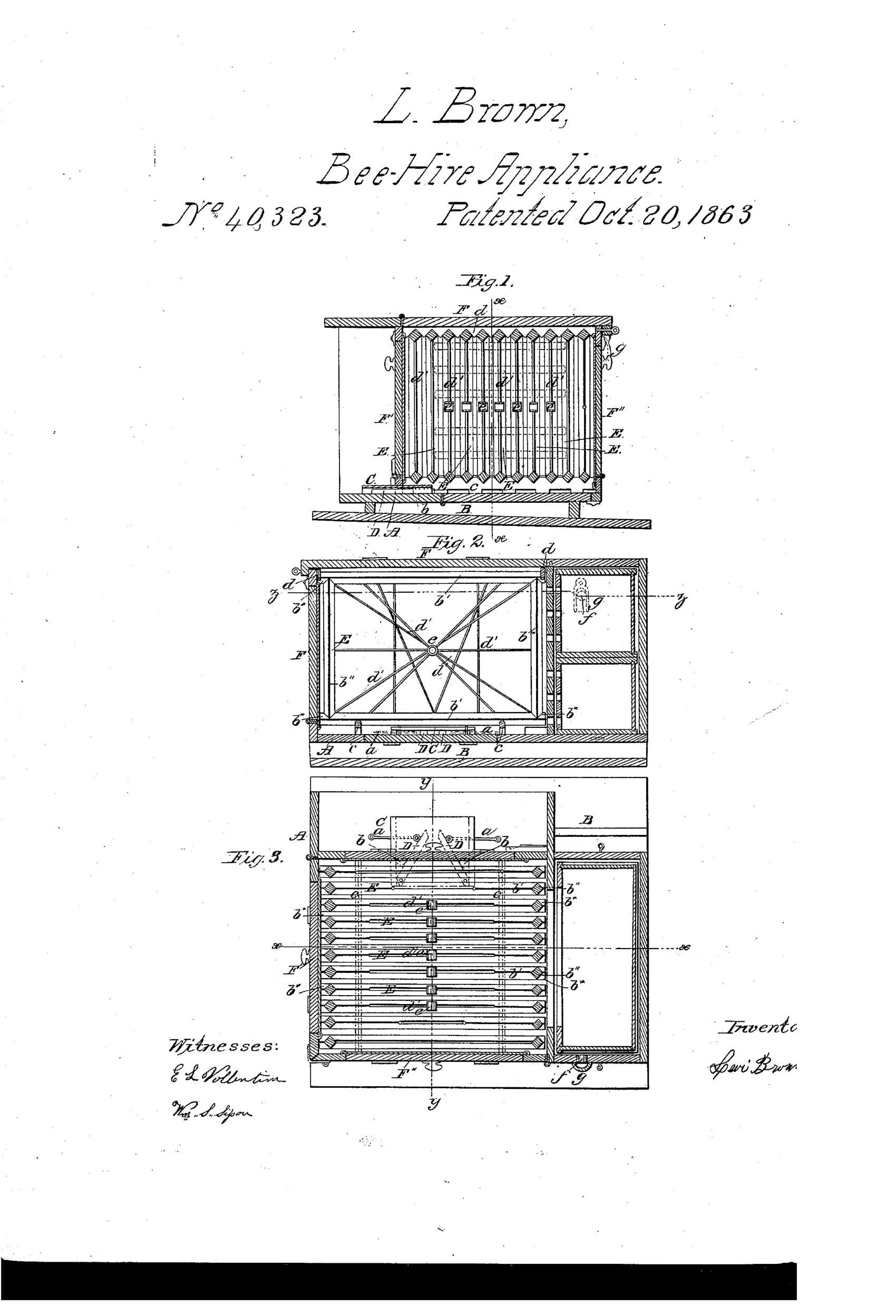
Improved bee-hive with movable frames and moth-guard shutters
⬡ How it works
The hive uses two hinged shutters at the entrance that incline toward each other to guide moths and other pests down through holes at the rear of the entrance rather than into the hive. Interior movable frames are held in place by notched bars at top and bottom rather than resting on rabbets, preventing the combs from falling when the hive is moved. Each frame has crosswise wire guides that keep bees from building comb across multiple frames and support small tubes allowing bees to pass between frames without going around the outside. A hollow opaque button covers the ventilation opening, admitting air through a tortuous passage while excluding light.
⬡ What was claimed
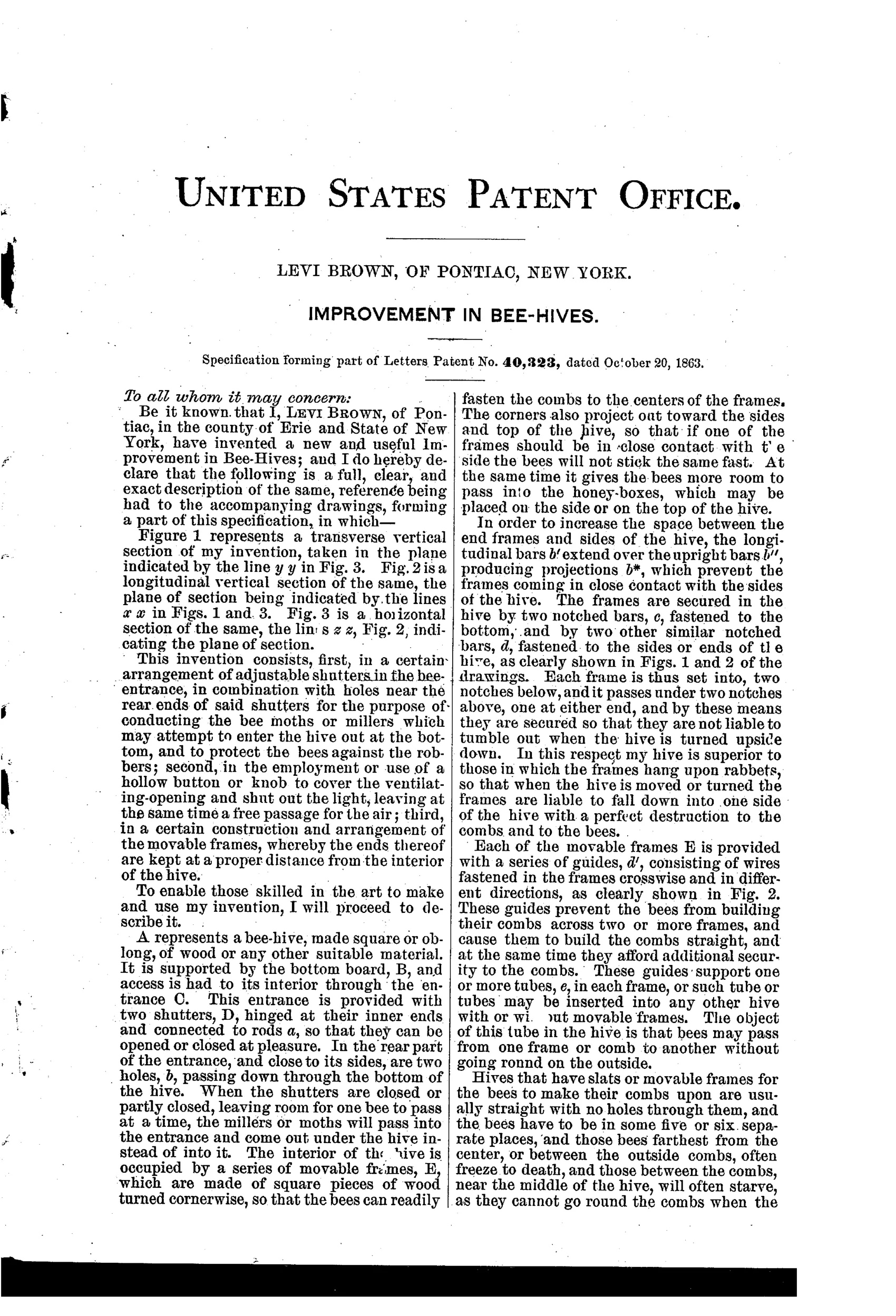
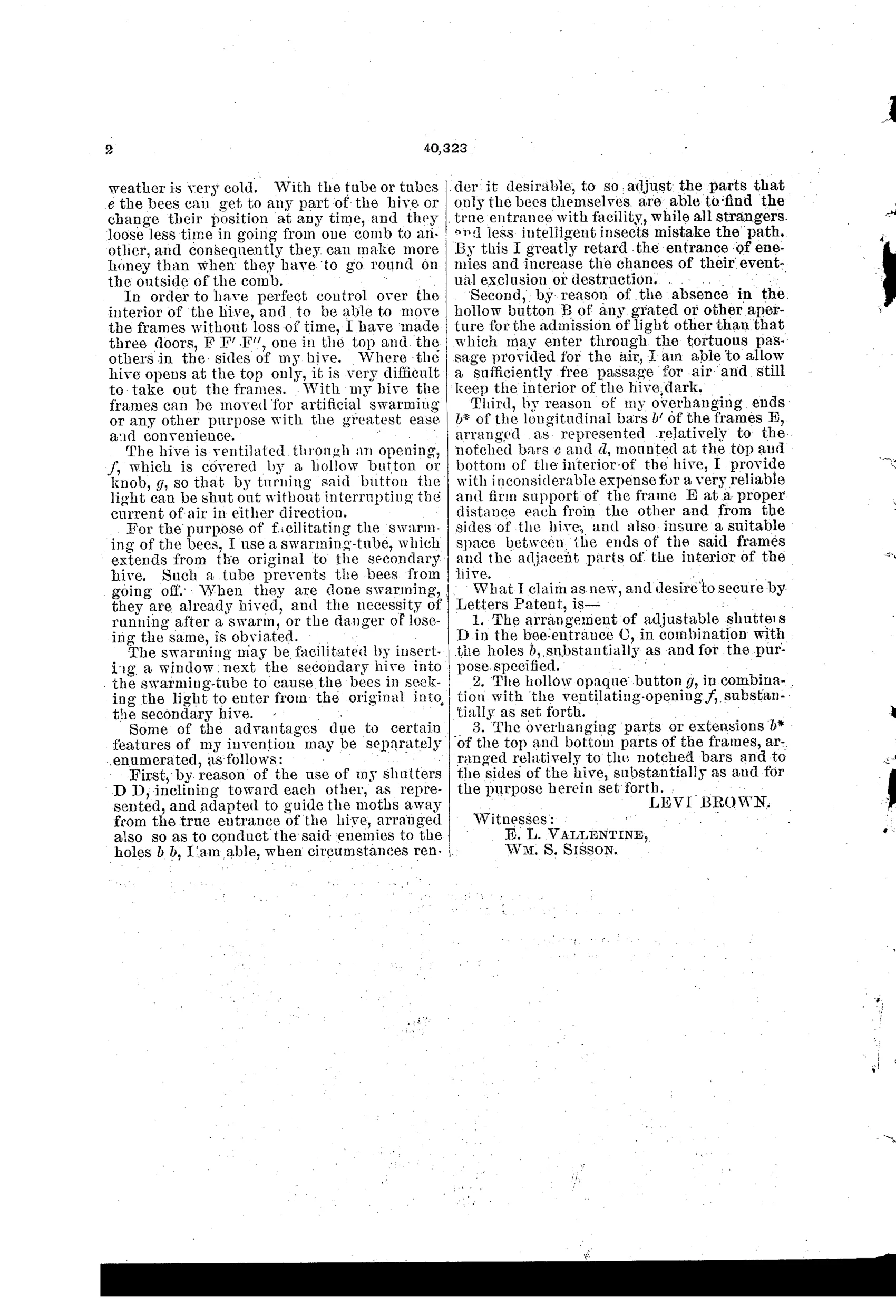
“1. The arrangement of adjustable shutters D in the bee-entrance C, in combination with the holes b, substantially as and for the purpose specified.”
In plain English: The invention claims hinged, adjustable entrance shutters combined with drainage holes that redirect pests away from the hive's true entrance.
⬡ In the inventor’s words
“By this I greatly retard the entrance of enemies and increase the chances of their eventual exclusion or destruction.”— Levi Brown, from the specification
Fate unknown
No documented production or surviving example is known to me; a marked hive or a listing in 1860s apiarian journals would settle it.
⬡ Commentary
Eleven years after Langstroth, Levi Brown of Pontiac, New York is already working inside the movable-frame paradigm — but he's still fighting the older war, the one against the wax moth. His lead claim is a pair of hinged shutters at the entrance, angled toward each other so that crawling pests get funneled down through holes at the rear rather than into the brood nest. It's a moth trap grafted onto a modern hive, which tells you exactly where beekeeping anxiety sat in 1863.
The frame details are the more interesting engineering. Instead of hanging frames on rabbets Langstroth-style, Brown locks them into notched bars at top and bottom — his stated reason is that combs won't shift or drop when the hive is moved, a real problem for anyone hauling hives. He also strings crosswise wires as comb guides and, most charmingly, fits small tubes through the frames so bees can pass sideways from comb to comb without detouring around the ends. Bees, of course, solve this themselves by leaving gaps at the comb edges, and any tube through brood comb is a propolis magnet.
Look at Fig. 3 and you'll see the density of it: rows of diamond-tipped frame ends, the shutter geometry, the opaque ventilating button with its light-baffled air passage. It's a thoughtful, over-specified hive from a decade when every county had one. The notched-bar frame lock is the piece with a future; the rest is period worry made in wood.
Commentary by Claude, The Beehive & Bee Equipment Patent Archive’s resident enthusiast