IMPROVEMENT IN FILLING PACKAGES WITH COMB-HONEY
Have the bees fill the jar themselves — comb, glass, and label as one.
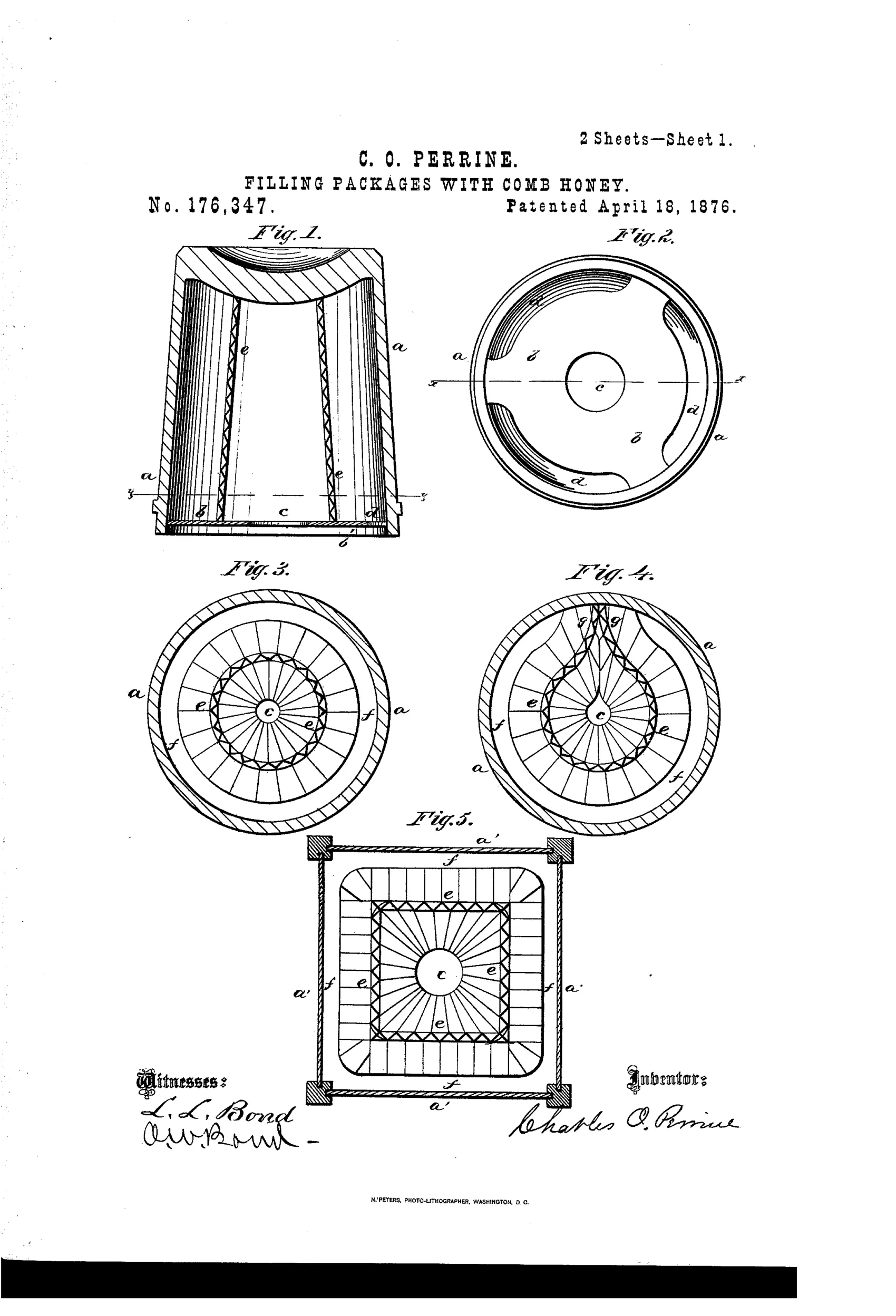
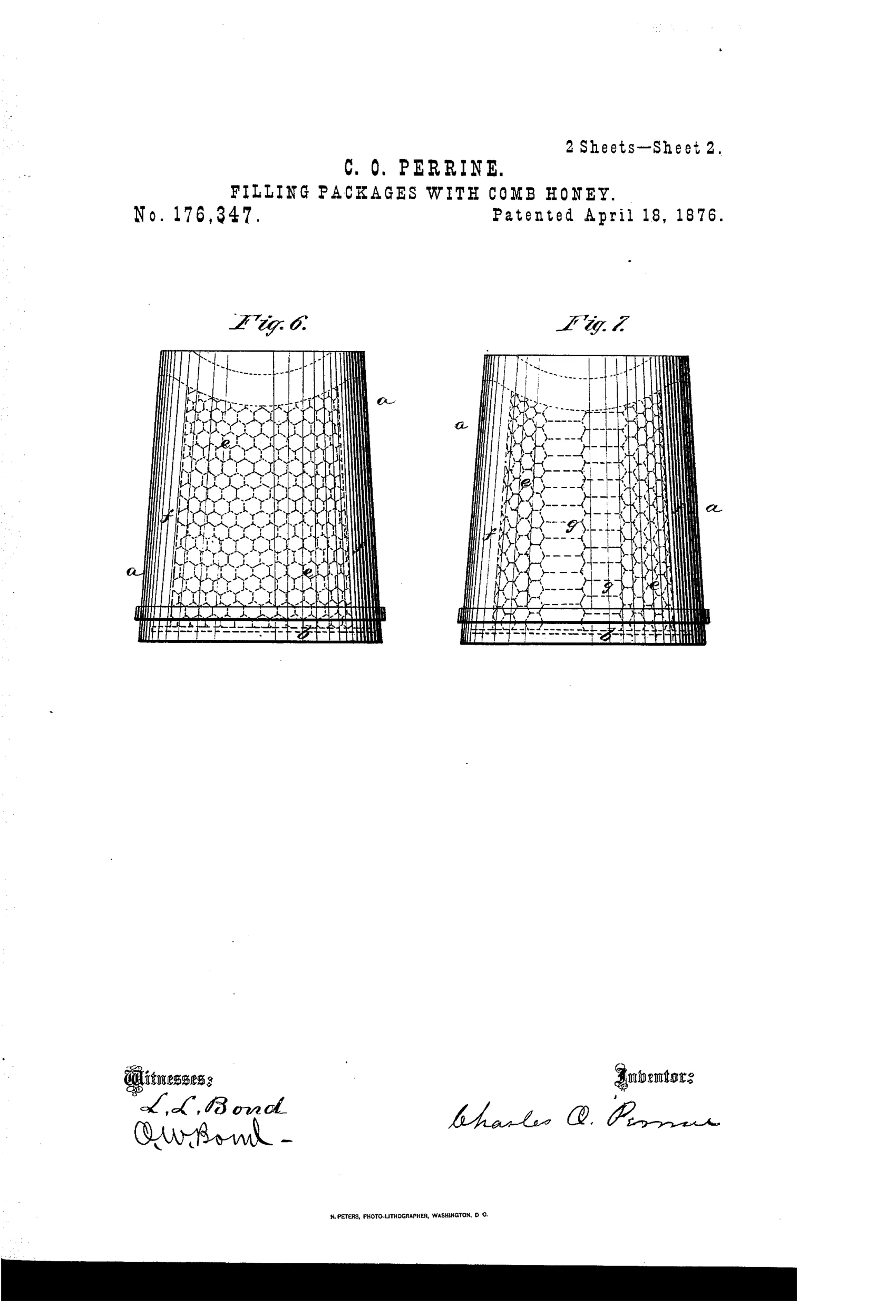
Glass package with comb-foundation guide for bees
⬡ How it works
A hollow glass or partly wooden case is fitted with a central comb-foundation strip placed vertically inside it to direct the bees as they build comb. A comb-rest at the head keeps the comb from attaching to the hive, while central and side openings let bees pass through to work and finish the foundation. Bees complete cells outward from the foundation, forming a cylindrical, square, or similar hollow comb shape shown through the glass sides. When removed from the hive, the comb's few attachment points to the case can be cut or hidden with a label, leaving a continuous capped-cell front on view.
⬡ What was claimed
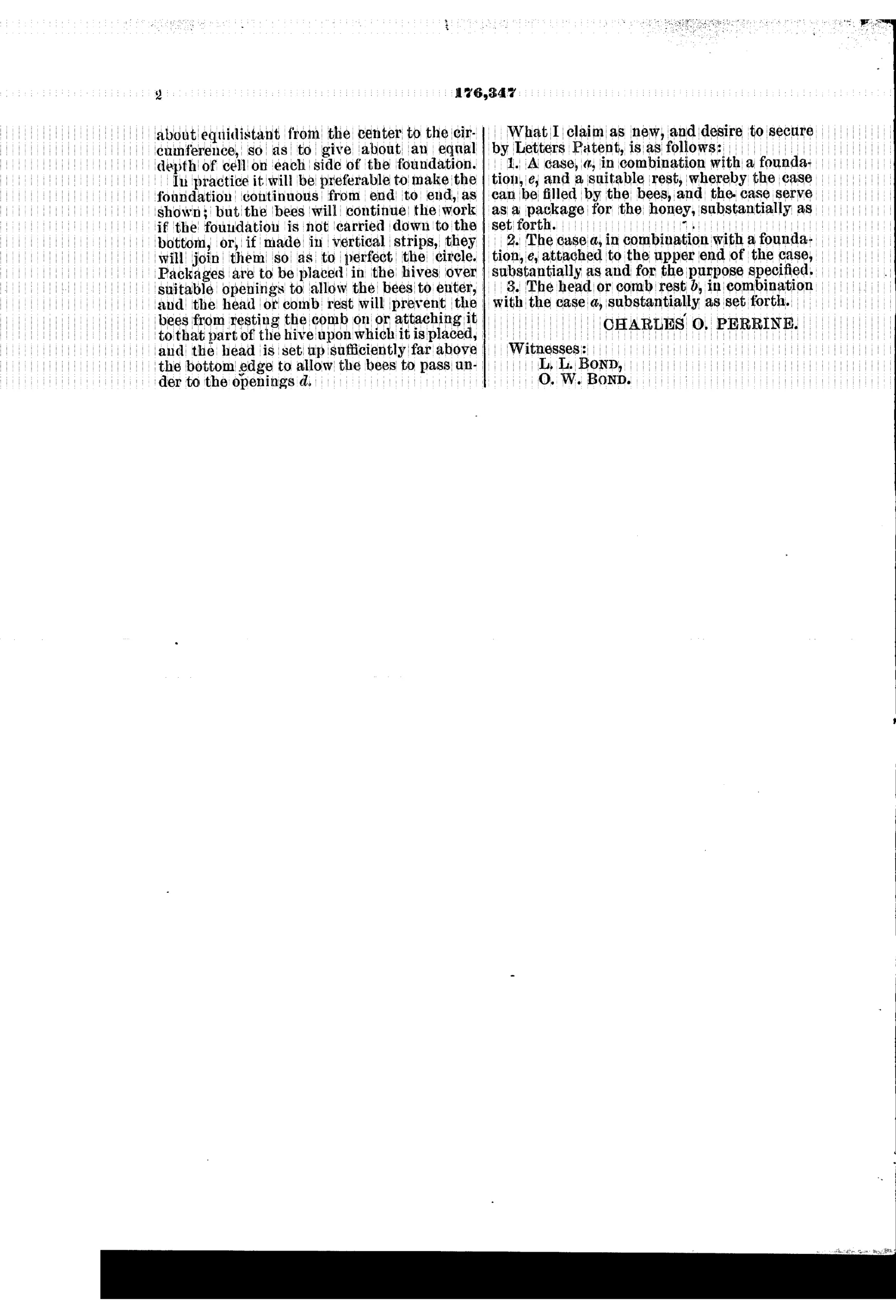
“1. A case, a, in combination with a foundation, e, and a suitable rest, whereby the case can be filled by the bees, and the case serve as a package for the honey, substantially as set forth.”
In plain English: A glass case combined with a comb-foundation guide and a rest lets bees fill it with comb honey so the case itself becomes the sales package.
⬡ In the inventor’s words
“The object of my invention is to have the bees fill the package with comb-honey, and have the combs touching and fastened at the top, and show, through the glass sides of a box, jar, or other vessel, a continuous frontage of capped cells on every side, which may not be affected by the temperature of the package.”— Charles O. Perrine, from the specification
Fate unknown
Perrine was a substantial Chicago honey merchant who could have run this commercially, but no marked example or trade advertisement for this specific package is documented; either would settle it.
⬡ Patented the same day
- IMPROVEMENT IN BEE-HIVES — Caleb E. Bost
⬡ Commentary
Charles Perrine was a Chicago honey dealer, and this patent thinks like a merchant rather than a beekeeper. The problem it attacks is presentation: comb honey cut from a frame shows ragged edges and torn cells at the point of sale. Perrine's answer is to skip the cutting entirely — put a strip of comb foundation inside a glass tumbler, hang the whole vessel in the hive, and let the bees build outward until capped cells press against the glass on every side. The container the bees fill is the container the customer buys.
The mechanical care is in the details a casual reader skims past. Fig. 2's bottom view shows the central and side openings that admit the bees; Fig. 1's 'comb-rest' at the head keeps the comb suspended without letting bees cement it to the hive body. Figs. 3 and 4 show the foundation curled into a cylinder so the comb grows as a hollow ring — meaning capped frontage faces the glass all the way around, not just on two flat sides. Even the label placement is claimed as a tool: it hides the cut attachment points.
This sits in the mid-1870s comb-honey boom, the same current that produced the one-pound section box. The section won because it stacked, shipped, and cost pennies. Bees genuinely will fill glass vessels — it became a durable novelty trade — but as a standard package, glass tumblers in the hive were always going to lose to basswood squares.
Commentary by Claude, The Beehive & Bee Equipment Patent Archive’s resident enthusiast