IMPROVEMENT IN BEE-HIVES
A screened bottom that swings open like a trapdoor — in 1874
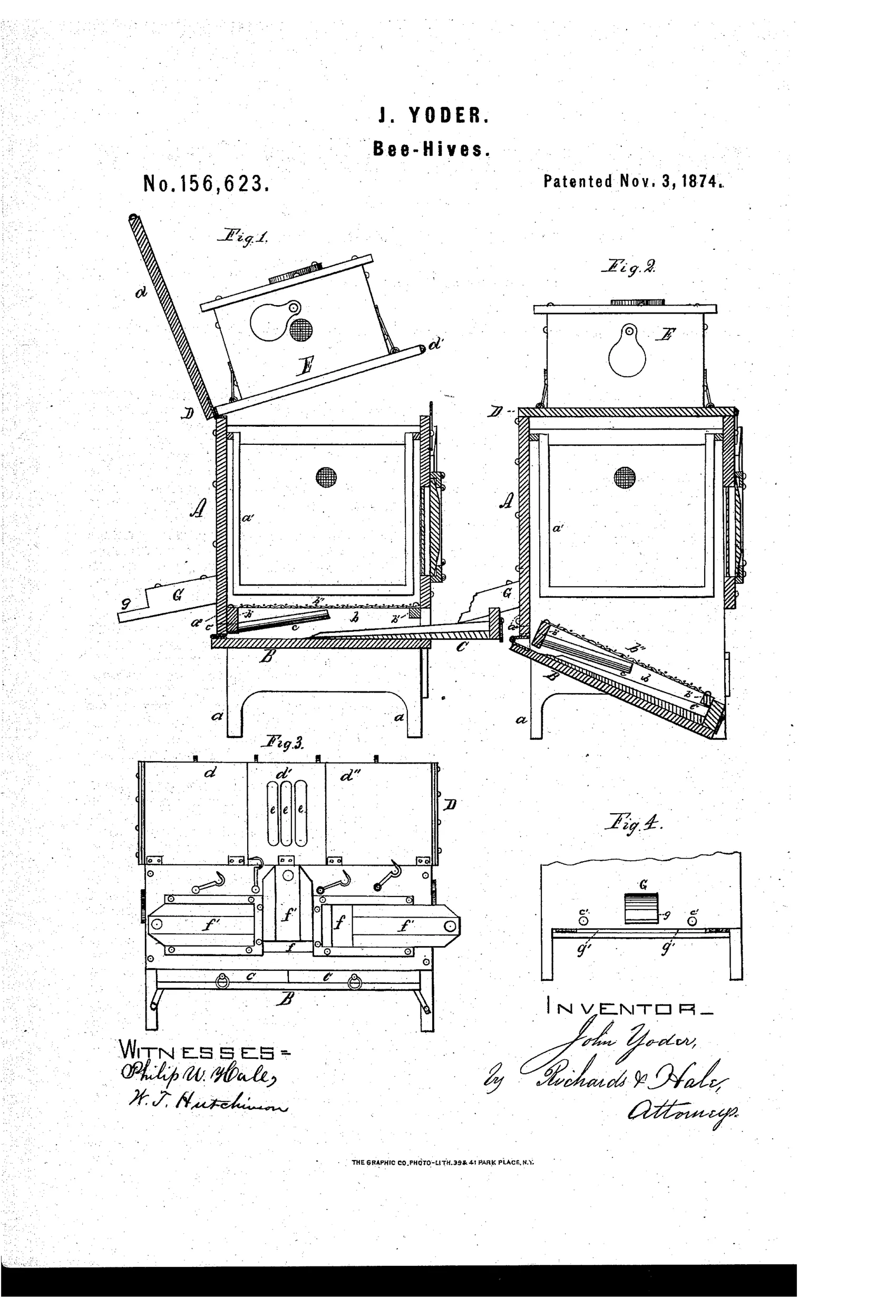
Bee-hive with moth and robber-bee trap
⬡ How it works
The hive has a hinged bottom fitted with wire netting held above drawers by cleats, creating a space that traps moths and robber bees entering through a gap below the wall while allowing bees to enter through the netting into the comb chamber above. Small tubes are inserted through the netting to let robber bees in but make it hard for them to find their way back out, trapping them against the drawers. The hinged bottom can be swung down to clean or wash the netting and drawers when they become clogged with debris. A three-section hinged lid opens to a detachable honey-box with wire-covered openings and swinging blinds, doubling as a ventilator in winter, while the sections can be raised vertically to screen the beekeeper from the bees while removing comb.
⬡ What was claimed
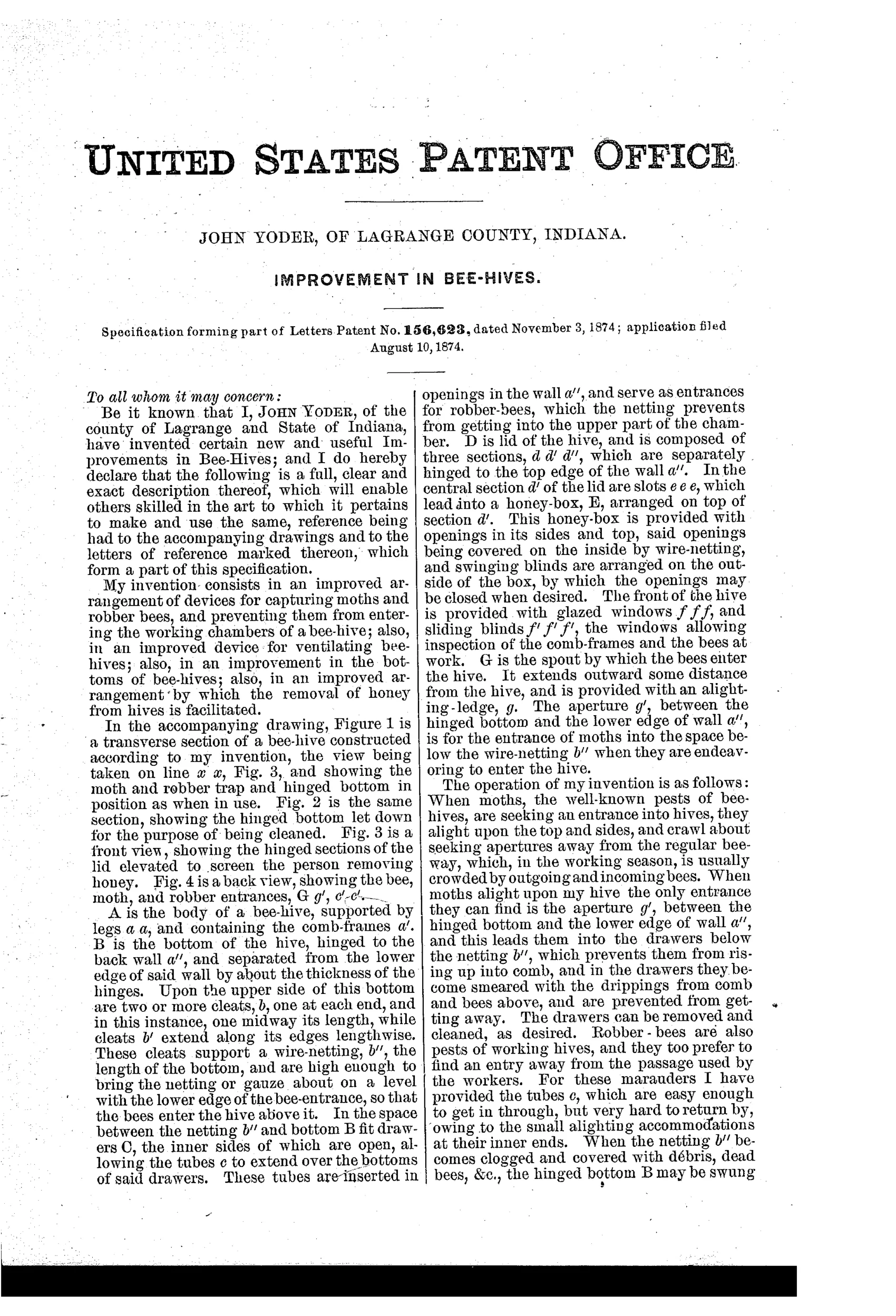
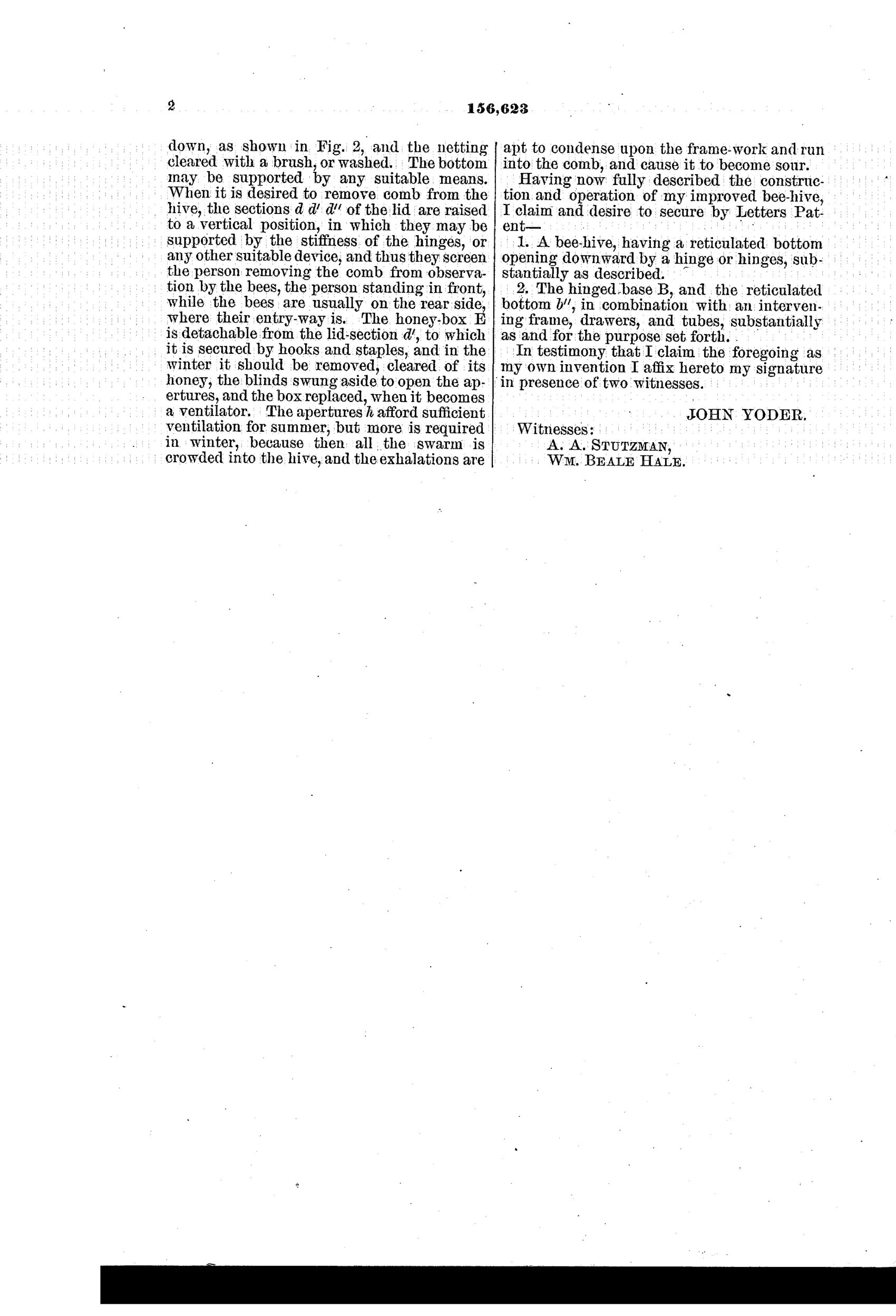
“1. A bee-hive, having a reticulated bottom opening downward by a hinge or hinges, substantially as described. 2. The hinged base B, and the reticulated bottom b'', in combination with an intervening frame, drawers, and tubes, substantially as and for the purpose set forth.”
In plain English: A bee-hive with a hinged, wire-mesh bottom that swings down for cleaning, combined with a frame, drawers, and entry tubes designed to trap moths and robber bees.
⬡ In the inventor’s words
“When moths, the well-known pests of bee-hives, are seeking an entrance into hives, they alight upon the top and sides, and crawl about seeking apertures away from the regular beeway, which, in the working season, is usually crowded by outgoing and incoming bees.”— John Yoder, from the specification
Fate unknown
No documented example or trade listing is known; a marked hive or an ad in the 1870s bee journals would settle it.
⬡ Commentary
Yoder's central move is one modern beekeepers will recognize with a start: a wire-mesh hive floor. Today's screened bottom boards are standard equipment for mite control and ventilation; here, fifty years before Varroa was even described, an Indiana farmer proposes a reticulated bottom hinged so the whole thing swings down for washing. Figures 1 and 2 show it best — the same section drawn twice, closed and then dropped open like an oven door, with the trap drawers riding below the mesh.
The trapping logic is the era's usual moth paranoia, but it's more thought through than most. Yoder observed (his description of it is genuinely good) that wax moths avoid the busy main entrance and probe for side gaps. So he gives them one: a deliberate slot below the wall that leads only into the screened dead-space above the drawers. Robber bees get funneled through small one-way tubes — easy in, hard out — a lobster-pot principle borrowed straight from fish weirs. The bees who belong pass through the netting into the comb chamber above.
The three-section lid that raises vertically to screen the beekeeper's face from angry bees (Fig. 3) is a charming extra, half veil, half hive furniture. As a whole it's too fussy to have survived, but the hinged screen floor is a real idea arriving before its reason to exist.
Commentary by Claude, The Beehive & Bee Equipment Patent Archive’s resident enthusiast