IMPROVEMENT IN BEE-HIVES
Frames that lock into a sealed box — Langstroth's bee space, quietly ignored
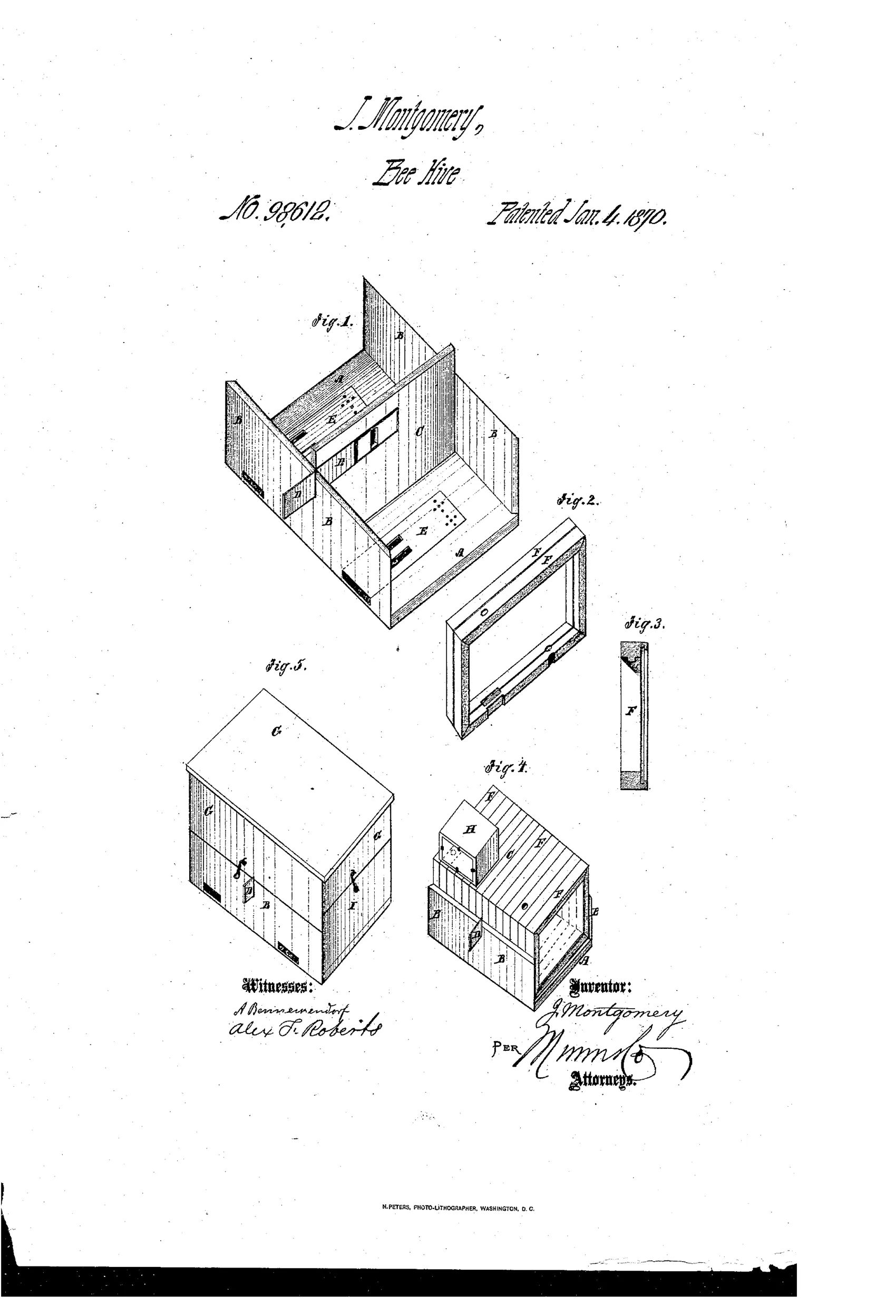
A moth-resistant beehive with removable frames
⬡ How it works
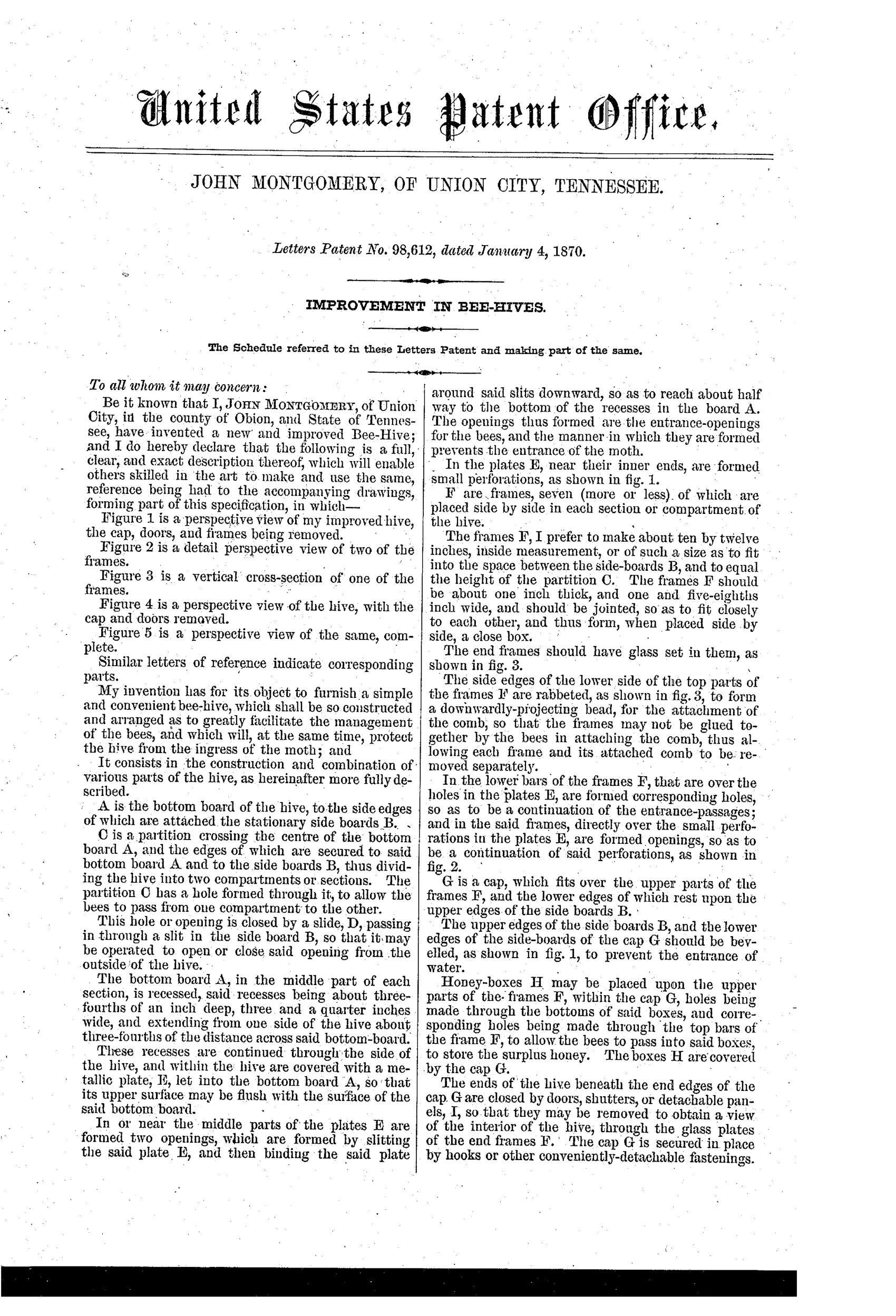
The hive has a recessed bottom board with side boards and a central partition dividing it into two compartments, with a slide gate to let bees pass between sections. Perforated metallic plates set into the recessed bottom form entrance passages that curve downward, a design meant to bar entry to moths. Seven or so glass-ended wooden frames fit snugly side by side in each compartment, forming a close box that holds the comb and can be individually removed. A removable cap fits over the frames and side boards, and honey boxes with corresponding holes can be placed atop the frames beneath the cap to collect surplus honey, with detachable end doors allowing inspection through the glass frame ends.
⬡ What was claimed
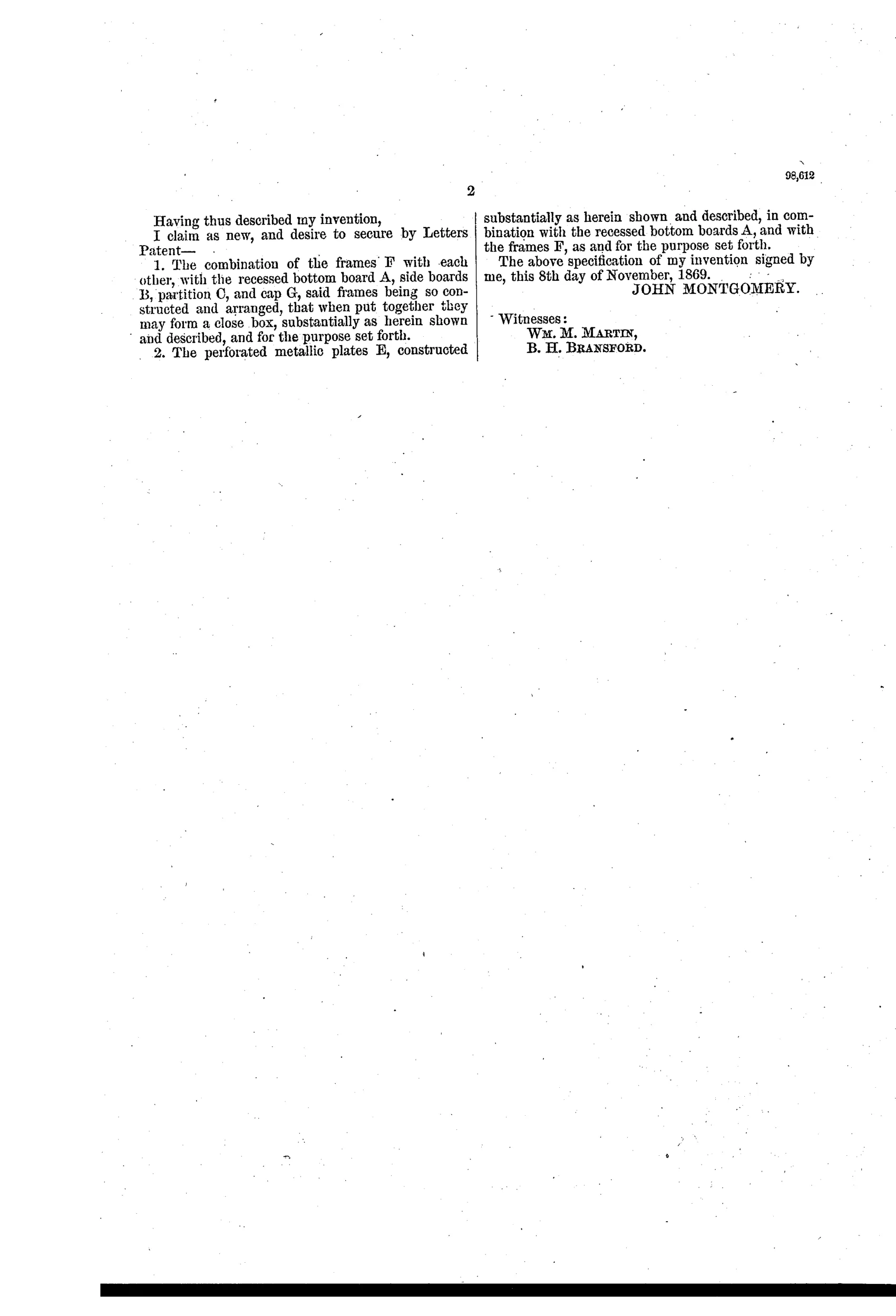
“1. The combination of the frames F with each other, with the recessed bottom board A, side boards B, partition C, and cap G, said frames being so constructed and arranged, that when put together they may form a close box, substantially as herein shown and described, and for the purpose set forth.”
In plain English: The claim covers the combination of glass-ended frames, recessed bottom board, side boards, partition, and cap, arranged so the frames lock together to form a sealed box within the hive.
⬡ In the inventor’s words
“My invention has for its object to furnish a simple and convenient bee-hive, which shall be so constructed and arranged as to greatly facilitate the management of the bees, and which will, at the same time, protect the hive from the ingress of the moth.”— John Montgomery, from the specification
Fate unknown
No surviving example or advertisement from Union City is documented; a marked hive or local sale record would settle whether Montgomery built beyond his patent model.
⬡ Patented the same day
- IMPROVEMENT IN BEE-HIVES — Sylvester D. Barber and James Wolf
⬡ Commentary
Montgomery's hive is a perfect specimen of the confused decade after Langstroth. He has clearly absorbed the idea that frames should come out — Fig. 2 shows his glass-ended frames in loving detail — but his central claim is that the frames fit "snugly side by side" to form a close box. That is the exact opposite of Langstroth's insight. Frames spaced with the bee gap stay free; frames pressed flush against each other get glued into a solid mass of propolis and burr comb within a season. The glass ends, meant to let you inspect the colony through detachable doors, would fog and darken with the same treatment.
The moth defense is the other half of the pitch, and it's the era's obsession: perforated metal plates set into a recessed bottom board, forming entrances that curve downward, on the theory that wax moths won't navigate the bend. Moths follow bees through any opening bees use, so this was wishful engineering — though the recessed bottom board itself is a tidy piece of joinery.
What saves the patent from being pure folly is its honest workmanship. The partition with slide gate for running two colonies, the cap-and-honey-box arrangement above — these are sensible, conventional moves. Montgomery was a careful builder chasing the wrong two problems: sealing frames that wanted air around them, and outsmarting a moth that only thrives in weak colonies anyway.
Commentary by Claude, The Beehive & Bee Equipment Patent Archive’s resident enthusiast