IMPROVED MOSQUITO-NET
An 1864 hooped head net that is, in everything but name, the bee veil
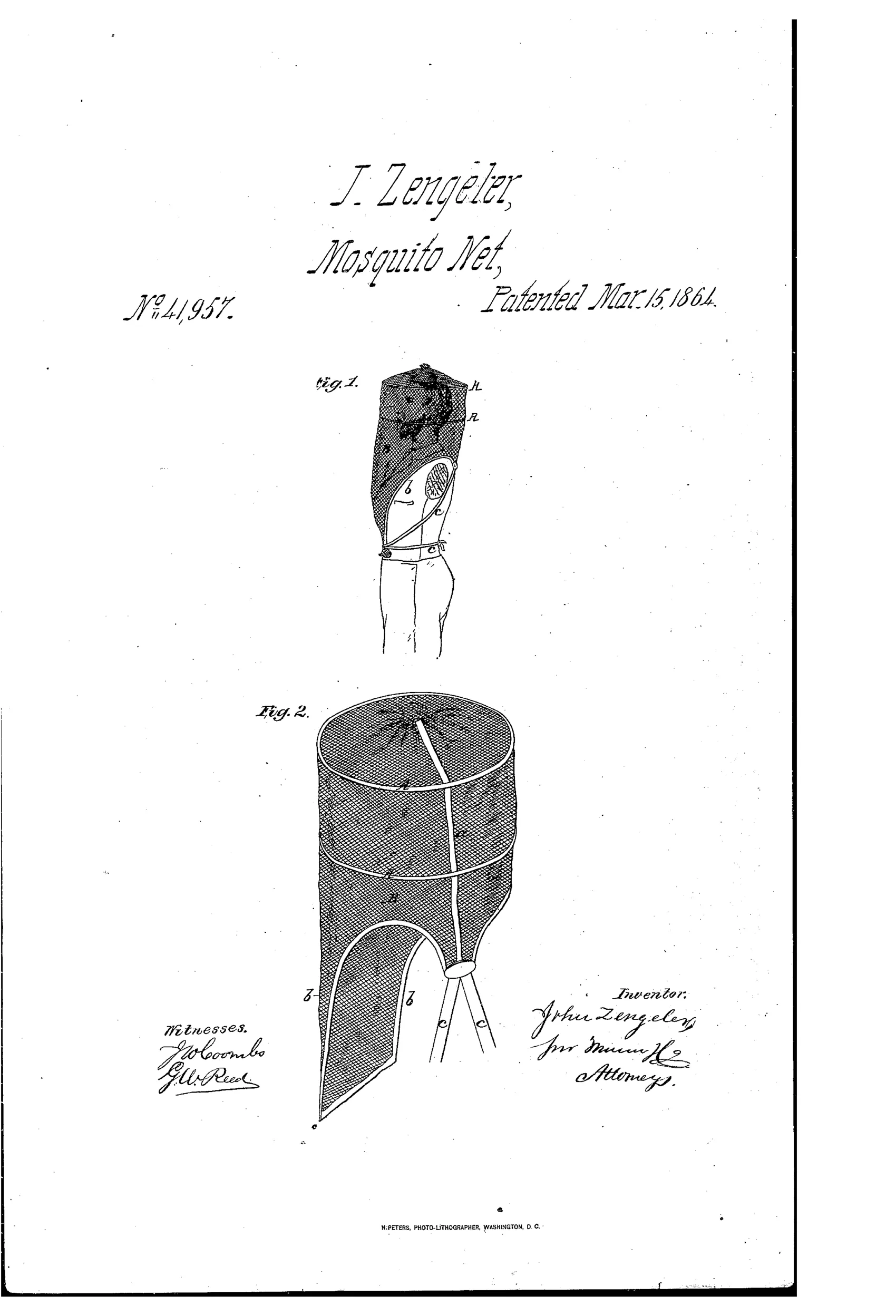
Wearable mosquito net for head and neck
⬡ How it works
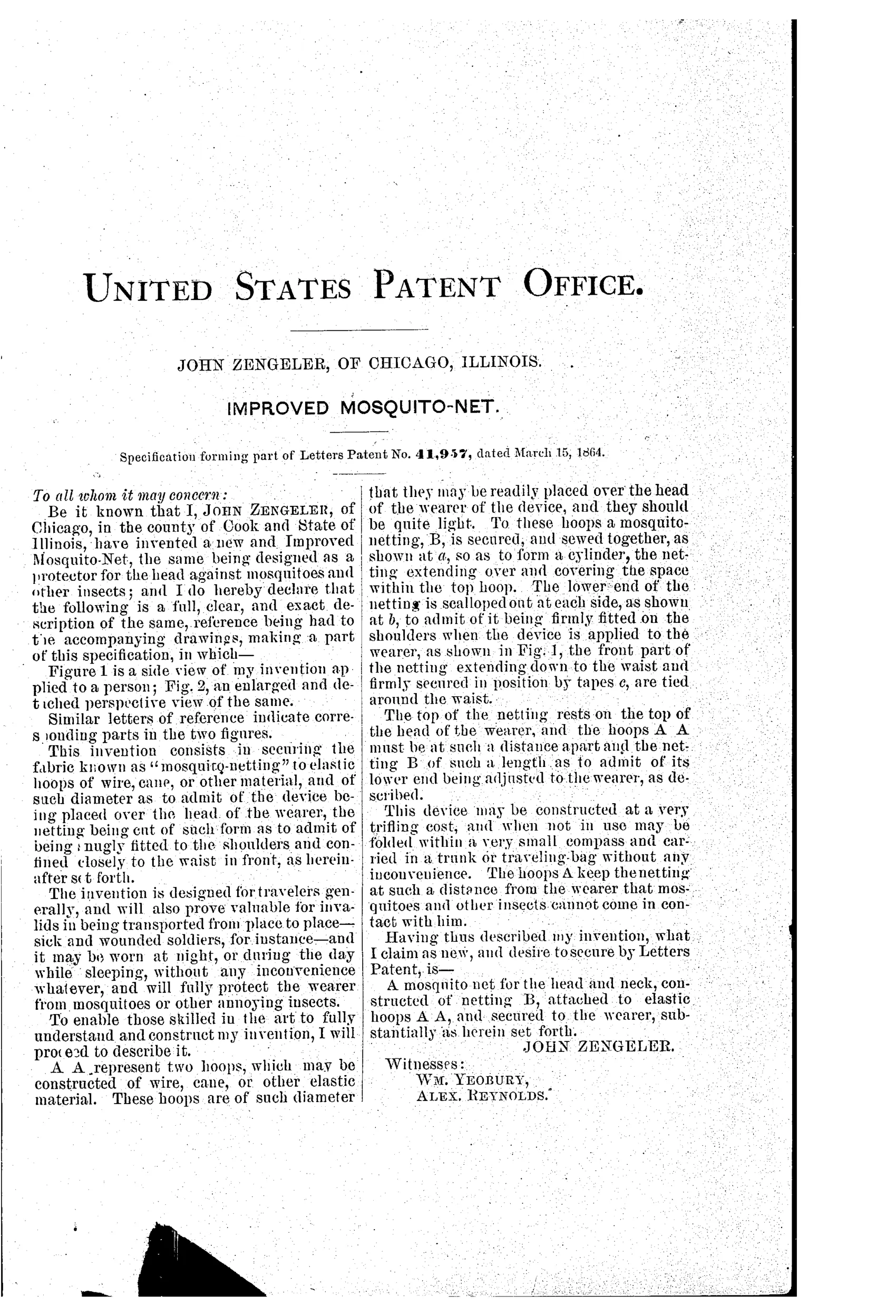
Two elastic hoops of wire, cane, or other elastic material are held apart to support a cylinder of mosquito netting. The netting is sewn to the hoops and extends over the space within the top hoop, resting on the wearer's head. The lower end of the netting is scalloped at each side to fit snugly on the shoulders, with the front extending to the waist and tied in place with tapes. The device folds into a small compass for easy transport in a trunk or traveling bag.
⬡ What was claimed
“A mosquito net for the head and neck, constructed of netting B, attached to elastic hoops A A, and secured to the wearer, substantially as herein set forth.”
In plain English: A head-and-neck mosquito net made of netting attached to two elastic hoops and fastened onto the wearer as described.
⬡ In the inventor’s words
“The invention is designed for travelers generally, and will also prove valuable for invalids in being transported from place to place—sick and wounded soldiers, for instance—and it may be worn at night, or during the day while sleeping, without any inconvenience whatever, and will fully protect the wearer from mosquitoes or other annoying insects.”— John Zengeler, from the specification
Fate unknown
No manufactured example or period advertisement is documented; a surviving specimen or dry-goods catalog listing would settle it.
⬡ Commentary
This one earns its place on a beekeeping site by convergence rather than intent. Zengeler was solving mosquitoes for Civil War-era travelers and wounded soldiers, but look at Fig. 2: two elastic hoops holding a cylinder of netting off the face, scalloped to sit on the shoulders, tapes tying it down at the waist. That is the exact architecture of the beekeeper's veil that would become standard equipment within a couple of decades — the hoop is the whole trick, because netting that touches the skin protects nothing. A mosquito bites through contact; so does a bee sting. Standoff is the invention.
The mechanical details are sensible. Elastic hoops of wire or cane mean the thing collapses flat into a trunk and springs back into shape — the same fold-flat behavior sold with pocket veils well into the twentieth century. The scalloped lower edge is a nice touch a casual reader will miss: cut straight, the net would gap at the shoulders and tent open at the neck; scalloping lets it hug the shoulder line while the front drops to the waist for tying.
Whether Zengeler ever sold one, the drawing documents that by 1864 the hooped personal veil was fully worked out. Beekeepers didn't have to invent it — they just had to borrow it and swap mosquitoes for something with more attitude.
Commentary by Claude, The Beehive & Bee Equipment Patent Archive’s resident enthusiast