IMPROVEMENT IN BEE-HIVES
Fifteen years after Langstroth, an Ohio inventor clamps his frames in gangs
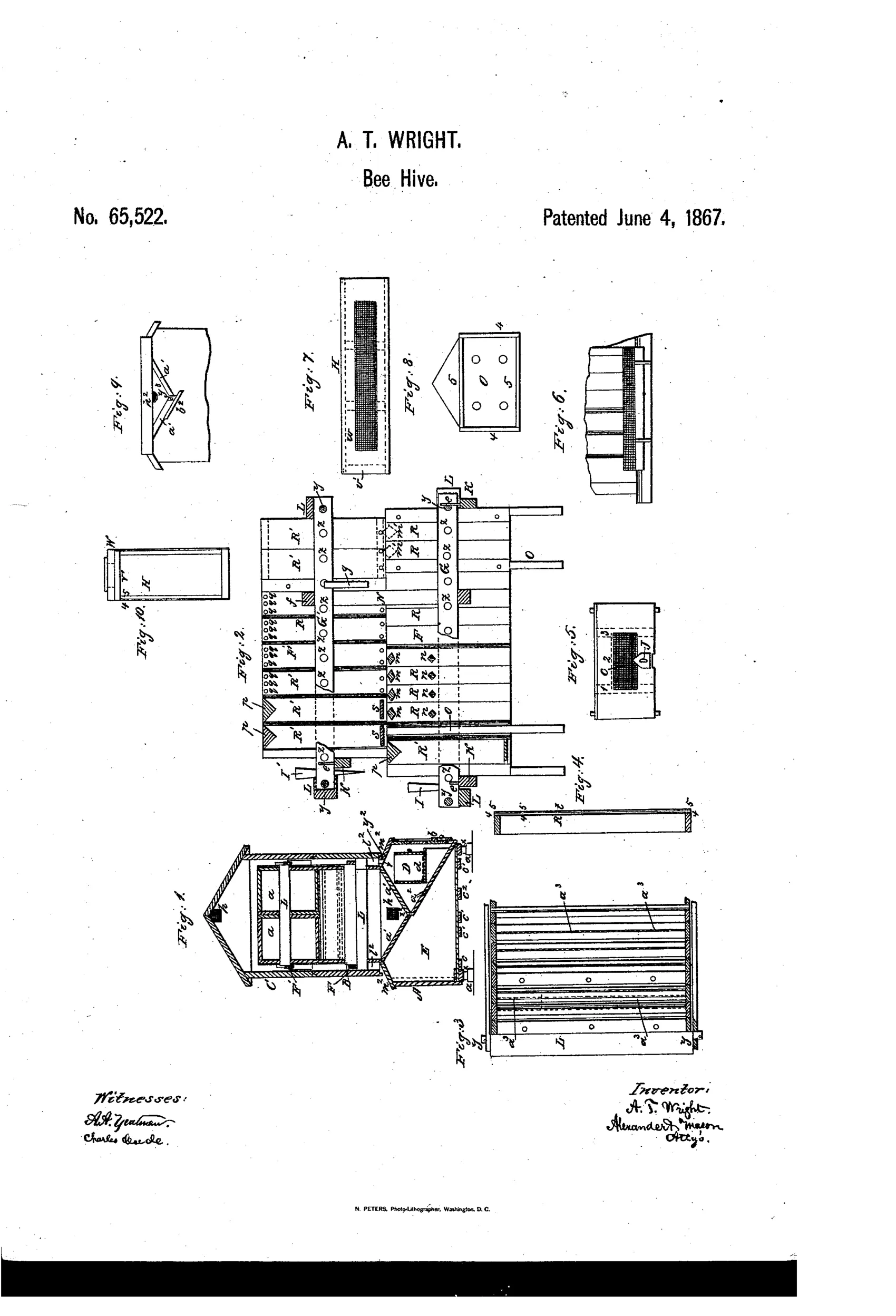
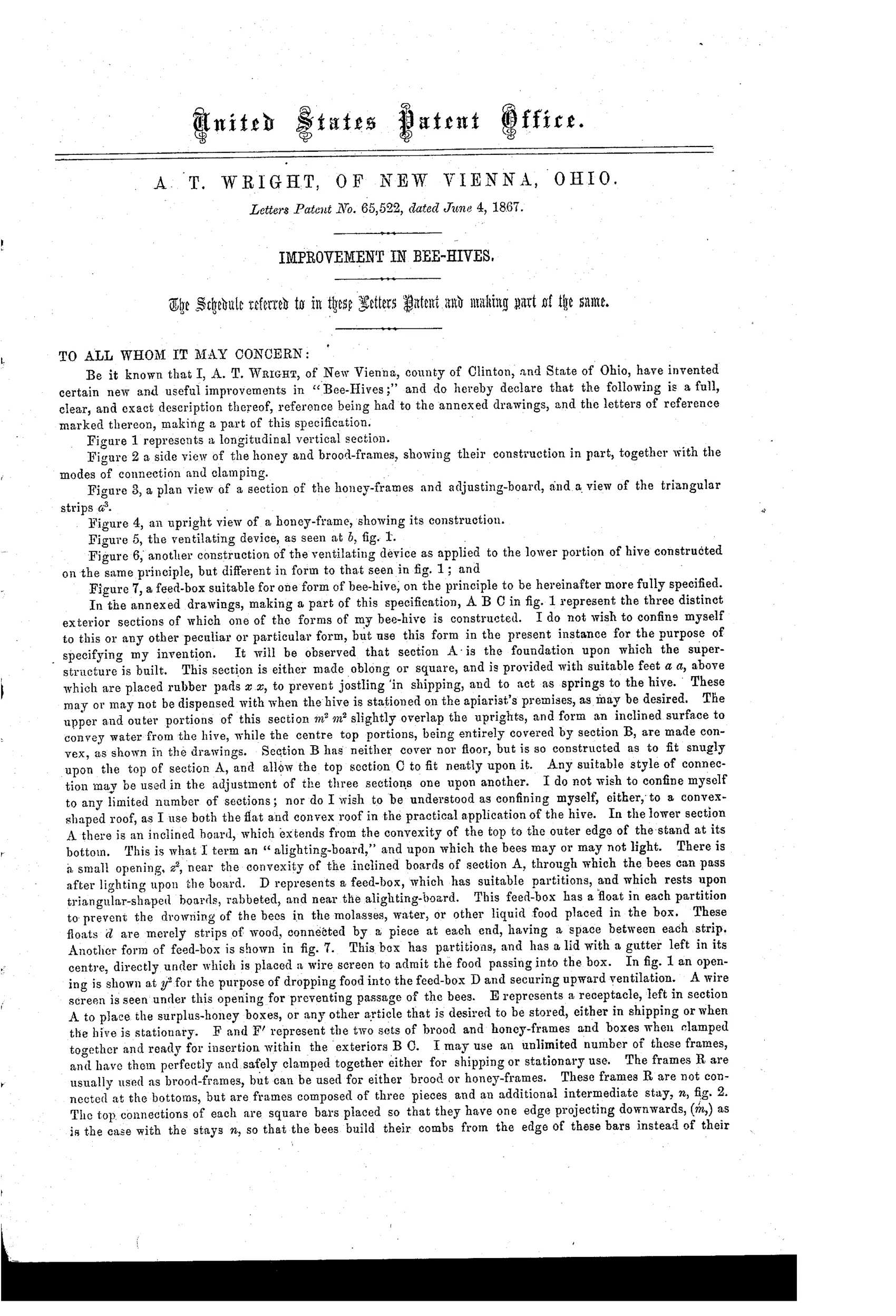
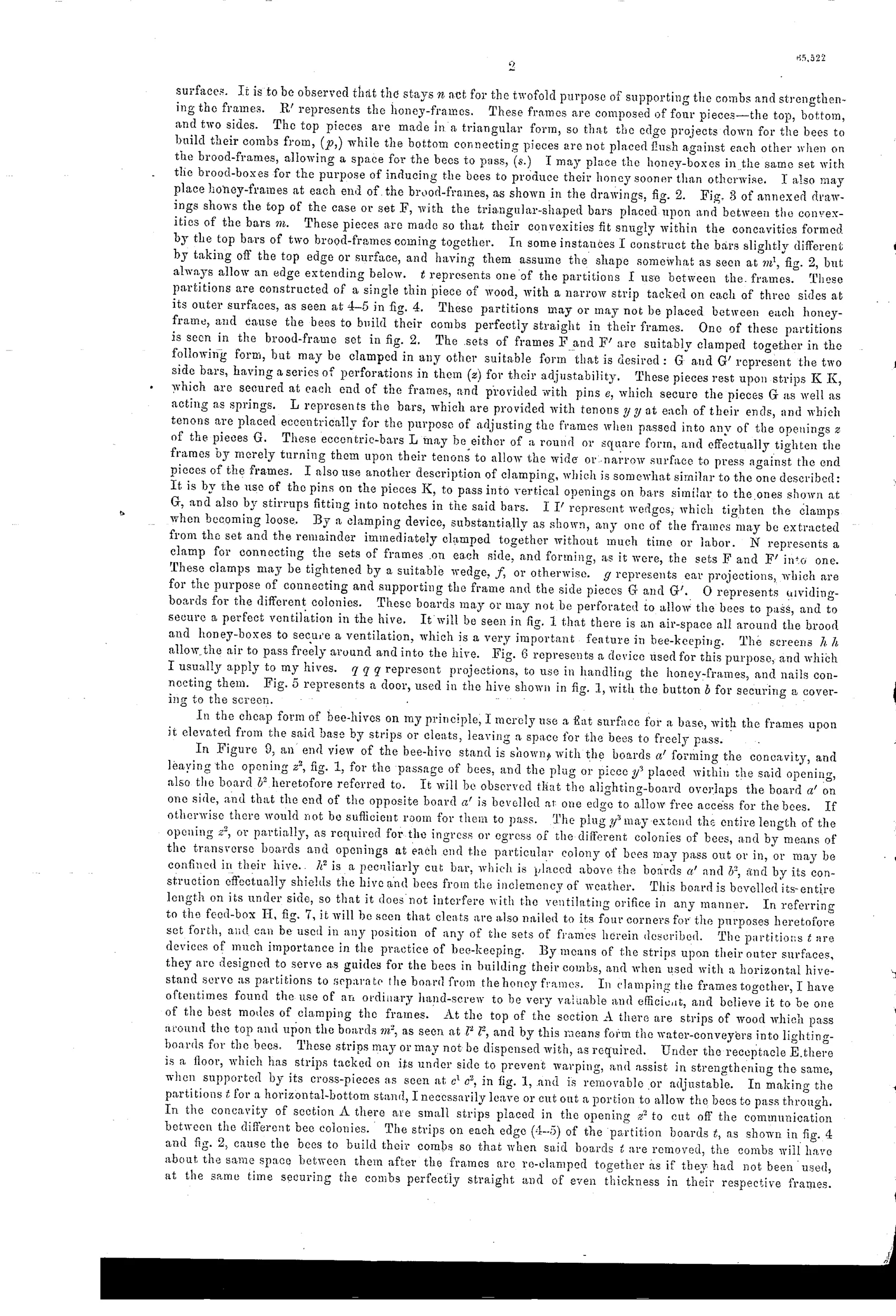
Sectional bee-hive with clamped movable frames
⬡ How it works
The hive is built of three stacking exterior sections, a base, body, and top, that fit snugly one upon another and can be adjusted or shipped separately. Honey and brood frames are held in sets by eccentric clamping bars and perforated side pieces so any single frame can be removed without disturbing the rest. A feed-box with floats prevents bees from drowning while feeding, and ventilating screens and a sliding door regulate airflow and bee passage. Partition boards with raised edge strips guide the bees to build straight, evenly spaced combs.
⬡ What was claimed
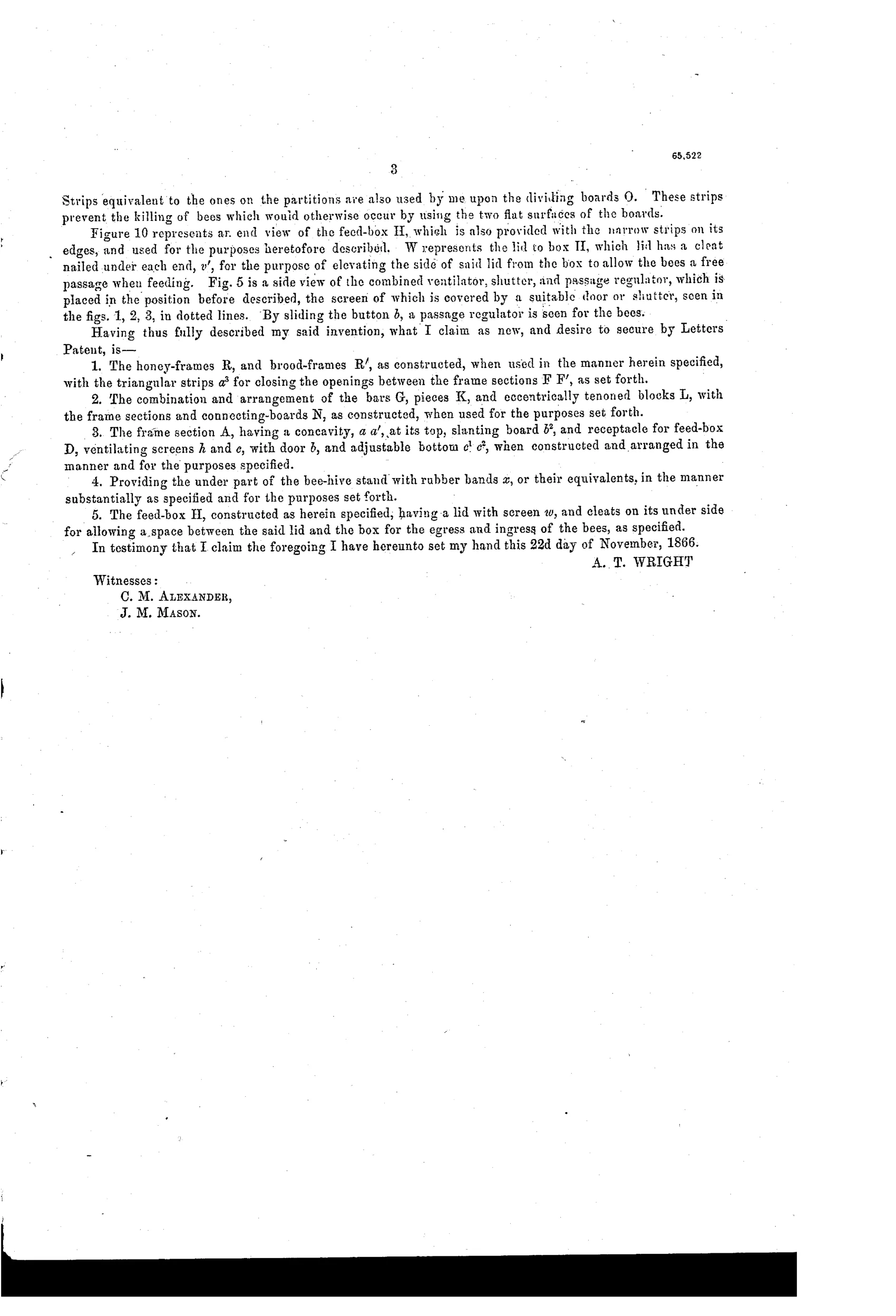
“1. The honey-frames R, and brood-frames R', as constructed, when used in the manner herein specified, with the triangular strips a3 for closing the openings between the frame sections F F', as set forth.”
In plain English: The specific design of honey and brood frames, combined with triangular strips that seal gaps between frame sections, is claimed as the invention.
⬡ In the inventor’s words
“I do not wish to confine myself to this or any other peculiar or particular form, but use this form in the present instance for the purpose of specifying my invention.”— A. T. Wright, from the specification
Fate unknown
No manufactured Wright hive or advertisement is documented in the standard bee-journal record; a marked specimen or period ad from New Vienna, Ohio would settle it.
⬡ Commentary
Wright's hive lands in the thick of the post-Langstroth scramble, when every county in the Midwest seemed to produce someone with a better idea for holding frames. His answer is the interesting part: instead of hanging frames independently from a rabbet the way Langstroth did, he groups them into sets held by eccentric clamping bars and perforated side pieces, then claims triangular strips to close the gaps between frame sections. Fig. 2 rewards a close look — you can see the honey frames R and brood frames R' packed shoulder to shoulder like books in a press, with the clamping hardware running across them.
The promise is that any single frame comes out without disturbing its neighbors, but the mechanism arguably works against itself. Bees propolize everything; an eccentric clamp gummed with propolis is harder to release than a frame you simply lift from a ledge. History sided decisively with the loose-hanging frame and bee-space spacing, and gang-clamped frames became a dead branch on the family tree.
The supporting cast is more durable: a feed box with floats to keep bees from drowning is genuinely humane and practical, and the ventilating screens and sectional, separately shippable body show a working beekeeper's concerns. Wright even hedges in the text that he won't confine himself to any particular form — a candid admission that the drawing is one embodiment of a bundle of ideas.
Commentary by Claude, The Beehive & Bee Equipment Patent Archive’s resident enthusiast