FACE AND NECK PROTECTOR.
A bee veil built like a diving helmet, with a lockable flap for lunch
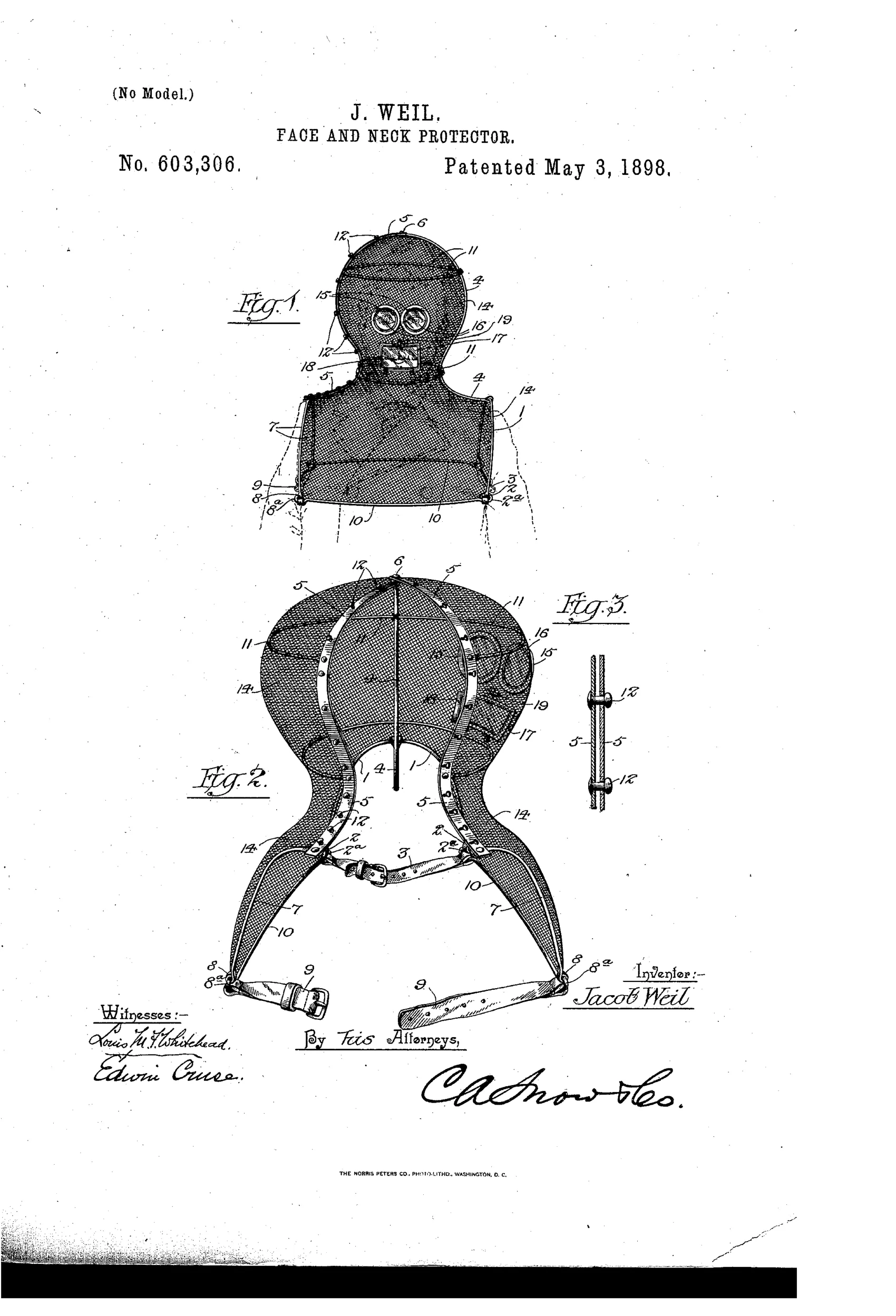

Wire-framed insect-proof face and neck veil
⬡ How it works
A skeleton frame of spring wire and spring metal strips is shaped to fit over the head, neck and shoulders, forming yokes over each shoulder connected by wires that outline the head and neck. Fine wire netting is stretched over this frame, divided along one side so the whole device can be sprung open and slipped over the wearer's head, then relocked by headed pins engaging loopholes on overlapping metal strips. Straps buckle under the armpits to hold the yokes in place, and separate small framed openings hold transparent material over the eyes while a hinged, lockable flap covers the mouth for eating or drinking.
⬡ What was claimed
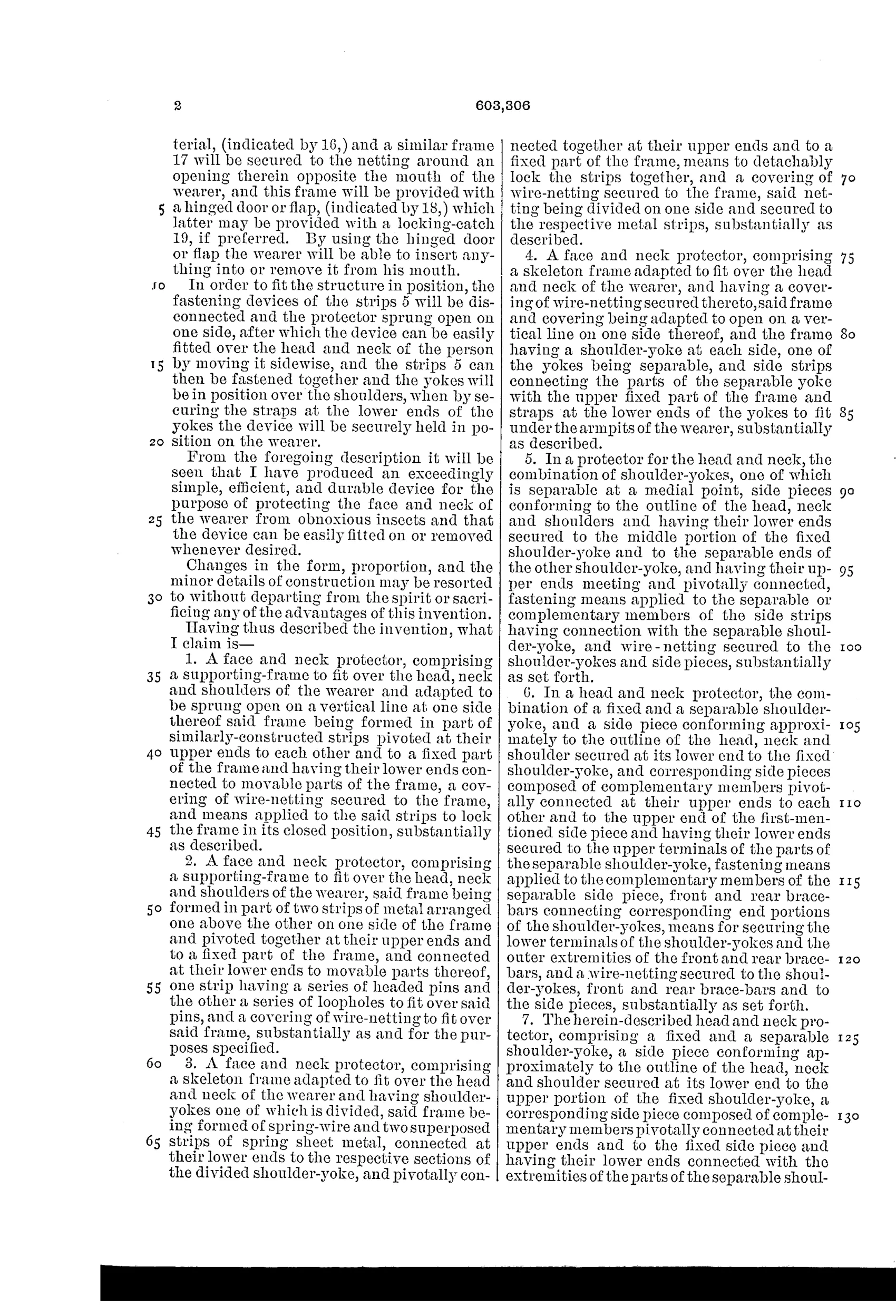
“A face and neck protector, comprising a supporting-frame to fit over the head, neck and shoulders of the wearer and adapted to be sprung open on a vertical line at one side thereof said frame being formed in part of similarly-constructed strips pivoted at their upper ends to each other and to a fixed part of the frame and having their lower ends connected to movable parts of the frame, a covering of wire-netting secured to the frame, and means applied to the said strips to lock the frame in its closed position, substantially as described.”
In plain English: The protector has a wire-and-metal frame covering the head, neck and shoulders that can be sprung open along one side to put on, then locked shut with a covering of wire netting attached.
⬡ In the inventor’s words
“This invention relates to guards or protectors designed to protect the face and neck of the wearer from bees, mosquitos, flies, and other insects which are likely to sting or otherwise annoy a person.”— Jacob Weil, from the specification
Paper patent — likely never produced
The rigid multi-part frame, glazed eye ports, and locking hardware would have cost many times a cloth veil, and no manufactured example or catalog listing is known to me.
⬡ Commentary
By 1898 the standard bee veil was a yard of mosquito netting sewn to a hat brim and tucked into the collar — cheap, packable, and good enough. Jacob Weil of Las Animas, Colorado looked at that and decided what beekeepers really needed was rigid armor: a spring-wire skeleton shaped over the head, neck, and both shoulders, skinned in fine wire netting, split down one side so you spring it open, clamp yourself inside, and lock it shut with headed pins dropping into loopholes. Fig. 1 makes the ambition plain — the thing reads less like a veil and more like a diving helmet with epaulets.
The details are where the earnestness shows. Separate framed windows hold transparent material over the eyes, presumably because Weil worried netting would blur vision (a real complaint about black-painted wire cloth of the day). And there is a hinged, lockable flap over the mouth so the wearer can eat or drink without disarming. Underarm straps anchor the shoulder yokes so bees can't push the mesh against the skin — the one genuine failure mode of loose cloth veils, and the one problem this design honestly solves.
But it solves it at the cost of everything else: weight, heat, storage, and the fussy pin-locking closure shown in Fig. 3. The market went the other way — folding wire veils and later ventilated helmets kept the standoff distance without the exoskeleton. This is a dead-end branch, charming for how thoroughly it overbuilds.
Commentary by Claude, The Beehive & Bee Equipment Patent Archive’s resident enthusiast