IMPROVEMENT IN BEE-HIVES
A metal-skeleton hive with glass walls hiding behind removable insulated panels
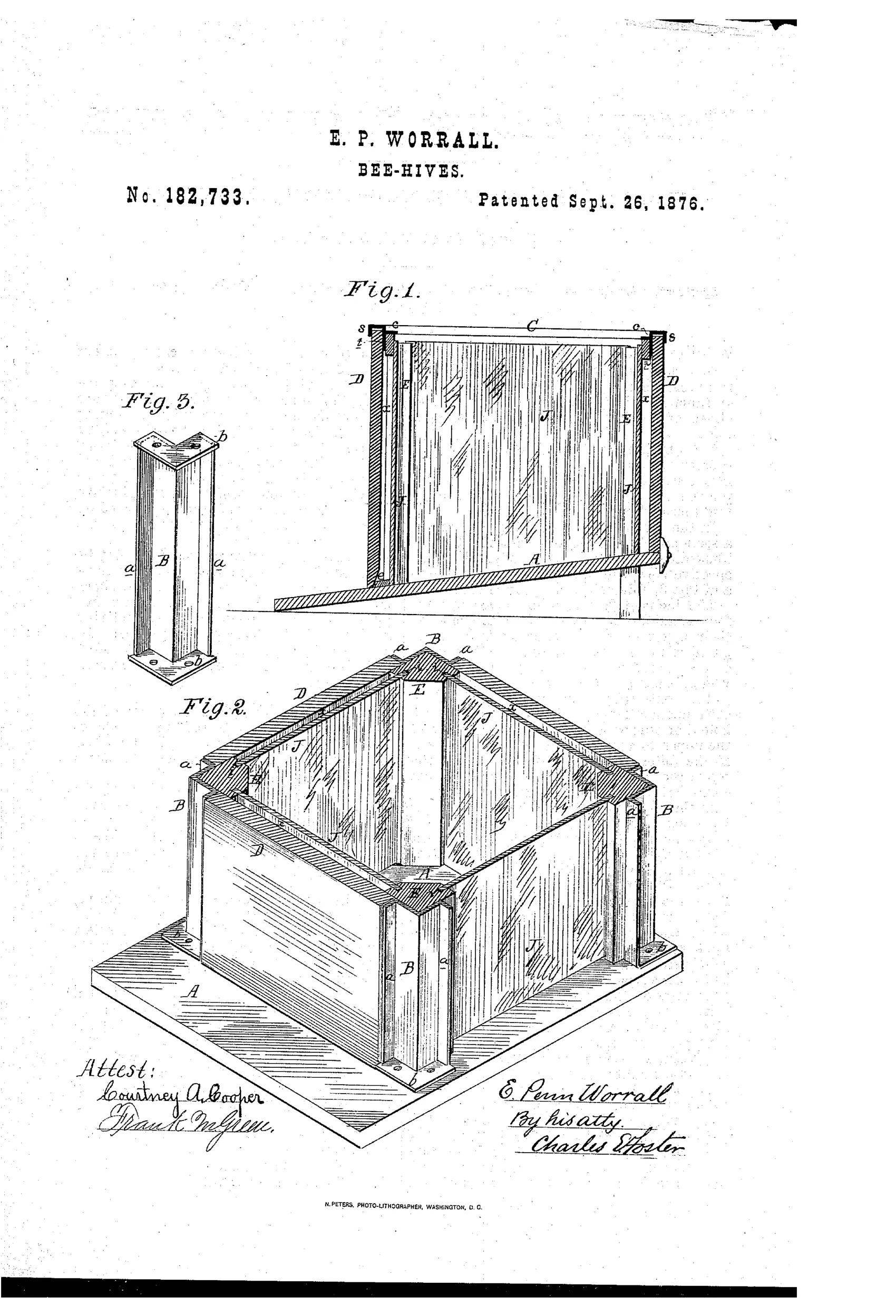
Metal-framed glass-sided beehive with detachable panels
⬡ How it works
An inclined metal floor supports four L-shaped metal standards that connect to a rectangular metal frame at the top, forming a rigid skeleton. Wood uprights fit into the angle of each standard and are grooved to hold glass plates that form the hive's sides, spaced away from detachable outer wood side pieces. This spacing creates enclosed dead-air chambers between the glass and the wood panels that insulate against summer heat and can be packed with felt, wool, or cotton for winter warmth. The metal frame's flanges receive the cross-pieces of ordinary detachable comb frames, while the side pieces can be removed to expose the glass and allow visual inspection of the colony without disturbing the bees.
⬡ What was claimed
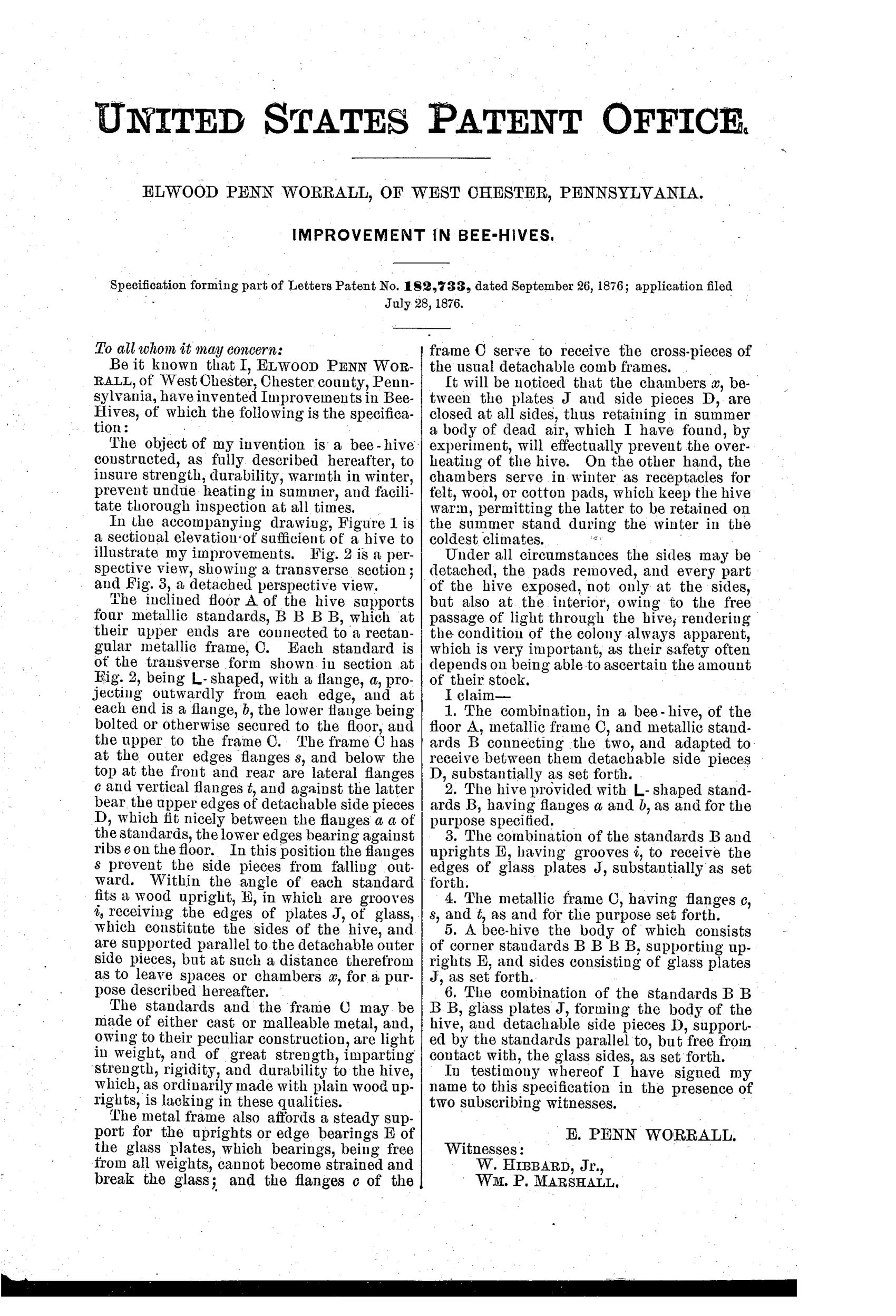
“The combination, in a bee-hive, of the floor A, metallic frame C, and metallic standards B connecting the two, and adapted to receive between them detachable side pieces D, substantially as set forth.”
In plain English: The invention claims combining a floor, a metal top frame, and metal corner standards that together hold removable wooden side panels on the hive.
⬡ In the inventor’s words
“Under all circumstances the sides may be detached, the pads removed, and every part of the hive exposed, not only at the sides, but also at the interior, owing to the free passage of light through the hive, rendering the condition of the colony always apparent, which is very important, as their safety often depends on being able to ascertain the amount of their stock.”— Elwood Penn Worrall, from the specification
Paper patent — likely never produced
The metal-and-glass construction would have cost several times a plain wooden hive, and no manufactured example or trade listing is known to me; a marked specimen would overturn this.
⬡ Commentary
Worrall's idea is easy to state: build the hive like a piece of furniture with a metal frame — an inclined metal floor, four L-shaped corner standards (Fig. 3 shows one on its own), and a rectangular metal frame at the top — then hang everything else off that skeleton. Grooved wood uprights sit in the angle of each standard and carry glass plates that form the real walls of the hive. Outboard of the glass go detachable wooden side pieces, and the gap between glass and wood is the clever part: a dead-air chamber for summer, or a cavity to stuff with felt, wool, or cotton for winter.
So you get two fashionable 1870s features in one box. Pull the panels and the whole colony is visible through glass — the specification is almost lyrical about being able to check the bees' stores without opening the hive. Leave the panels on and you have double-walled insulation, which was a genuine preoccupation of the era and survives today in packed winter hives.
The weak point is the metal frame itself. Metal conducts heat straight through the corners of a hive that is otherwise carefully insulated, and it adds cost and weight for no gain the bees would notice. Note too that the top frame's flanges receive ordinary movable comb frames — Worrall is building on Langstroth's architecture, not fighting it. A thoughtful, over-engineered refinement, not a folly.
Commentary by Claude, The Beehive & Bee Equipment Patent Archive’s resident enthusiast