IMPROVEMENT IN BEE-HIVES
A perforated net to catch cold-stunned bees before they drop and die
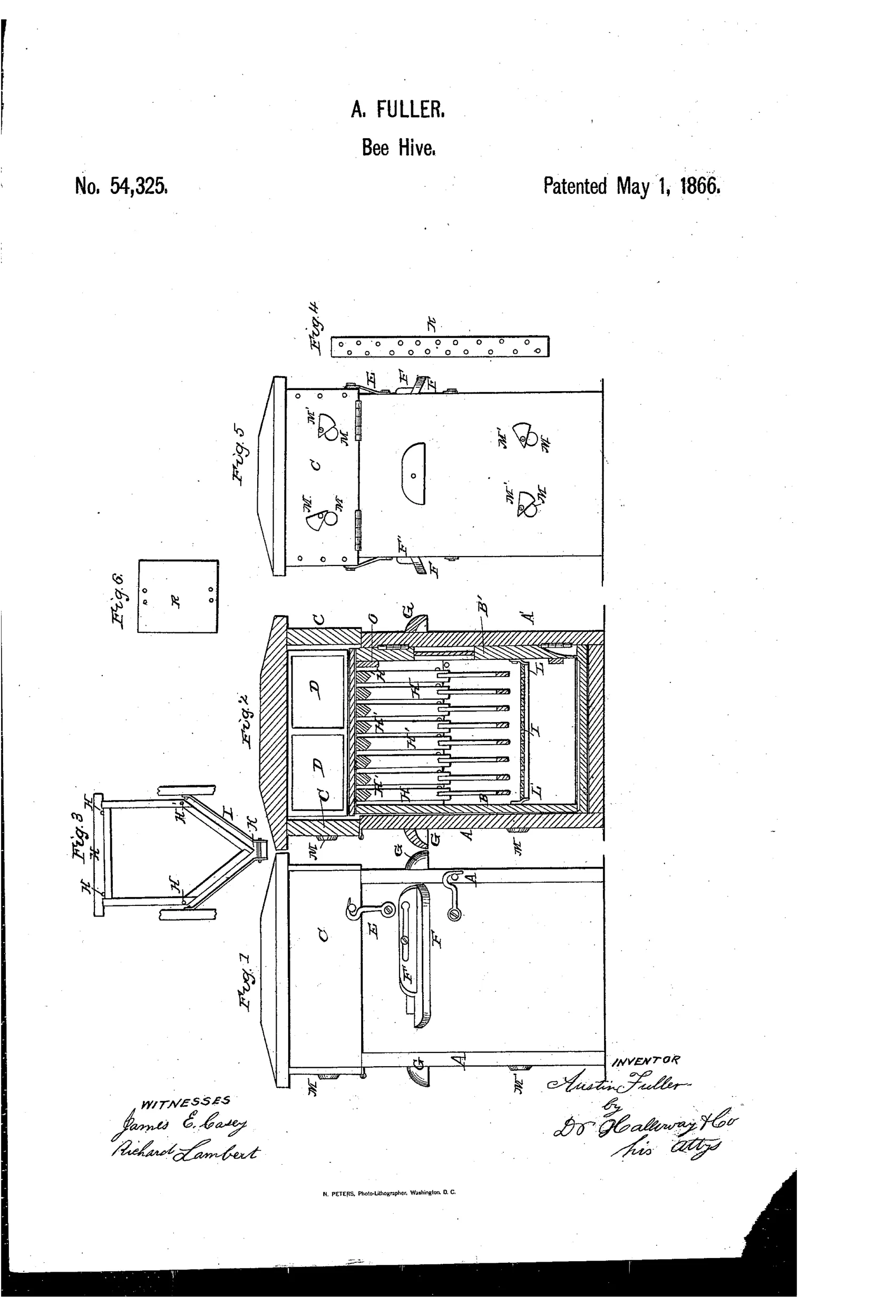
Double-cased insulated bee-hive with winter bee-preserver slide
⬡ How it works
The hive has an outer case A and an inner case B separated by a dead-air space to insulate the brood chamber from temperature extremes. Suspended frames H hang from shoulders inside the case, with sloping tin sides I beneath them forming a funnel-shaped mouth that gives the miller moth no place to lay eggs. In winter a perforated slide K, called the winter bee-preserver, is fitted over this funnel mouth to catch benumbed bees before they fall into the pit below, allowing them a chance to revive and crawl back. Sliding doors F' controlled by a slot and bolt close the entrance openings for safe transport, and removable cap C on top holds honey boxes D set on a perforated honey-board R.
⬡ What was claimed
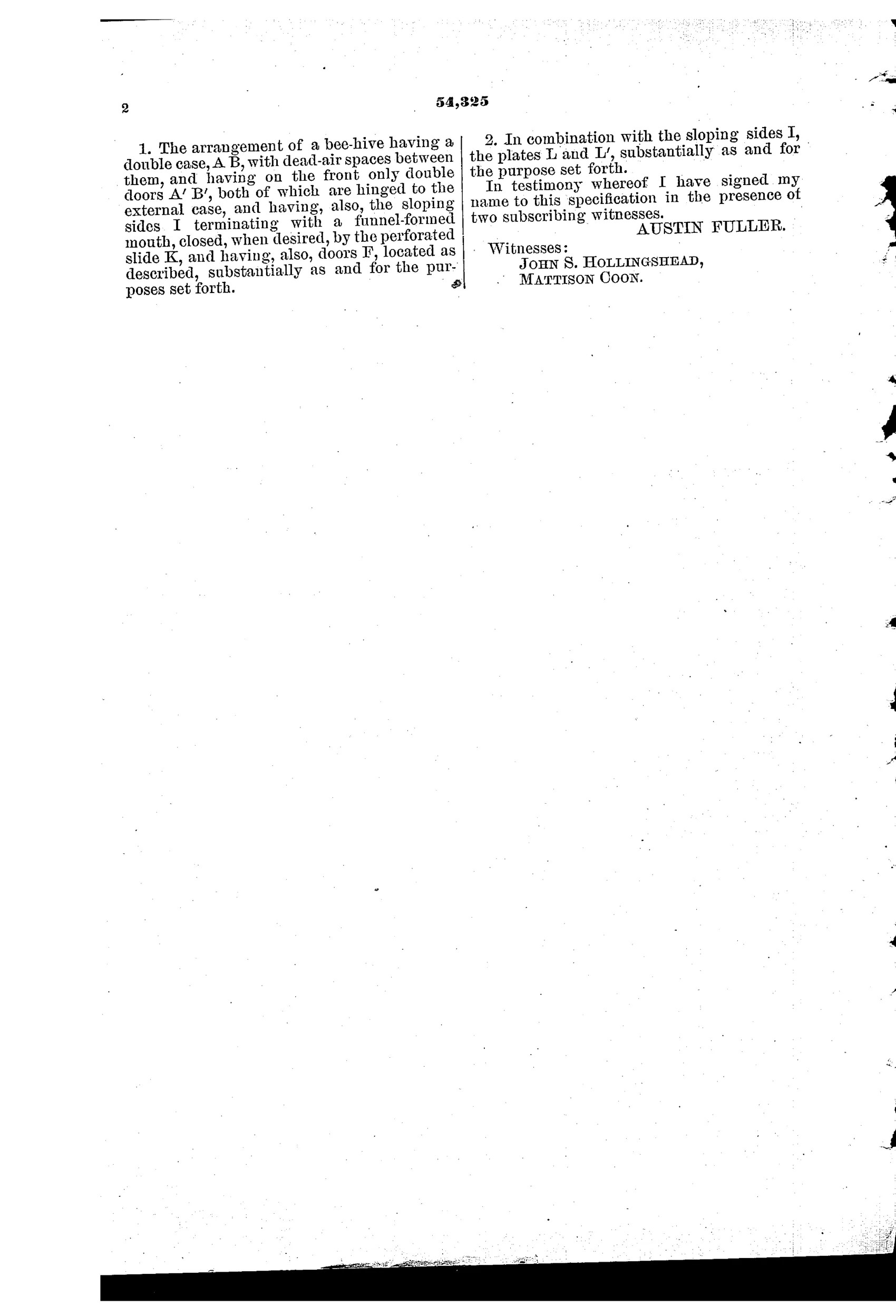
“The arrangement of a bee-hive having a double case, A B, with dead-air spaces between them, and having on the front only double doors A' B', both of which are hinged to the external case, and having, also, the sloping sides I terminating with a funnel-formed mouth, closed, when desired, by the perforated slide K, and having, also, doors F, located as described, substantially as and for the purposes set forth.”
In plain English: A bee-hive with an insulating double-walled case, double front doors, funnel-shaped sloping interior sides closable by a perforated winter slide, and entrance doors positioned midway of the hive front.
⬡ In the inventor’s words
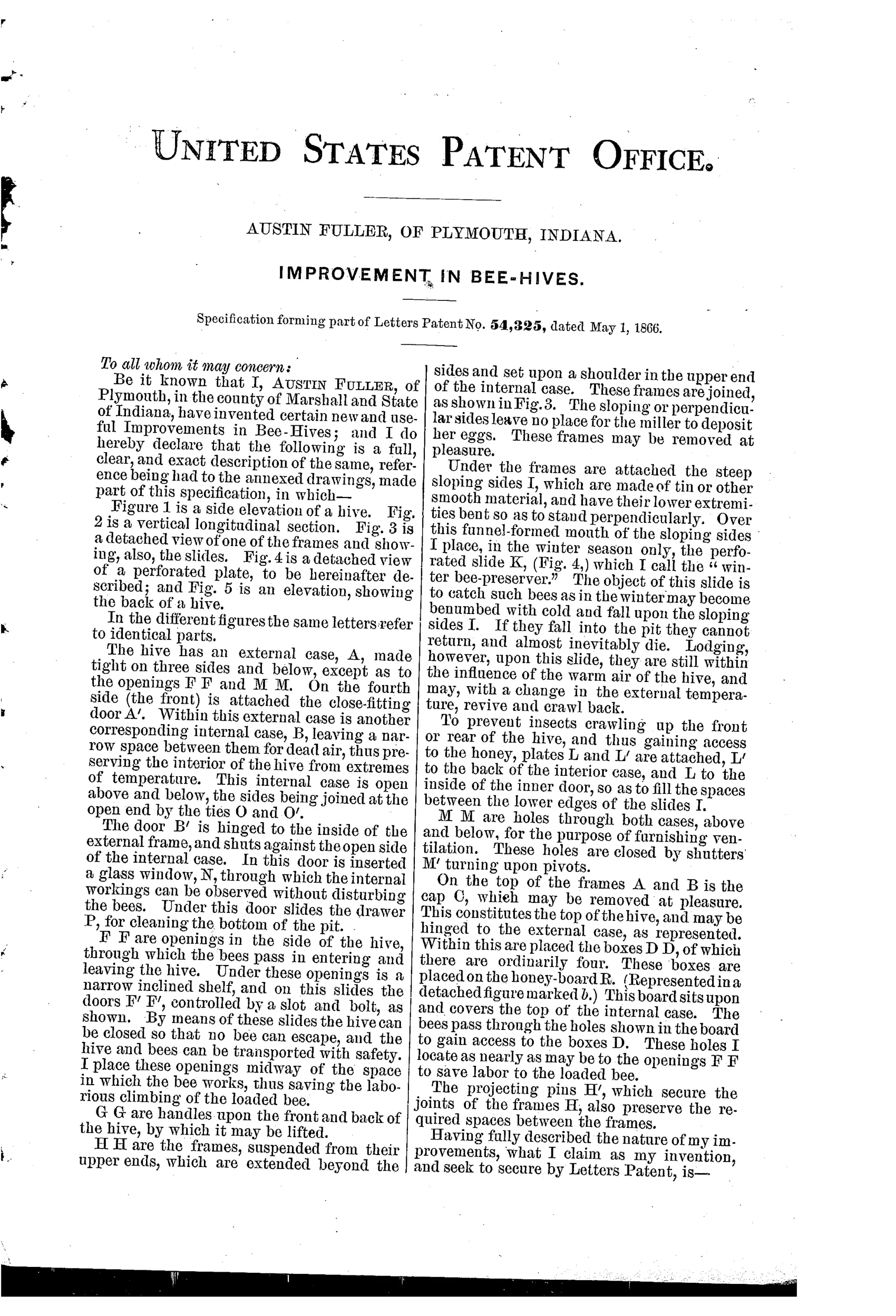
“If they fall into the pit they cannot return, and almost inevitably die.”— Austin Fuller, from the specification
Fate unknown
No documented production or surviving marked example is known; an Indiana-area specimen or a period advertisement would settle it.
⬡ Commentary
Fuller's hive is a post-Langstroth entry with suspended frames, honey boxes under a cap, and the double-walled dead-air construction that dozens of inventors were pushing in the 1860s as the answer to winter losses. All of that is competent but familiar. What sets this one apart is the problem he chose to solve inside the hive: on cold days, bees at the cluster's edge go torpid and drop. In a deep-bottomed hive they fall into the pit and, as the patent bluntly puts it, 'cannot return, and almost inevitably die.'
His answer is the winter bee-preserver, the little perforated plate shown detached in Fig. 4. The sloping tin sides beneath the frames form a funnel, and in winter the slide K covers its mouth. A benumbed bee lands on the plate instead of falling clear to the bottom board, close enough to the cluster's warmth to revive and crawl back up. The perforations keep ventilation working. It's a genuinely humane bit of mechanical thinking — a safety net calibrated to bee physiology.
The sloping tin funnel does double duty as moth defense, denying the wax miller a ledge to lay eggs on, which is the 1860s obsession showing through. Whether the slide meaningfully improved wintering is doubtful — cluster management and insulation matter far more — but it costs almost nothing and can't hurt. A workmanlike hive with one tender-hearted detail worth remembering.
Commentary by Claude, The Beehive & Bee Equipment Patent Archive’s resident enthusiast