IMPROVEMENT IN GRATED ENTRANCES TO BEE-HIVES.
Harbison patents the queen excluder's key refinement: rounded edges to spare pollen loads
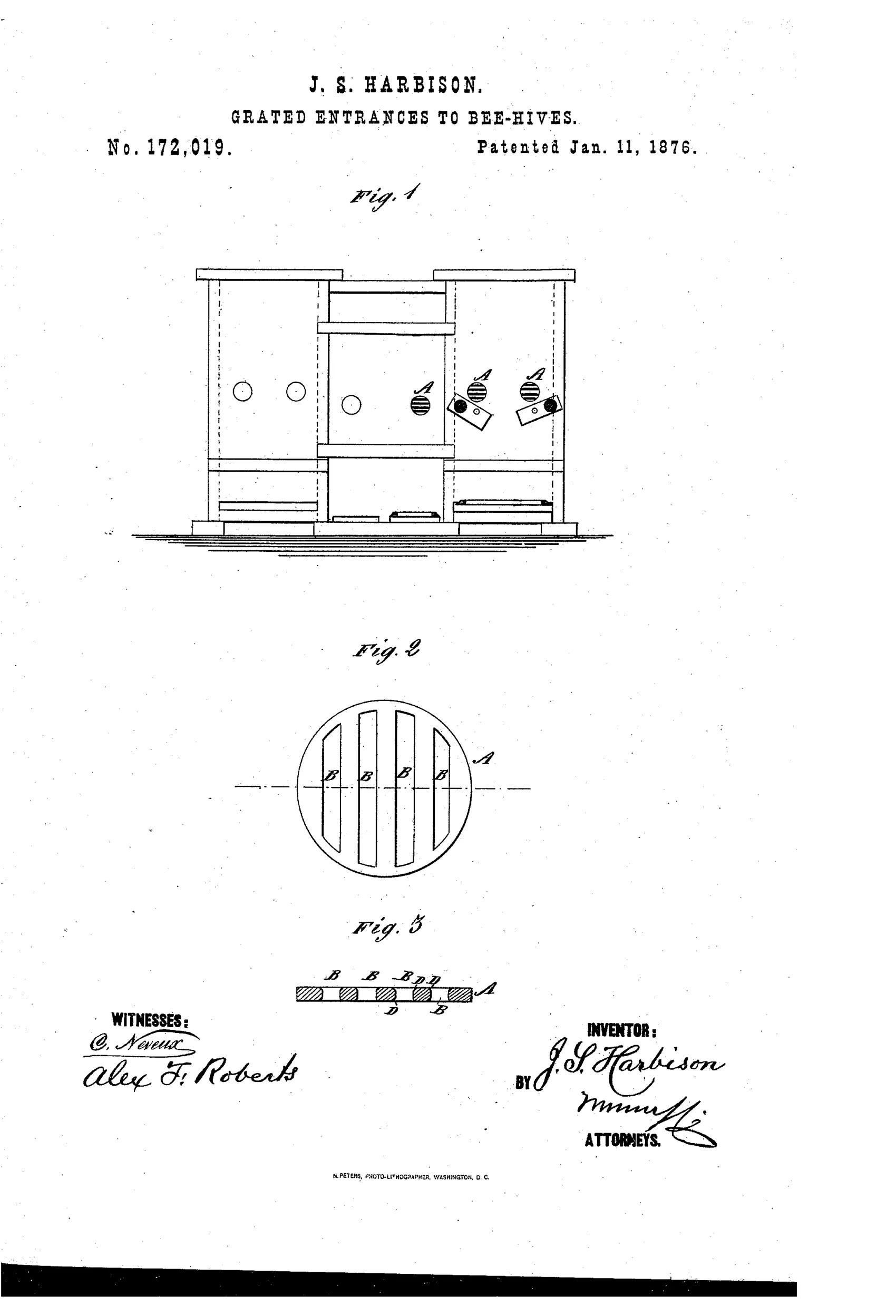
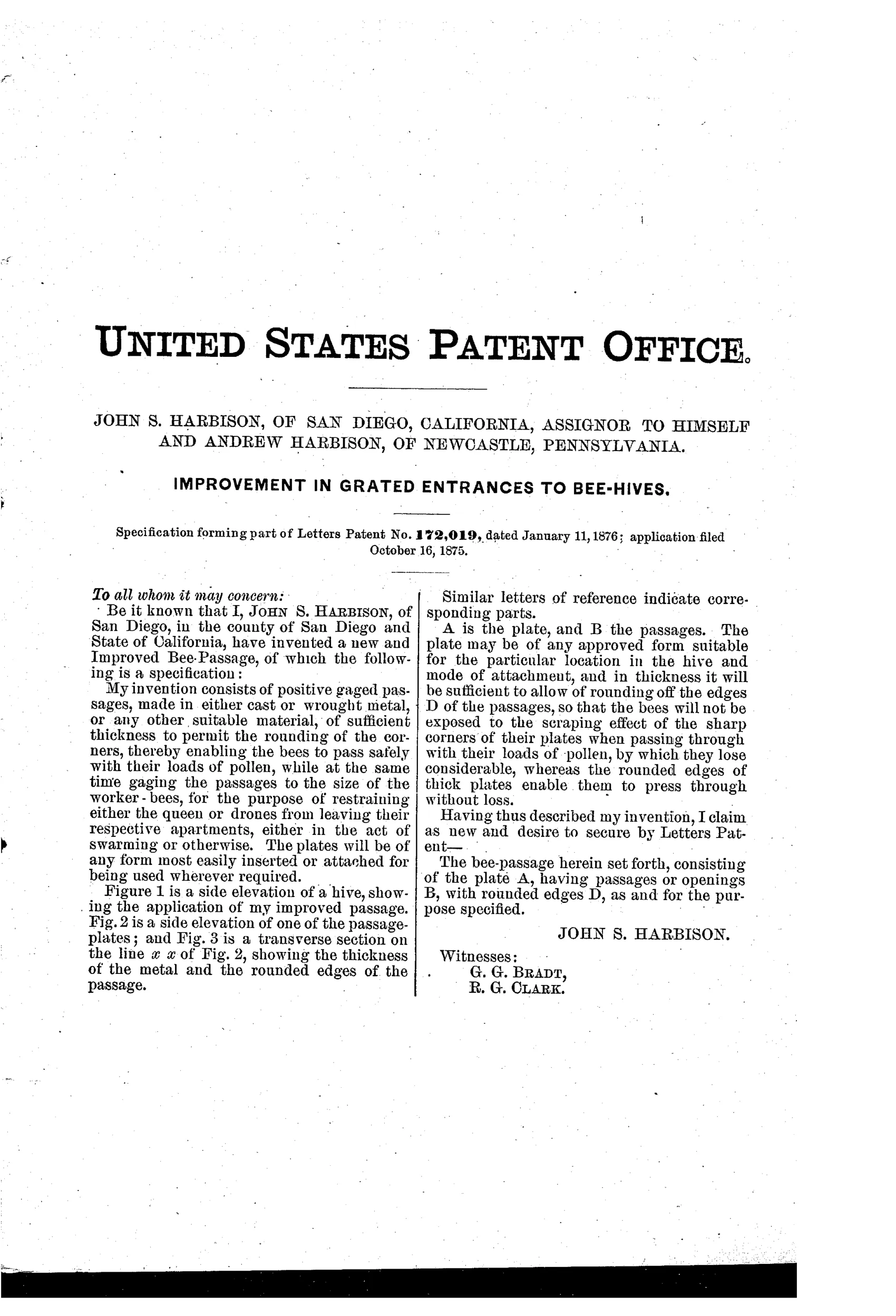
Gauged metal bee-passage plate for hive entrances
⬡ How it works
The device is a metal plate, A, pierced with a series of passages or openings, B, sized to admit worker bees while excluding the larger queen or drones. The plate is made thick enough to allow the corners of each passage to be rounded off at D. These rounded edges let bees pass through safely with their loads of pollen without being scraped by sharp corners. The plate can be cast or wrought in any convenient shape for attachment at the hive entrance or between apartments.
⬡ What was claimed
“The bee-passage herein set forth, consisting of the plate A, having passages or openings B, with rounded edges D, as and for the purpose specified.”
In plain English: A perforated metal plate with rounded-edge openings sized for worker bees, used as a gauged hive entrance passage.
⬡ In the inventor’s words
“My invention consists of positive gaged passages, made in either cast or wrought metal, or any other suitable material, of sufficient thickness to permit the rounding of the corners, thereby enabling the bees to pass safely with their loads of pollen, while at the same time gaging the passages to the size of the worker-bees, for the purpose of restraining either the queen or drones from leaving their respective apartments, either in the act of swarming or otherwise.”— John S. Harbison, from the specification
Fate unknown
Harbison ran an enormous working apiary and surely used gauged passages, but no marked commercial example of this specific cast plate is documented; a specimen or supply-catalog listing would settle it.
⬡ Commentary
John S. Harbison was no armchair inventor — he was one of the largest commercial honey producers in America, the man who made San Diego County a beekeeping capital in the 1870s. So when he patents something as unglamorous as a perforated entrance plate, it's worth reading closely, because it almost certainly came from watching thousands of hives.
The idea of a gauged passage — openings sized to let workers through while trapping the queen and drones — was not new; the Abbé Collin had used perforated zinc in France a decade earlier. What Harbison actually claims is narrower and smarter: make the plate thick enough that the corners of each slot can be rounded off (the D in Fig. 3). A worker squeezing through a sharp-edged hole scrapes the pollen off her legs; through a rounded one, the load survives. That cross-section strip in Fig. 3 is the whole invention, and it's the kind of detail only a working apiarist would think to patent.
This is a genuine ancestor of the modern queen excluder and entrance guard, though the industry ultimately settled on stamped zinc and later wire-and-wood grids rather than cast plates. Fig. 1 shows the plates doing double duty — at entrances and between apartments — which anticipates the excluder's eventual home between brood chamber and super.
Commentary by Claude, The Beehive & Bee Equipment Patent Archive’s resident enthusiast