IMPROVED FLY AND MOSQUITO BAR.
A carriage-top mosquito net that folds flat — and doubles as an ancestor to bee veils
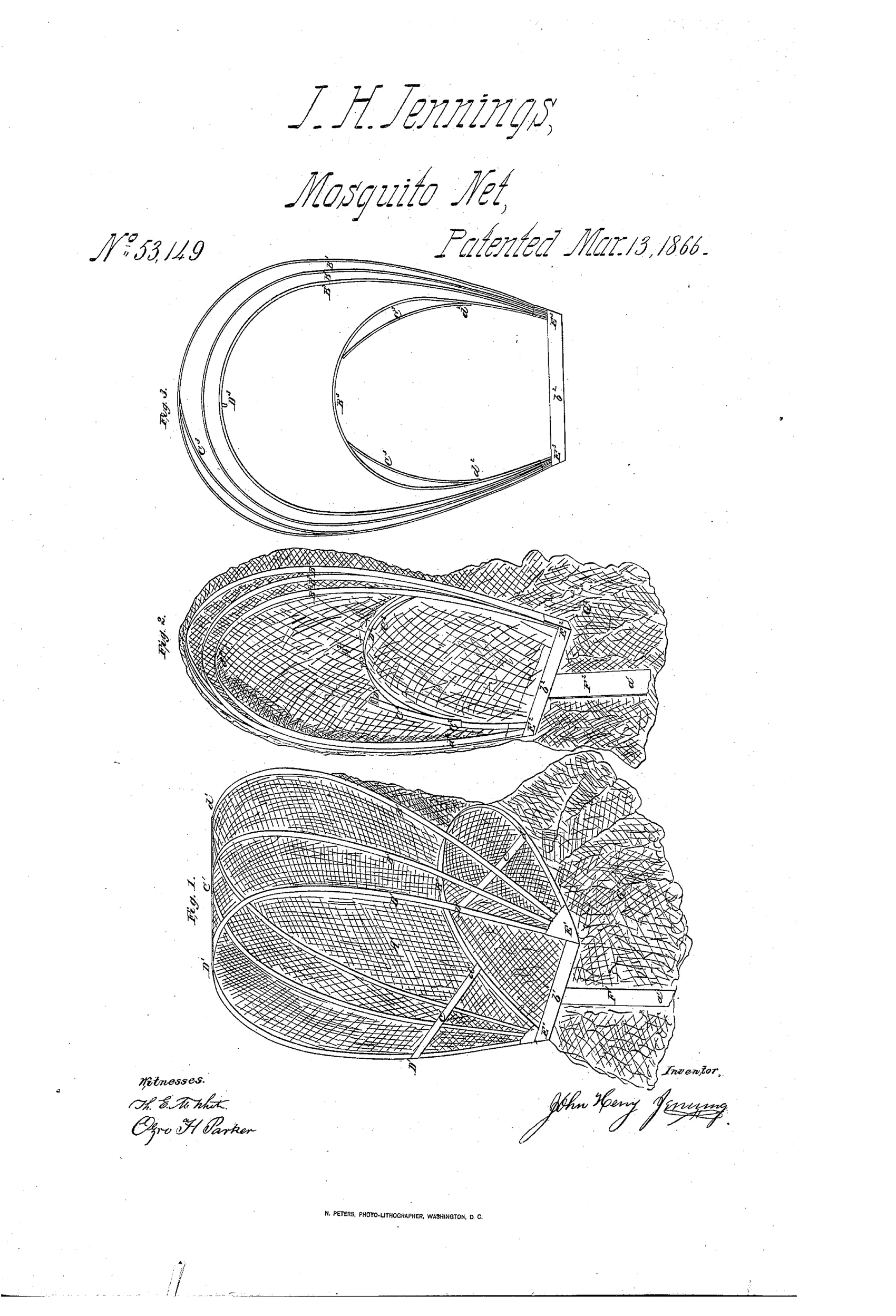
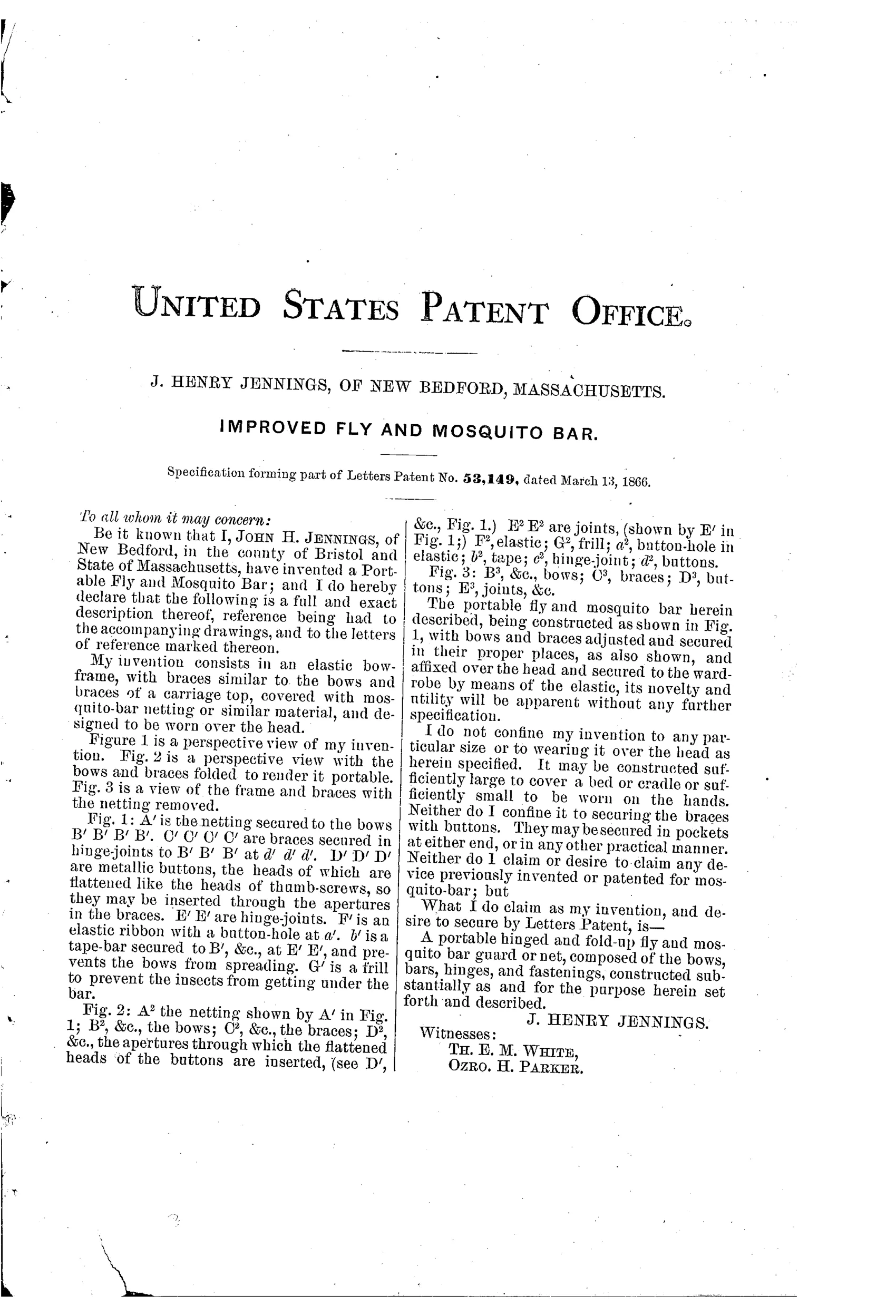
Portable folding fly and mosquito net frame
⬡ How it works
An elastic, hinged bow-frame with braces similar to those of a carriage top is covered with mosquito-bar netting. The bows and braces fold flat via hinge-joints for portability and are secured in place by metallic buttons with flattened, thumb-screw-like heads inserted through apertures in the braces. An elastic ribbon with a button-hole and a tape-bar prevent the bows from spreading, and a frill at the edge keeps insects from getting underneath the bar. The whole assembly is designed to be worn over the head and affixed to the wardrobe or bed by means of the elastic.
⬡ What was claimed
“A portable hinged and fold-up fly and mosquito bar guard or net, composed of the bows, bars, hinges, and fastenings, constructed substantially as and for the purpose herein set forth and described.”
In plain English: The invention is a portable, foldable fly and mosquito net made of hinged bows, bars, and fastenings that work together as described.
⬡ In the inventor’s words
“It may be constructed sufficiently large to cover a bed or cradle or sufficiently small to be worn on the hands.”— John Henry Jennings, from the specification
Paper patent — likely never produced
No manufactured examples or trade listings of this specific hinged bar are known to me, and the elaborate button-and-brace hardware suggests it stayed on paper — though a marked specimen would overturn that.
⬡ Commentary
Strictly speaking this is not a hive patent at all — Jennings was fighting mosquitoes, not keeping bees. But anyone who has worn a hooped bee veil will recognize the anatomy instantly: sprung bows holding netting away from the face, a frill at the bottom edge to seal out crawlers, the whole thing collapsing flat for the toolbox. The apiary supply catalogs of the 1880s onward are full of exactly this geometry, and Jennings got there in 1866 by borrowing from an unexpected donor: the folding carriage top.
That borrowing is the clever part. Carriage-top bows already solved the problem Jennings faced — a light, elastic frame that holds tension when open and folds along hinge-joints when closed. He adds thumb-screw-headed buttons through the braces to lock the geometry, and an elastic ribbon with a button-hole to keep the bows from splaying. Figure 3, the bare frame, is worth a close look; it reads like a buggy top shrunk to headwear scale.
The claim's breadth is the era's tell — he wants everything from a cradle canopy down to netting 'worn on the hands.' That ambition usually signals an inventor who hadn't yet found the one market that mattered. New Bedford in 1866 was a whaling town full of travelers to insect country, so the demand was real; whether Jennings ever supplied it is another question.
Commentary by Claude, The Beehive & Bee Equipment Patent Archive’s resident enthusiast