IMPROVEMENT IN APIARY.
A whole climate-controlled building for bees, with tar moats against the ants
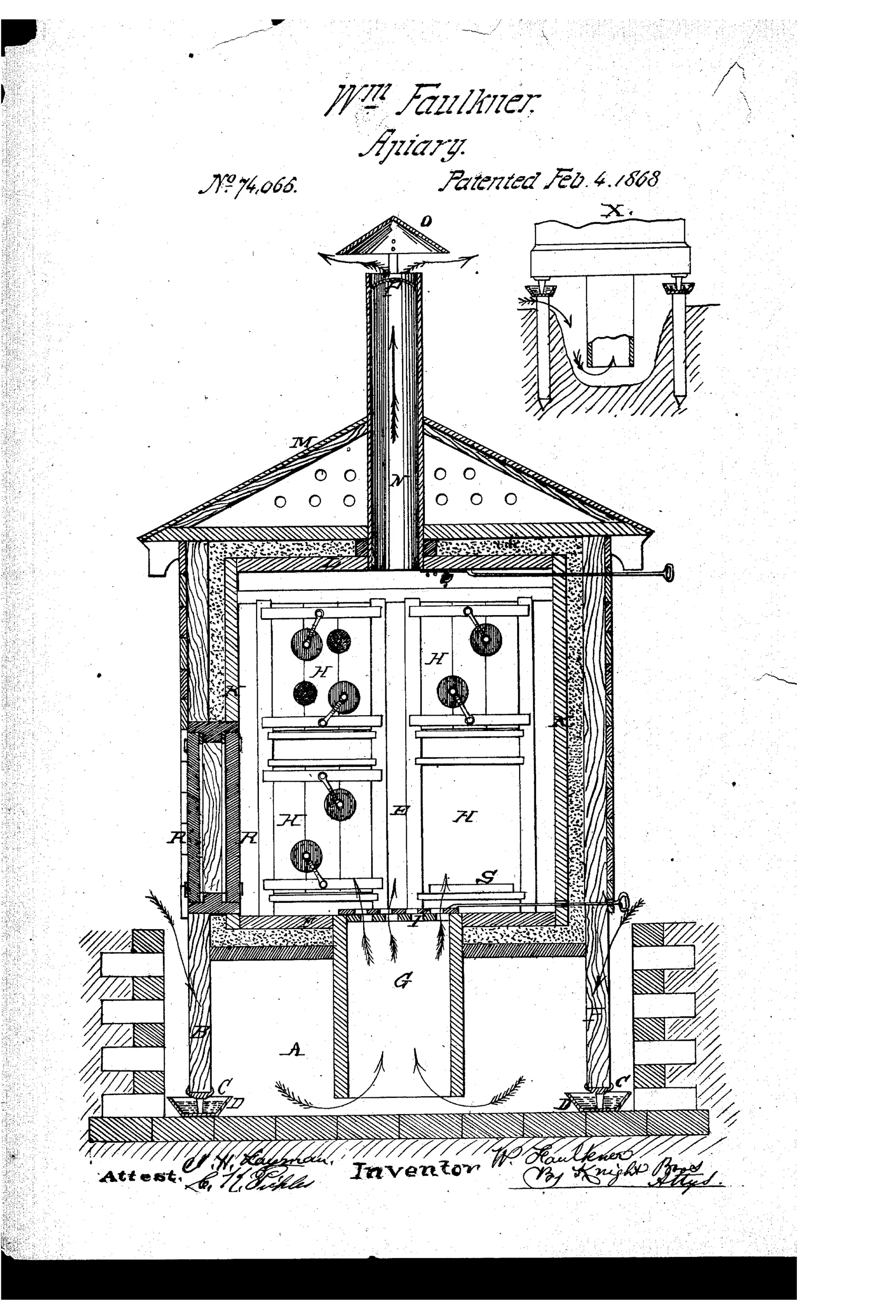
A ventilated, insulated beehive housing building
⬡ How it works
The apiary building rests on posts whose iron pins sit in cups filled with tar to keep out ants and vermin. A sunken pit beneath the hive room cools incoming air, which is drawn up through a central hatchway and past the hives, then exhausted through a roof flue fitted with a cowl, screen, and adjustable damper. Double floor, walls, and ceiling are packed with chaff or other insulation to keep an equable temperature, and registers let the beekeeper open or contract the airways as weather changes.
⬡ What was claimed
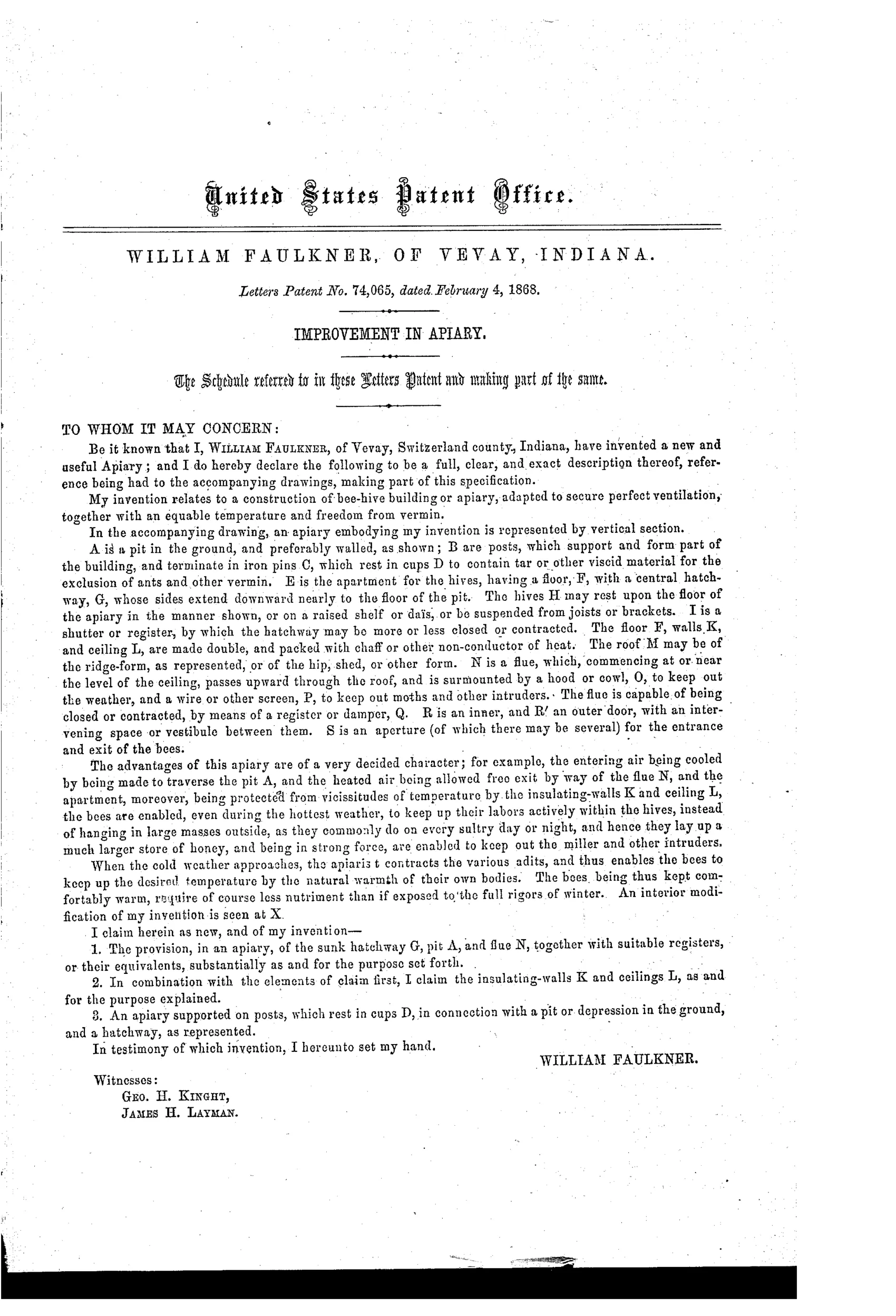
“The provision, in an apiary, of the sunk hatchway G, pit A, and flue N, together with suitable registers, or their equivalents, substantially as and for the purpose set forth.”
In plain English: He claims the combination of a sunken hatchway, an underground pit, and a roof flue, all fitted with adjustable registers, used together to ventilate and regulate temperature in a beehive building.
⬡ In the inventor’s words
“The bees, being thus kept comfortably warm, require of course less nutriment than if exposed to the full rigors of winter.”— William Faulkner, from the specification
Fate unknown
Faulkner may well have built his own apiary house, but nothing suggests commercial production; a period account or photograph of the Vevay structure would settle it.
⬡ Commentary
Most 1860s inventors were fussing over the hive box itself. Faulkner, of Vevay, Indiana, zoomed out and patented the whole building: an insulated bee house with a passive ventilation system that would not embarrass a root cellar. Cool air pools in a sunken pit below the floor, rises through a central hatchway past the hives, and exhausts through a roof flue capped with a cowl and damper. Double walls, floor, and ceiling packed with chaff do the insulating. It is essentially a thermosiphon chimney for bees.
The detail everyone skips is the inset marked X: each post of the building ends in an iron pin sitting in a cup filled with tar. That is a moat. Ants and crawling vermin cannot reach the hives without swimming pitch, which is a genuinely practical trick still used, in essence, under modern hive stands in ant country.
Would it work? The physics is sound in summer — warm air really would draft up that flue — but the winter logic is the interesting part. His quote about bees needing 'less nutriment' when kept warm shows he understood cluster economics: cold bees eat stores to generate heat. Chaff insulation for wintering later became orthodox practice (chaff hives were a Root catalog staple). Faulkner just scaled the idea to architecture. Bee houses like this remained common in Europe but never caught on in America, where movable hives in open yards won. A thoughtful dead end, on the wrong continent.
Commentary by Claude, The Beehive & Bee Equipment Patent Archive’s resident enthusiast