IMPROVEMENT IN BEE-HIVES
A moth-proof Iowa hive where the frames slide out as one locked block
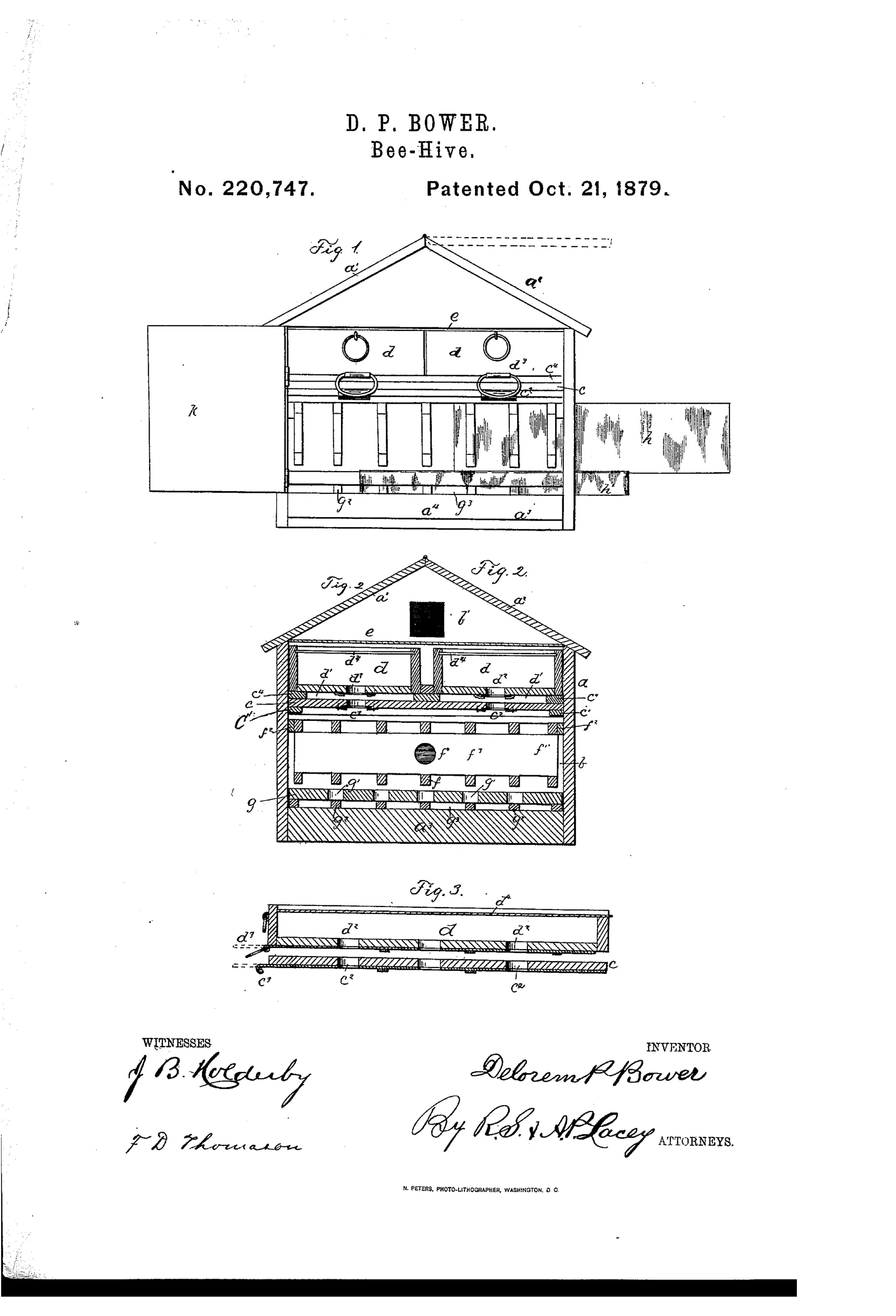
A moth-proof, inspectable beehive with sliding parts
⬡ How it works
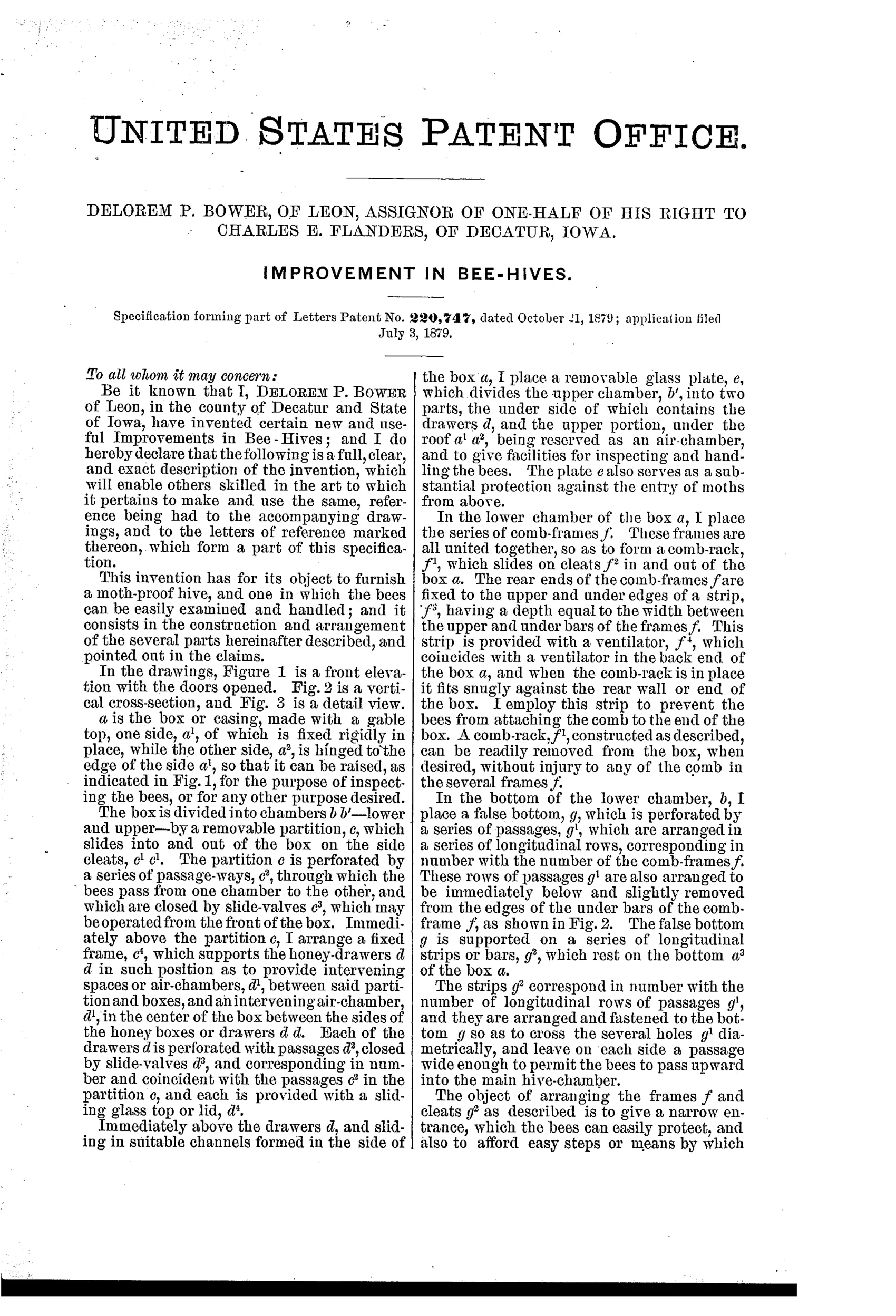
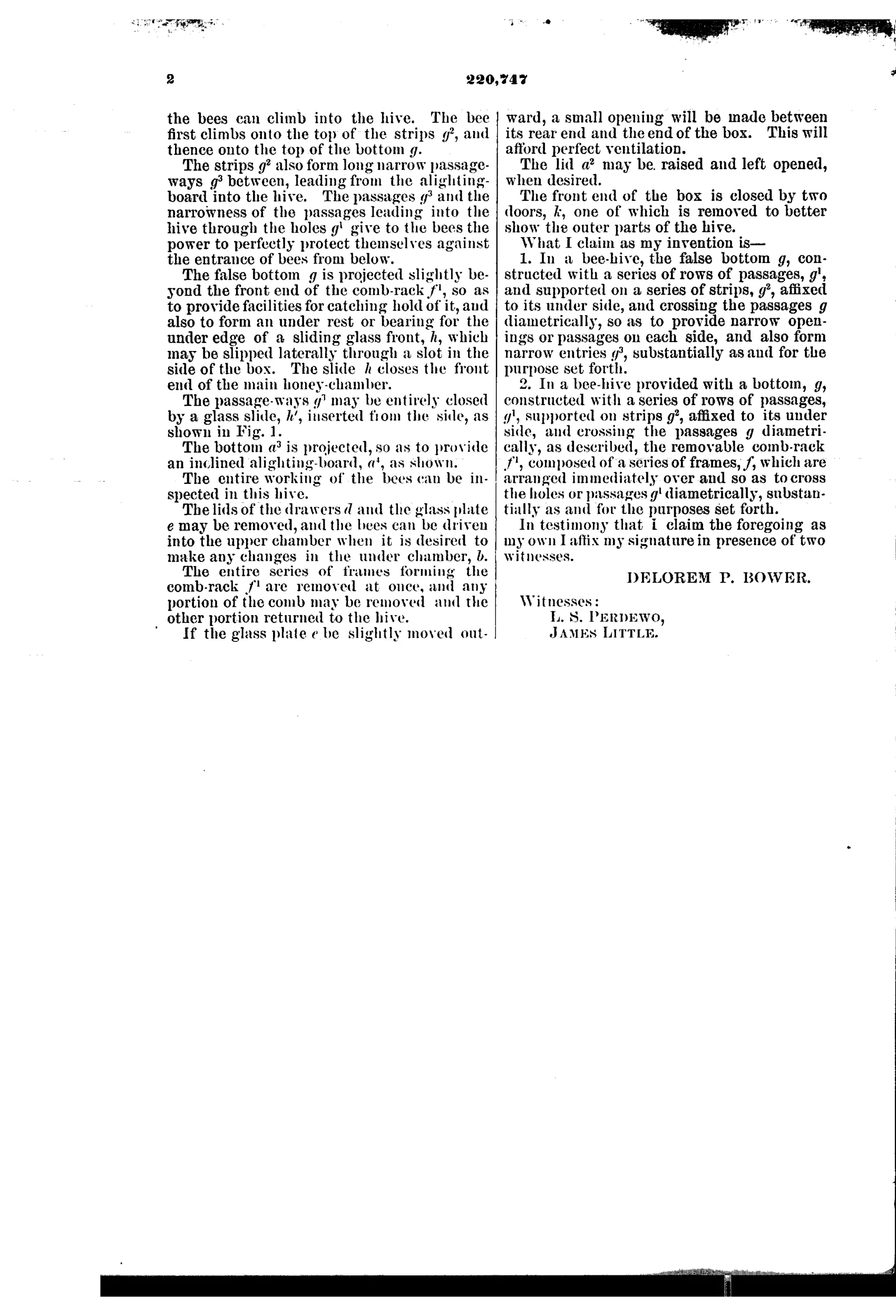
The hive box has a hinged gable roof side that can be raised for inspecting the bees, and is divided into upper and lower chambers by a removable, perforated partition with slide-valves. Honey drawers with sliding glass lids sit above the partition, separated by air-chambers, while a removable comb-rack of united frames slides in and out on cleats in the lower brood chamber. A perforated false bottom, supported on crossing strips, forms narrow diametrical passages and entries that the bees can easily guard, and a sliding glass front and glass slides can close off the comb-rack or passageways as needed.
⬡ What was claimed
“In a bee-hive, the false bottom g, constructed with a series of rows of passages, g1, and supported on a series of strips, g2, affixed to its under side, and crossing the passages g diametrically, so as to provide narrow openings or passages on each side, and also form narrow entries g3, substantially as and for the purpose set forth.”
In plain English: The hive's false bottom has rows of holes underlaid by crosswise strips, creating narrow, easily-guarded openings and entry passages for the bees.
⬡ In the inventor’s words
“This invention has for its object to furnish a moth-proof hive, and one in which the bees can be easily examined and handled.”— Delorem P. Bower, from the specification
Paper patent — likely never produced
The joinery-heavy design and rights-sale arrangement fit the patent-peddling pattern, and no manufactured example or trade listing is known to me — a marked specimen would overturn this.
⬡ Commentary
By 1879, Langstroth's movable frames had been public for twenty-seven years, and here is Delorem Bower of Leon, Iowa, quietly walking half of it back. His comb-rack is a set of frames "united" into a single drawer that slides in and out on cleats — inspectable, yes, but not the frame-by-frame manipulation that makes modern beekeeping work. You can pull the whole brood nest out like a filing drawer; you cannot easily lift one comb to find the queen.
The part the Patent Office actually allowed is humbler and more interesting: the false bottom. Look low in Fig. 2, at the crosshatched grid marked g. Rows of holes in the floor sit over crosswise strips, so a bee entering has to negotiate a narrow, dog-legged passage. The theory — universal in this era — was that wax moths could be excluded by geometry while bees, being defenders, could guard a slot they couldn't guard an open doorway. Moths, of course, are roughly bee-sized, and the real defense against them is colony strength, not carpentry.
Add the glass-lidded honey drawers, slide-valves, hinged gable, and air chambers, and you have a classic late-70s patent palace: earnest, over-jointed, expensive to build, and solving the wrong problem well. The half-interest assigned to Charles Flanders suggests they hoped to sell rights, the standard business model for hives like this.
Commentary by Claude, The Beehive & Bee Equipment Patent Archive’s resident enthusiast