Moth-Trap
A tube-within-a-tube bet that moths crawl where bees fly
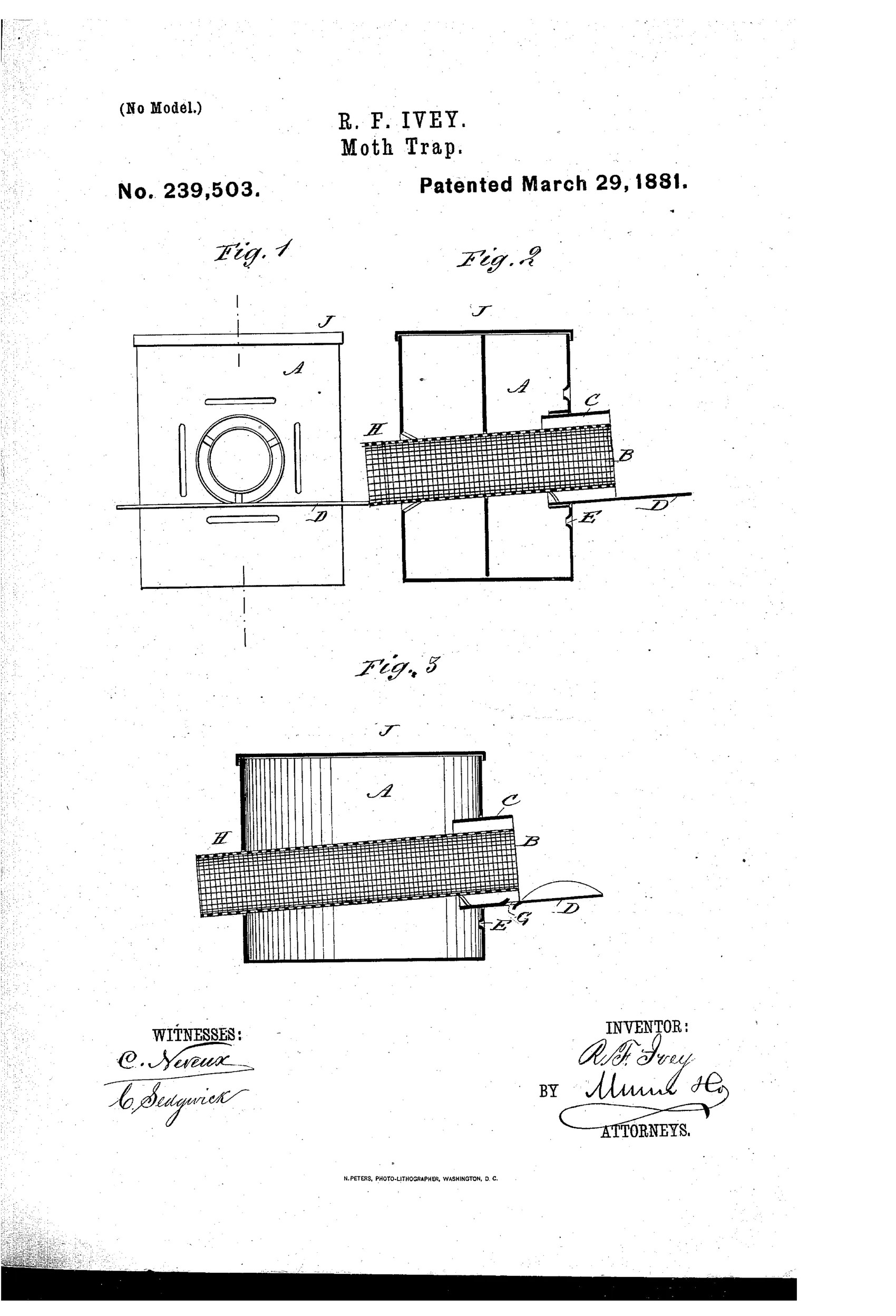
A bee-hive-mounted trap for catching moths
⬡ How it works
A box A is fitted with a perforated tube B that passes through it into the hive's main aperture, allowing bees to enter directly. A shorter, larger surrounding tube C encircles the front end of tube B, with a plate D beneath its outer end for bees to alight on. Moths cannot navigate tube B like bees can, so they crawl along tube C and fall through an aperture into box A, where they are trapped by sweetened bait water; the box has a removable top J and a drain opening E for excess water.
⬡ What was claimed
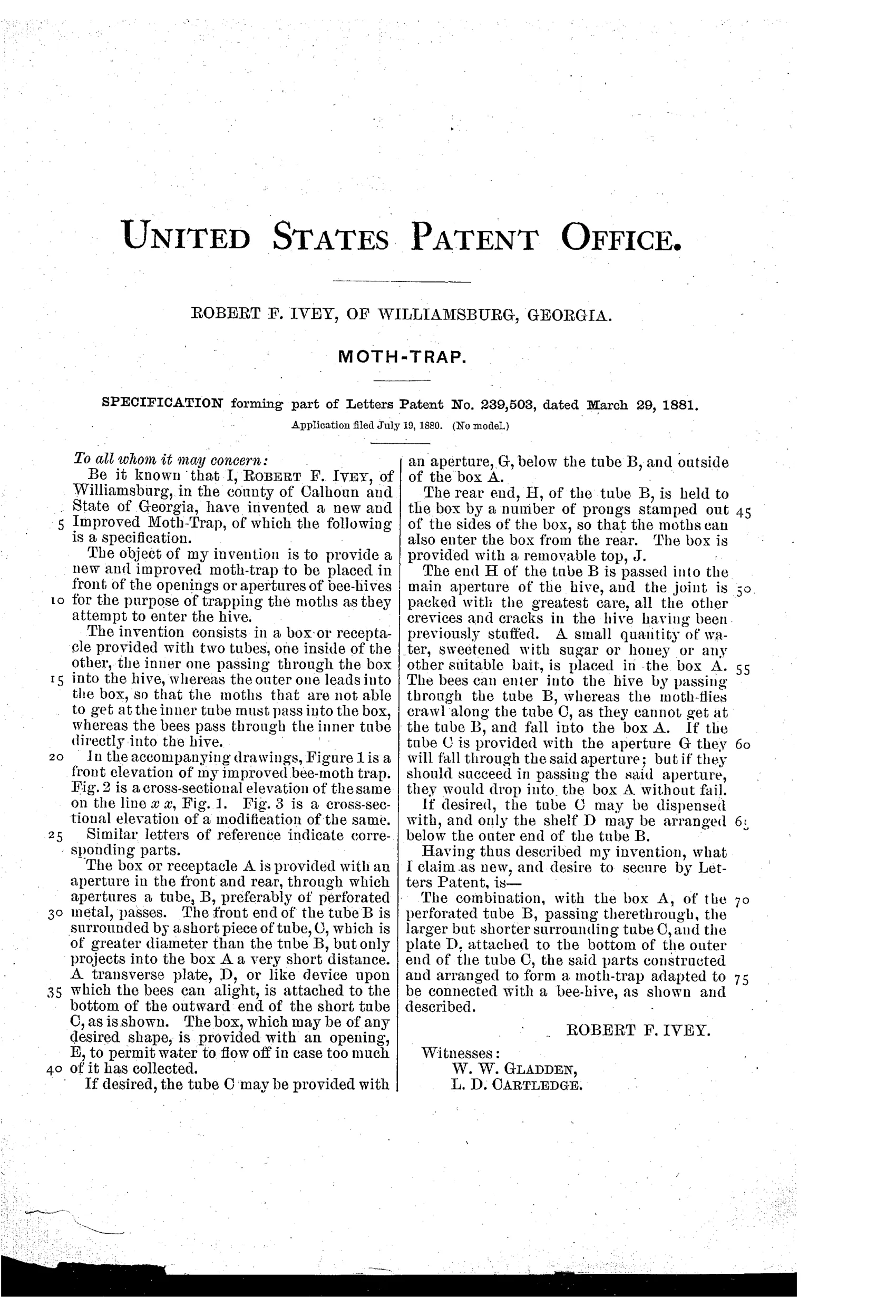
“The combination, with the box A, of the perforated tube B, passing therethrough, the larger but shorter surrounding tube C, and the plate D, attached to the bottom of the outer end of the tube C, the said parts constructed and arranged to form a moth-trap adapted to be connected with a bee-hive, as shown and described.”
In plain English: The invention claims the combination of a box with a perforated inner tube, a shorter surrounding outer tube, and a landing plate beneath it, all arranged together to form a moth trap that attaches to a beehive.
⬡ In the inventor’s words
“The bees can enter into the hive by passing through the tube B, whereas the moth-flies crawl along the tube C, as they cannot get at the tube B, and fall into the box A.”— Robert F. Ivey, from the specification
Paper patent — likely never produced
A simple attachment cheap enough to build, but no manufactured example or trade listing is known, and the moth-trap genre it belongs to left almost no commercial survivors.
⬡ Commentary
Ivey's whole invention rests on one behavioral wager: bees will fly straight down the perforated inner tube B into the hive, while wax moths — clumsier, crawl-prone, arriving at dusk — will land on the little plate D, walk up the wider outer sleeve C, miss the inner tube entirely, and drop through a gap into a box of sweetened water. It is a one-way street built out of nothing but geometry and a guess about insect habits. The drawing shows the trick clearly if you look at Fig. 2: the two tubes are concentric but the outer one is short, so an insect crawling along its inner wall reaches a ledge that leads only downward into the drowning box. The removable lid J and drain hole E show a man thinking about actual maintenance, which many patent-hive dreamers never did.
The trouble is the wager itself. Wax moths mostly slip into hives through the same entrances bees use, and their real damage is done by larvae already inside weak colonies. Langstroth had said as much decades earlier: the cure for moths is a strong colony, not a gadget on the porch. By 1881 the moth-trap genre was already the category's most crowded dead end, and this is an earnest, tidily drawn entry in it.
Still, as these things go it is cheap, simple, and would drown some moths and, unfortunately, some bees. That puts it well above the hinged moth-palace hives it competed with.
Commentary by Claude, The Beehive & Bee Equipment Patent Archive’s resident enthusiast