IMPROVEMENT IN BEE-HIVES
An 1868 Hoosier hive resting its combs on metal pins — propolis-proofing before its time
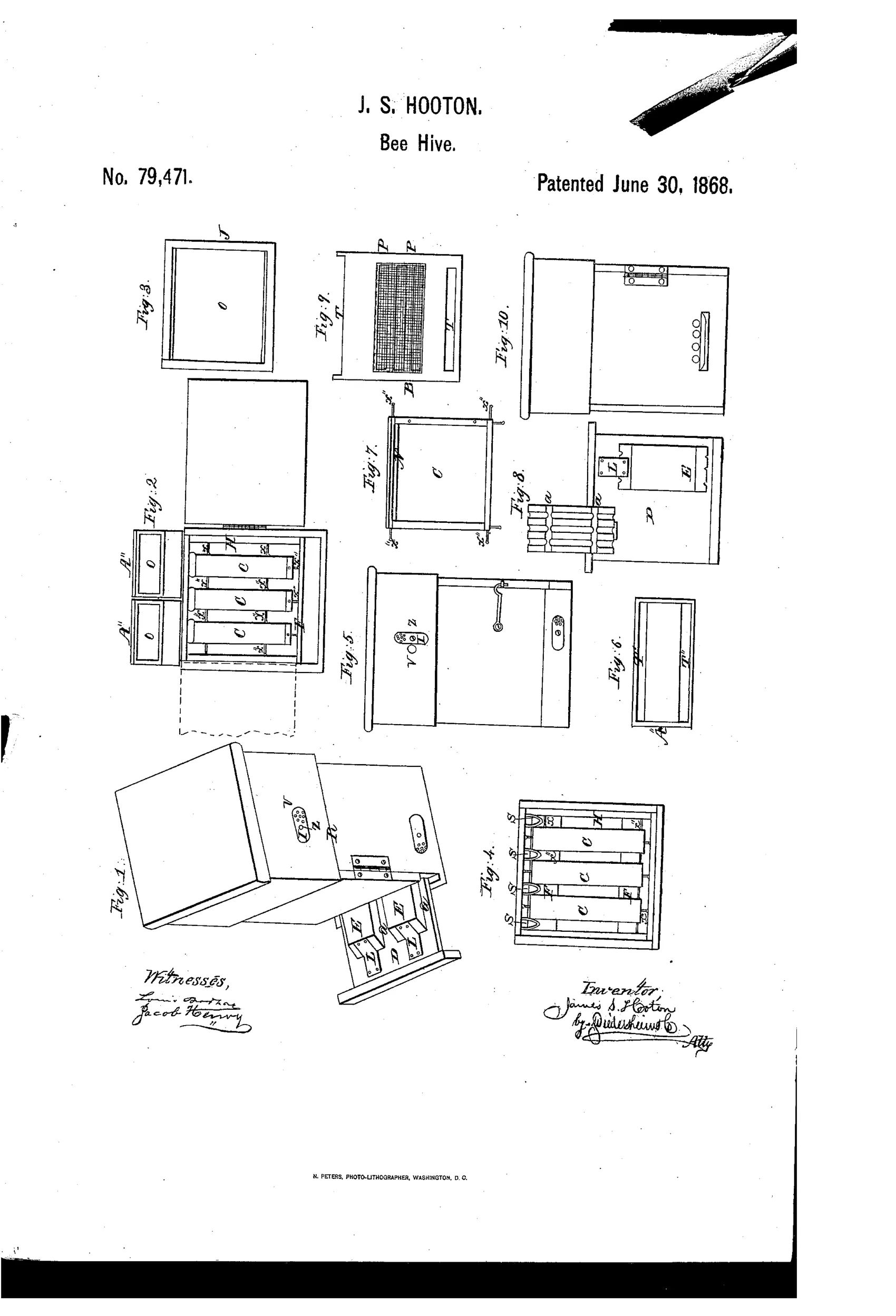
Improved wooden bee-hive with removable comb-racks
⬡ How it works
The hive is built as a lower box with two hinged sides that swing open on metal pins and staples so the comb-racks can be pulled forward for inspection without disturbing the bees. A sliding drawer beneath the hive, lined with grooved wood, traps moths and worms that fall through openings, while a thin board with wire-covered ventilation holes and a turnable perforated metal strip lets the beekeeper open or close air circulation depending on the weather. Separate honey-caps with glass windows sit atop a covering board and communicate with the lower hive through small openings, allowing bees to fill the caps while letting the keeper see when they are full. Comb-racks are supported only on metal pins and staples so wax cannot fasten them to the hive body, permitting easy removal of any single comb section.
⬡ What was claimed
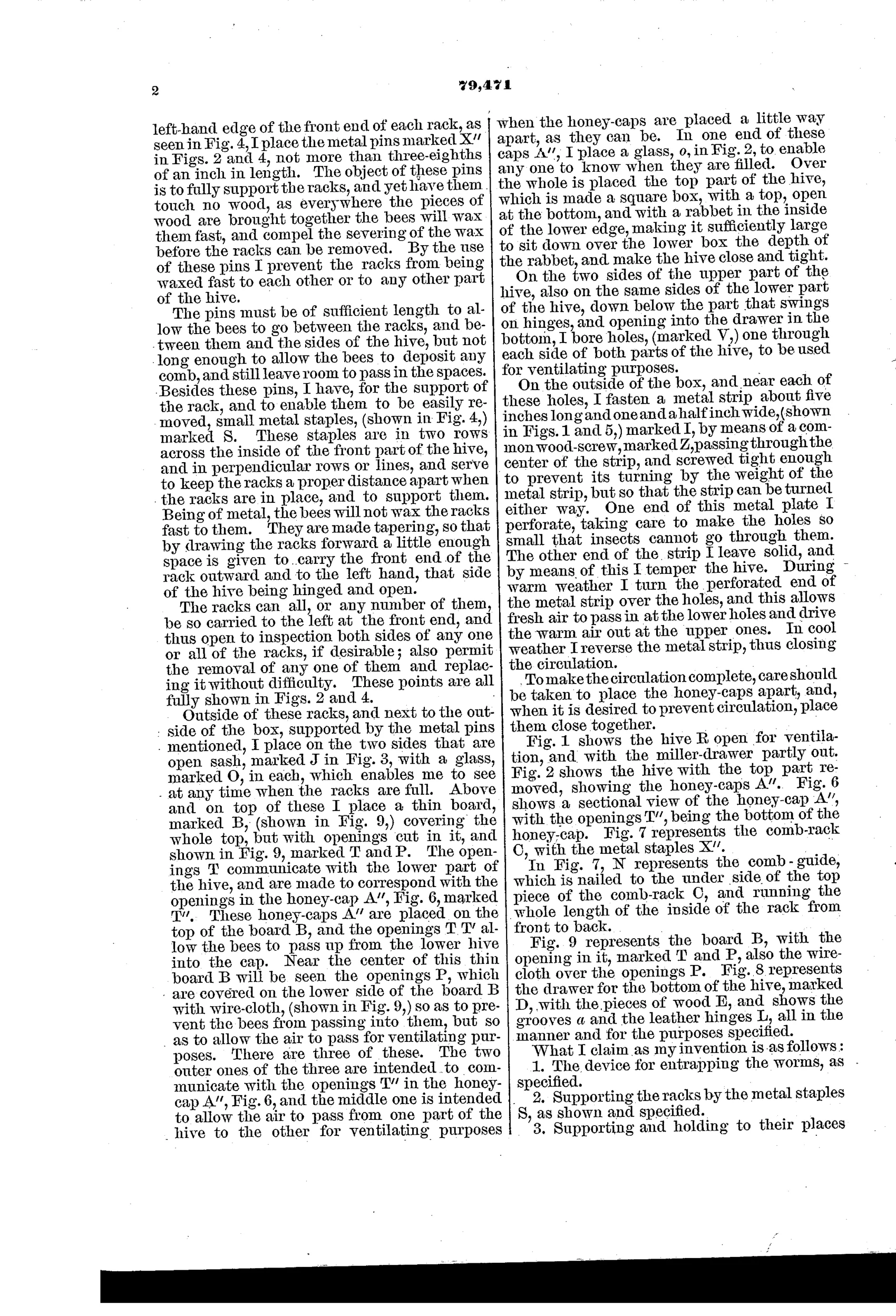
“4. Supporting the racks solely upon metal bearings by means of the pins X and staples S, as set forth.”
In plain English: The comb-racks rest only on metal pins and staples so bees cannot wax them permanently to the hive, making them easy to remove.
⬡ In the inventor’s words
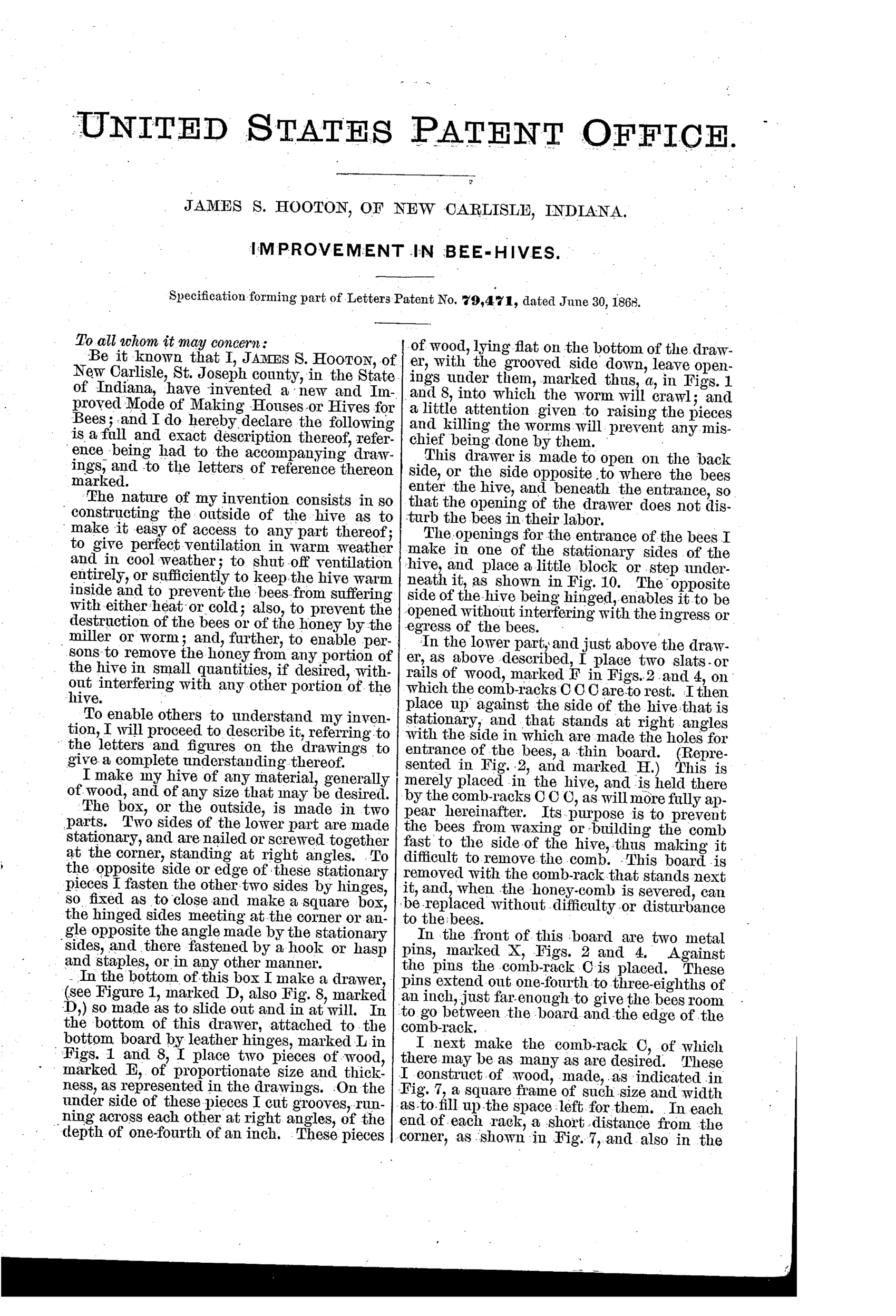
“The nature of my invention consists in so constructing the outside of the hive as to make it easy of access to any part thereof; to give perfect ventilation in warm weather and in cool weather; to shut off ventilation entirely, or sufficiently to keep the hive warm inside and to prevent the bees from suffering with either heat or cold; also, to prevent the destruction of the bees or of the honey by the miller or worm.”— James S. Hooton, from the specification
Fate unknown
No documented production or surviving example is known to me; a marked hive or a local Indiana advertisement would settle it.
⬡ Commentary
Sixteen years after Langstroth, the patent office was drowning in hive designs, and most of them piled on the same three promises Hooton makes here: easy access, adjustable ventilation, and death to the wax moth. What lifts this one slightly above the crowd is claim 4 — supporting the comb-racks solely on metal pins and staples so the bees can't glue them down. Anyone who has pried a propolized frame loose knows the problem is real, and the modern answer, the metal frame rest folded into a hive body's rabbet, is a direct cousin of Hooton's idea. He didn't invent bee space, but he understood that wood-on-wood contact is where bees win the removability fight.
The rest is the familiar 1860s kit. Hinged sides swinging open on pins (Fig. 1) so racks pull forward; a grooved drawer underneath (Fig. 8) meant to catch falling moth larvae; a perforated ventilation strip you turn like a damper; and glass-windowed honey-caps up top so you can watch them fill. The moth drawer is the era's great folly — moths breed in the comb, not on the floor — and the hinged sides multiply joints, which multiply propolis and drafts.
Still, the drawings are careful and the metal-bearing claim is genuinely forward-looking. A workmanlike palace hive with one sharp idea buried in it.
Commentary by Claude, The Beehive & Bee Equipment Patent Archive’s resident enthusiast