IMPROVEMENT IN BEE-HIVES
A moth-defense hive with sloped metal floors, ten years after Langstroth
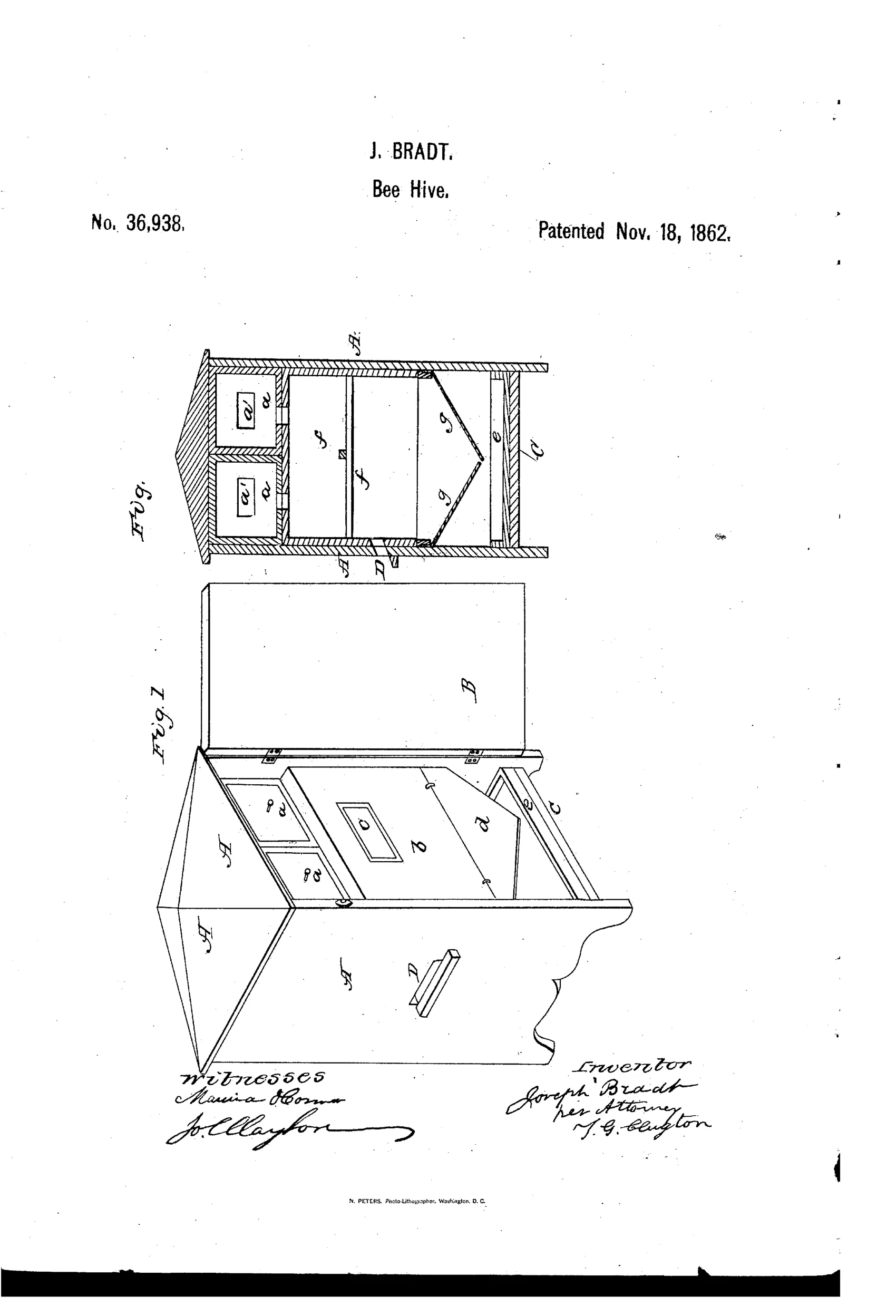
An improved wooden bee-hive with honey boxes
⬡ How it works
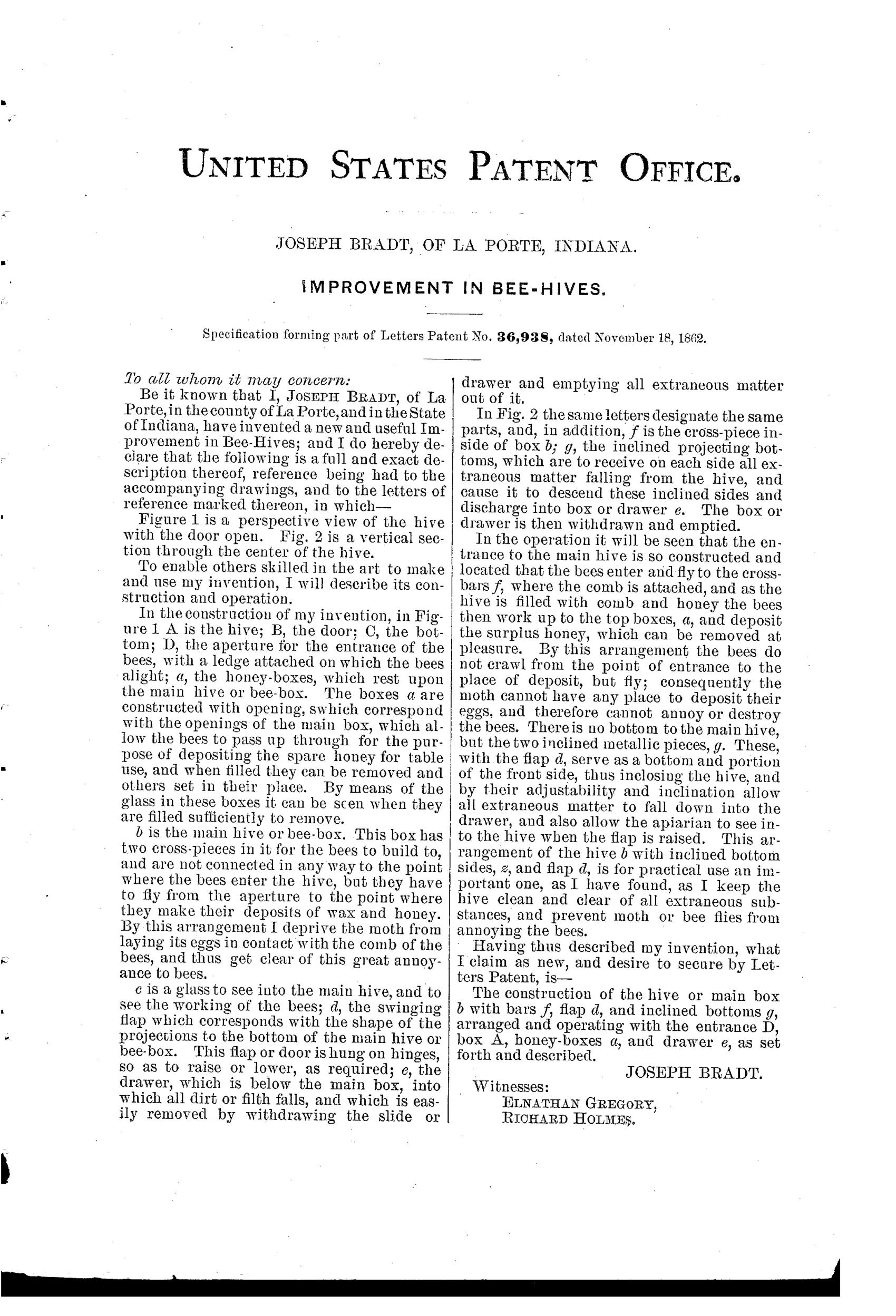
The hive has a main brood box with internal cross-bars for comb attachment, separate from the bee entrance so bees must fly rather than crawl to deposit wax and honey. Two inclined metallic bottoms funnel debris and refuse through a hinged flap into a removable drawer beneath the hive, keeping the brood chamber clean. Glass-fronted honey boxes rest atop the main box, aligned with openings so bees can pass up to deposit surplus honey visible through the glass, and these boxes can be removed once full. A glass window in the main box allows viewing of the bees' activity without opening the hive.
⬡ What was claimed
“The construction of the hive or main box b with bars f, flap d, and inclined bottoms g, arranged and operating with the entrance D, box A, honey-boxes a, and drawer e, as set forth and described.”
In plain English: The patent claims the specific combination of the main hive box with internal comb bars, a hinged bottom flap, inclined metal bottoms, the entrance, the upper honey boxes, and the debris drawer, all working together as described.
⬡ In the inventor’s words
“By this arrangement I deprive the moth from laying its eggs in contact with the comb of the bees, and thus get clear of this great annoyance to bees.”— Joseph Bradt, from the specification
Fate unknown
No manufacturing record or surviving example is documented for Bradt's design; a marked hive or period advertisement from La Porte would settle it.
⬡ More by Joseph Bradt
- IMPROVEMENT IN BEE-HIVES (1866)
⬡ Commentary
Bradt's hive is a wartime entry in the great anti-moth arms race, and his weapon of choice is gravity. Look at Fig. 2: those inclined metallic bottoms (g) form a shallow funnel under the brood chamber, so wax scraps, dead bees, and — crucially — wax-moth larvae and eggs slide down through a hinged flap into a removable drawer below. Pull the drawer, dump the debris, and in theory the moths never get a foothold near the comb. He even separates the entrance from the comb space so bees must fly up rather than crawl, on the theory that moths creep where bees fly.
The honest problem is what's missing. In 1862 Langstroth's movable frames had been public for a decade, yet Bradt gives us fixed cross-bars (f) for comb attachment — you still can't lift a comb out for inspection, which is the actual cure for moths. Strong colonies police wax moths themselves; weak ones fail no matter how clever the floor is. The debris drawer is a genuinely decent piece of hygiene engineering — it anticipates the screened bottom boards modern beekeepers use against varroa mites — but it's bolted to an obsolete comb system.
The glass-fronted honey boxes and viewing window are pure period charm: watch your bees work, lift off the box when full. As comb-honey sections, they're not far off what the industry eventually settled on.
Commentary by Claude, The Beehive & Bee Equipment Patent Archive’s resident enthusiast