IMPROVEMENT IN BEE-HIVES.
A hive on ball feet that tilts, swings open, and sweeps itself clean
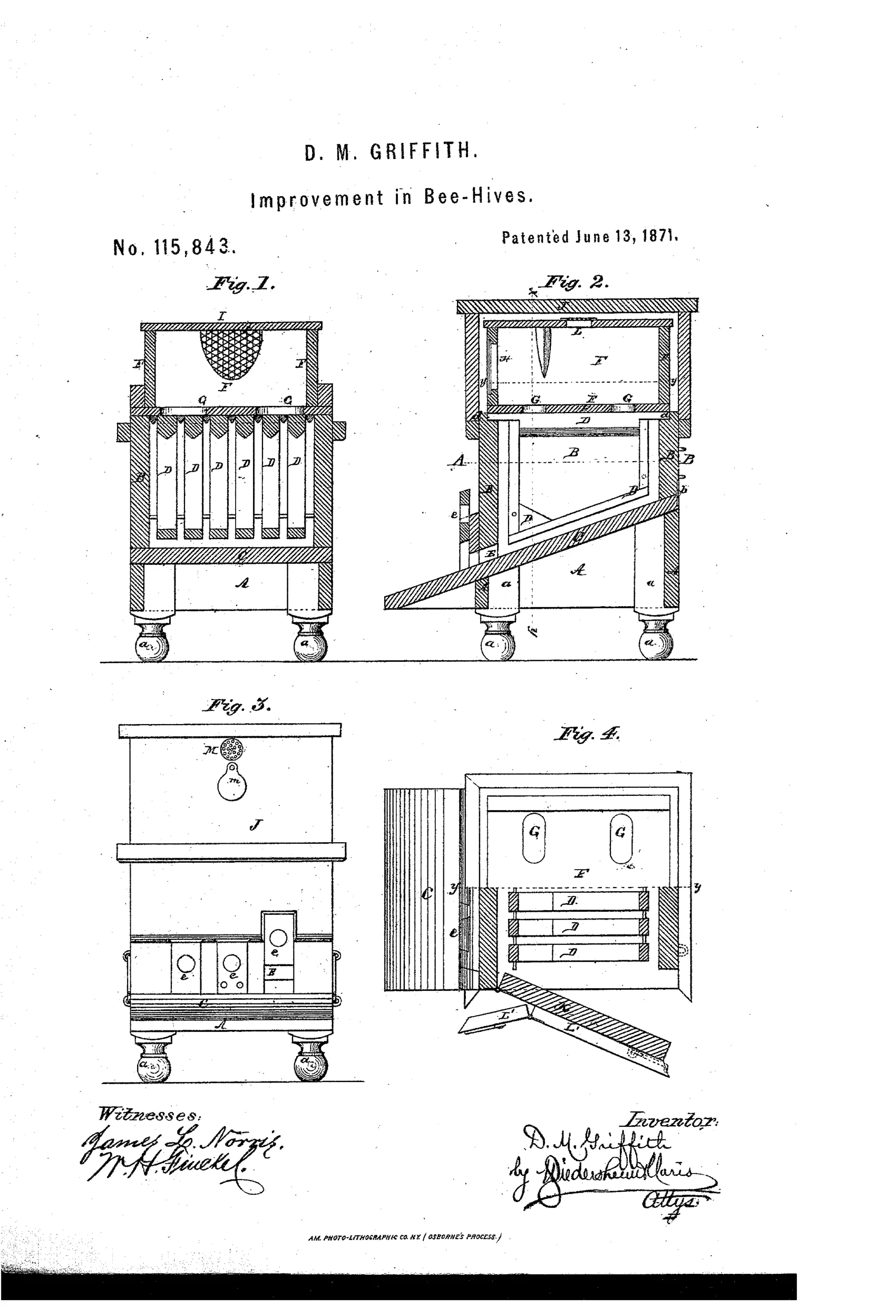
Self-cleaning, ventilated bee-hive with hinged inspection body
⬡ How it works
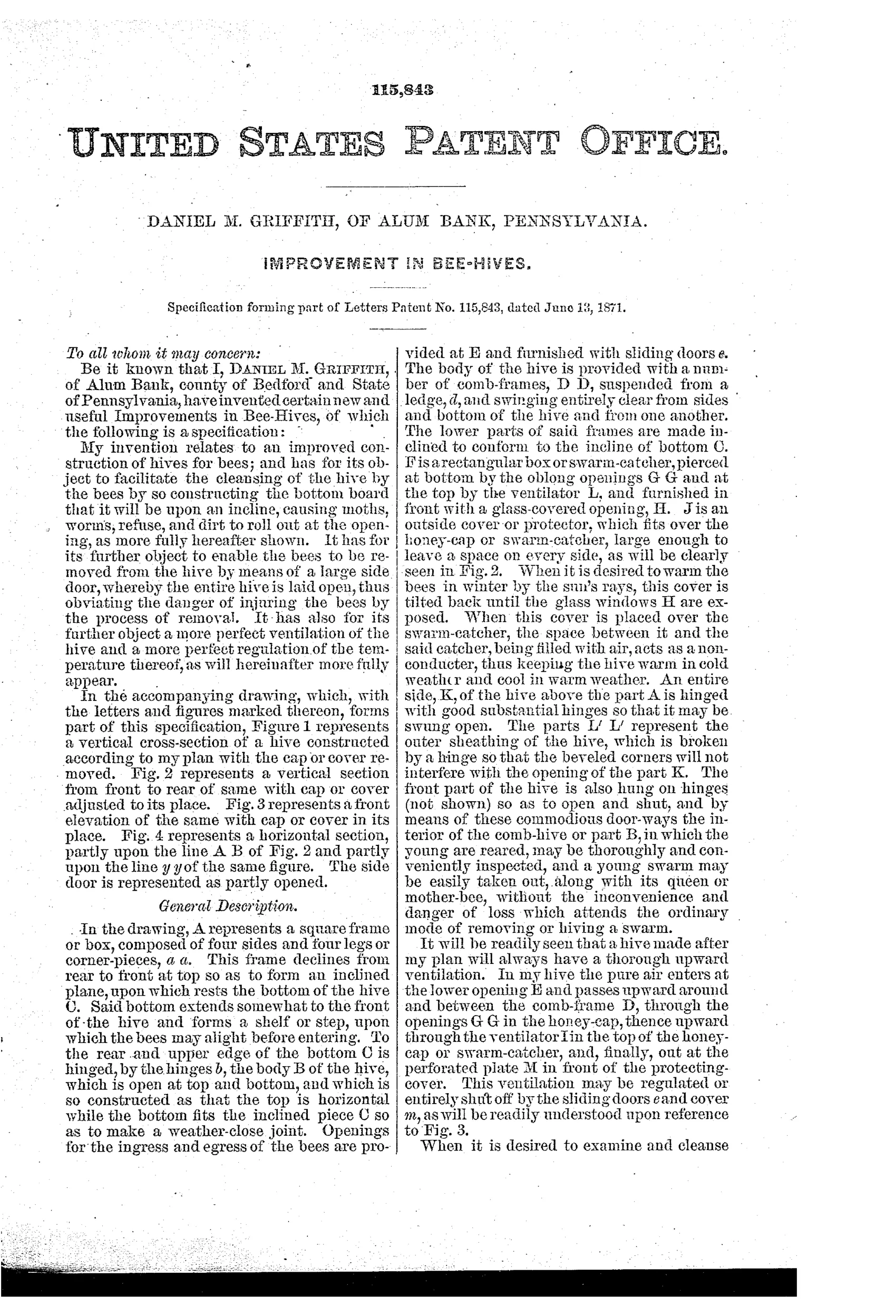
The hive rests on an inclined bottom board hinged at the rear so it can be tilted back for full cleaning access, letting moths, worms, and debris roll out the front opening. Comb-frames hang suspended from a ledge, swinging clear of the sides and bottom for easy handling. A honey-cap or swarm-catcher above the brood chamber has bottom openings and a top ventilator, creating an upward airflow path from the entrance through the comb-frames to a perforated plate in the outer protecting cover. An entire side of the hive above the base is hinged to swing open, allowing full inspection or removal of a swarm without disturbing the bees excessively.
⬡ What was claimed
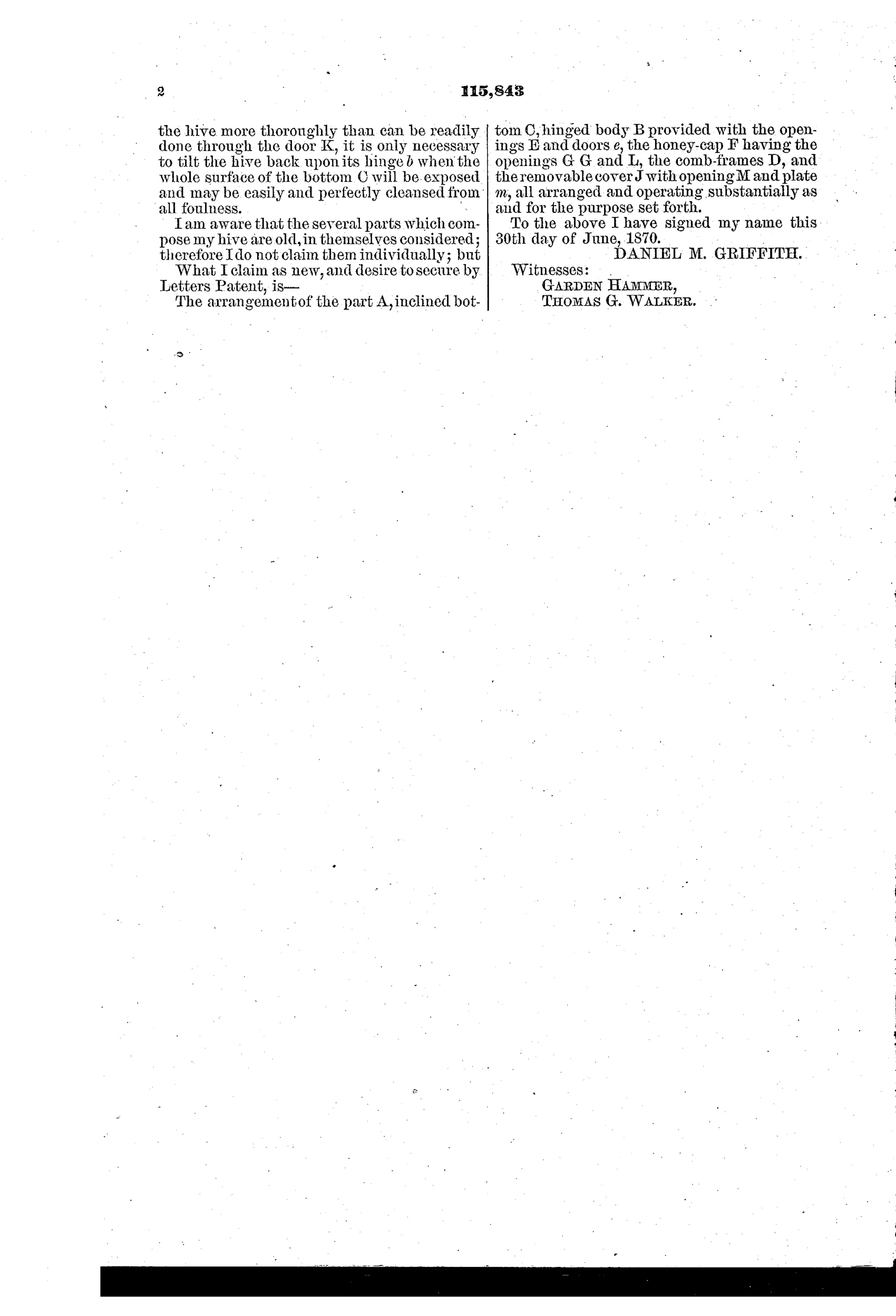
“The arrangement of the part A, inclined bottom C, hinged body B provided with the openings E and doors e, the honey-cap F having the openings G G and L, the comb-frames D, and the removable cover J with opening M and plate m, all arranged and operating substantially as and for the purpose set forth.”
In plain English: The claim covers the specific combination of the inclined bottom, hinged body with vents and doors, the honey-cap with its openings, the hanging comb-frames, and the removable ventilated cover, all working together as described.
⬡ In the inventor’s words
“It will be readily seen that a hive made after my plan will always have a thorough upward ventilation.”— Daniel M. Griffith, from the specification
Fate unknown
No documented production or surviving example is known to me; a marked specimen or an Alum Bank-area advertisement would settle it.
⬡ Commentary
Griffith's 1871 entry is a classic of the post-Langstroth 'do everything' school. Nineteen years after the movable frame settled the fundamentals, inventors like Griffith piled on features: here an inclined bottom board hinged at the rear so debris — and, hopefully, wax-moth larvae — rolls out the front; an entire hinged side wall for inspection; hanging comb-frames suspended from a ledge; and a honey-cap with a deliberate chimney of ventilation from the entrance up through a perforated plate in the outer cover. Note the ball-and-caster feet in the drawings, a small vanity that tells you this hive was meant to live somewhere genteel.
Some of it is genuinely sound. The upward-ventilation path anticipates what beekeepers still argue about today, and a sloped, cleanable bottom board reappears in modern screened-bottom designs. The frames swinging clear of walls and floor show Griffith understood the bee-space lesson, at least in outline.
The trouble is the hinged carpentry. Bees propolize every seam they can reach, and a hive whose bottom tilts and whose side swings open is a hive of seams. After one season the 'self-cleaning' hinge would be glued shut, and prying it open would crush bees and temper alike. It is a thoughtful dead end: right instincts about ventilation and cleaning, wrong bet on moving parts.
Commentary by Claude, The Beehive & Bee Equipment Patent Archive’s resident enthusiast