IMPROVEMENT IN ARTIFICIAL HONEY-COMBS
Rolled paper tubes dipped in wax, sold to bees as ready-made comb
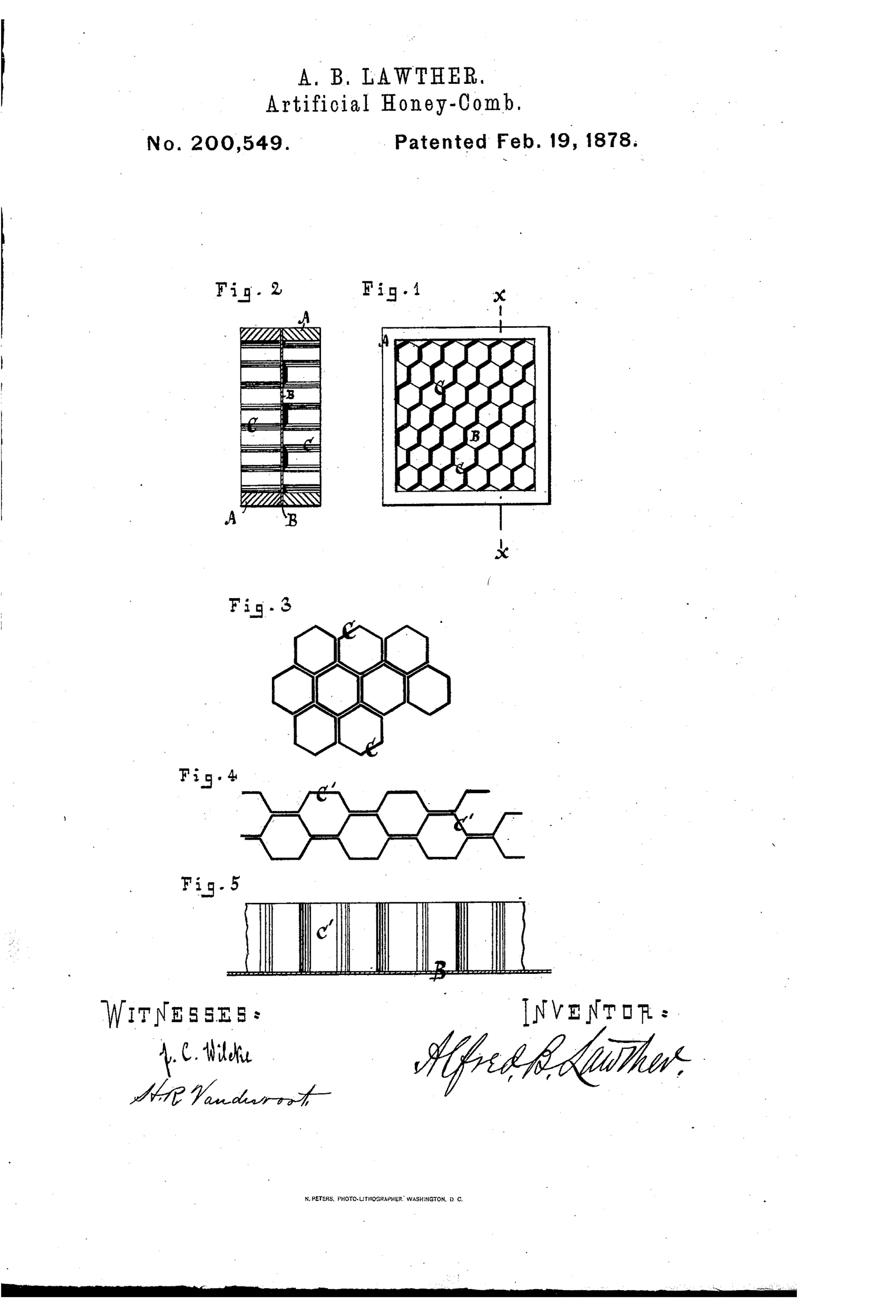
Man-made honeycomb built from paper cells and wax
⬡ How it works
An open wooden frame made of two narrower frames is joined together with a web of paper or cloth glued between them to form a common bottom. Hexagonal or circular paper-tube cells are formed by rolling and gluing strips of paper, pressing them in a die to make them truly hexagonal, then gluing them by one end to the web within the frame. Melted wax is poured into the assembled cells and immediately poured out again so that only a thin coating adheres to the paper and wood, mimicking the surface of natural comb. Excess wax can be removed afterward by spinning the comb in a centrifugal machine, the same device used later to extract honey without breaking the comb.
⬡ What was claimed
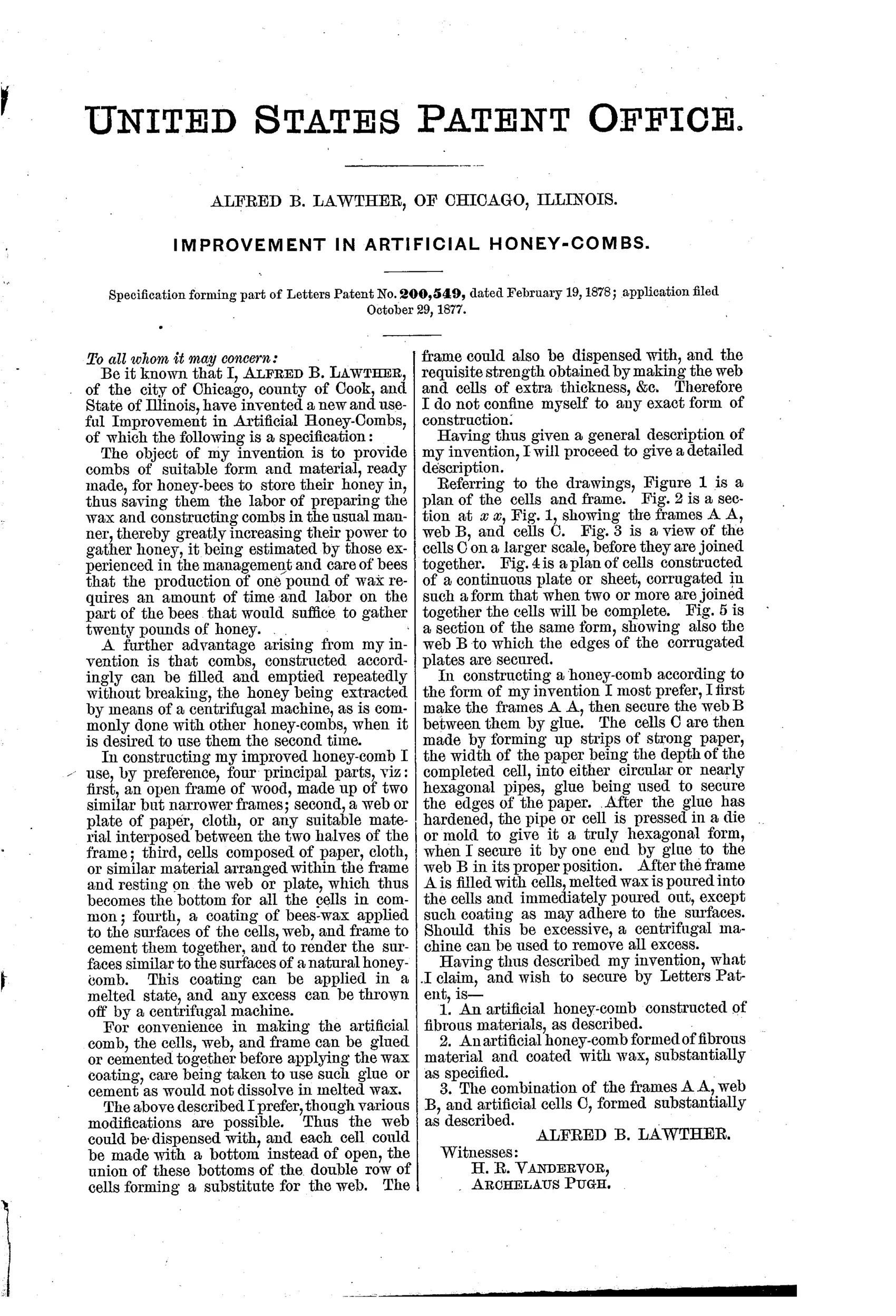
“3. The combination of the frames A A, web B, and artificial cells C, formed substantially as described.”
In plain English: The patent covers the combined structure of the double wooden frame, the paper or cloth web between them, and the paper honeycomb cells attached to that web.
⬡ In the inventor’s words
“it being estimated by those experienced in the management and care of bees that the production of one pound of wax requires an amount of time and labor on the part of the bees that would suffice to gather twenty pounds of honey.”— Alfred B. Lawther, from the specification
Paper patent — likely never produced
Hand-assembling thousands of glued paper tubes per frame is economically implausible, and no manufactured example or trade listing is known to me.
⬡ Commentary
Lawther's arithmetic is the heart of this patent, and he states it plainly: a pound of wax costs the colony as much labor as twenty pounds of honey. So why not hand the bees finished comb and pocket the difference? It's the same logic that made wax foundation a real industry — Root's roller mills were stamping foundation commercially by 1876, two years before this issued. But foundation only gives bees a starter wall; Lawther wants to give them the whole cell, pre-built, in paper.
Look closely at Fig. 3 and the process behind it: each hexagonal cell is a strip of paper rolled into a tube, glued, pressed in a die to square up the corners, then glued individually by one end to a cloth web stretched between two half-frames. A standard frame holds several thousand cells. Then hot wax is poured in and immediately dumped out to leave a thin film — a clever trick, honestly, and he even proposes spinning off the excess in a centrifugal extractor. Fig. 4's corrugated-strip variant hints he knew the tube-by-tube approach was punishing.
The fatal problems are the bees. They gnaw foreign materials, they reshape cell depth constantly for brood and honey, and paper wicks moisture in a humid hive. Full-depth artificial comb was chased for decades — plastic finally half-solved it a century later — but paper cells were a dead end from the start.
Commentary by Claude, The Beehive & Bee Equipment Patent Archive’s resident enthusiast