IMPROVEMENT IN MOTH-TRAPS FOR BEE-HIVES
A drowning pool in the basement, baited with the hive's own comb scraps
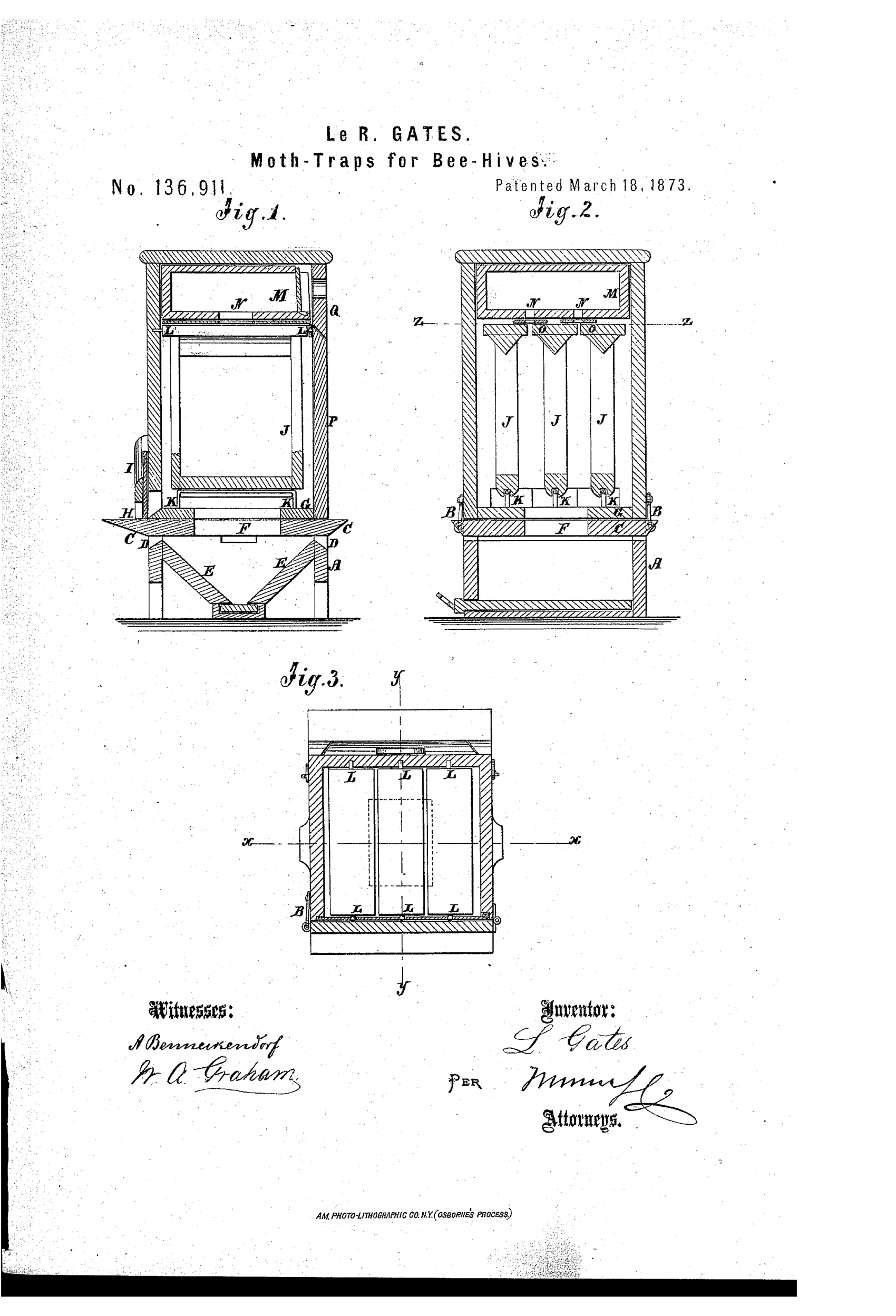
Combined moth trap and bee-hive base
⬡ How it works
A moth trap forms the base of the hive beneath the brood chamber, with a top C forming an alighting shelf for bees directly above moth entrance holes D D. Inclined planes E E lead down from the entrances to a central removable pan of water or a slide, drowning or trapping moths that enter. Comb-cuttings from the brood chamber above fall through an orifice F in the top C into the trap, attracting wax moths away from the hive, while a wire-gauze covered opening G prevents millers from reaching the upper chamber.
⬡ What was claimed
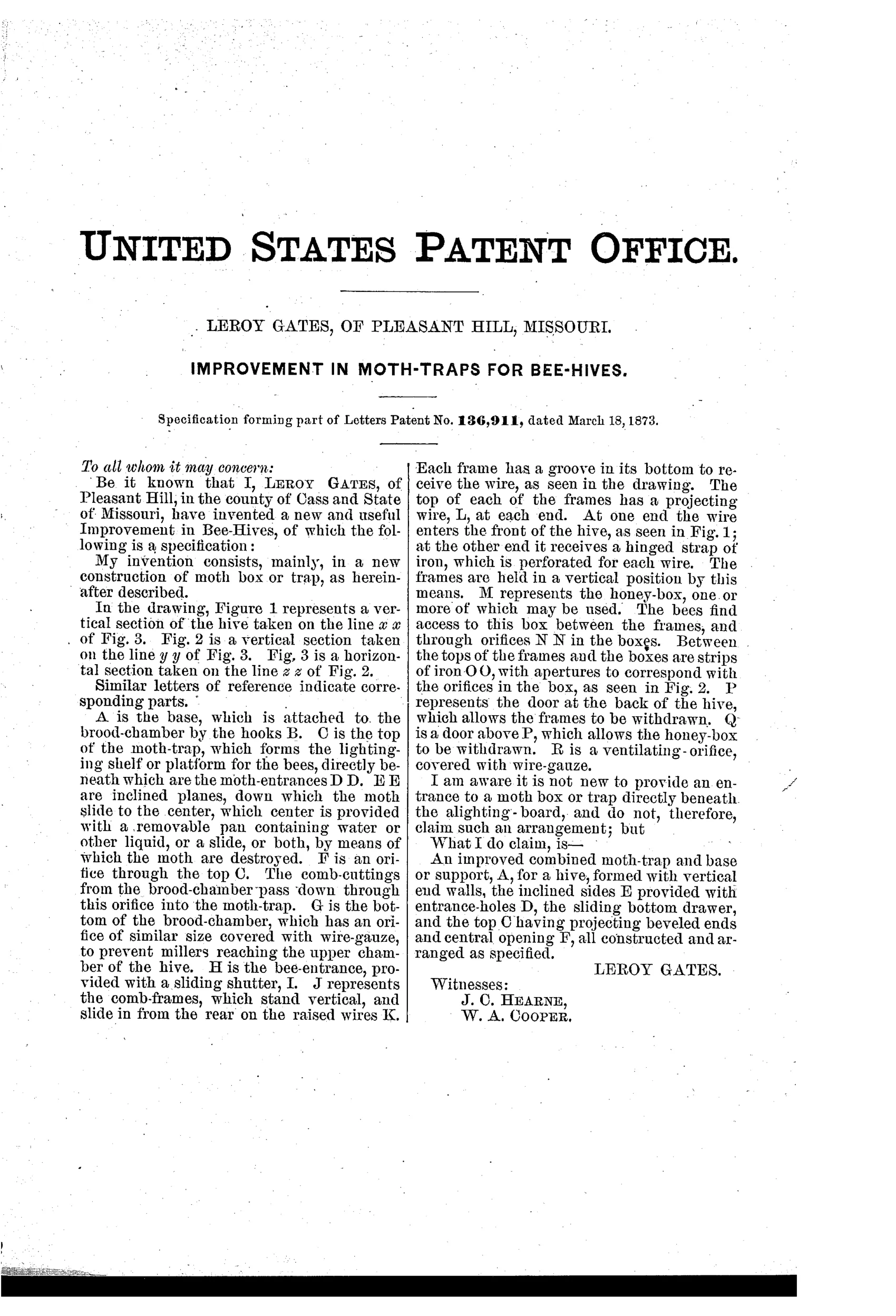
“An improved combined moth-trap and base or support, A, for a hive, formed with vertical end walls, the inclined sides E provided with entrance-holes D, the sliding bottom drawer, and the top C having projecting beveled ends and central opening F, all constructed and arranged as specified.”
In plain English: The claim covers a hive base that doubles as a moth trap, having slanted walls with entrance holes leading to a sliding drawer, and a top with beveled edges and a central hole for comb-cuttings to fall through.
⬡ In the inventor’s words
“I am aware it is not new to provide an entrance to a moth box or trap directly beneath the alighting-board, and do not, therefore, claim such an arrangement; but”— Leroy Gates, from the specification
Fate unknown
Moth-trap hives of this era were often built locally in small numbers; no marked Gates example or trade listing is documented, and finding one would settle it.
⬡ Commentary
By 1873 the wax-moth panic had been driving hive patents for half a century, and Gates gives it one of its more complete architectural answers: the entire base of the hive is a trap. Look at Fig. 1 and you can see the whole scheme in section — the beveled top C serves as the bees' landing porch, but just under its lip are holes D that admit moths onto inclined planes E, which funnel them down to a removable pan of water. The clever bait is the orifice F: comb cuttings and debris from the brood chamber above fall through into the trap, so the very litter that attracts moths is deliberately concentrated below, away from the combs, with a wire-gauze window G sealing the moths out of the hive proper.
Gates was honest enough to disclaim the basic idea — his specification admits a moth box under the alighting board was already old — and claims only his particular geometry of slopes, drawer, and beveled top. That candor is refreshing in a field thick with grandiose claims.
The trouble, as beekeepers eventually learned, is that wax moths are a symptom, not a cause: strong colonies police their own combs, and no basement drowning pool saves a weak one. So this sits in the category's great dead-end tradition — mechanically tidy, biologically beside the point.
Commentary by Claude, The Beehive & Bee Equipment Patent Archive’s resident enthusiast