IMPROVEMENT IN BEE-HIVES
Slippery glass acorns on pegs, meant to stop moths that can fly
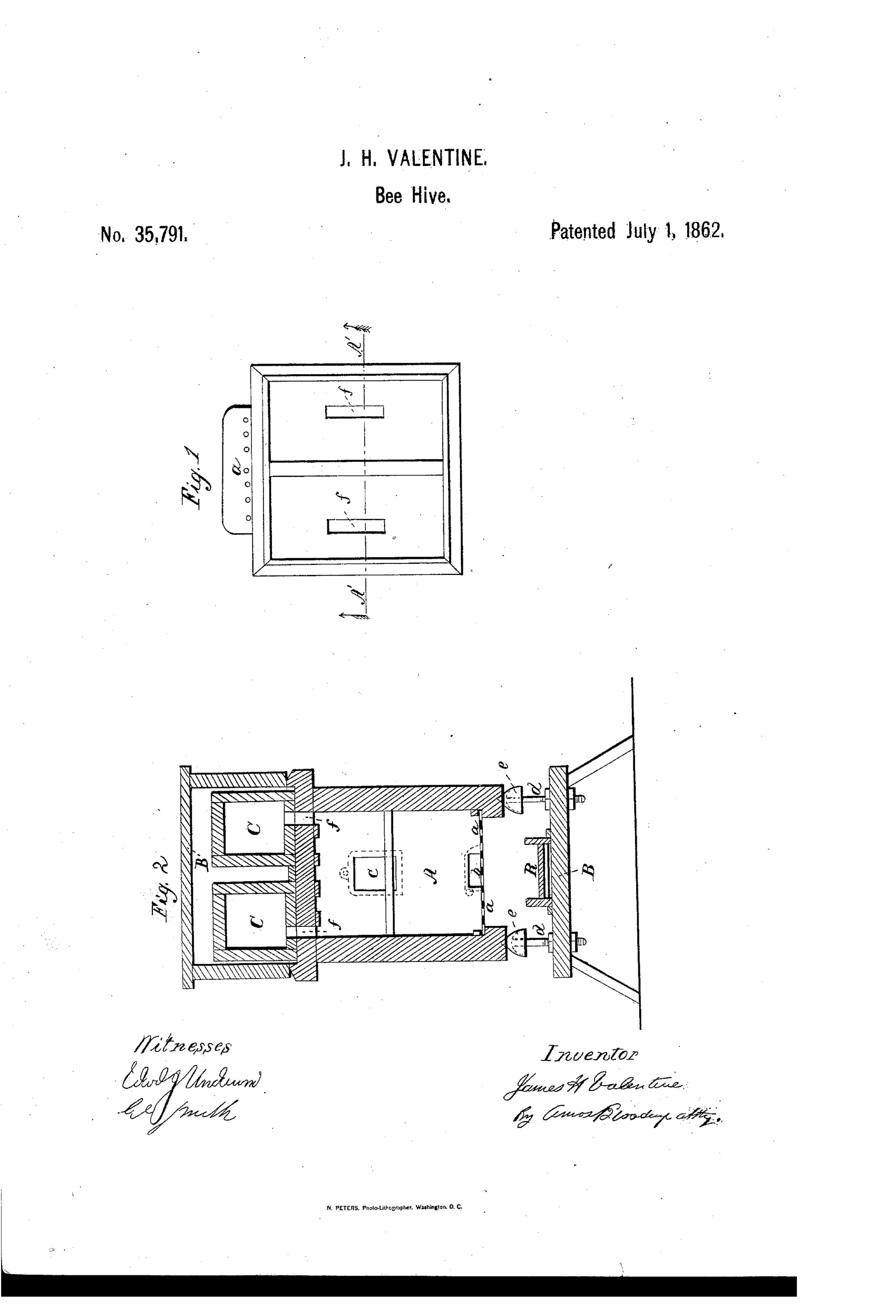
Bee-hive with moth-proof glass-bulb support
⬡ How it works
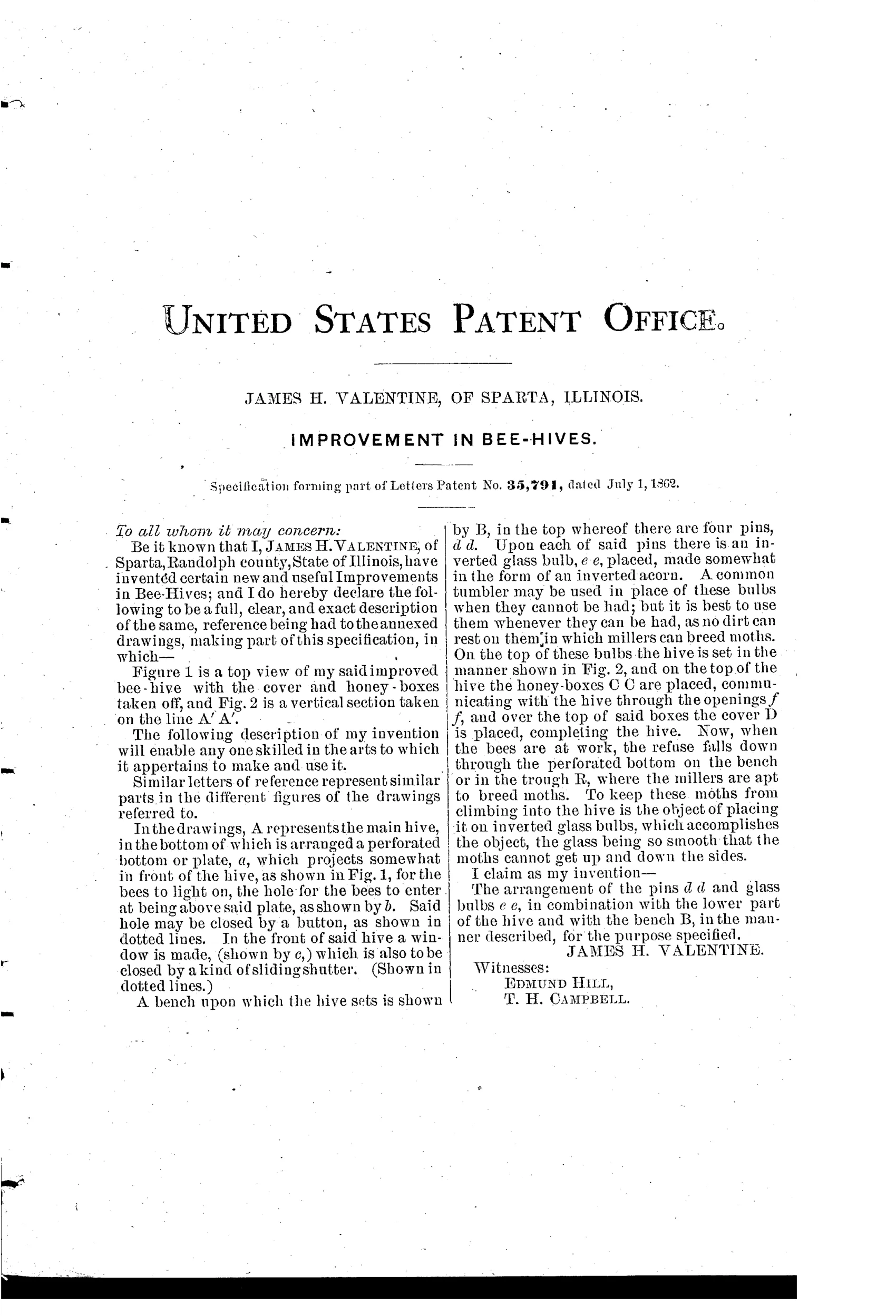
The hive body sits on a bench fitted with four pins, each topped by an inverted glass bulb shaped somewhat like an acorn or a tumbler. Because the glass is too smooth for moths to climb, this arrangement keeps millers from breeding in the refuse that falls through the perforated bottom into the trough below. The main hive has a perforated bottom plate that projects forward as a landing platform for bees, with an entrance hole above it that can be closed with a button. Honey-boxes sit atop the hive, communicating through openings, and a cover completes the assembly.
⬡ What was claimed
“The arrangement of the pins d d and glass bulbs e e, in combination with the lower part of the hive and with the bench B, in the manner described, for the purpose specified.”
In plain English: The claim covers the specific combination of pins with inverted glass bulbs on the bench, used together with the hive's base to keep moths out.
⬡ In the inventor’s words
“To keep these moths from climbing into the hive is the object of placing it on inverted glass bulbs, which accomplishes the object, the glass being so smooth that the moths cannot get up and down the sides.”— James H. Valentine, from the specification
Fate unknown
No manufacturing record or surviving example is known to me; a marked hive or period advertisement from downstate Illinois would settle it.
⬡ Commentary
Valentine's answer to the wax-moth panic of the 1860s was furniture-maker's logic: set the hive on four pins, cap each pin with an inverted glass bulb, and the moths can't climb the slick glass to reach the brood. It's the same trick used to keep ants out of pie safes and bedposts, and against ants it genuinely works. The trouble is that the adult wax moth arrives by wing. She doesn't need to climb the bench legs — she flies to the entrance like the bees do. What the bulbs might actually intercept are larvae crawling up from the debris trough below, which the patent's perforated bottom deliberately creates as a refuse catch.
The drawing rewards a close look at Fig. 2: you can see the acorn-shaped bulbs (e) sitting on their pins between hive and bench, a small, careful detail that clearly mattered most to Valentine — it's all his claim covers. The rest is a competent box hive with top honey-boxes and a button-closed entrance.
Issued in 1862, a full decade after Langstroth, this hive has no movable frames at all. It belongs to the older tradition where moth defense, not comb management, was the selling point — a tradition Langstroth's bee space was already quietly making obsolete. A likable, earnest dead end.
Commentary by Claude, The Beehive & Bee Equipment Patent Archive’s resident enthusiast