IMPROVEMENT IN MOTH-TRAPS FOR BEE-HIVES
Kansas beekeeper baits moths with shiny tubes, honey scent, and glowing phosphorus
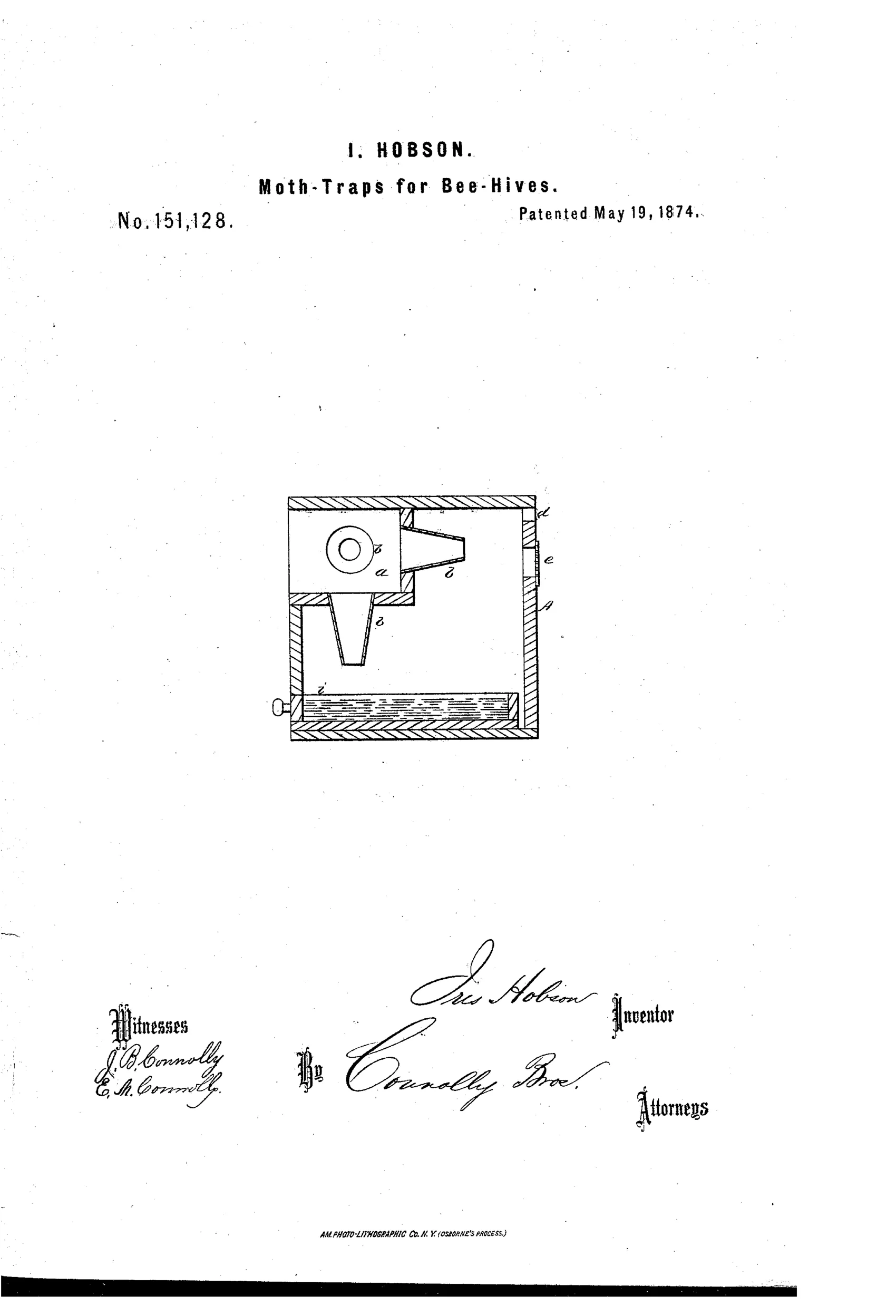
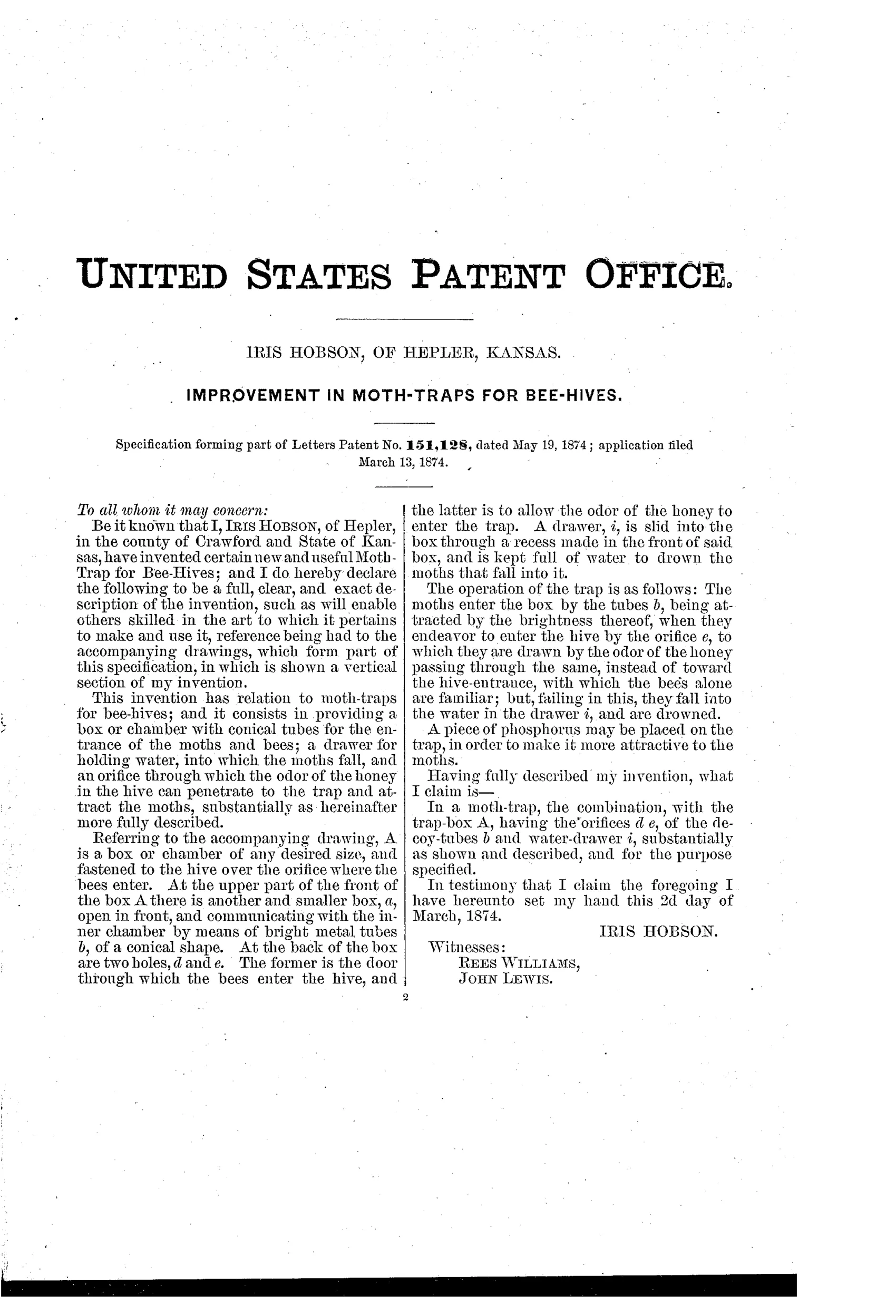
A moth trap device for bee-hives
⬡ How it works
A trap-box is fastened to a hive over the entrance orifice, with a smaller box on front holding bright conical metal tubes that attract moths with their shine. Moths enter through these tubes, drawn further by the scent of honey through an orifice, mistaking it for the true hive entrance used by bees. Failing to reach the honey, the moths fall through a hole into a water-filled drawer slid into the box, where they drown. A piece of phosphorus may optionally be added to the trap to increase its attractiveness to moths.
⬡ What was claimed
“In a moth-trap, the combination, with the trap-box A, having the orifices d e, of the decoy-tubes b and water-drawer i, substantially as shown and described, and for the purpose specified.”
In plain English: The invention claims a moth trap box with two rear holes, decoy tubes, and a water-filled drawer working together to lure and drown moths.
⬡ In the inventor’s words
“A piece of phosphorus may be placed on the trap, in order to make it more attractive to the moths.”— Iris Hobson, from the specification
Fate unknown
Simple enough for local carpentry, but no advertisement or surviving example is documented; a marked specimen or supply-catalog listing would settle it.
⬡ Commentary
The wax moth was the great villain of nineteenth-century beekeeping literature, and patents like this one are its monument. Hobson's trap bolts over the hive entrance: moths are meant to be drawn by the glint of bright conical metal tubes, follow the smell of honey through an orifice at the rear, realize they can't reach it, and tumble through a hole into a water-filled drawer below. The drawer is the practical touch — slide it out, dump the drowned moths, refill. The optional piece of phosphorus, added to glow in the dark and improve the lure, is the era in one sentence: earnest, slightly hazardous, and untested.
The section drawing repays a look. The funnel-shaped decoy tube narrows inward, a one-way geometry borrowed from fish traps and flypaper-era insect catchers — easy in, hard out. Meanwhile the actual bee entrance sits separately at the back, so bees supposedly pass unbothered while moths get diverted. That's the weak joint: wax moths are perfectly capable of following bees through the real entrance, and nothing here stops them.
By 1874 Langstroth had already shown that a strong colony on movable frames is the real moth defense; weak hives get infested, gadgets or no. This is a late entry in a fading genre — mechanically tidy, biologically hopeful, and a nice specimen of the moth-trap folly the movable frame quietly retired.
Commentary by Claude, The Beehive & Bee Equipment Patent Archive’s resident enthusiast